EnglishFreePrintable
Visual Storytelling Introduction
A free english worksheet ready for your classroom. Open in Kuraplan to grab the print-ready PDF, customize it for your students, or generate a fresh version in seconds.
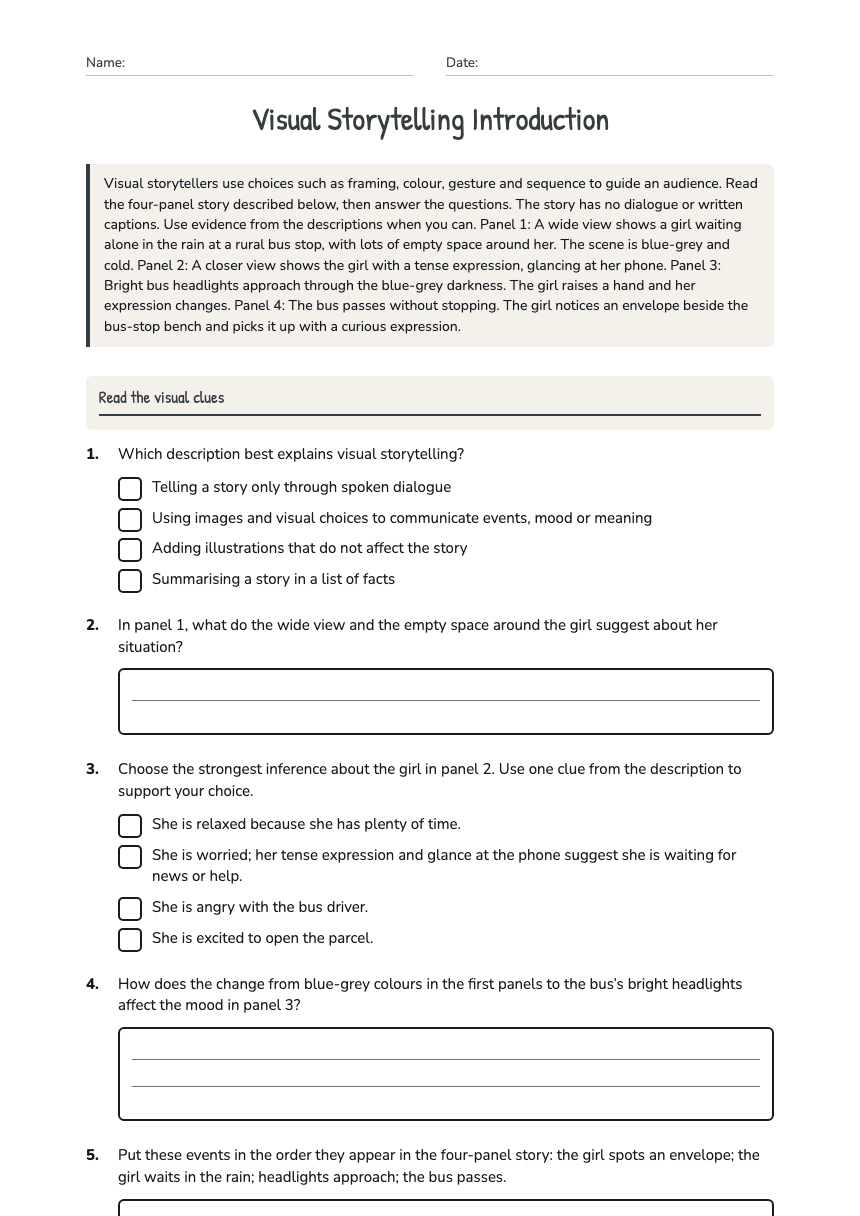
Name:Date:
Visual Storytelling Introduction
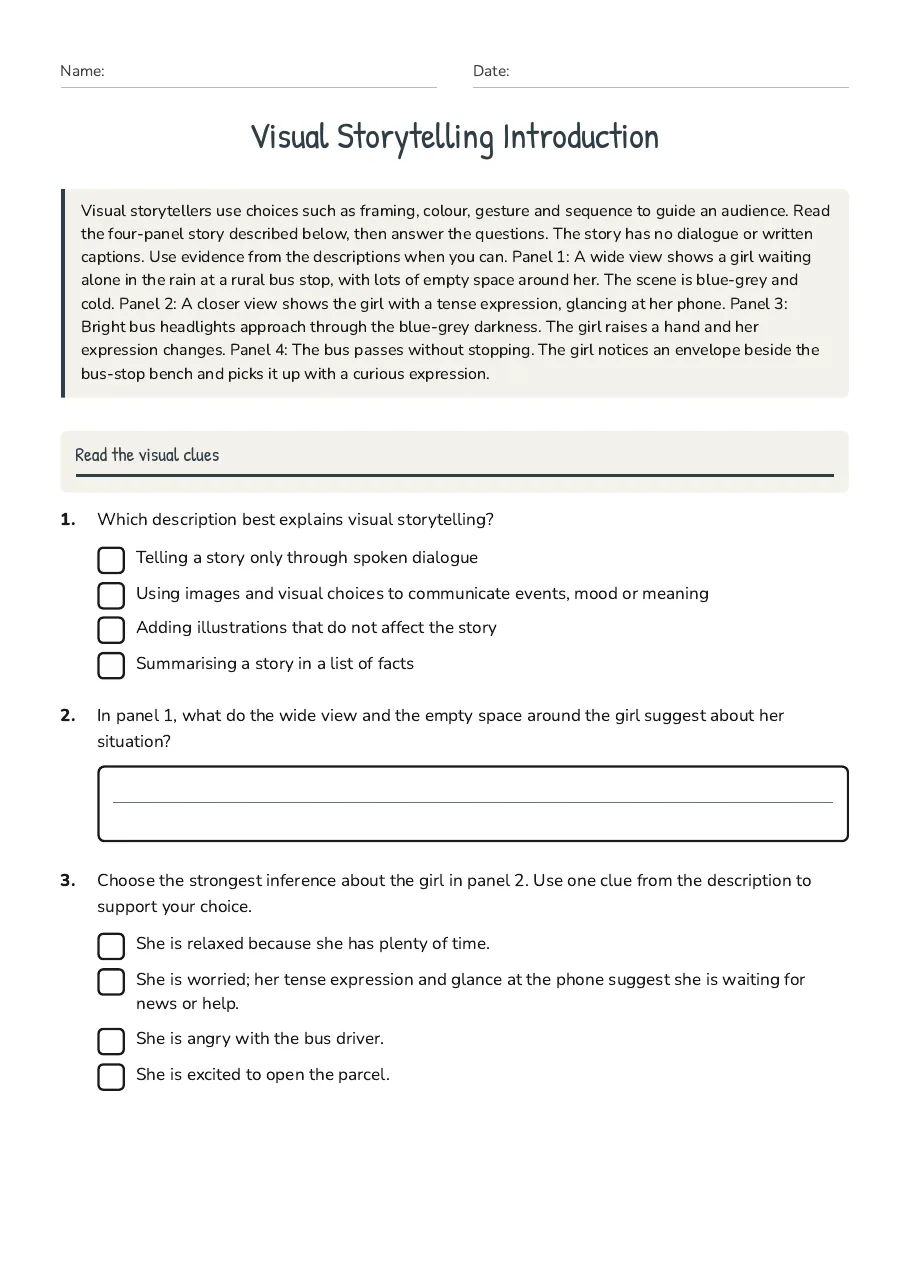
Visual storytellers use choices such as framing, colour, gesture and sequence to guide an audience. Read the four-panel story described below, then answer the questions. The story has no dialogue or written captions. Use evidence from the descriptions when you can.
Panel 1: A wide view shows a girl waiting alone in the rain at a rural bus stop, with lots of empty space around her. The scene is blue-grey and cold.
Panel 2: A closer view shows the girl with a tense expression, glancing at her phone.
Panel 3: Bright bus headlights approach through the blue-grey darkness. The girl raises a hand and her expression changes.
Panel 4: The bus passes without stopping. The girl notices an envelope beside the bus-stop bench and picks it up with a curious expression.
Read the visual clues
1.Which description best explains visual storytelling?
- Telling a story only through spoken dialogue
- Using images and visual choices to communicate events, mood or meaning
- Adding illustrations that do not affect the story
- Summarising a story in a list of facts
2.In panel 1, what do the wide view and the empty space around the girl suggest about her situation?
3.Choose the strongest inference about the girl in panel 2. Use one clue from the description to support your choice.
- She is relaxed because she has plenty of time.
- She is worried; her tense expression and glance at the phone suggest she is waiting for news or help.
- She is angry with the bus driver.
- She is excited to open the parcel.
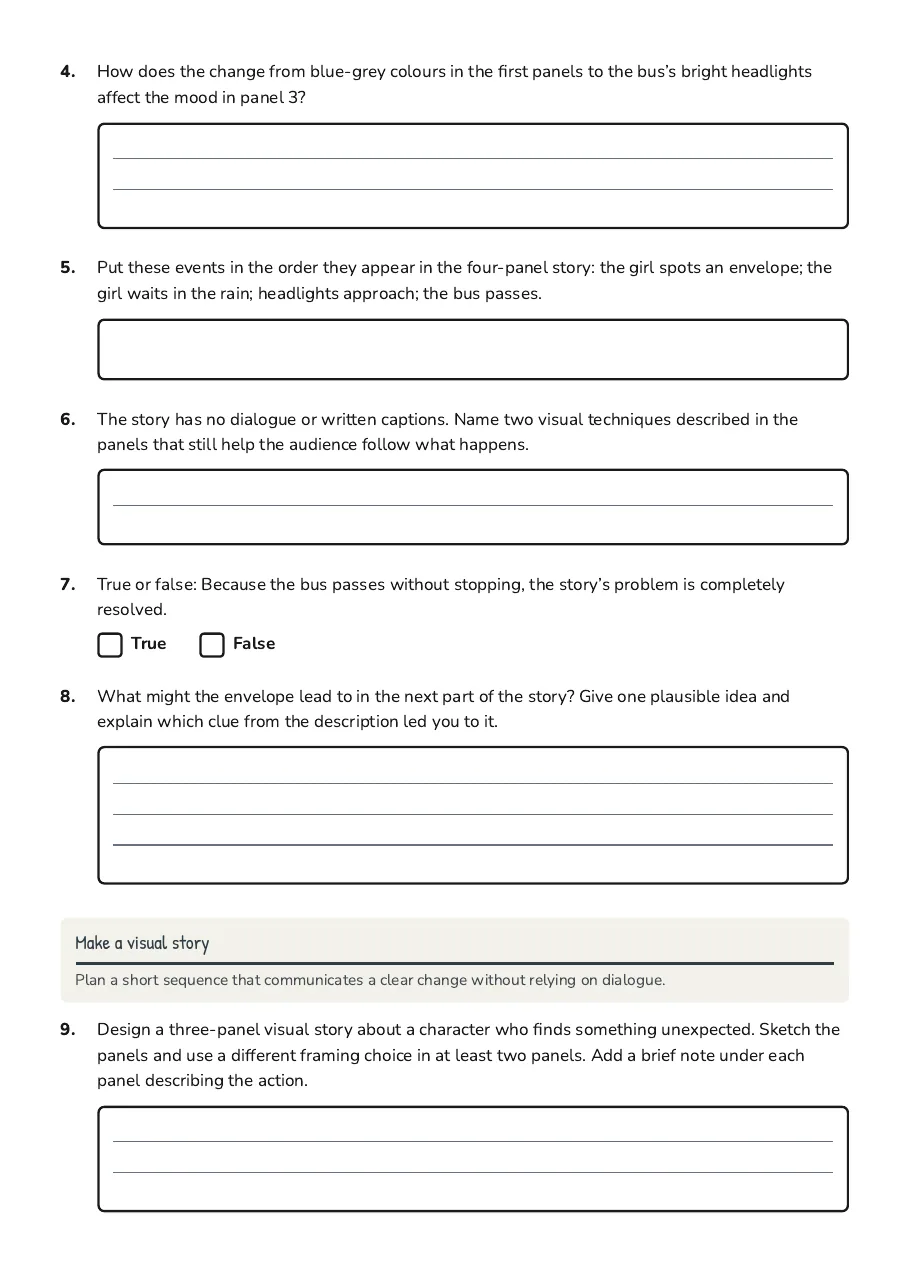
4.How does the change from blue-grey colours in the first panels to the bus’s bright headlights affect the mood in panel 3?
5.Put these events in the order they appear in the four-panel story: the girl spots an envelope; the girl waits in the rain; headlights approach; the bus passes.
6.The story has no dialogue or written captions. Name two visual techniques described in the panels that still help the audience follow what happens.
7.True or false: Because the bus passes without stopping, the story’s problem is completely resolved.
TrueFalse
8.What might the envelope lead to in the next part of the story? Give one plausible idea and explain which clue from the description led you to it.
Make a visual story
Plan a short sequence that communicates a clear change without relying on dialogue.
9.Design a three-panel visual story about a character who finds something unexpected. Sketch the panels and use a different framing choice in at least two panels. Add a brief note under each panel describing the action.
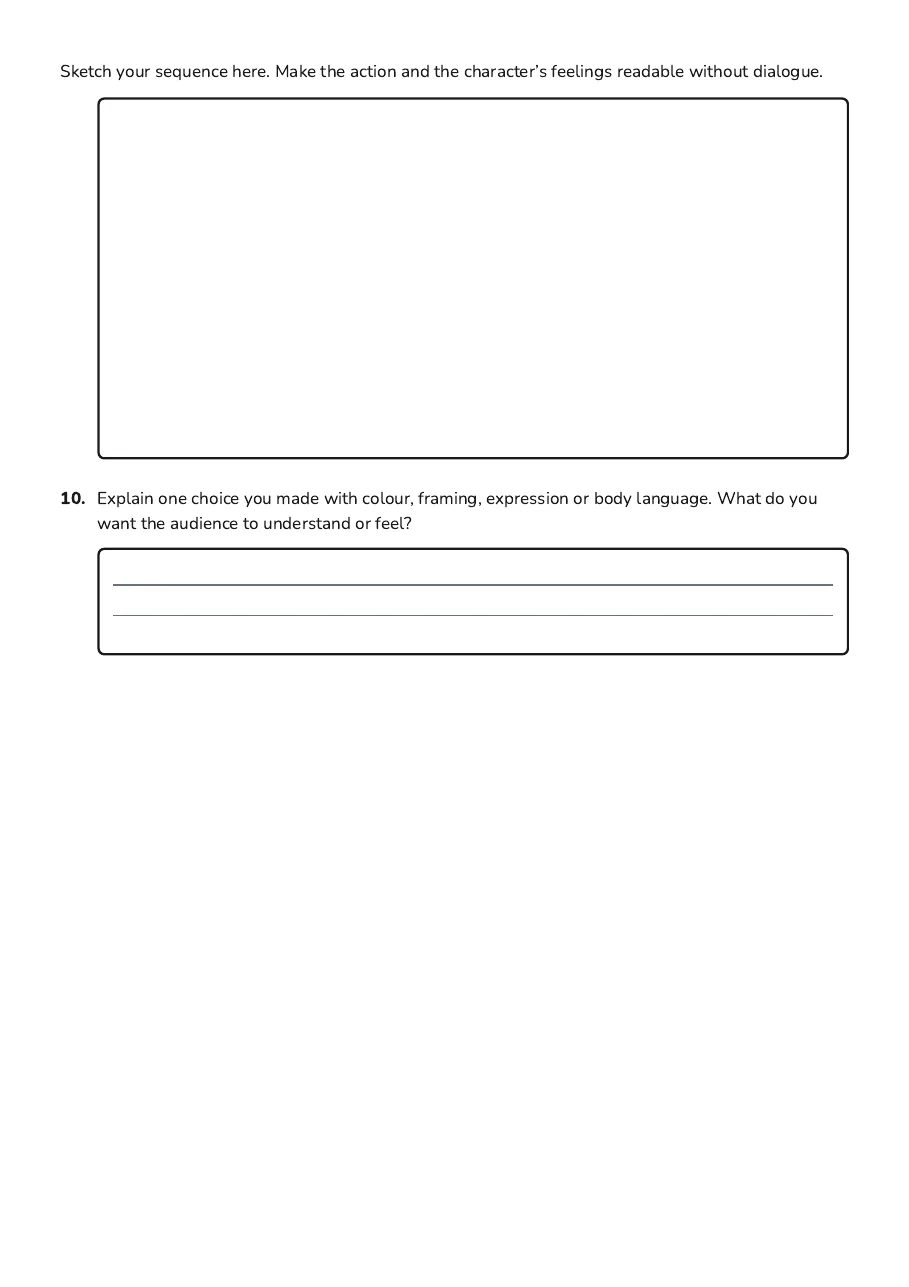
Sketch your sequence here. Make the action and the character’s feelings readable without dialogue.
10.Explain one choice you made with colour, framing, expression or body language. What do you want the audience to understand or feel?
3 printable pages
Page 1
Page 2
Page 3
About This Worksheet
Free in Kuraplan
Sign up free, grab the PDF, and customize it for your class.
Print-Ready
Formatted for standard paper. Clean layout, easy to read.
AI-Generated
Created with Kuraplan's AI, designed for real classroom use.
For Teachers & Parents
Use in classrooms, for homework, tutoring, or homeschool.
Need a custom version of this worksheet?
Kuraplan's AI generates custom worksheets in seconds — differentiated for every learner, aligned to your curriculum.
Generate Custom Worksheets — Free No credit card Curriculum-aligned Under 60 seconds