Shaping NZ History
A free social sciences worksheet ready for your classroom. Open in Kuraplan to grab the print-ready PDF, customize it for your students, or generate a fresh version in seconds.
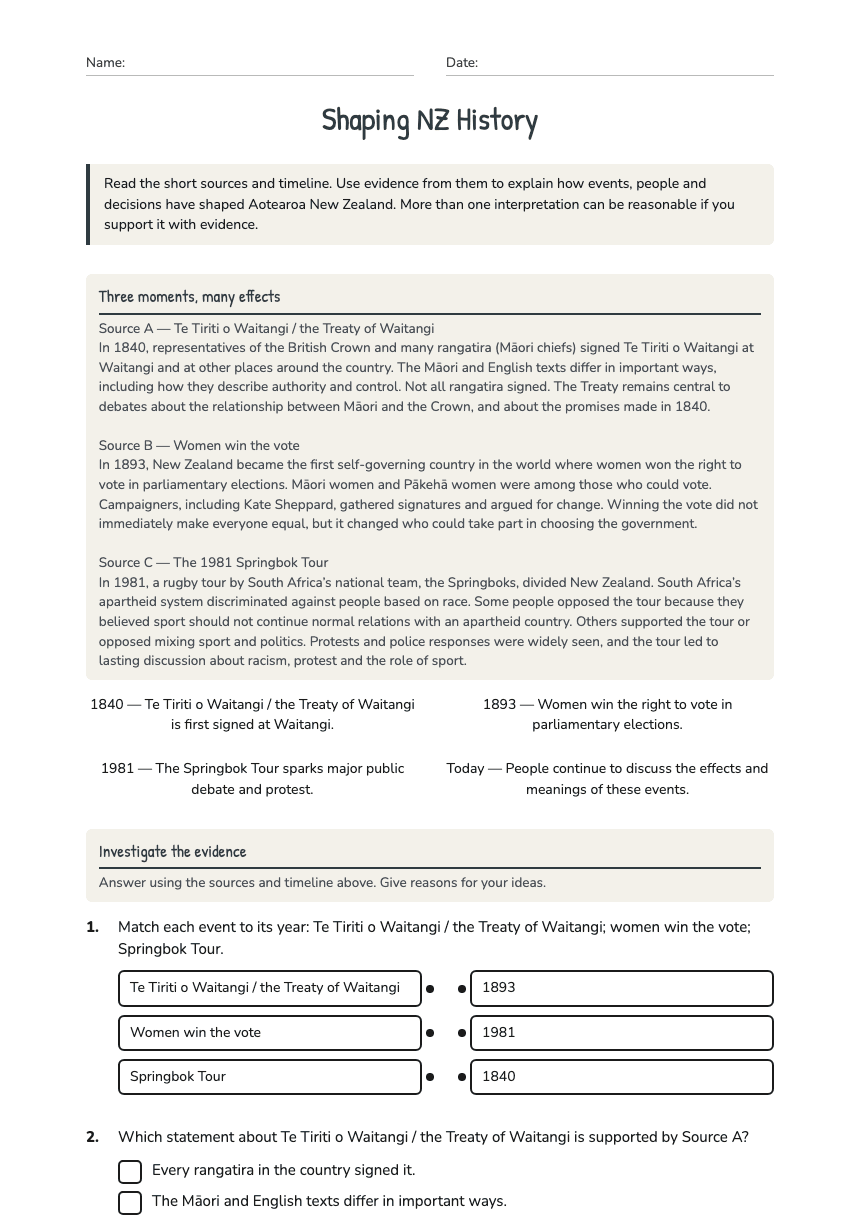
Shaping NZ History
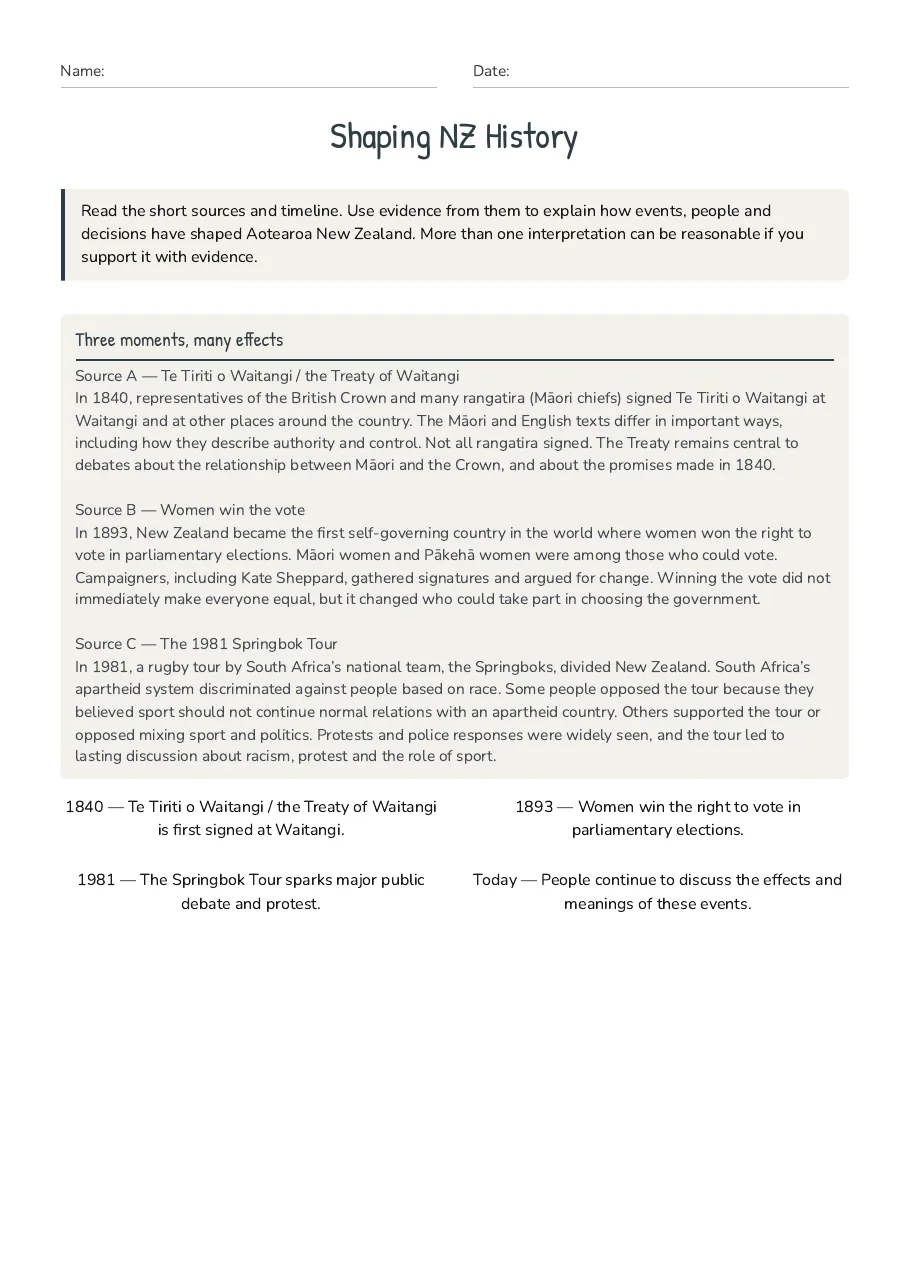
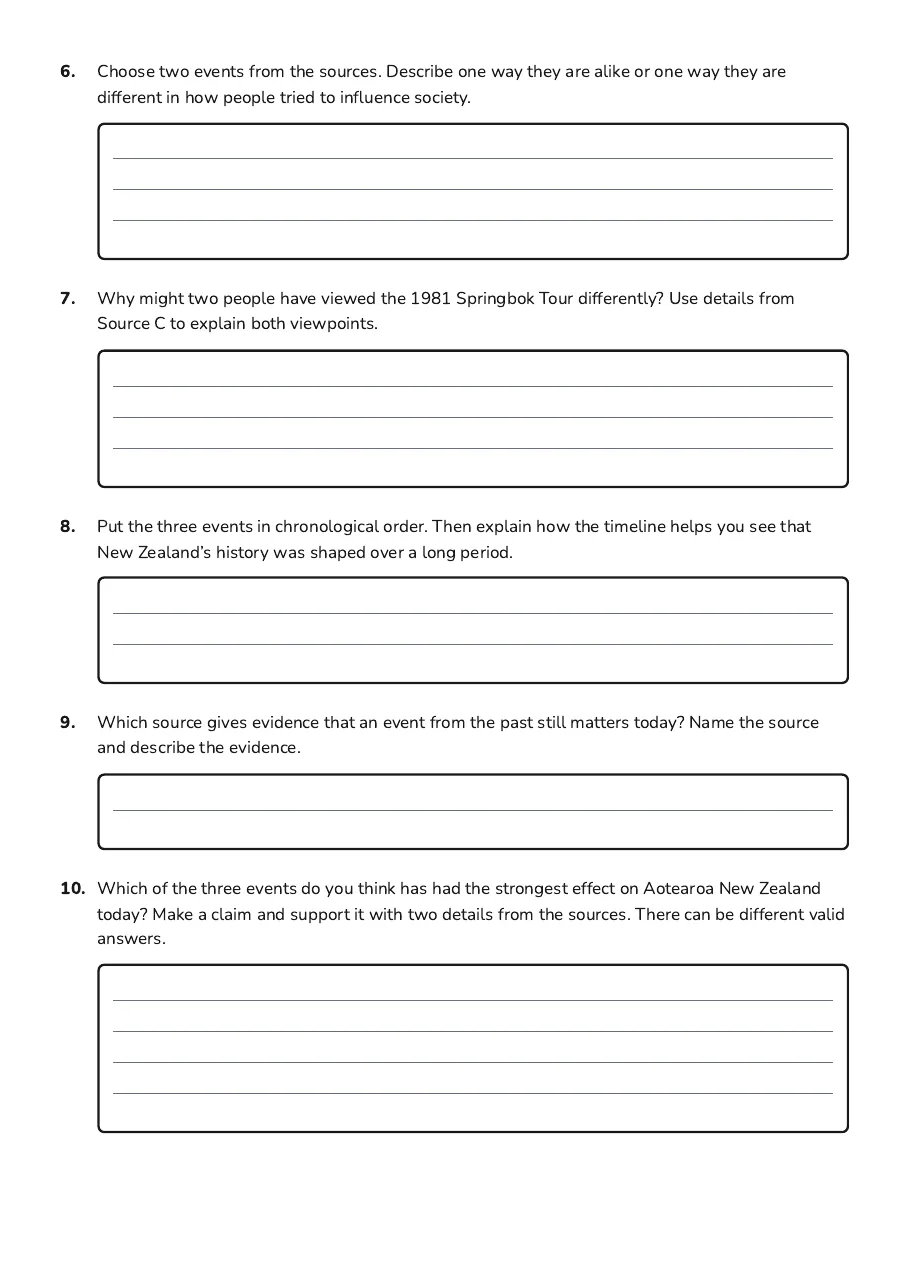
Three moments, many effects
Source A — Te Tiriti o Waitangi / the Treaty of Waitangi In 1840, representatives of the British Crown and many rangatira (Māori chiefs) signed Te Tiriti o Waitangi at Waitangi and at other places around the country. The Māori and English texts differ in important ways, including how they describe authority and control. Not all rangatira signed. The Treaty remains central to debates about the relationship between Māori and the Crown, and about the promises made in 1840. Source B — Women win the vote In 1893, New Zealand became the first self-governing country in the world where women won the right to vote in parliamentary elections. Māori women and Pākehā women were among those who could vote. Campaigners, including Kate Sheppard, gathered signatures and argued for change. Winning the vote did not immediately make everyone equal, but it changed who could take part in choosing the government. Source C — The 1981 Springbok Tour In 1981, a rugby tour by South Africa’s national team, the Springboks, divided New Zealand. South Africa’s apartheid system discriminated against people based on race. Some people opposed the tour because they believed sport should not continue normal relations with an apartheid country. Others supported the tour or opposed mixing sport and politics. Protests and police responses were widely seen, and the tour led to lasting discussion about racism, protest and the role of sport.
1840 — Te Tiriti o Waitangi / the Treaty of Waitangi is first signed at Waitangi.
1893 — Women win the right to vote in parliamentary elections.
1981 — The Springbok Tour sparks major public debate and protest.
Today — People continue to discuss the effects and meanings of these events.
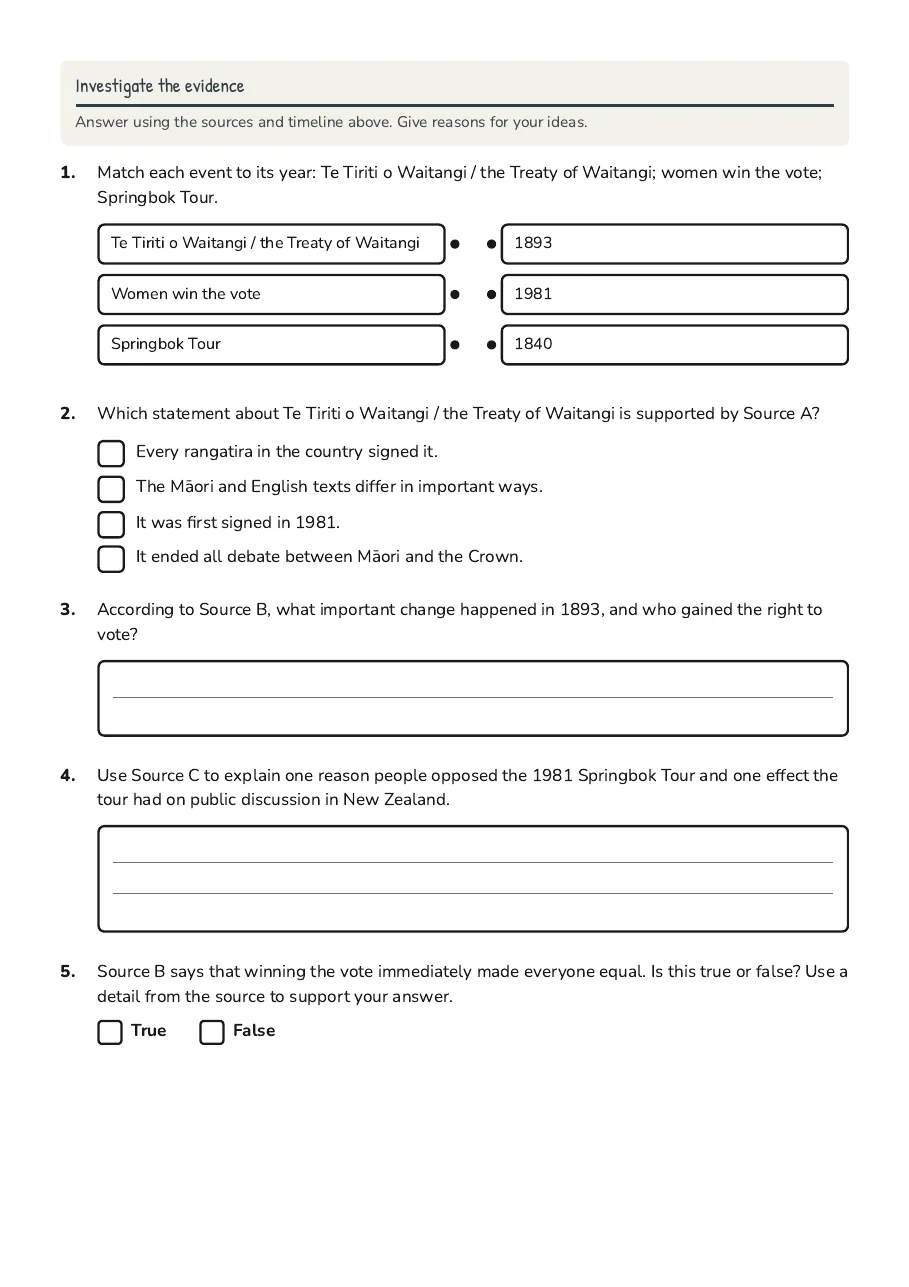
Investigate the evidence
Answer using the sources and timeline above. Give reasons for your ideas.
- Te Tiriti o Waitangi / the Treaty of Waitangi
- Women win the vote
- Springbok Tour
- 1893
- 1981
- 1840
- Every rangatira in the country signed it.
- The Māori and English texts differ in important ways.
- It was first signed in 1981.
- It ended all debate between Māori and the Crown.
3 printable pages
Page 1
Page 2
Page 3
About This Worksheet
Free in Kuraplan
Sign up free, grab the PDF, and customize it for your class.
Print-Ready
Formatted for standard paper. Clean layout, easy to read.
AI-Generated
Created with Kuraplan's AI, designed for real classroom use.
For Teachers & Parents
Use in classrooms, for homework, tutoring, or homeschool.
Need a custom version of this worksheet?
Kuraplan's AI generates custom worksheets in seconds — differentiated for every learner, aligned to your curriculum.
Generate Custom Worksheets — FreeMore Social Sciences Worksheets
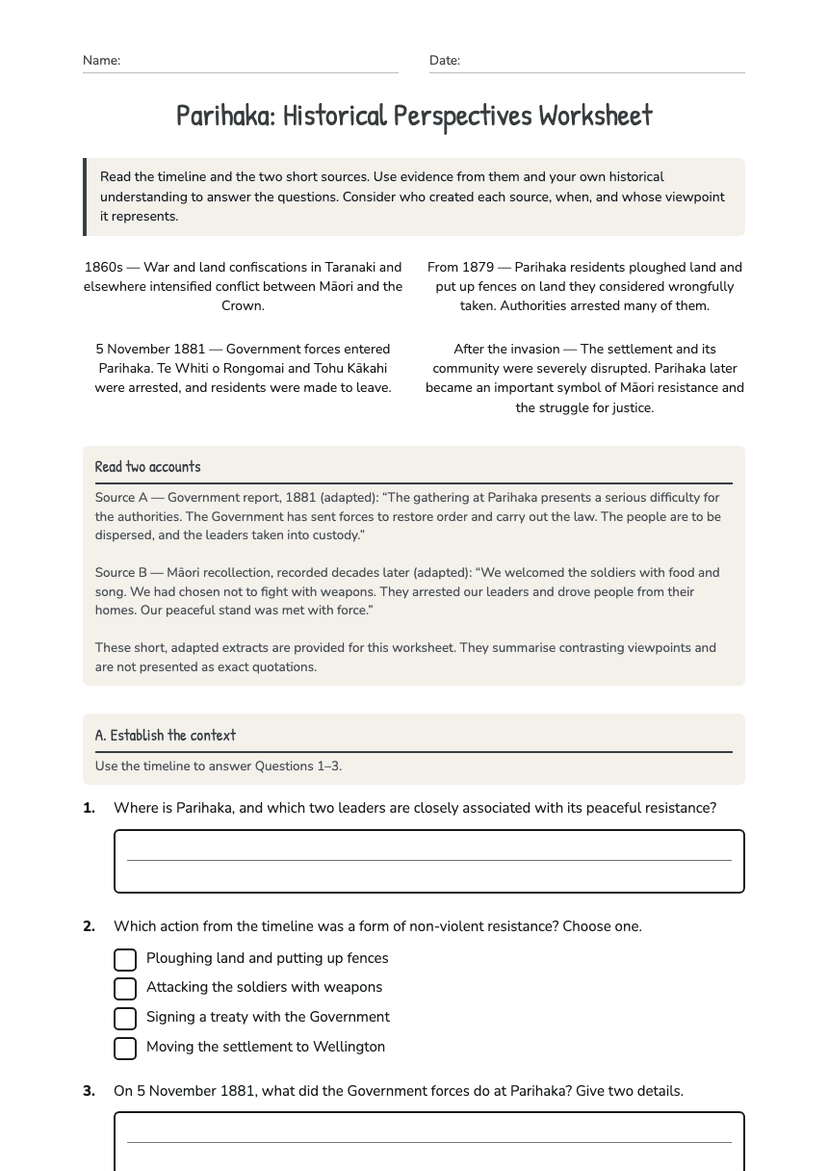
Parihaka: Historical Perspectives Worksheet
Free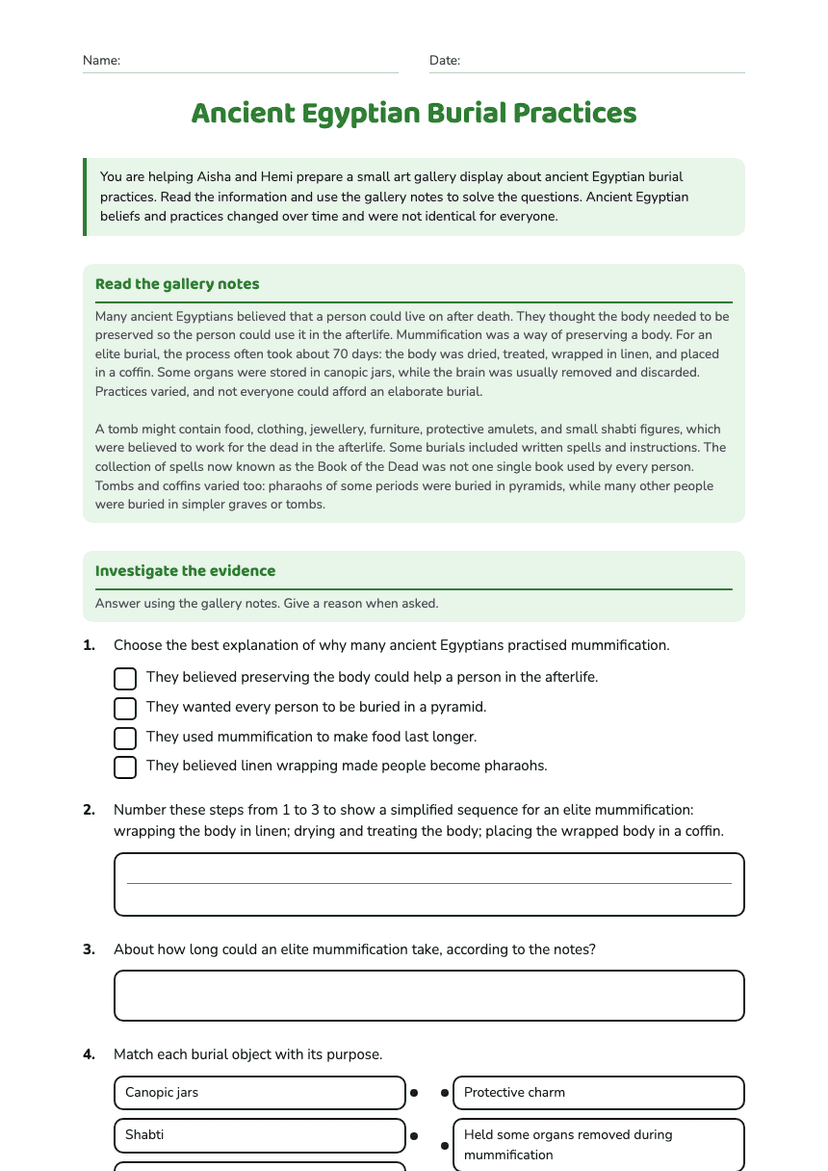
Ancient Egyptian Burial Practices
Free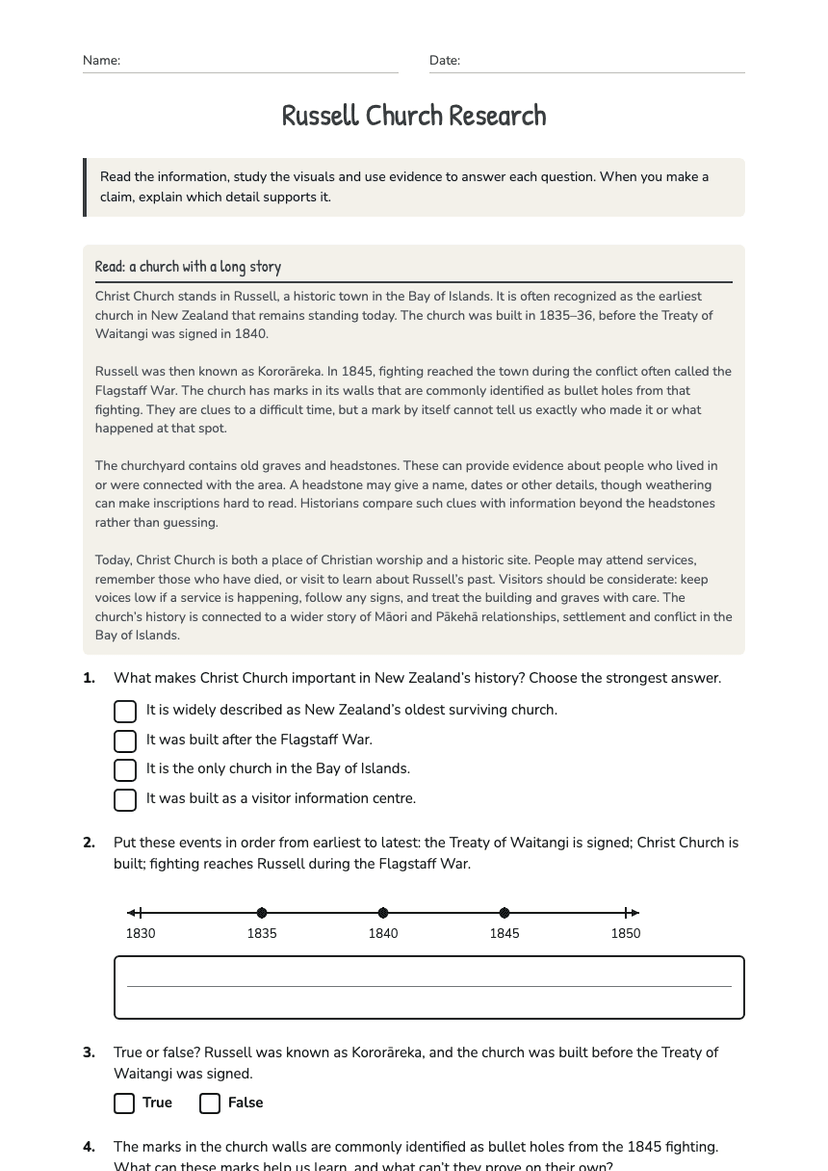
Russell Church Research
Free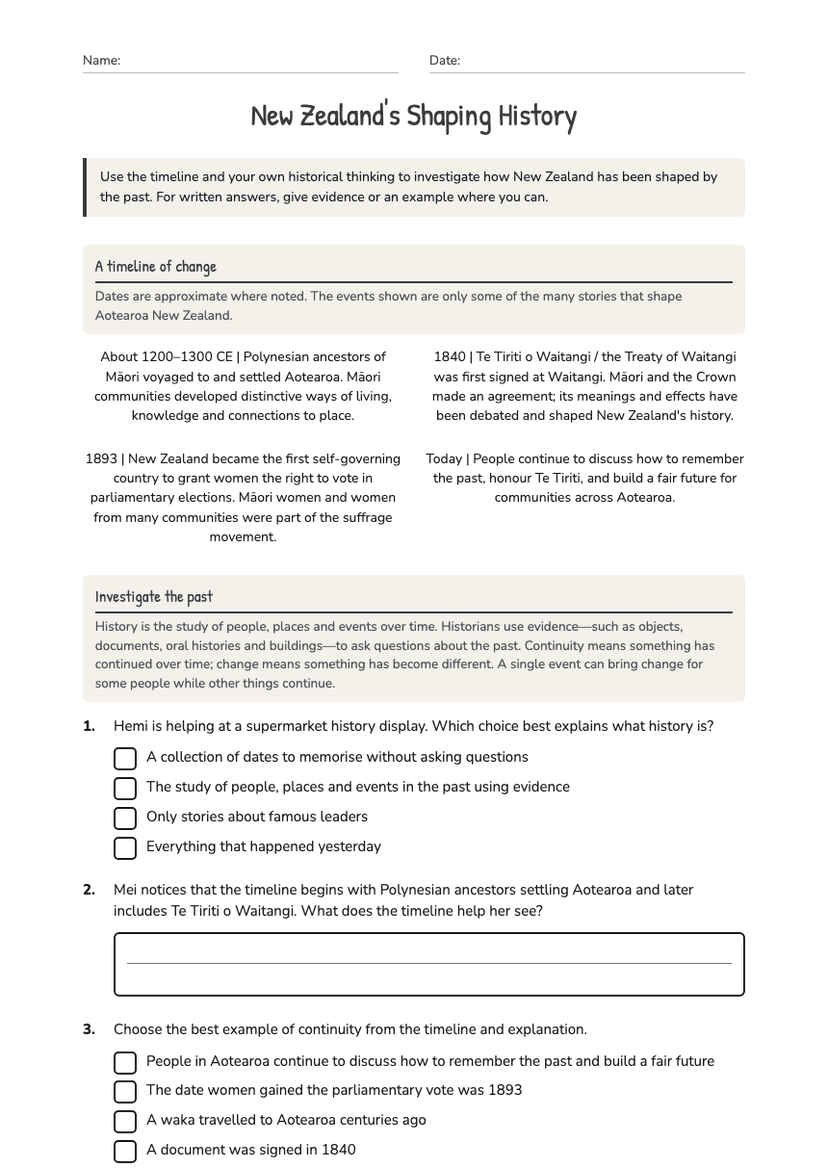
New Zealand's Shaping History
Free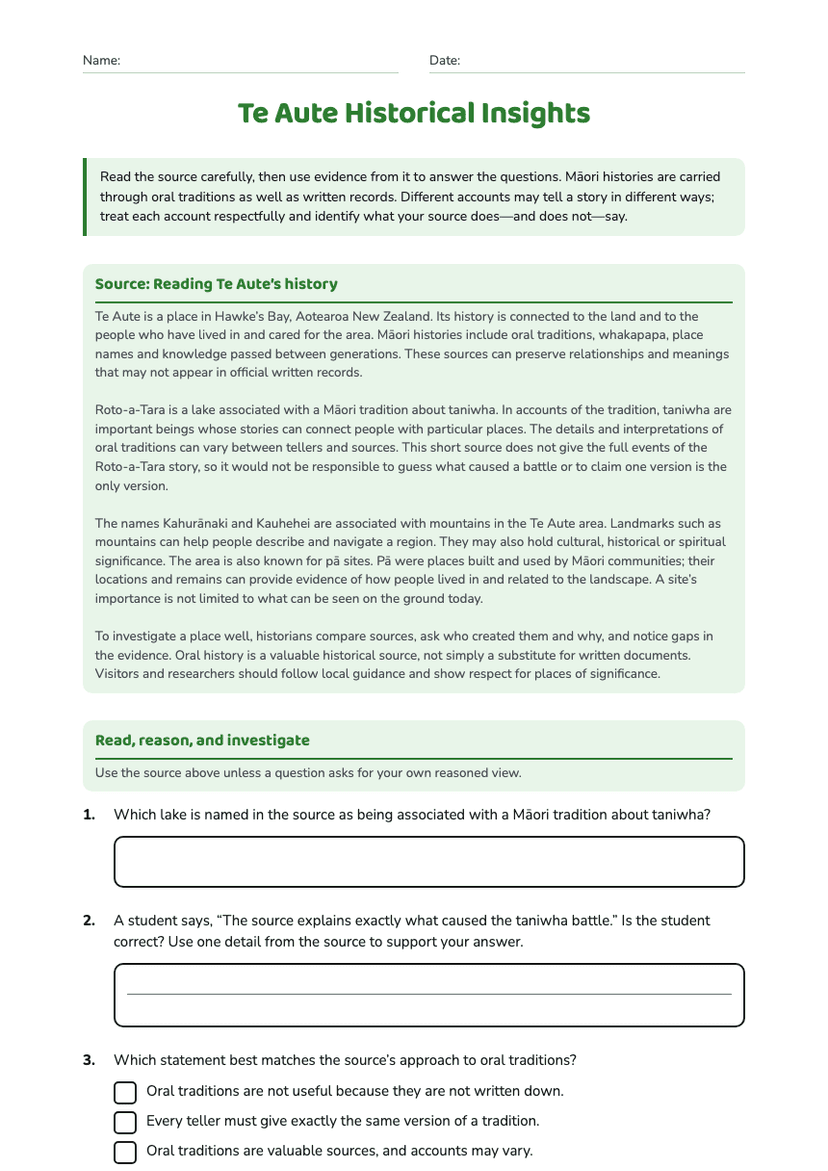
Te Aute Historical Insights
Free
World War II: Causes
Free
Traditional and Modern Voyaging
Free