Sharks Reading Comprehension
A free english worksheet ready for your classroom. Open in Kuraplan to grab the print-ready PDF, customize it for your students, or generate a fresh version in seconds.
Sharks Reading Comprehension
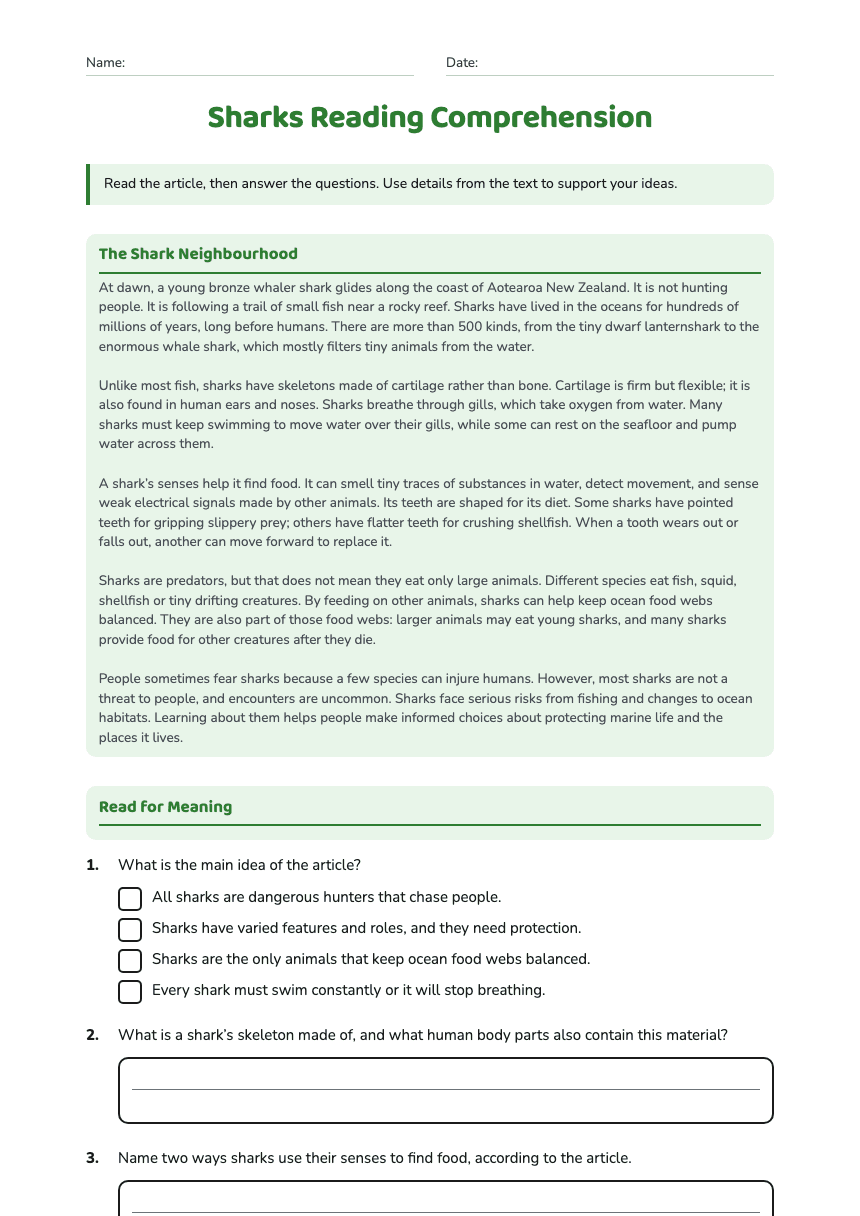
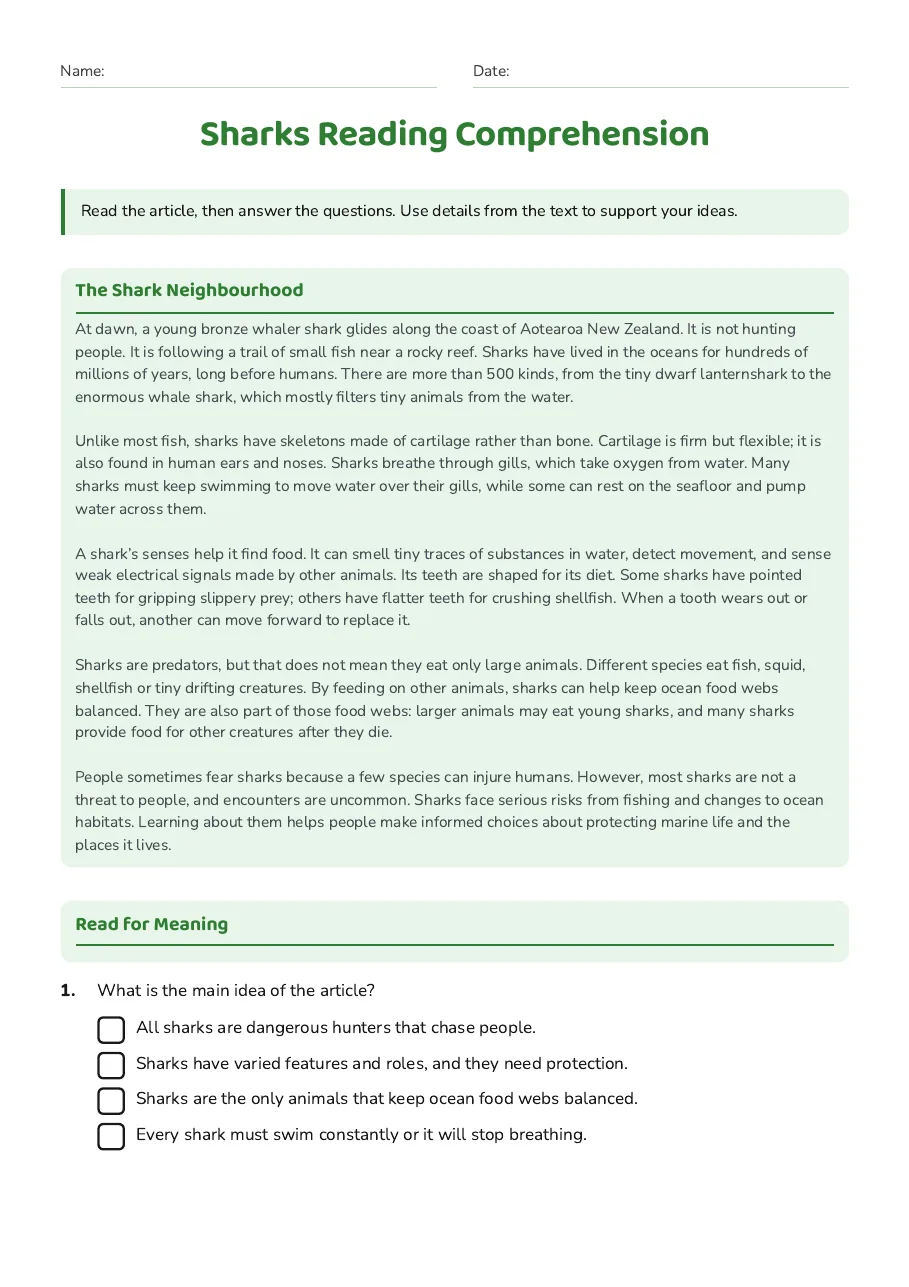
The Shark Neighbourhood
At dawn, a young bronze whaler shark glides along the coast of Aotearoa New Zealand. It is not hunting people. It is following a trail of small fish near a rocky reef. Sharks have lived in the oceans for hundreds of millions of years, long before humans. There are more than 500 kinds, from the tiny dwarf lanternshark to the enormous whale shark, which mostly filters tiny animals from the water. Unlike most fish, sharks have skeletons made of cartilage rather than bone. Cartilage is firm but flexible; it is also found in human ears and noses. Sharks breathe through gills, which take oxygen from water. Many sharks must keep swimming to move water over their gills, while some can rest on the seafloor and pump water across them. A shark’s senses help it find food. It can smell tiny traces of substances in water, detect movement, and sense weak electrical signals made by other animals. Its teeth are shaped for its diet. Some sharks have pointed teeth for gripping slippery prey; others have flatter teeth for crushing shellfish. When a tooth wears out or falls out, another can move forward to replace it. Sharks are predators, but that does not mean they eat only large animals. Different species eat fish, squid, shellfish or tiny drifting creatures. By feeding on other animals, sharks can help keep ocean food webs balanced. They are also part of those food webs: larger animals may eat young sharks, and many sharks provide food for other creatures after they die. People sometimes fear sharks because a few species can injure humans. However, most sharks are not a threat to people, and encounters are uncommon. Sharks face serious risks from fishing and changes to ocean habitats. Learning about them helps people make informed choices about protecting marine life and the places it lives.
Read for Meaning
- All sharks are dangerous hunters that chase people.
- Sharks have varied features and roles, and they need protection.
- Sharks are the only animals that keep ocean food webs balanced.
- Every shark must swim constantly or it will stop breathing.
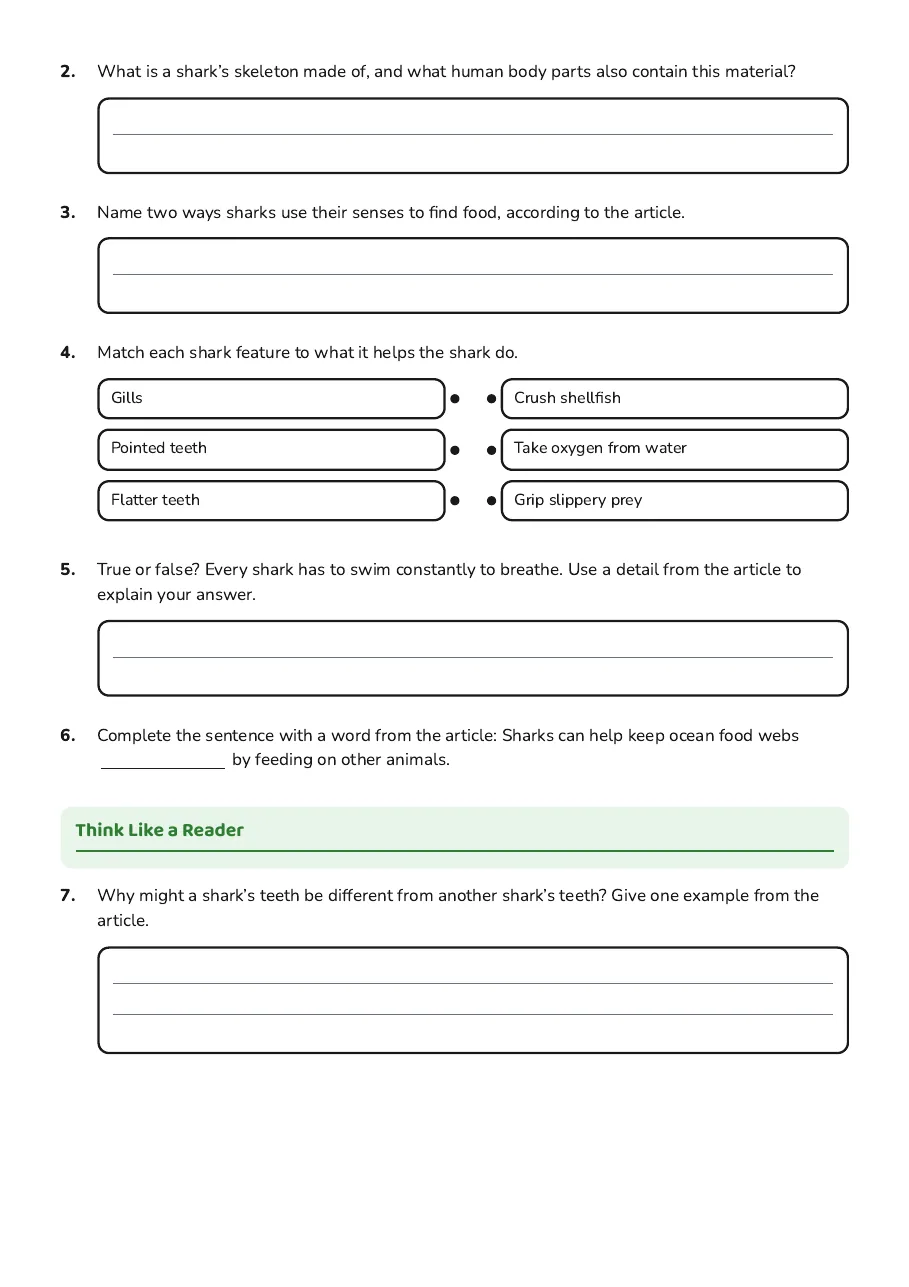
- Gills
- Pointed teeth
- Flatter teeth
- Crush shellfish
- Take oxygen from water
- Grip slippery prey
Think Like a Reader
3 printable pages
Page 1
Page 2
Page 3
About This Worksheet
Free in Kuraplan
Sign up free, grab the PDF, and customize it for your class.
Print-Ready
Formatted for standard paper. Clean layout, easy to read.
AI-Generated
Created with Kuraplan's AI, designed for real classroom use.
For Teachers & Parents
Use in classrooms, for homework, tutoring, or homeschool.
Need a custom version of this worksheet?
Kuraplan's AI generates custom worksheets in seconds — differentiated for every learner, aligned to your curriculum.
Generate Custom Worksheets — Free