Social Justice in New Zealand
A free social sciences worksheet ready for your classroom. Open in Kuraplan to grab the print-ready PDF, customize it for your students, or generate a fresh version in seconds.
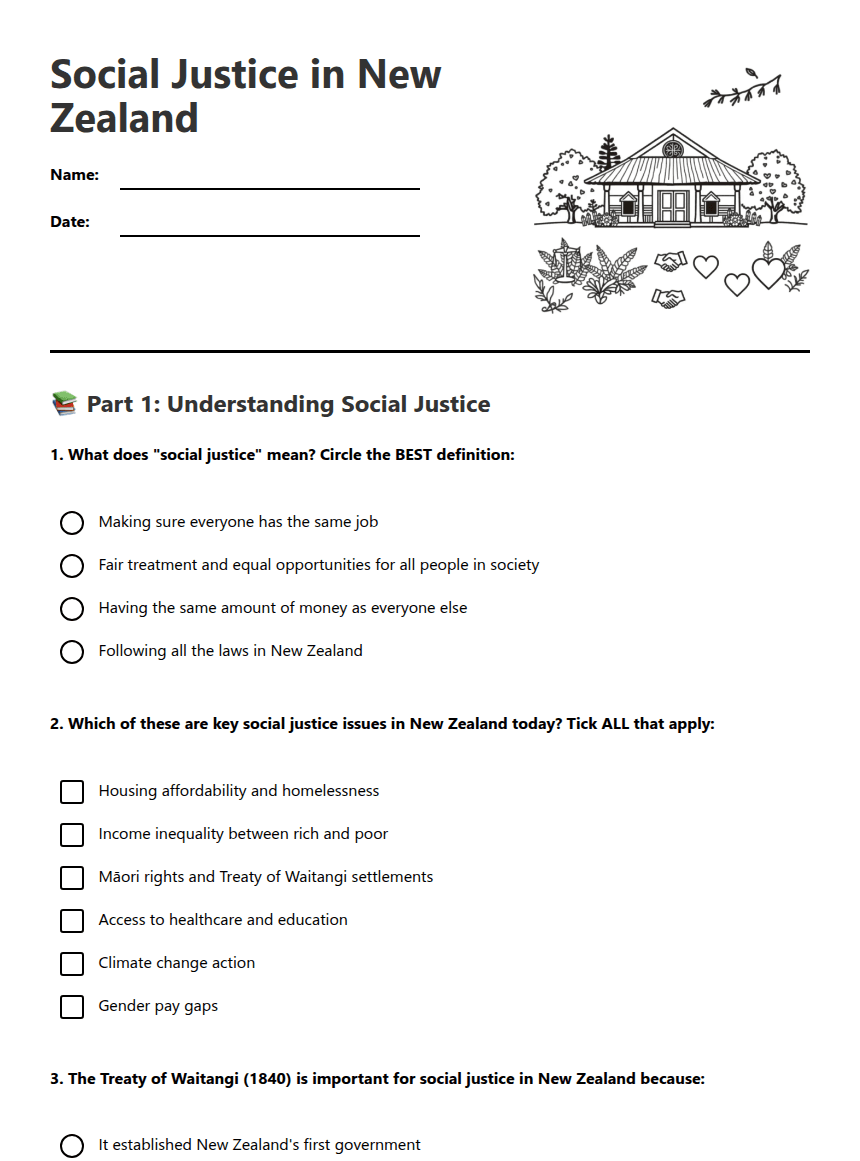
Social Justice in New Zealand

📚 Part 1: Understanding Social Justice
Answer: _______________
✏️ Part 2: Analysis and Examples
Examples: Human Rights Act 1993, Residential Tenancies Act, Minimum Wage Act, Public Health and Disability Act
🎯 Part 3: Extension Activity
Your fact sheet should include: Key dates, important people, what happened, and why it matters for social justice today.
About This Worksheet
Free in Kuraplan
Sign up free, grab the PDF, and customize it for your class.
Print-Ready
Formatted for standard paper. Clean layout, easy to read.
AI-Generated
Created with Kuraplan's AI, designed for real classroom use.
For Teachers & Parents
Use in classrooms, for homework, tutoring, or homeschool.
Need a custom version of this worksheet?
Kuraplan's AI generates custom worksheets in seconds — differentiated for every learner, aligned to your curriculum.
Generate Custom Worksheets — FreeMore Social Sciences Worksheets
Government Systems Comparison Chart
Free
Government Types and Methods
Free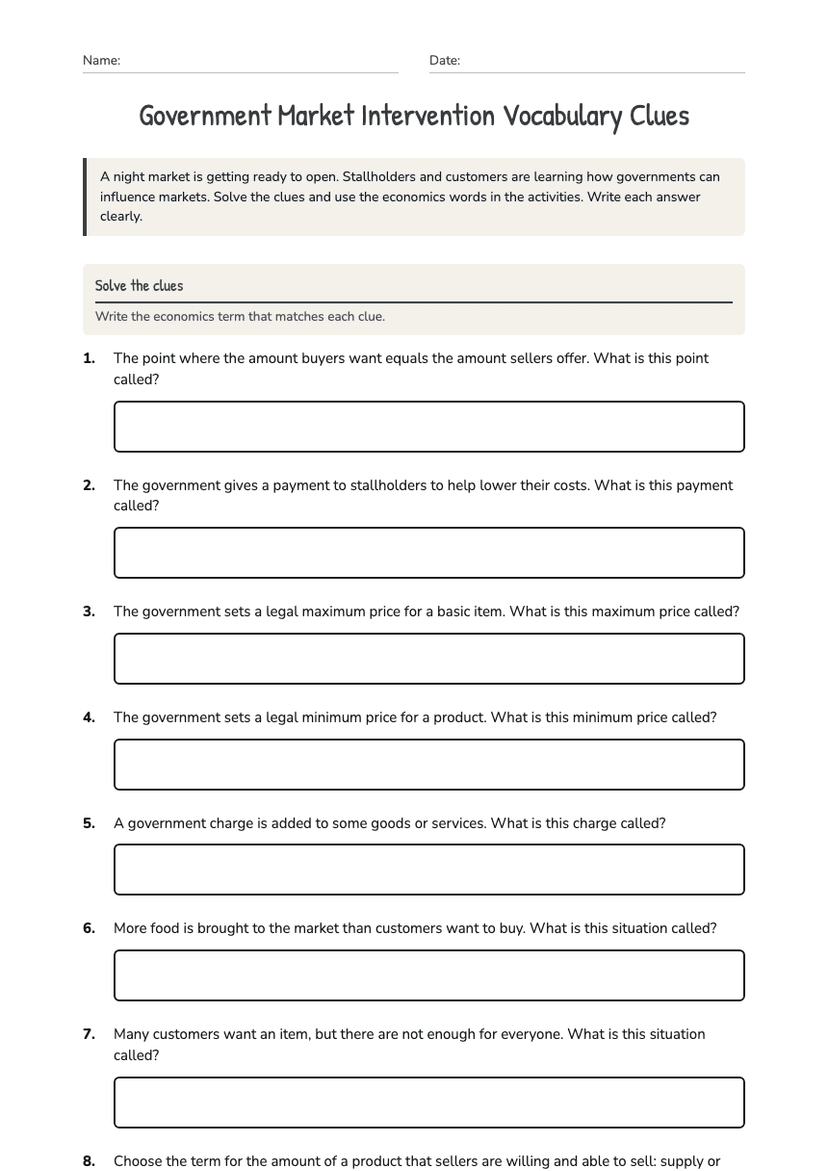
Government Market Intervention Vocabulary Clues
Free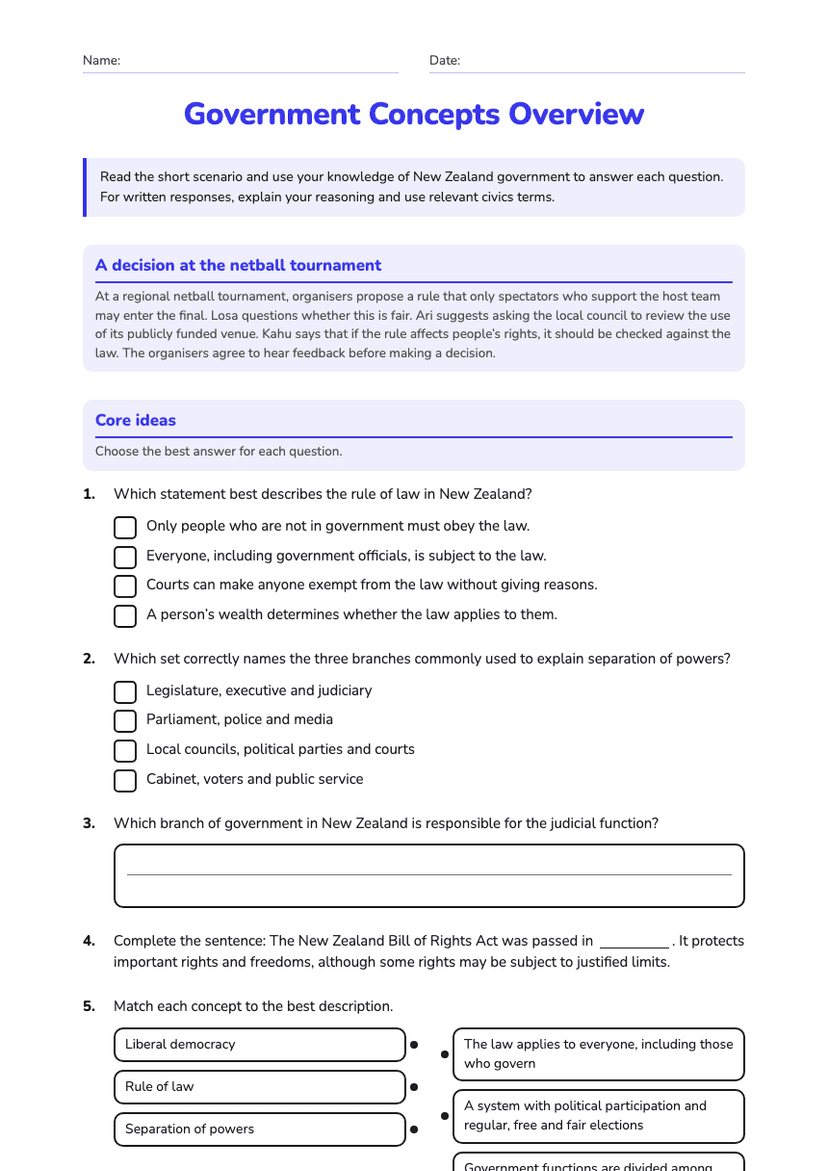
Government Concepts Overview
Free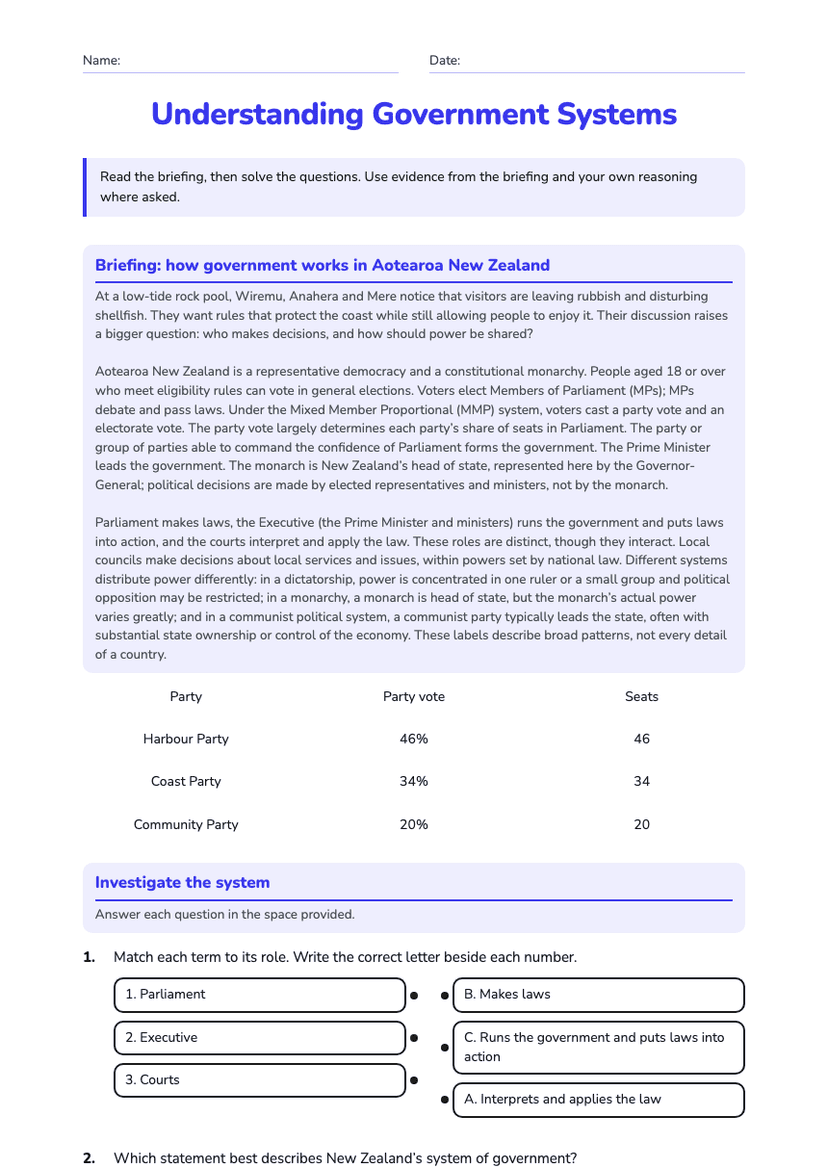
Understanding Government Systems
Free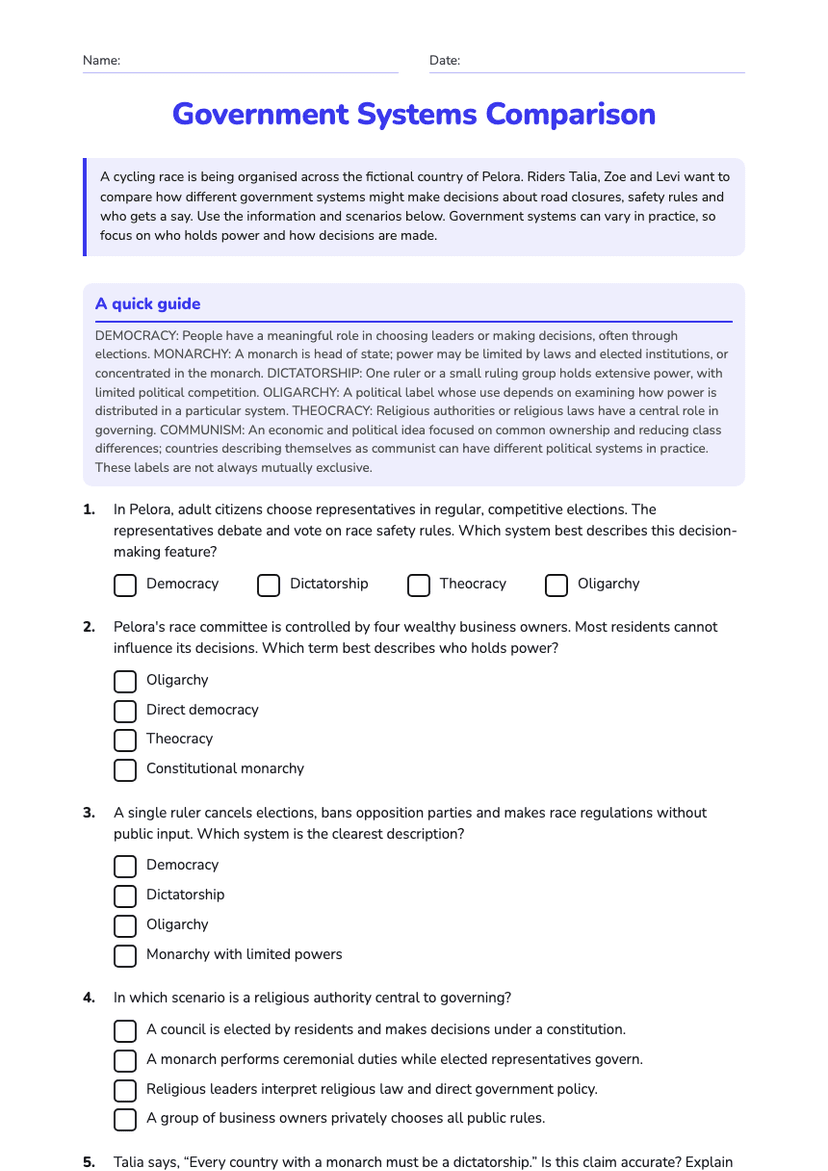
Government Systems Comparison
Free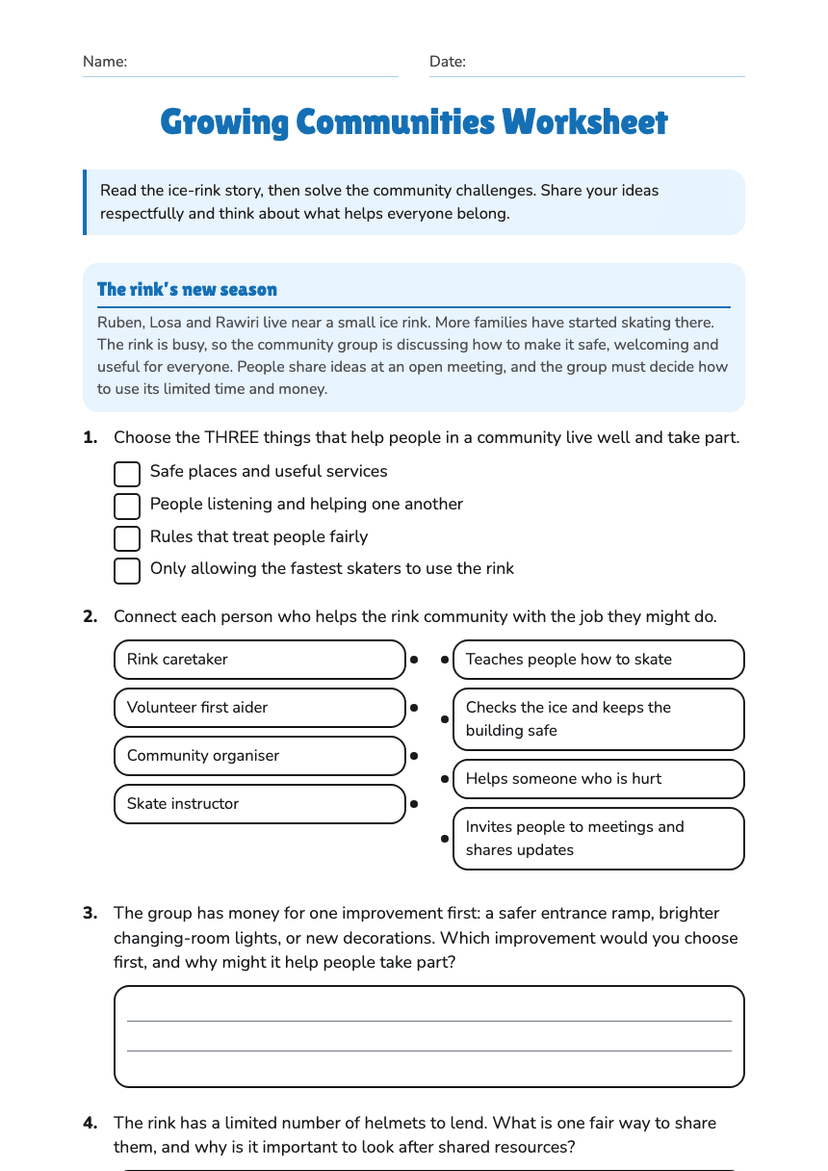
Growing Communities Worksheet
Free