Soil Science Through Drama
A free drama worksheet ready for your classroom. Open in Kuraplan to grab the print-ready PDF, customize it for your students, or generate a fresh version in seconds.
Soil Science Through Drama
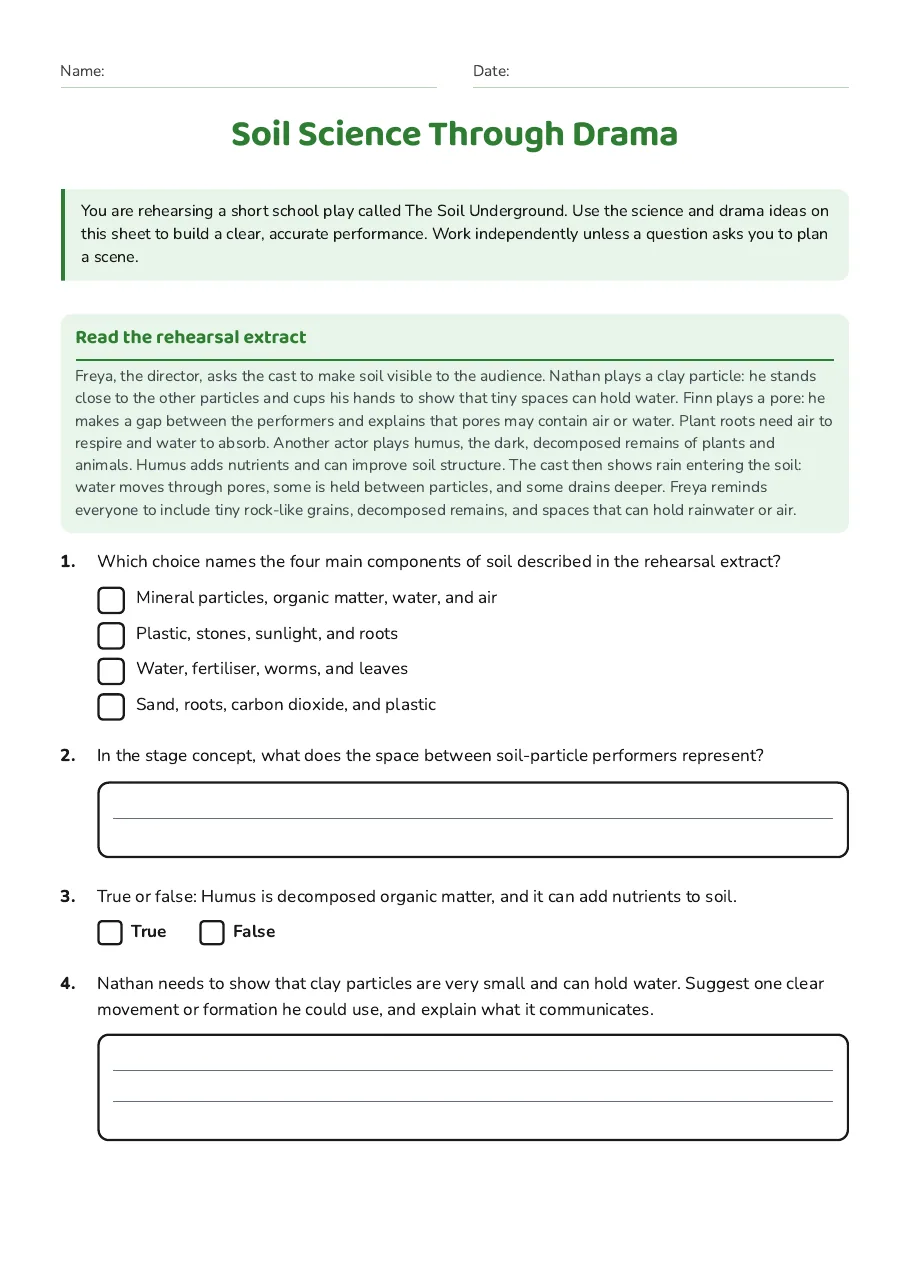
Read the rehearsal extract
Freya, the director, asks the cast to make soil visible to the audience. Nathan plays a clay particle: he stands close to the other particles and cups his hands to show that tiny spaces can hold water. Finn plays a pore: he makes a gap between the performers and explains that pores may contain air or water. Plant roots need air to respire and water to absorb. Another actor plays humus, the dark, decomposed remains of plants and animals. Humus adds nutrients and can improve soil structure. The cast then shows rain entering the soil: water moves through pores, some is held between particles, and some drains deeper. Freya reminds everyone to include tiny rock-like grains, decomposed remains, and spaces that can hold rainwater or air.
- Mineral particles, organic matter, water, and air
- Plastic, stones, sunlight, and roots
- Water, fertiliser, worms, and leaves
- Sand, roots, carbon dioxide, and plastic
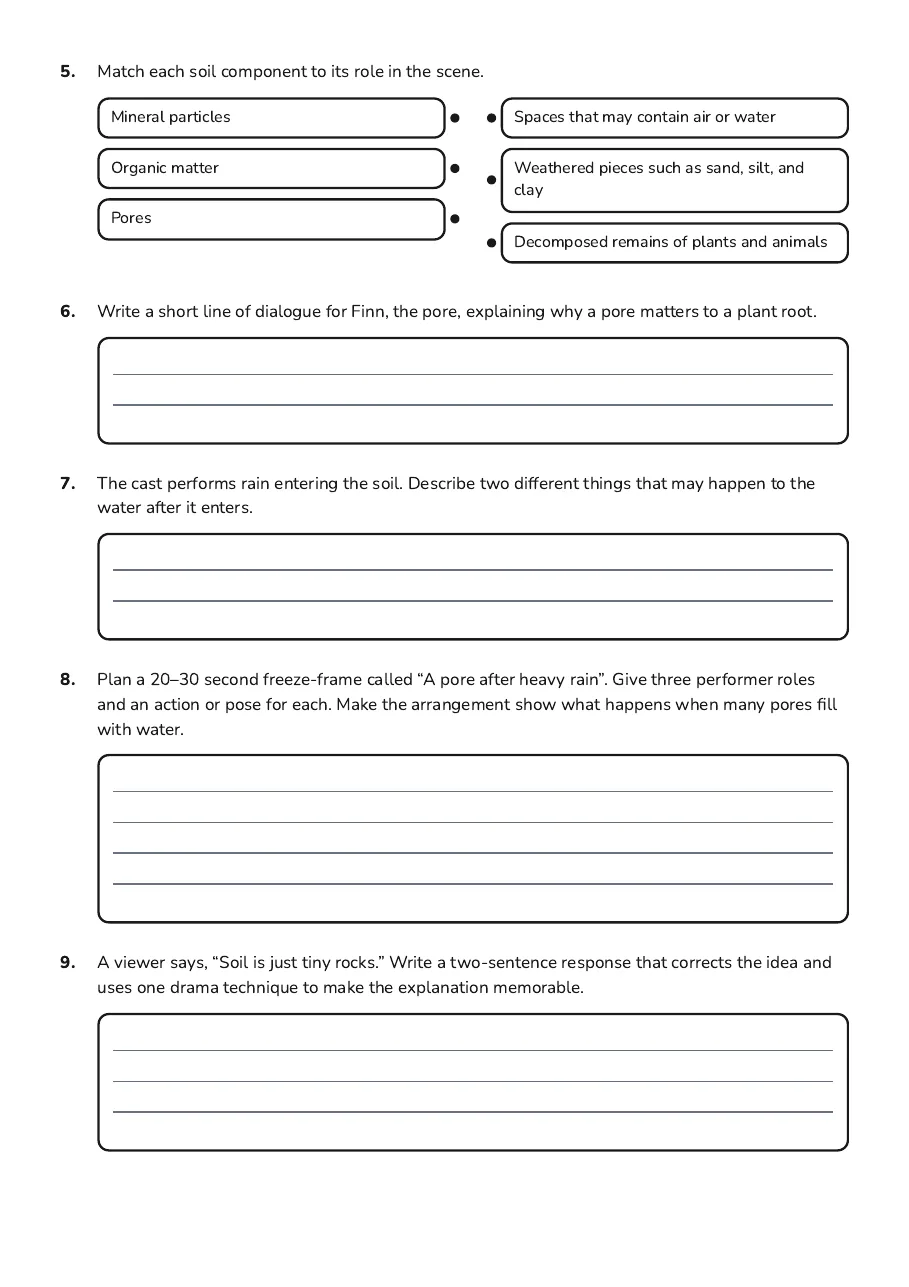
- Mineral particles
- Organic matter
- Pores
- Spaces that may contain air or water
- Weathered pieces such as sand, silt, and clay
- Decomposed remains of plants and animals
2 printable pages
Page 1
Page 2
About This Worksheet
Free in Kuraplan
Sign up free, grab the PDF, and customize it for your class.
Print-Ready
Formatted for standard paper. Clean layout, easy to read.
AI-Generated
Created with Kuraplan's AI, designed for real classroom use.
For Teachers & Parents
Use in classrooms, for homework, tutoring, or homeschool.
Need a custom version of this worksheet?
Kuraplan's AI generates custom worksheets in seconds — differentiated for every learner, aligned to your curriculum.
Generate Custom Worksheets — FreeMore Drama Worksheets
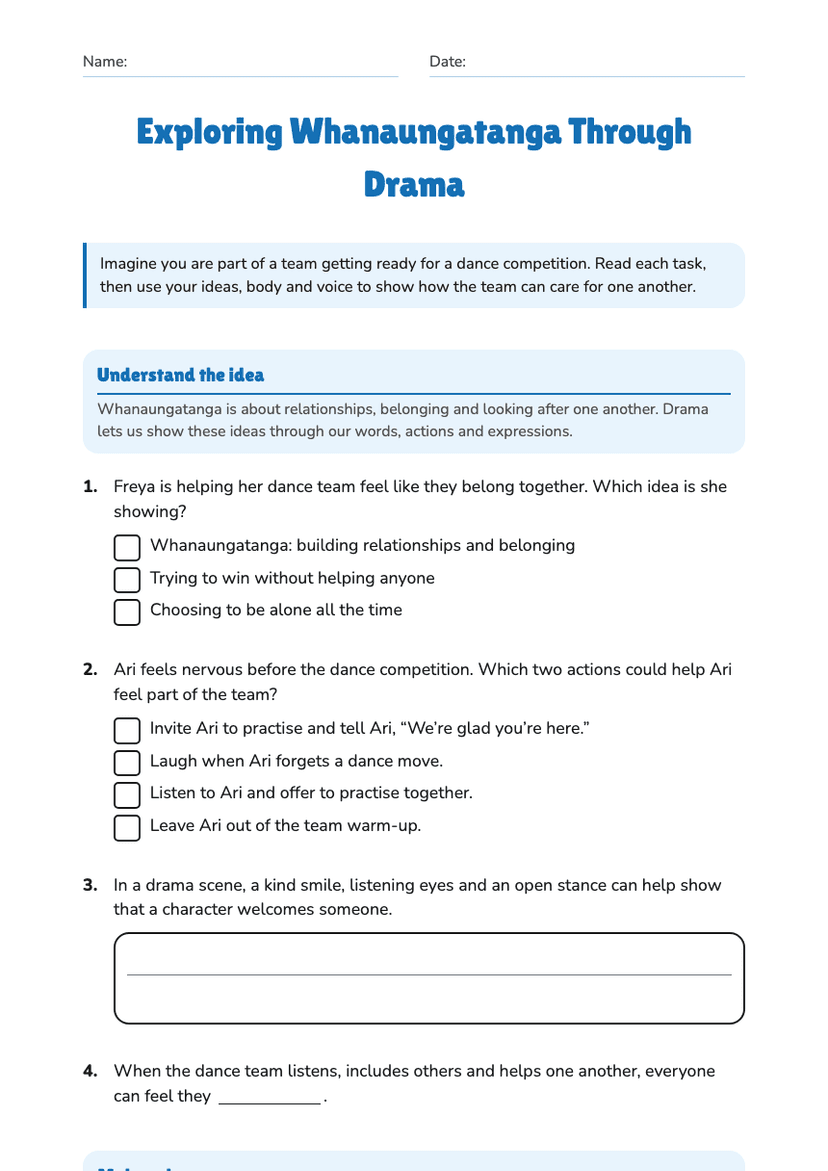
Exploring Whanaungatanga Through Drama
Free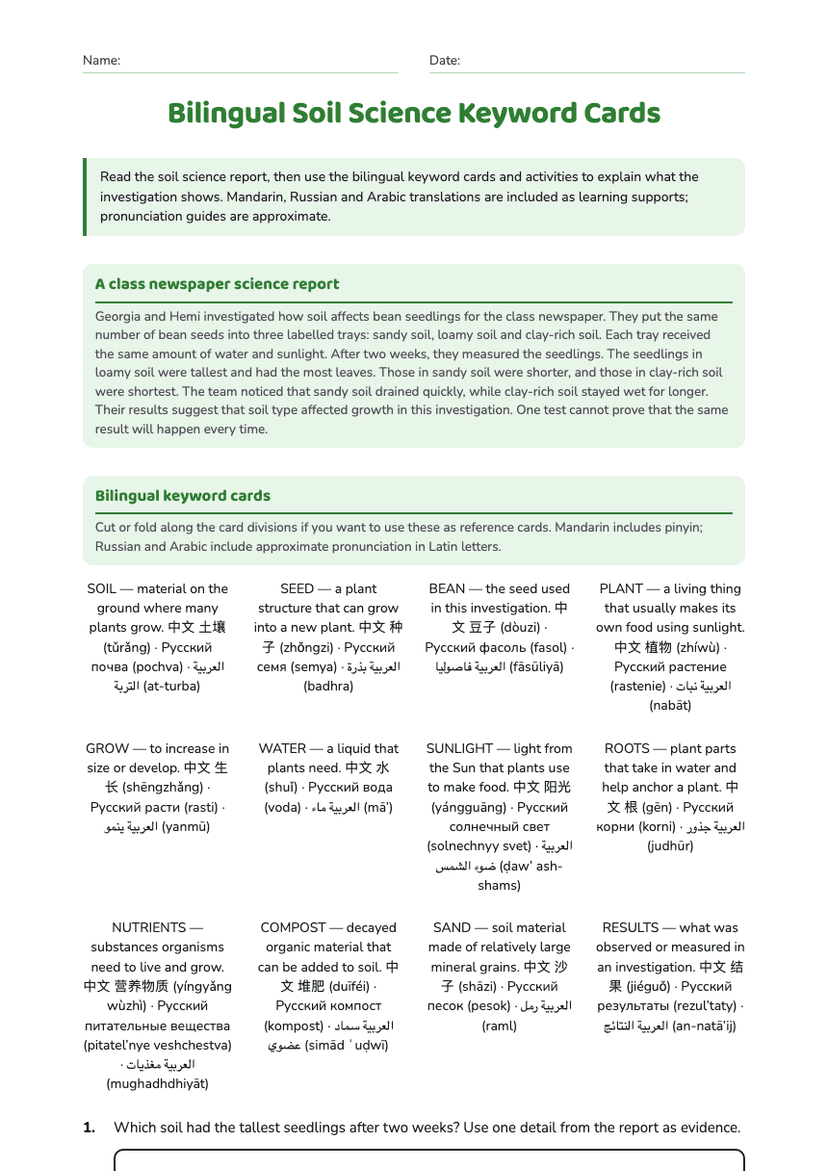
Bilingual Soil Science Keyword Cards
Free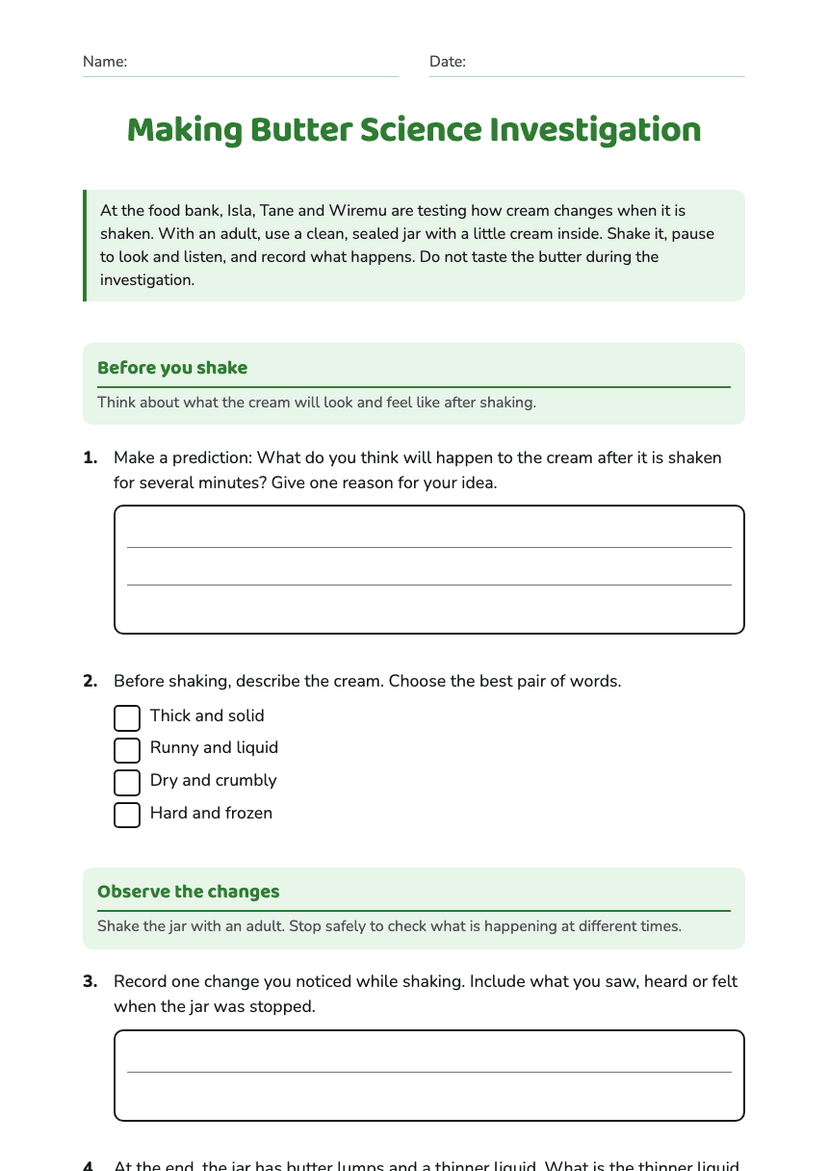
Making Butter Science Investigation
Free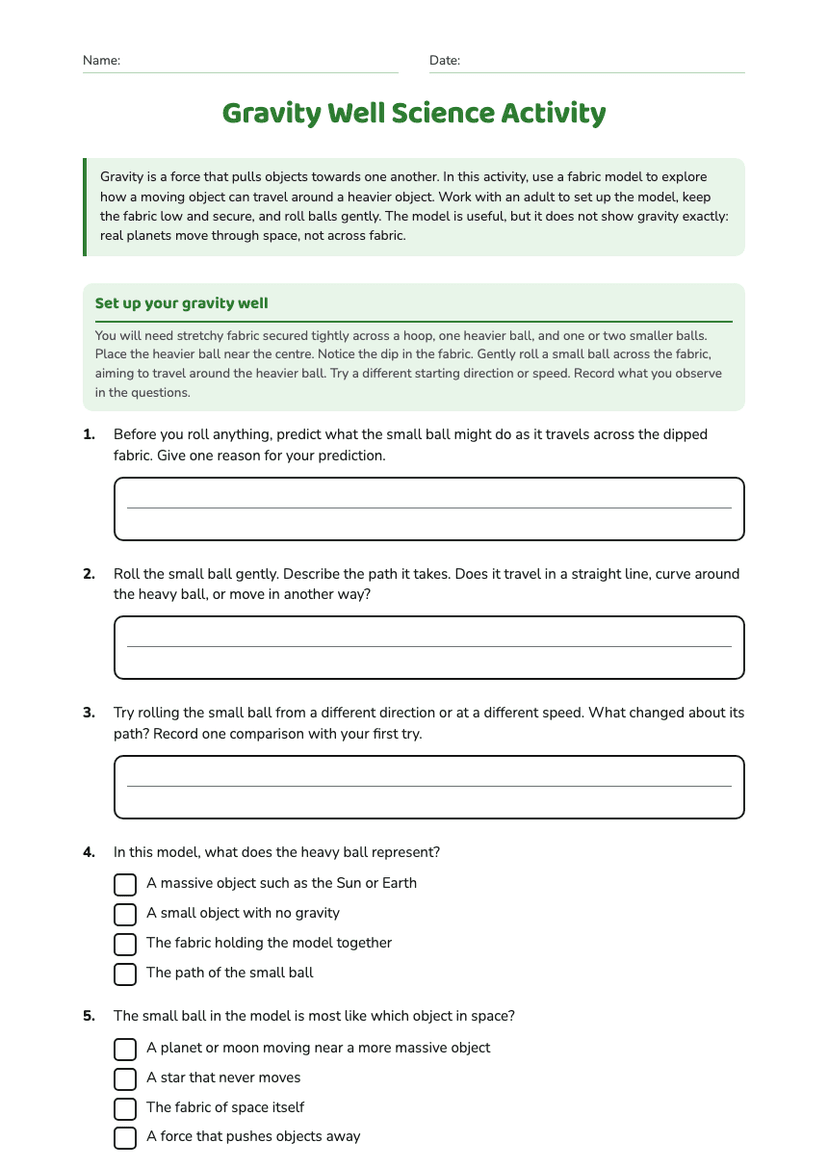
Gravity Well Science Activity
Free
Division Through Equal Groups
Free
Division Through Equal Groups
Free
Understanding Emotions Through Film
Free