Surfing Reading Comprehension Texts
A free english worksheet ready for your classroom. Open in Kuraplan to grab the print-ready PDF, customize it for your students, or generate a fresh version in seconds.

Surfing Reading Comprehension Texts
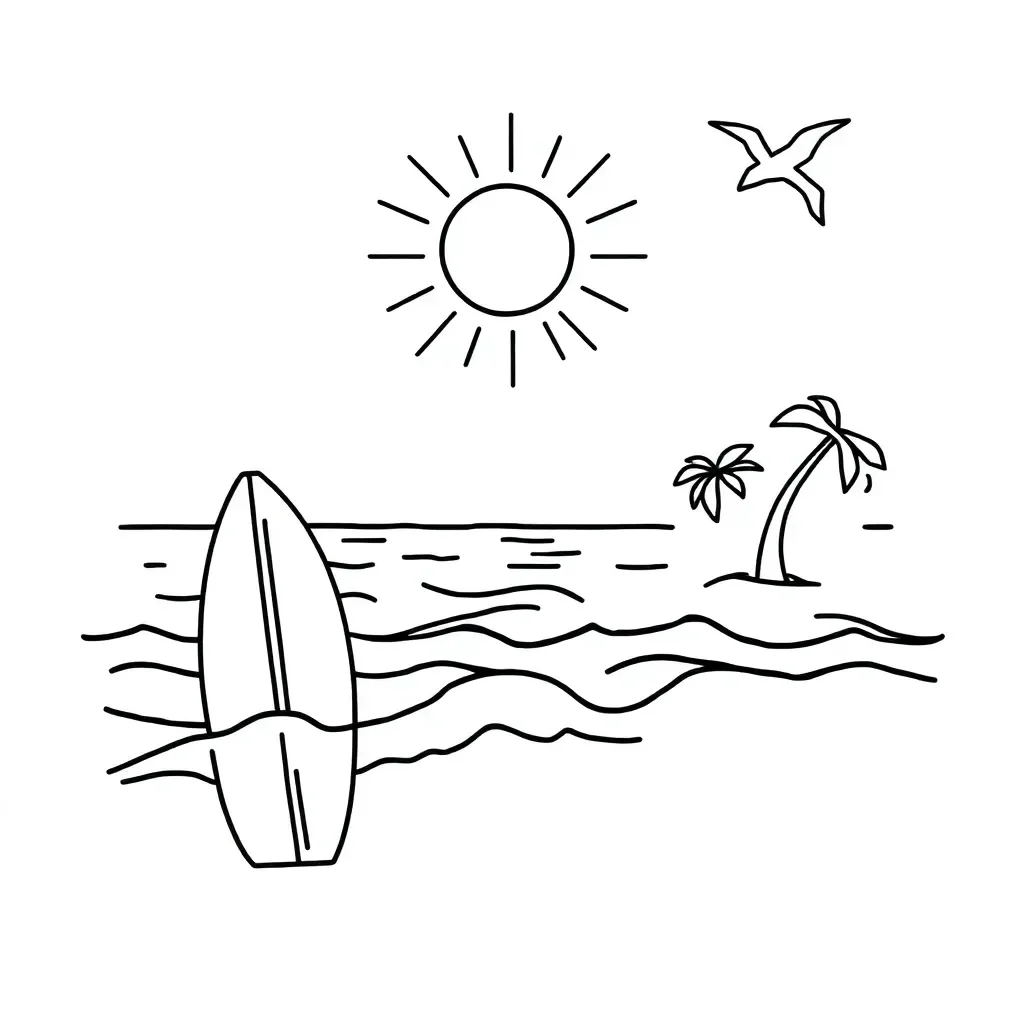
🏄♂️ Text 1: Learning to Surf (Ages 9-10)
Read the text below carefully:
Jake was eight years old when he first saw surfers at Piha Beach. The waves looked huge and scary, but the surfers made it look easy. They glided across the water like dolphins. Jake's dad promised to teach him when he turned nine.
On Jake's ninth birthday, they went to Muriwai Beach with a soft foam board. The waves were much smaller here - perfect for beginners. Jake's dad showed him how to lie on the board and paddle with his arms. "Keep your head up and look where you want to go," his dad said.
Jake's first attempts were wobbly. He fell off the board many times, but the warm water felt good. After two hours of practice, something clicked. Jake caught a small wave and rode it all the way to the beach. He felt like he was flying! From that day on, Jake was hooked on surfing. Every weekend, he begged his parents to take him to the beach.
Questions:
🌊 Text 2: Surf Rescue Heroes (Ages 10-12)
Read the text below carefully:
The red and yellow flags fluttered in the strong wind at Mount Maunganui Beach. Surf lifeguards Sam and Maria scanned the choppy waters through their binoculars. The weather forecast had warned of dangerous rip currents, but many tourists didn't understand the risks.
Suddenly, Sam spotted a family of four struggling beyond the flags. The father was waving frantically while trying to keep his young children afloat. "Code red rescue!" Sam shouted into his radio. Within seconds, both lifeguards sprinted towards their rescue boards.
The powerful rip current had dragged the family 200 metres from shore. Sam reached them first, pulling the exhausted children onto his board. Maria arrived moments later to help the parents. "Don't fight the current," she called out. "Let it carry us sideways, then we'll paddle back at an angle."
Twenty minutes later, the family was safely on the beach, wrapped in warm towels. The father thanked the lifeguards repeatedly. "We should have stayed between the flags," he admitted. Sam nodded, "The ocean demands respect, but it's also incredibly beautiful when you understand it."
Questions:
🏆 Text 3: Championship Dreams (Ages 12-14)
Read the text below carefully:
Fifteen-year-old Aroha Williams crouched low on her board, reading the ocean like an ancient text. The Raglan Surf Championships had attracted competitors from across New Zealand, but Aroha felt the weight of representing her iwi and the local surfing community. Her grandmother's carved jade pendant hung around her neck - a reminder of her ancestors' deep connection to the moana.
The final heat began with challenging 2.5-metre waves. Aroha's strategy was patience; she'd learned from her kaumātua that the ocean rewards those who listen. While other surfers frantically chased every wave, Aroha waited. Her keen eye spotted the perfect set approaching - three powerful waves with clean faces.
She paddled hard, feeling the wave's energy lift her board. As she dropped down the face, time seemed suspended. Aroha carved graceful turns, her movements flowing like a traditional haka. The crowd erupted as she executed a perfect cutback, spraying water high into the air.
When the scores were announced, Aroha had won by just 0.3 points. But more importantly, she'd surfed with mana - honouring both her heritage and her passion. "Surfing isn't just about competition," she told reporters. "It's about respecting the ocean and understanding your place within it."
Questions:
About This Worksheet
Free in Kuraplan
Sign up free, grab the PDF, and customize it for your class.
Print-Ready
Formatted for standard paper. Clean layout, easy to read.
AI-Generated
Created with Kuraplan's AI, designed for real classroom use.
For Teachers & Parents
Use in classrooms, for homework, tutoring, or homeschool.
Need a custom version of this worksheet?
Kuraplan's AI generates custom worksheets in seconds — differentiated for every learner, aligned to your curriculum.
Generate Custom Worksheets — FreeMore English Worksheets
Camp D Tent Reading Comprehension
Free
Discover Tonga Reading Text
Free
Possum Text Evidence Worksheet
Free
Possum Fluency Practice
Free
Author’s Purpose P.I.E.
Free
Sentence Meaning Detectives
Free
Māui and the Birds: Reading Comprehension
Free