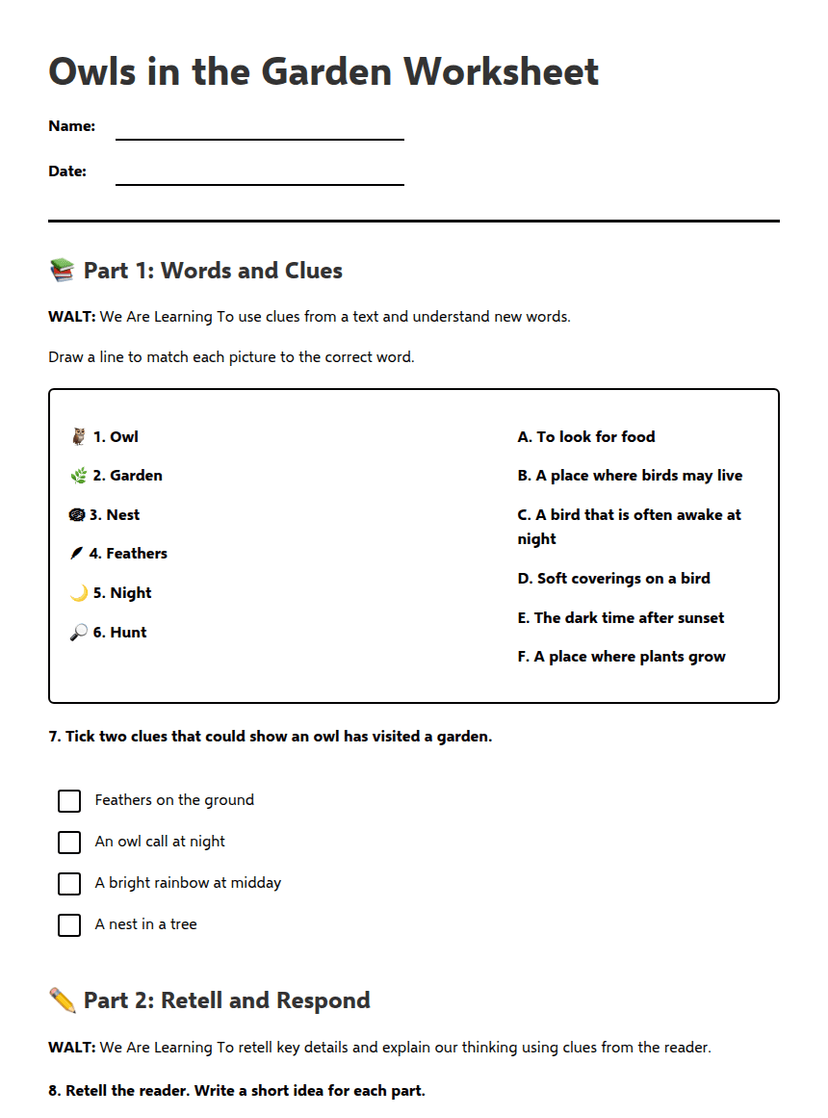
Taurikura Reading Comprehension
A free english worksheet ready for your classroom. Open in Kuraplan to grab the print-ready PDF, customize it for your students, or generate a fresh version in seconds.
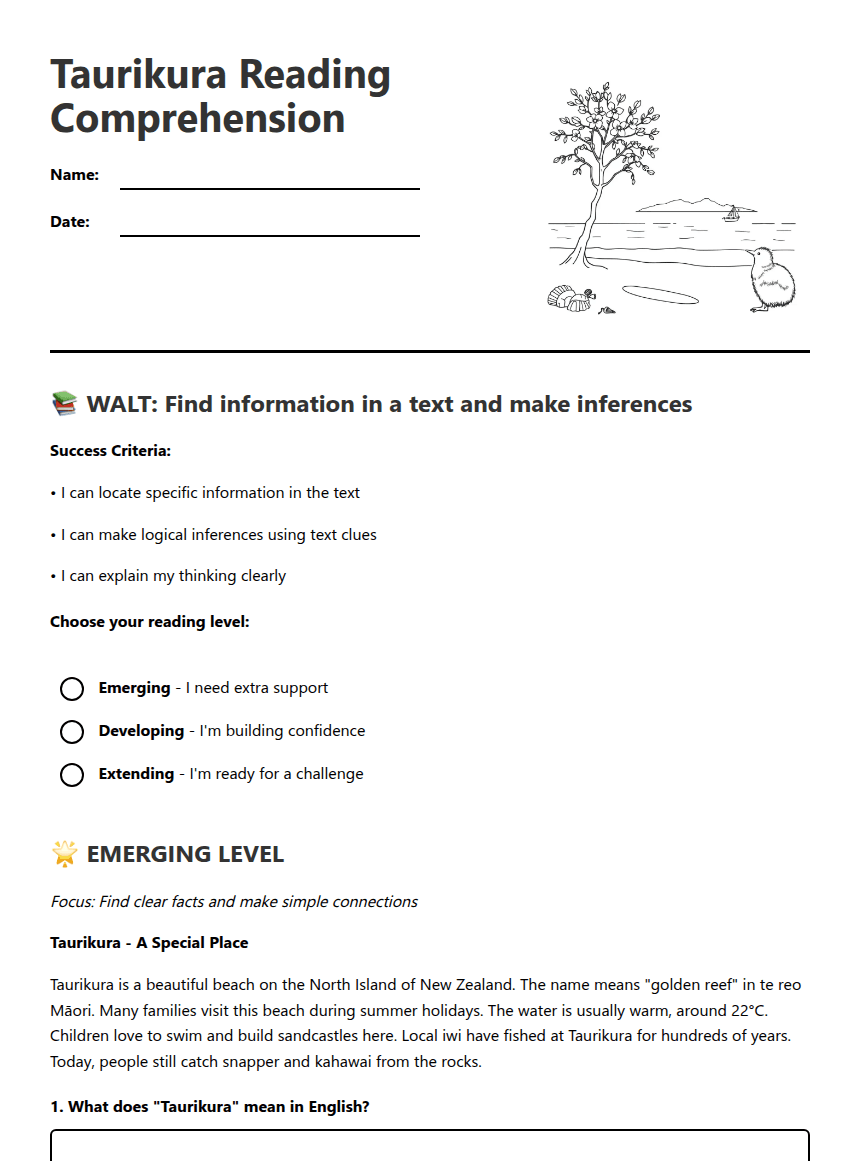
Taurikura Reading Comprehension
📚 WALT: Find information in a text and make inferences
Success Criteria:
• I can locate specific information in the text
• I can make logical inferences using text clues
• I can explain my thinking clearly
🌟 EMERGING LEVEL
Focus: Find clear facts and make simple connections
Taurikura - A Special Place
Taurikura is a beautiful beach on the North Island of New Zealand. The name means "golden reef" in te reo Māori. Many families visit this beach during summer holidays. The water is usually warm, around 22°C. Children love to swim and build sandcastles here. Local iwi have fished at Taurikura for hundreds of years. Today, people still catch snapper and kahawai from the rocks.
⭐ DEVELOPING LEVEL
Focus: Connect ideas and make thoughtful inferences
Taurikura - Past and Present
Taurikura, meaning "golden reef" in te reo Māori, has been treasured for generations. This North Island beach stretches 3 kilometres along a sheltered bay. Archaeological evidence shows Māori settlements dating back 800 years. The golden sand comes from ancient volcanic activity, creating the reef that gives Taurikura its name. During summer, temperatures reach 25°C, drawing thousands of visitors. However, increased tourism has created challenges. Local kaumātua worry about protecting traditional fishing grounds while council members debate parking restrictions and waste management.
🚀 EXTENDING LEVEL
Focus: Analyse complex ideas and make sophisticated inferences
Taurikura - Balancing Heritage and Progress
The etymology of Taurikura—"tau" (reef) and "rikura" (golden)—reflects both its geological formation and cultural significance. This 3-kilometre stretch of coastline represents a microcosm of New Zealand's environmental and cultural tensions. While archaeological surveys reveal continuous Māori occupation spanning eight centuries, contemporary pressures threaten this delicate ecosystem. Summer visitor numbers have increased 300% since 2010, generating $2.8 million annually for the local economy. Yet this prosperity comes at a cost: erosion rates have doubled, native bird populations have declined 40%, and traditional mahinga kai practices face disruption. The recent establishment of a rāhui by local iwi signals growing concern about sustainable stewardship versus economic imperatives.
🎯 Extension Activities
• Research another New Zealand location with similar cultural-environmental tensions
• Create a proposal balancing tourism and conservation at Taurikura
• Interview a local kaumātua about traditional place names in your area
• Use text-to-speech software for reading passages
• Highlight key words in different colours
• Work with a reading buddy
• Use graphic organisers to plan answers
About This Worksheet
Free in Kuraplan
Sign up free, grab the PDF, and customize it for your class.
Print-Ready
Formatted for standard paper. Clean layout, easy to read.
AI-Generated
Created with Kuraplan's AI, designed for real classroom use.
For Teachers & Parents
Use in classrooms, for homework, tutoring, or homeschool.
Need a custom version of this worksheet?
Kuraplan's AI generates custom worksheets in seconds — differentiated for every learner, aligned to your curriculum.
Generate Custom Worksheets — FreeMore English Worksheets
Camp D Tent Reading Comprehension
Free
Discover Tonga Reading Text
Free
Possum Text Evidence Worksheet
Free
Possum Fluency Practice
Free
Author’s Purpose P.I.E.
Free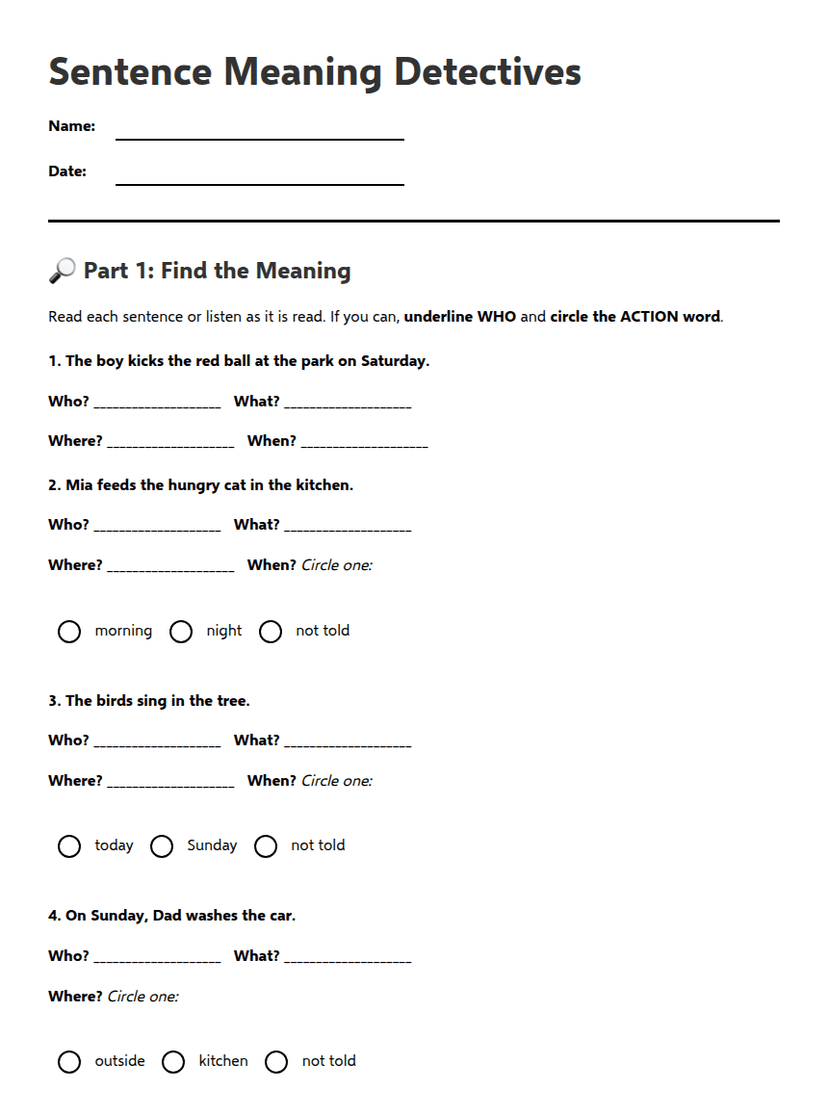
Sentence Meaning Detectives
Free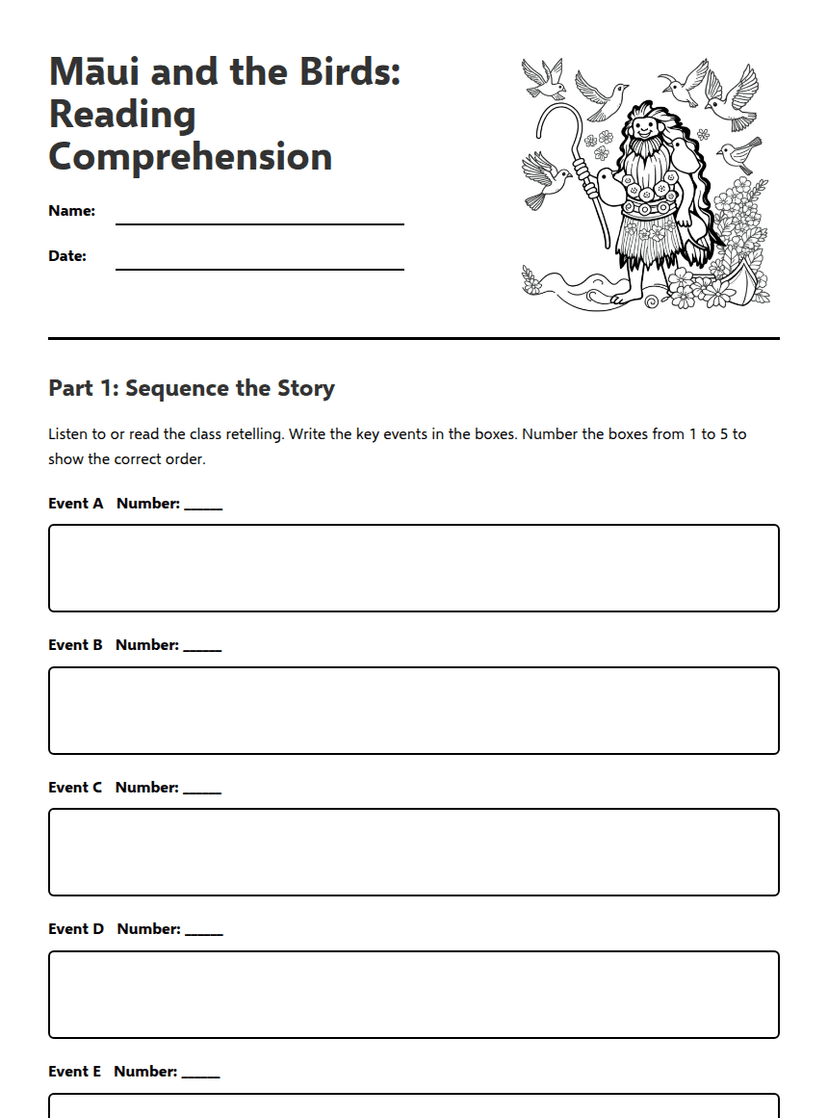
Māui and the Birds: Reading Comprehension
Free