Te Taiao Non-Fiction Writing
A free english worksheet ready for your classroom. Open in Kuraplan to grab the print-ready PDF, customize it for your students, or generate a fresh version in seconds.
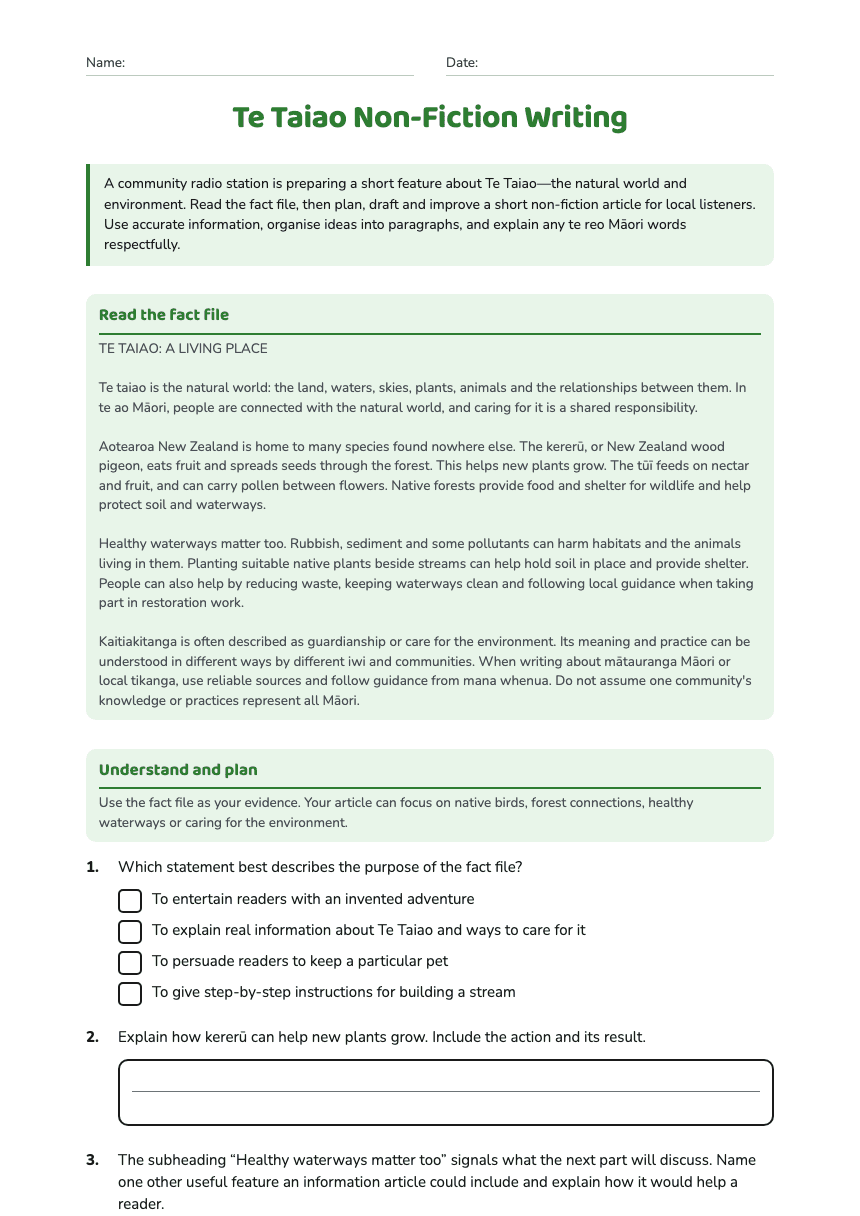
Te Taiao Non-Fiction Writing
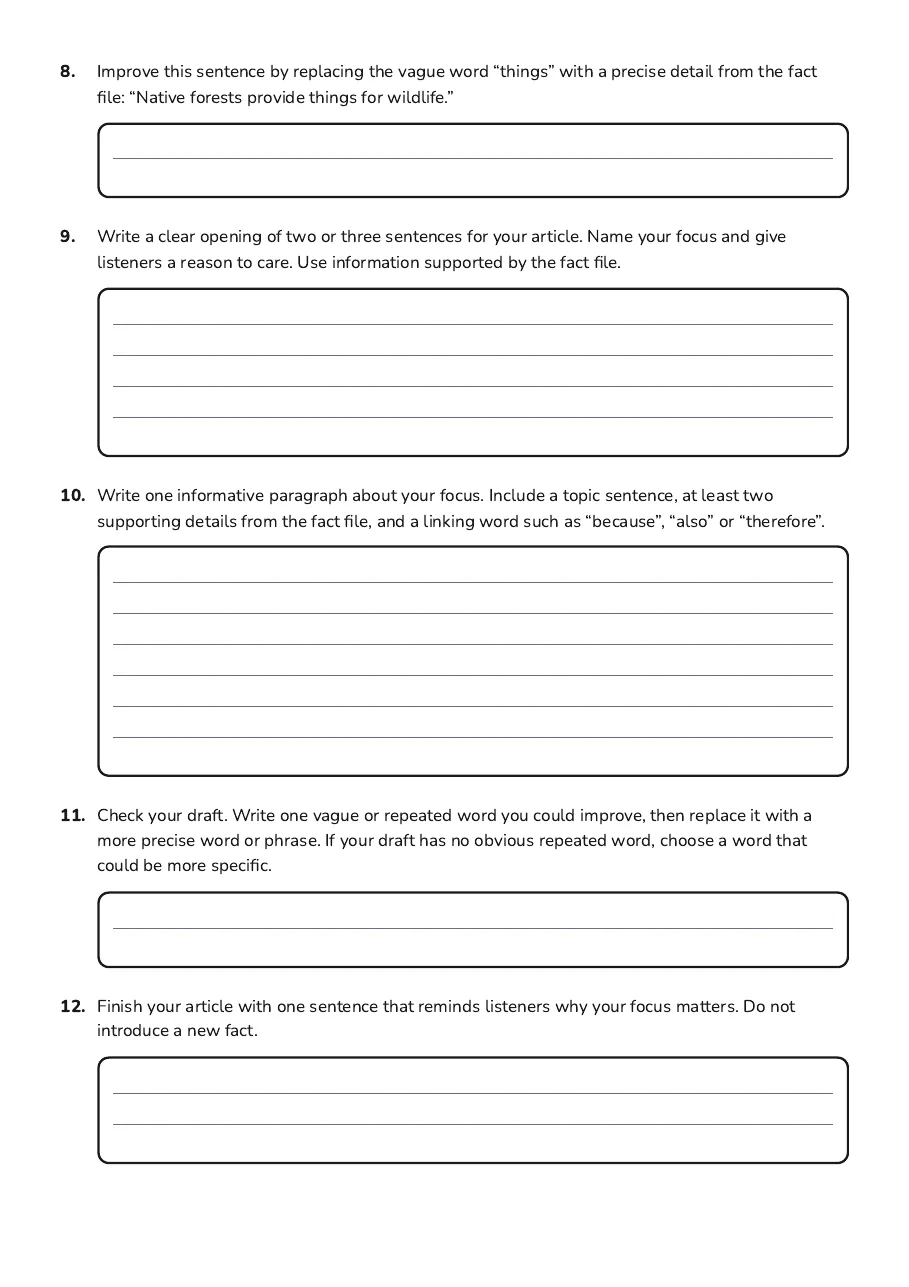
Read the fact file
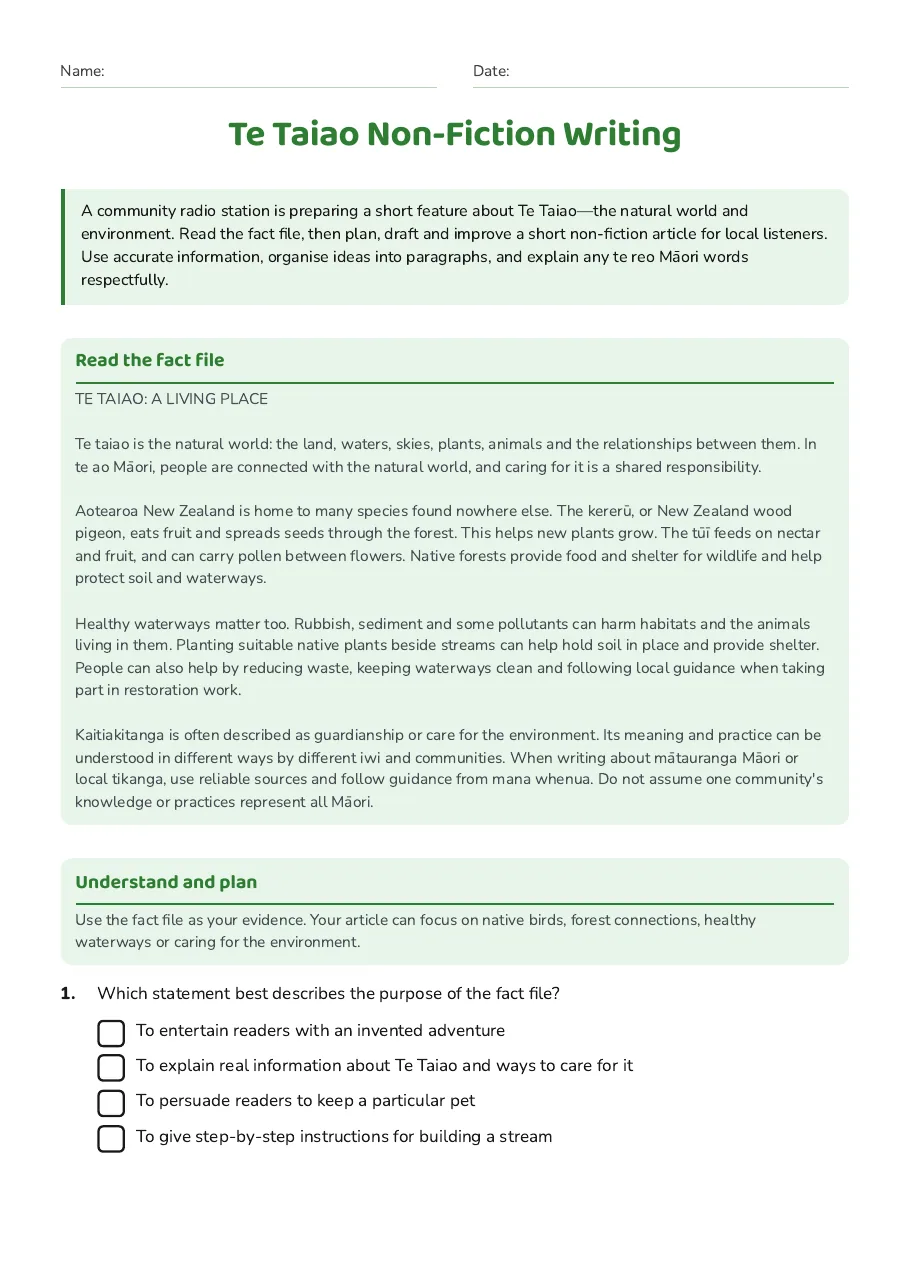
TE TAIAO: A LIVING PLACE Te taiao is the natural world: the land, waters, skies, plants, animals and the relationships between them. In te ao Māori, people are connected with the natural world, and caring for it is a shared responsibility. Aotearoa New Zealand is home to many species found nowhere else. The kererū, or New Zealand wood pigeon, eats fruit and spreads seeds through the forest. This helps new plants grow. The tūī feeds on nectar and fruit, and can carry pollen between flowers. Native forests provide food and shelter for wildlife and help protect soil and waterways. Healthy waterways matter too. Rubbish, sediment and some pollutants can harm habitats and the animals living in them. Planting suitable native plants beside streams can help hold soil in place and provide shelter. People can also help by reducing waste, keeping waterways clean and following local guidance when taking part in restoration work. Kaitiakitanga is often described as guardianship or care for the environment. Its meaning and practice can be understood in different ways by different iwi and communities. When writing about mātauranga Māori or local tikanga, use reliable sources and follow guidance from mana whenua. Do not assume one community's knowledge or practices represent all Māori.
Understand and plan
Use the fact file as your evidence. Your article can focus on native birds, forest connections, healthy waterways or caring for the environment.
- To entertain readers with an invented adventure
- To explain real information about Te Taiao and ways to care for it
- To persuade readers to keep a particular pet
- To give step-by-step instructions for building a stream
3 printable pages
Page 1
Page 2
Page 3
About This Worksheet
Free in Kuraplan
Sign up free, grab the PDF, and customize it for your class.
Print-Ready
Formatted for standard paper. Clean layout, easy to read.
AI-Generated
Created with Kuraplan's AI, designed for real classroom use.
For Teachers & Parents
Use in classrooms, for homework, tutoring, or homeschool.
Need a custom version of this worksheet?
Kuraplan's AI generates custom worksheets in seconds — differentiated for every learner, aligned to your curriculum.
Generate Custom Worksheets — FreeMore English Worksheets
Paragraphing with Adverbial Starters
Free
SCAR Narrative Writing Guide
Free
Year 12 Writing Scaffolds
Free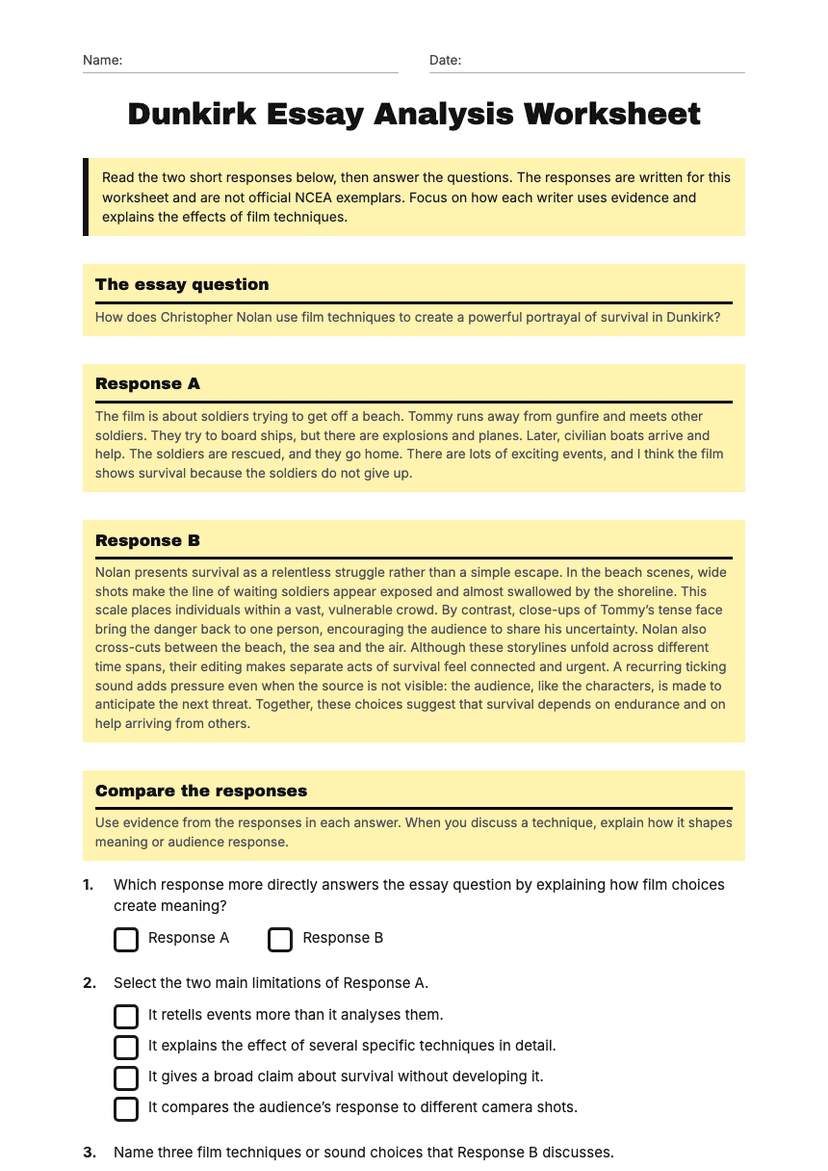
Dunkirk Essay Analysis Worksheet
Free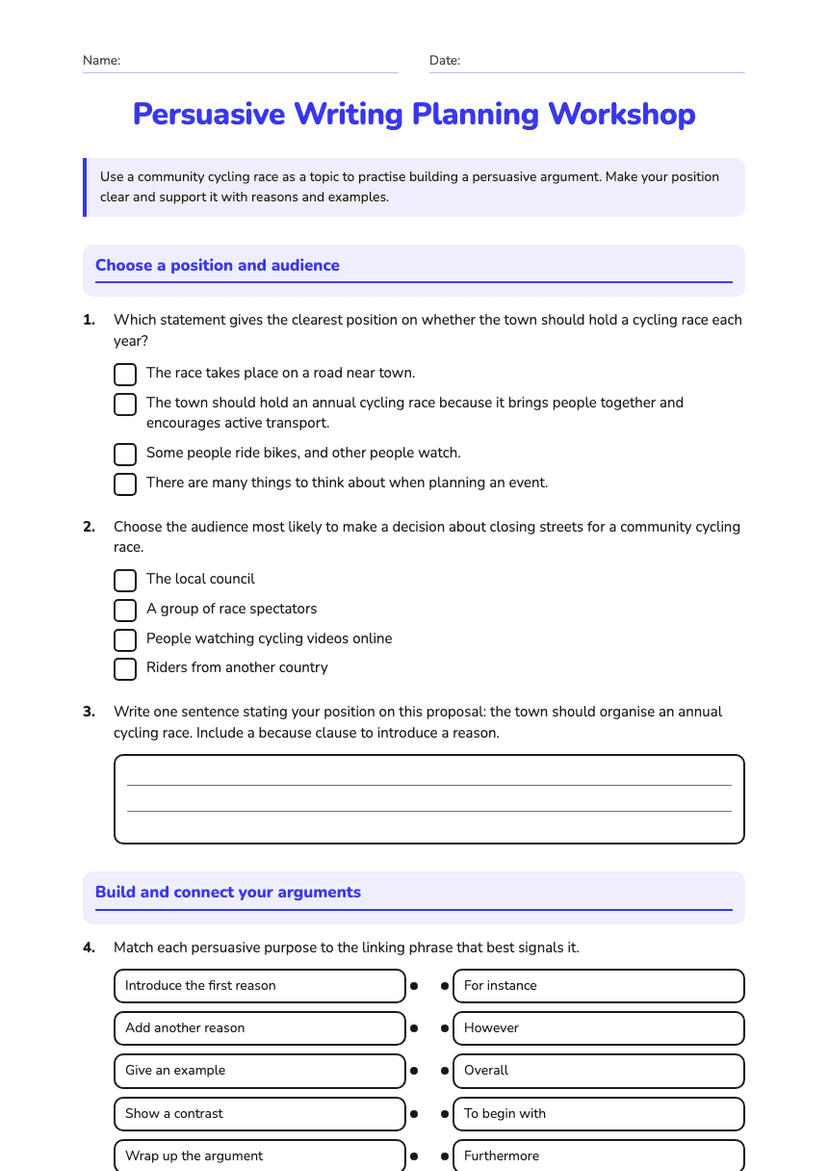
Persuasive Writing Planning Workshop
Free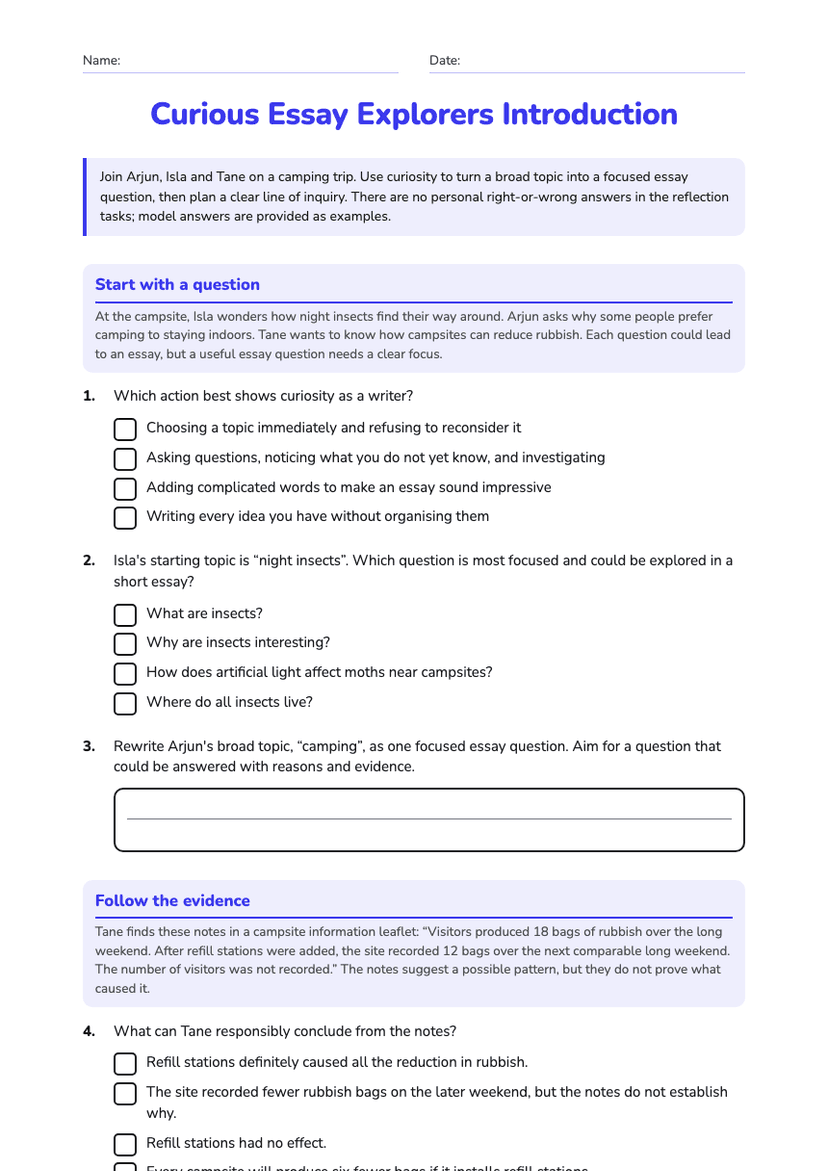
Curious Essay Explorers Introduction
Free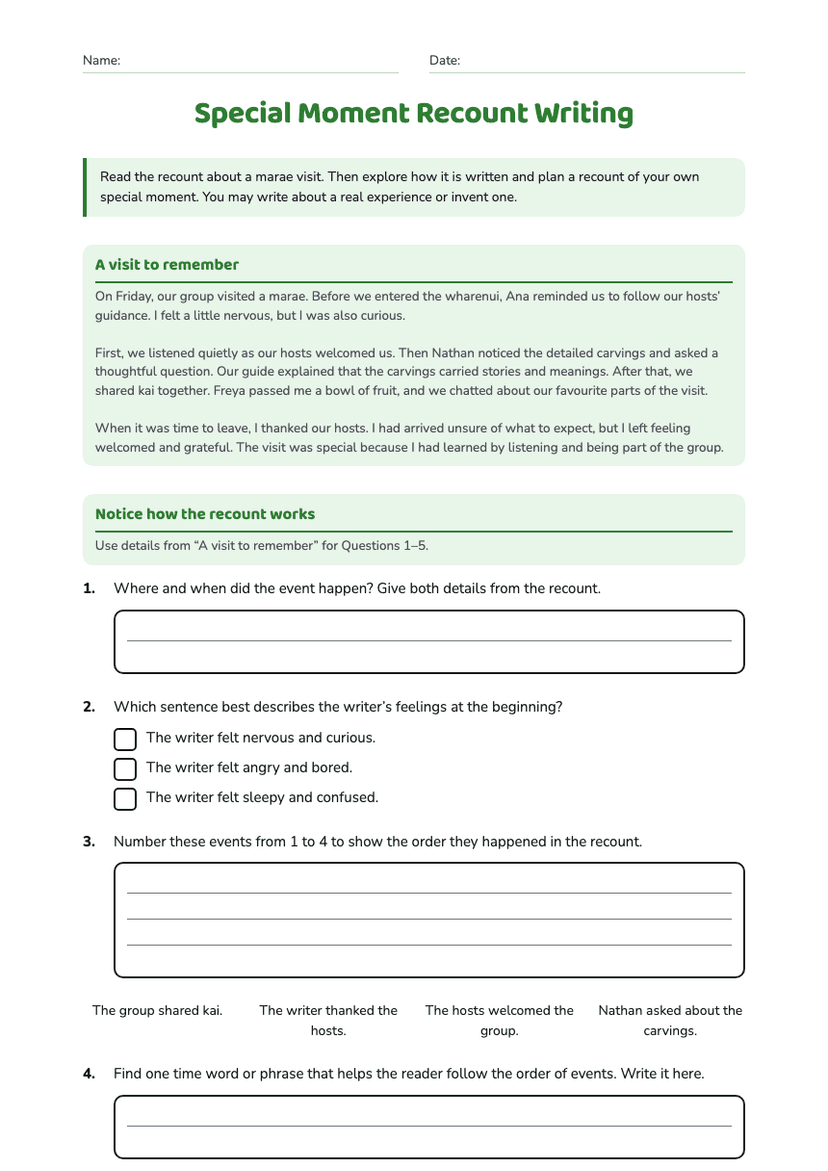
Special Moment Recount Writing
Free