The Hakarimata Forest Restoration Worksheet
A free english worksheet ready for your classroom. Open in Kuraplan to grab the print-ready PDF, customize it for your students, or generate a fresh version in seconds.
The Hakarimata Forest Restoration Worksheet
📚 Reading: The Hakarimata Ranges: Restoring a Living Forest
WALT: We Are Learning To find and explain important information in a non-fiction text.
Success criteria: I can answer in full statements, support my ideas with details from the text, and explain cause and effect.
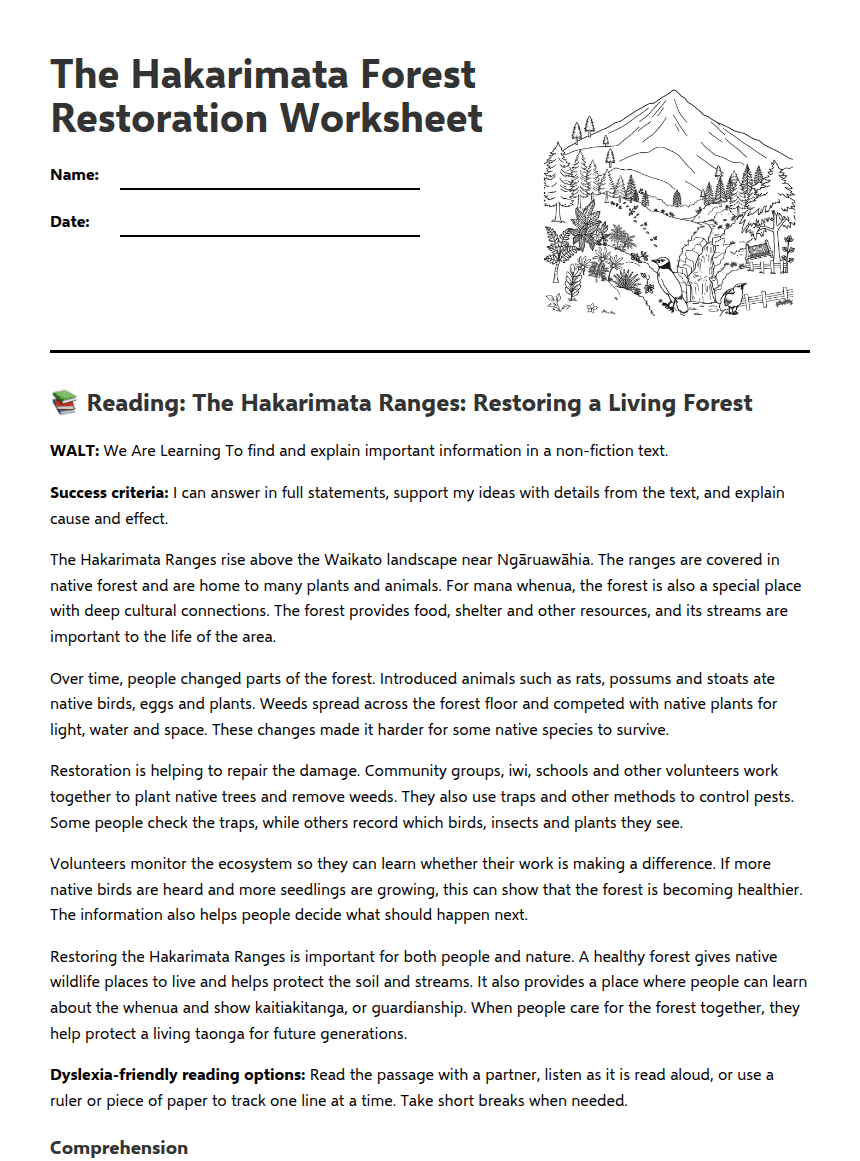
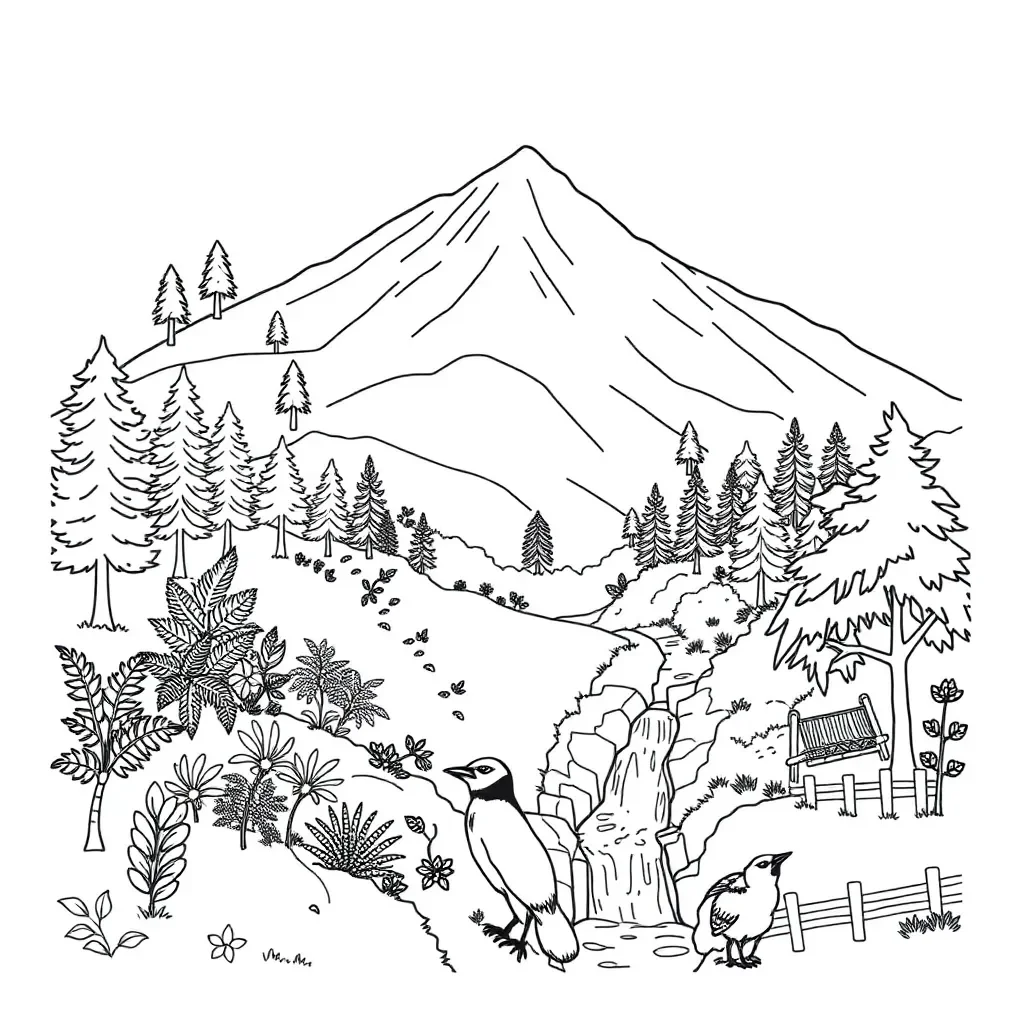
The Hakarimata Ranges rise above the Waikato landscape near Ngāruawāhia. The ranges are covered in native forest and are home to many plants and animals. For mana whenua, the forest is also a special place with deep cultural connections. The forest provides food, shelter and other resources, and its streams are important to the life of the area.
Over time, people changed parts of the forest. Introduced animals such as rats, possums and stoats ate native birds, eggs and plants. Weeds spread across the forest floor and competed with native plants for light, water and space. These changes made it harder for some native species to survive.
Restoration is helping to repair the damage. Community groups, iwi, schools and other volunteers work together to plant native trees and remove weeds. They also use traps and other methods to control pests. Some people check the traps, while others record which birds, insects and plants they see.
Volunteers monitor the ecosystem so they can learn whether their work is making a difference. If more native birds are heard and more seedlings are growing, this can show that the forest is becoming healthier. The information also helps people decide what should happen next.
Restoring the Hakarimata Ranges is important for both people and nature. A healthy forest gives native wildlife places to live and helps protect the soil and streams. It also provides a place where people can learn about the whenua and show kaitiakitanga, or guardianship. When people care for the forest together, they help protect a living taonga for future generations.
Dyslexia-friendly reading options: Read the passage with a partner, listen as it is read aloud, or use a ruler or piece of paper to track one line at a time. Take short breaks when needed.
Comprehension
Answer every question in a full statement. Use evidence from the passage where possible.
✏️ Language and Thinking Tasks
WALT: We Are Learning To use vocabulary and information from a non-fiction text.
Success criteria: I can use words from the reading correctly, follow the instructions, and explain my thinking using details from the text.
Vocabulary
Match each word with its meaning. Write the correct letter beside each word.
Cloze Activity
Read each sentence carefully. Choose the correct word from the word bank to complete each sentence. Use each word once.
Word bank: taonga seedlings possums ecosystem Ngāruawāhia weeds kaitiakitanga shelter pests restoration
Sequencing
Number these events from 1 to 7 in the order they happen in the passage.
_____ Volunteers monitor birds, insects and plants.
_____ Introduced animals eat native birds, eggs and plants.
_____ People work together to restore the forest.
_____ The Hakarimata Ranges are home to native forest and wildlife.
_____ Weeds compete with native plants.
_____ People plant native trees, remove weeds and control pests.
_____ A healthier forest can support wildlife and future generations.
Written Response
11. Explain why restoring the Hakarimata Ranges is important. Use at least two details from the passage.
Support and Extension
Support word bank: native birds, introduced pests, weeds, streams, mana whenua, kaitiakitanga, future generations, healthy ecosystem.
Sentence starters: Restoring the forest is important because ________. One detail from the text is ________. Another detail is ________.
Extension: How are people and ecosystems connected? Explain one way people can affect an ecosystem and one way a healthy ecosystem can help people.
Differentiation: Read the instructions and sentences aloud, allow students to work with a partner, pre-teach the word-bank vocabulary, and let students point to or discuss an answer before writing it. Students may use a ruler or piece of paper to track one line at a time and take short breaks when needed.
Extension: After completing the cloze activity, choose two answers and explain how each word helps show an important idea from the reading passage.
✅ Teacher Answer Key
Comprehension Model Answers
1. The Hakarimata Ranges are located near Ngāruawāhia in the Waikato.
2. Rats, possums and stoats are introduced animals that have harmed the forest.
3. The main idea is that people are working together to restore the Hakarimata forest and protect its wildlife, plants and cultural value.
4. Weeds compete with native plants for light, water and space, so the native plants have fewer resources to grow.
5. People monitor the ecosystem so they can find out whether restoration work is making the forest healthier and decide what to do next.
6. An increase in native birds and seedlings can suggest that the forest is becoming healthier.
7. Restoring the forest may be important to mana whenua because it has deep cultural connections and is a living taonga connected to the whenua.
8. The author’s purpose is to inform readers about the Hakarimata Ranges, explain the problems affecting the forest, and describe how restoration helps.
Vocabulary Answers
1. D 2. F 3. E 4. H 5. A 6. C 7. B 8. G
For question 9, accept any three accurate sentences that show the meanings of the chosen words.
Cloze Answers
1. Ngāruawāhia
2. shelter
3. possums
4. weeds
5. ecosystem
6. seedlings
7. pests
8. restoration
9. kaitiakitanga
10. taonga
Correct Sequence
1. The Hakarimata Ranges are home to native forest and wildlife.
2. Introduced animals eat native birds, eggs and plants.
3. Weeds compete with native plants.
4. People work together to restore the forest.
5. People plant native trees, remove weeds and control pests.
6. Volunteers monitor birds, insects and plants.
7. A healthier forest can support wildlife and future generations.
Written Response Model
Restoring the Hakarimata Ranges is important because it gives native birds, plants and other wildlife a safer place to live. Restoration also helps protect the soil and streams. It is important to mana whenua because the forest is connected to the whenua and is a living taonga for future generations.
Differentiation: Read the passage aloud, pre-teach the vocabulary, allow partner discussion before writing, and accept oral answers recorded by an adult or peer. Challenge advanced learners to justify answers with two quotations or precise details from the text.
About This Worksheet
Free in Kuraplan
Sign up free, grab the PDF, and customize it for your class.
Print-Ready
Formatted for standard paper. Clean layout, easy to read.
AI-Generated
Created with Kuraplan's AI, designed for real classroom use.
For Teachers & Parents
Use in classrooms, for homework, tutoring, or homeschool.
Need a custom version of this worksheet?
Kuraplan's AI generates custom worksheets in seconds — differentiated for every learner, aligned to your curriculum.
Generate Custom Worksheets — Free