Understanding Atomic Energy
A free science worksheet ready for your classroom. Open in Kuraplan to grab the print-ready PDF, customize it for your students, or generate a fresh version in seconds.
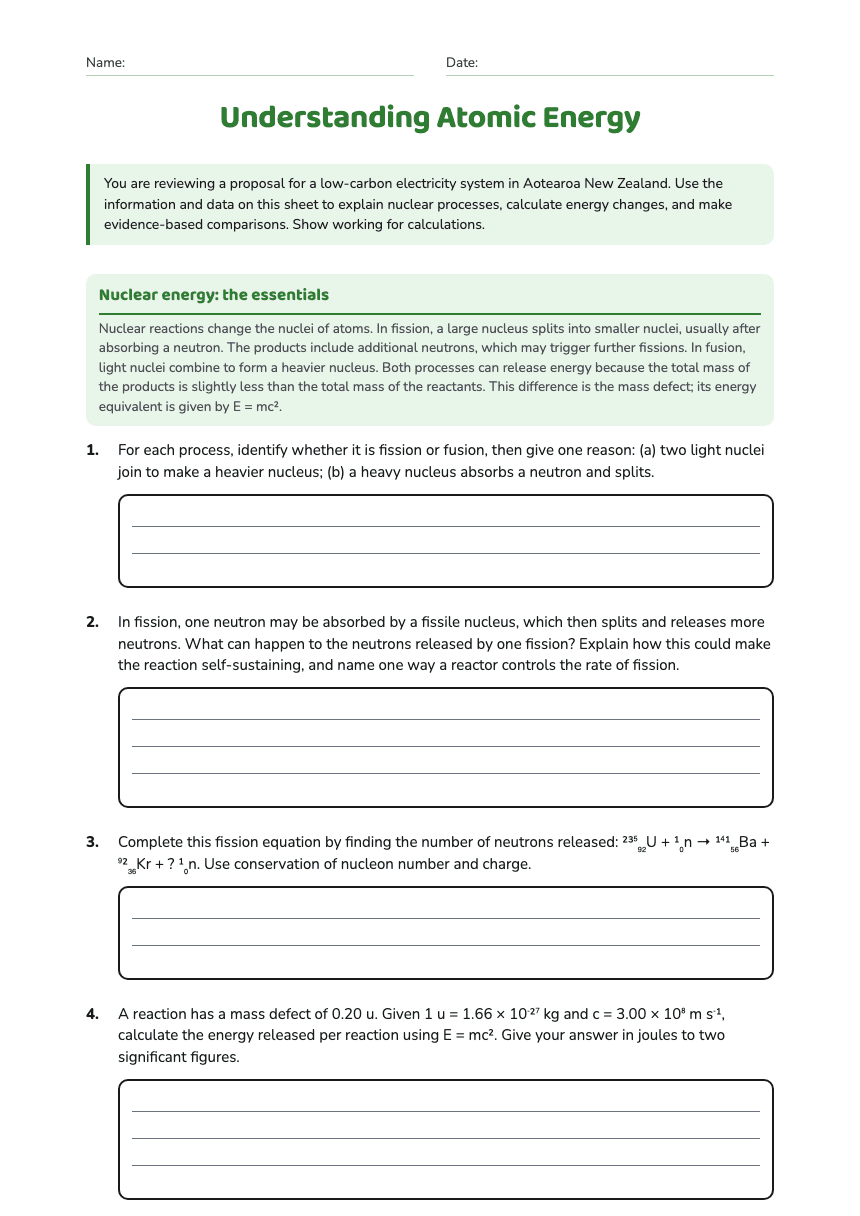
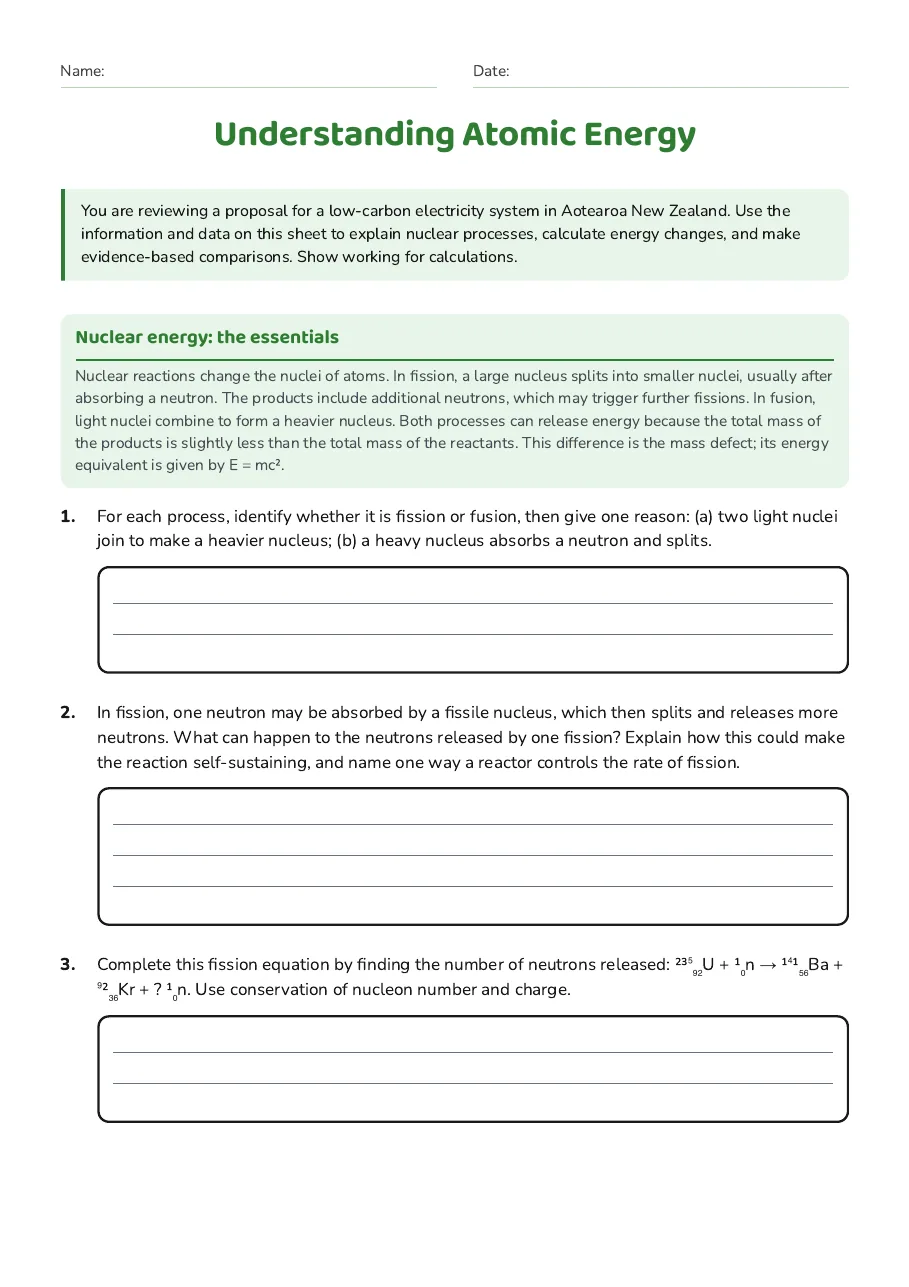
Understanding Atomic Energy
Nuclear energy: the essentials
Nuclear reactions change the nuclei of atoms. In fission, a large nucleus splits into smaller nuclei, usually after absorbing a neutron. The products include additional neutrons, which may trigger further fissions. In fusion, light nuclei combine to form a heavier nucleus. Both processes can release energy because the total mass of the products is slightly less than the total mass of the reactants. This difference is the mass defect; its energy equivalent is given by E = mc².
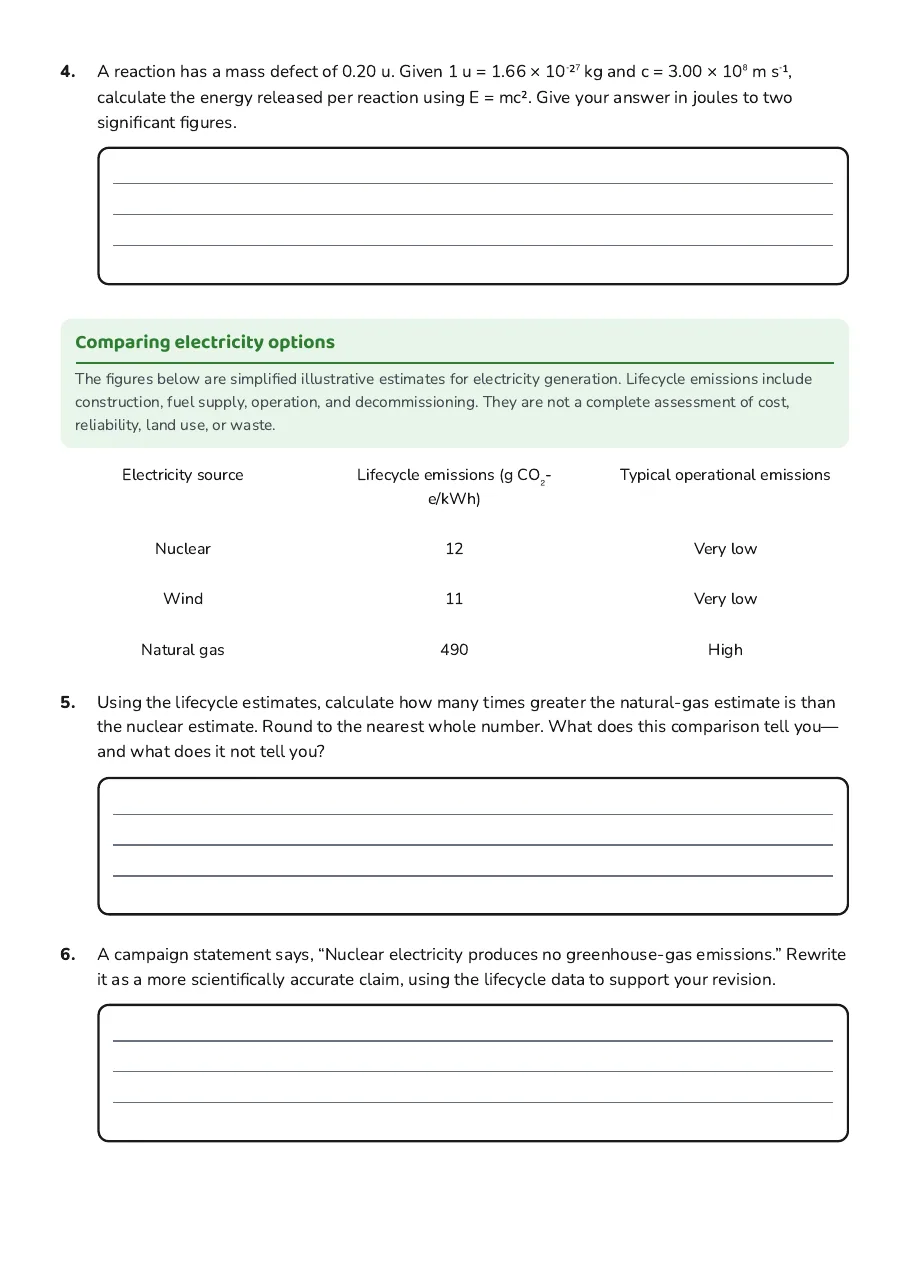
Comparing electricity options
The figures below are simplified illustrative estimates for electricity generation. Lifecycle emissions include construction, fuel supply, operation, and decommissioning. They are not a complete assessment of cost, reliability, land use, or waste.
Electricity source
Lifecycle emissions (g CO₂-e/kWh)
Typical operational emissions
Nuclear
12
Very low
Wind
11
Very low
Natural gas
490
High
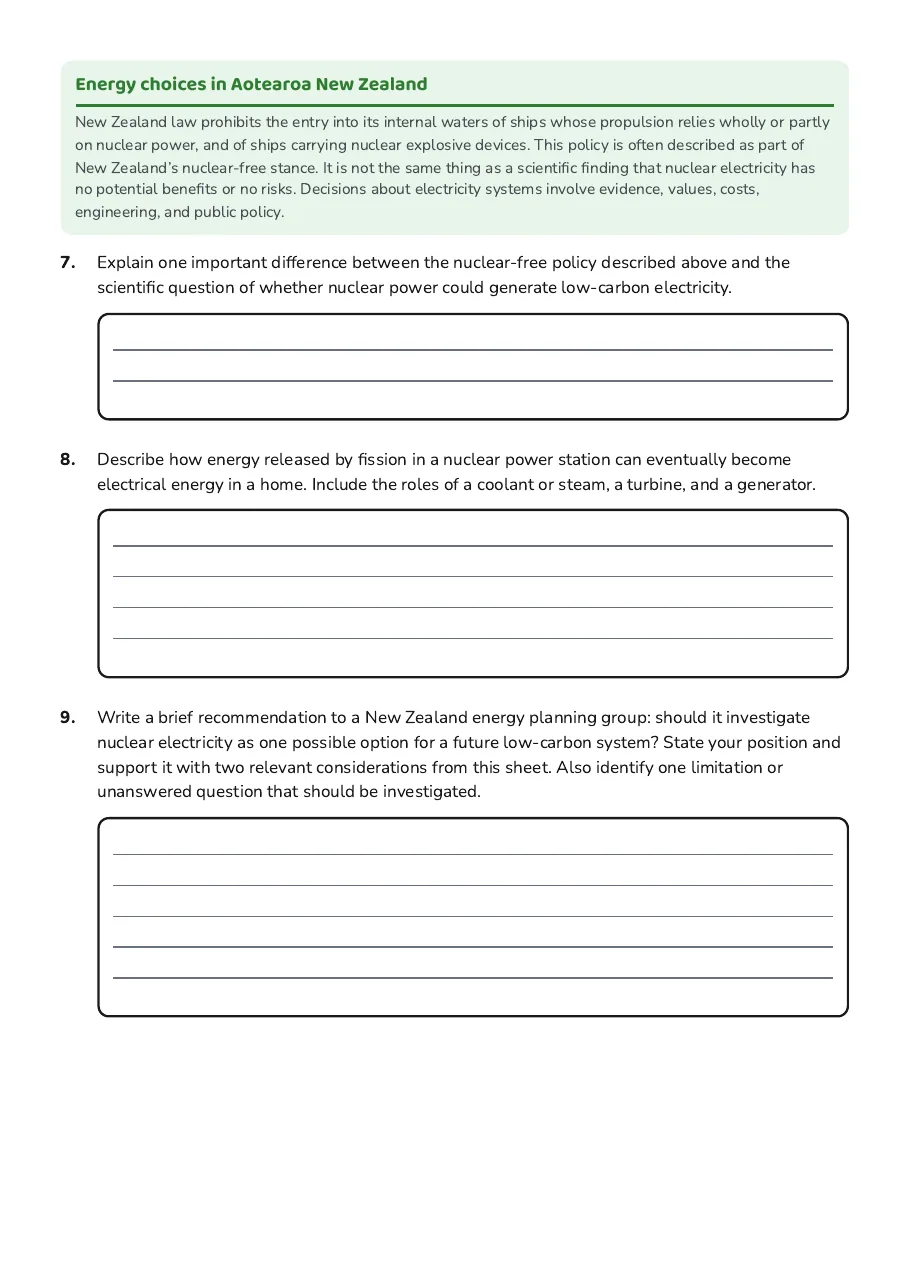
Energy choices in Aotearoa New Zealand
New Zealand law prohibits the entry into its internal waters of ships whose propulsion relies wholly or partly on nuclear power, and of ships carrying nuclear explosive devices. This policy is often described as part of New Zealand’s nuclear-free stance. It is not the same thing as a scientific finding that nuclear electricity has no potential benefits or no risks. Decisions about electricity systems involve evidence, values, costs, engineering, and public policy.
3 printable pages
Page 1
Page 2
Page 3
About This Worksheet
Free in Kuraplan
Sign up free, grab the PDF, and customize it for your class.
Print-Ready
Formatted for standard paper. Clean layout, easy to read.
AI-Generated
Created with Kuraplan's AI, designed for real classroom use.
For Teachers & Parents
Use in classrooms, for homework, tutoring, or homeschool.
Need a custom version of this worksheet?
Kuraplan's AI generates custom worksheets in seconds — differentiated for every learner, aligned to your curriculum.
Generate Custom Worksheets — FreeMore Science Worksheets
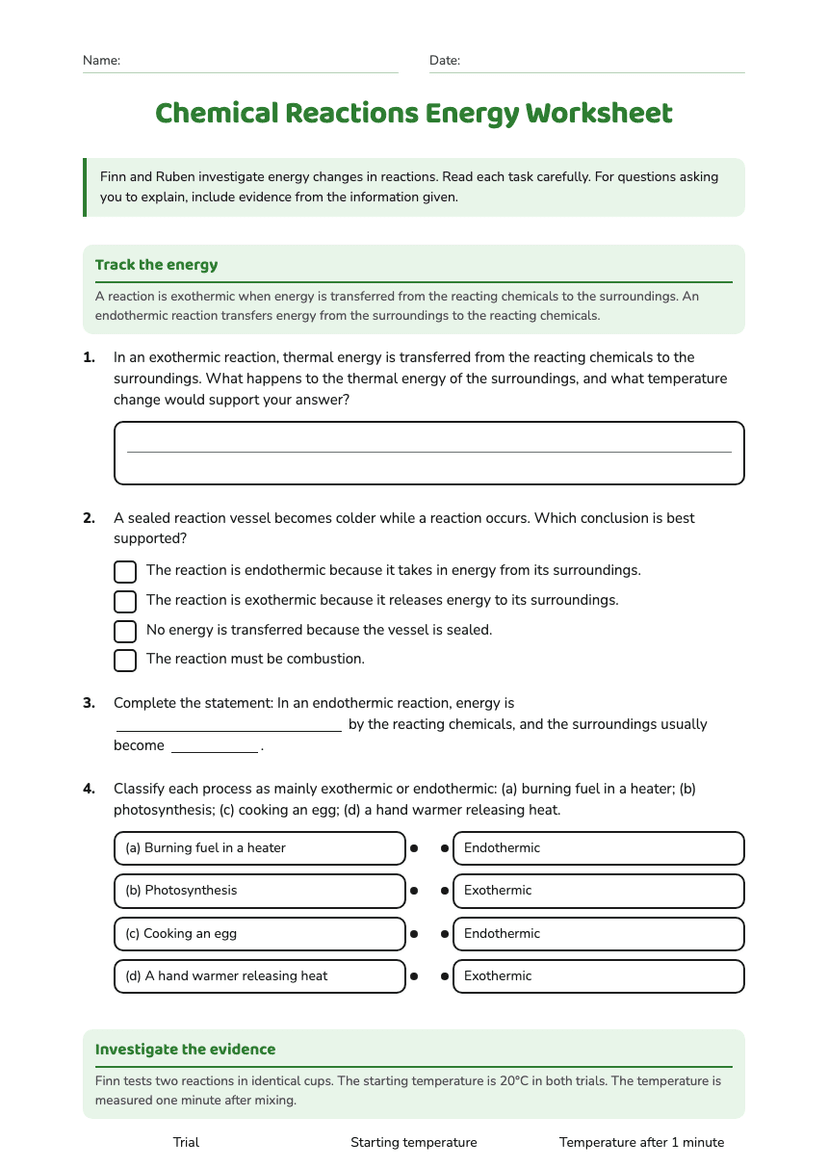
Chemical Reactions Energy Worksheet
Free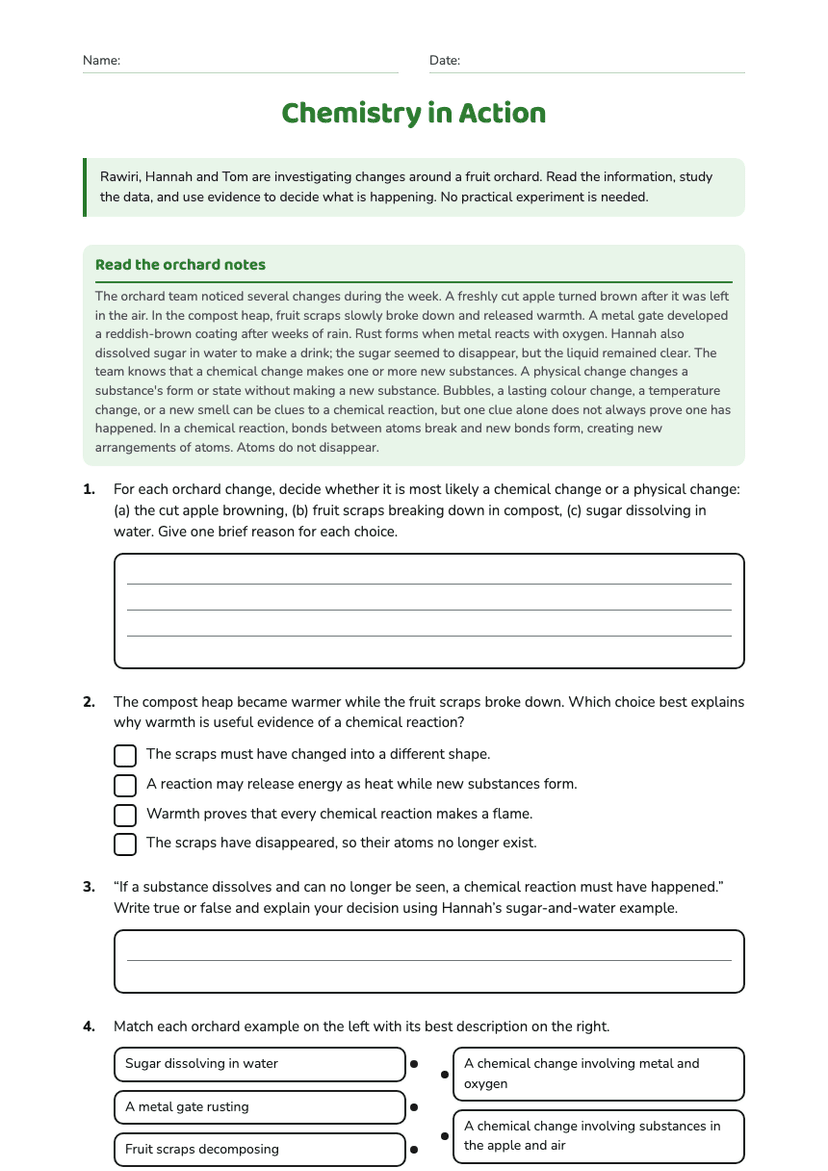
Chemistry in Action
Free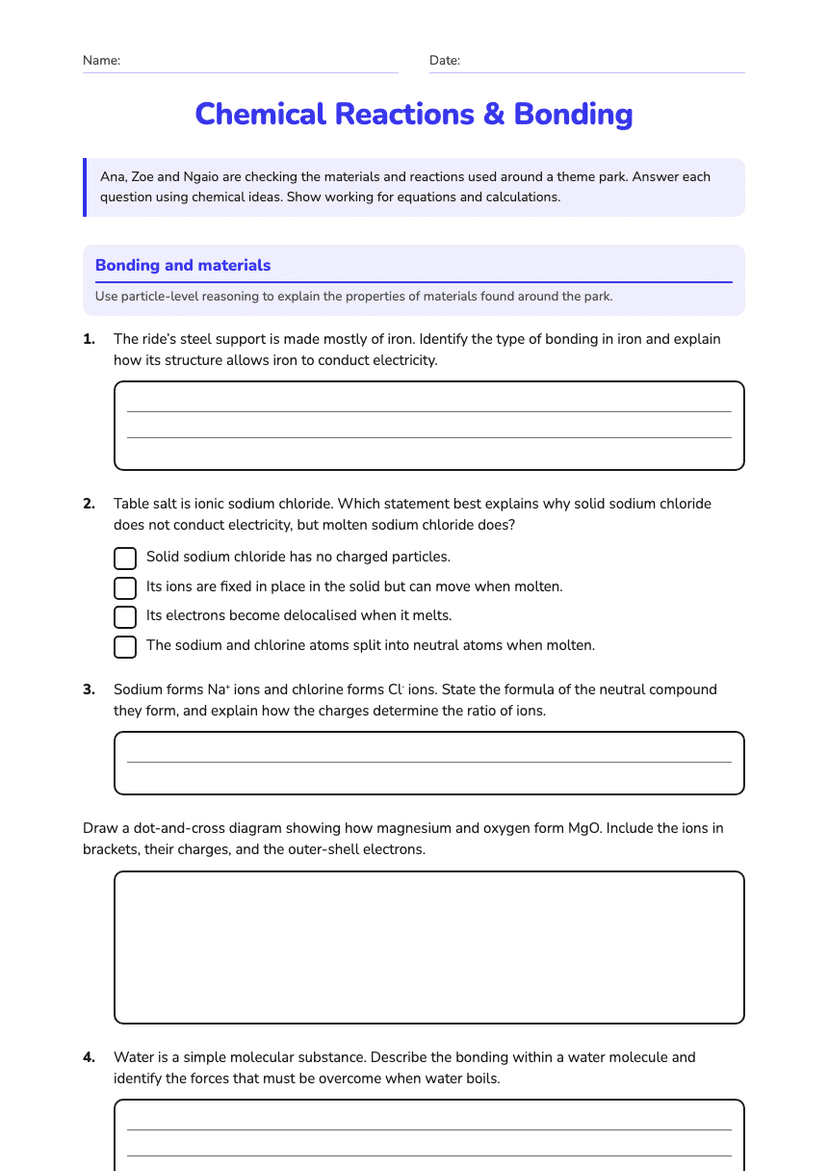
Chemical Reactions & Bonding
Free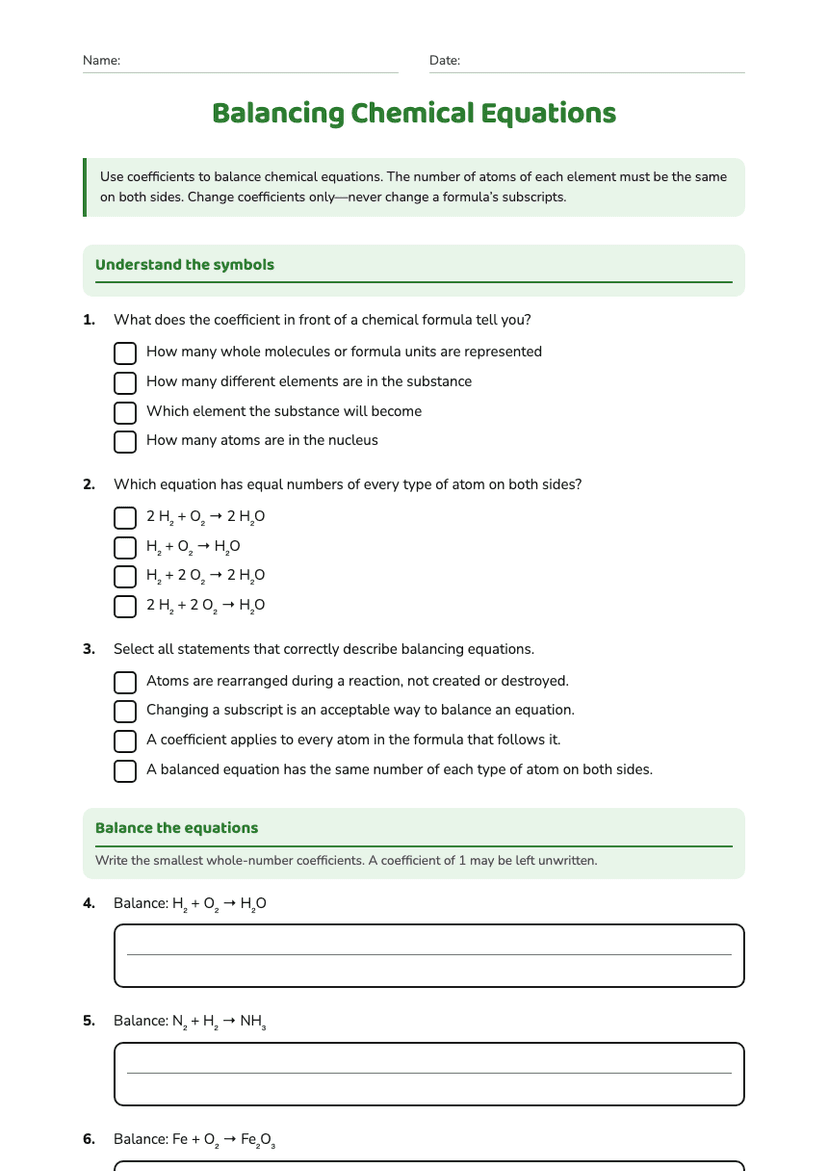
Balancing Chemical Equations
Free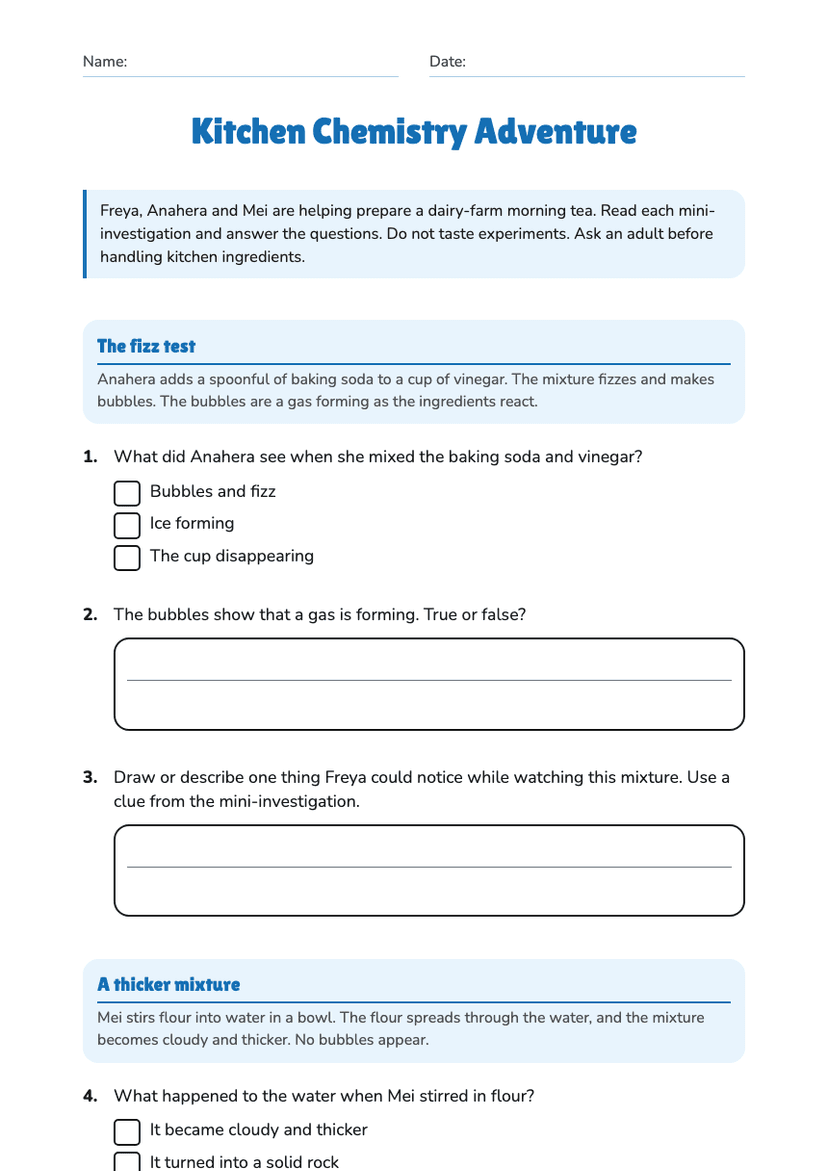
Kitchen Chemistry Adventure
Free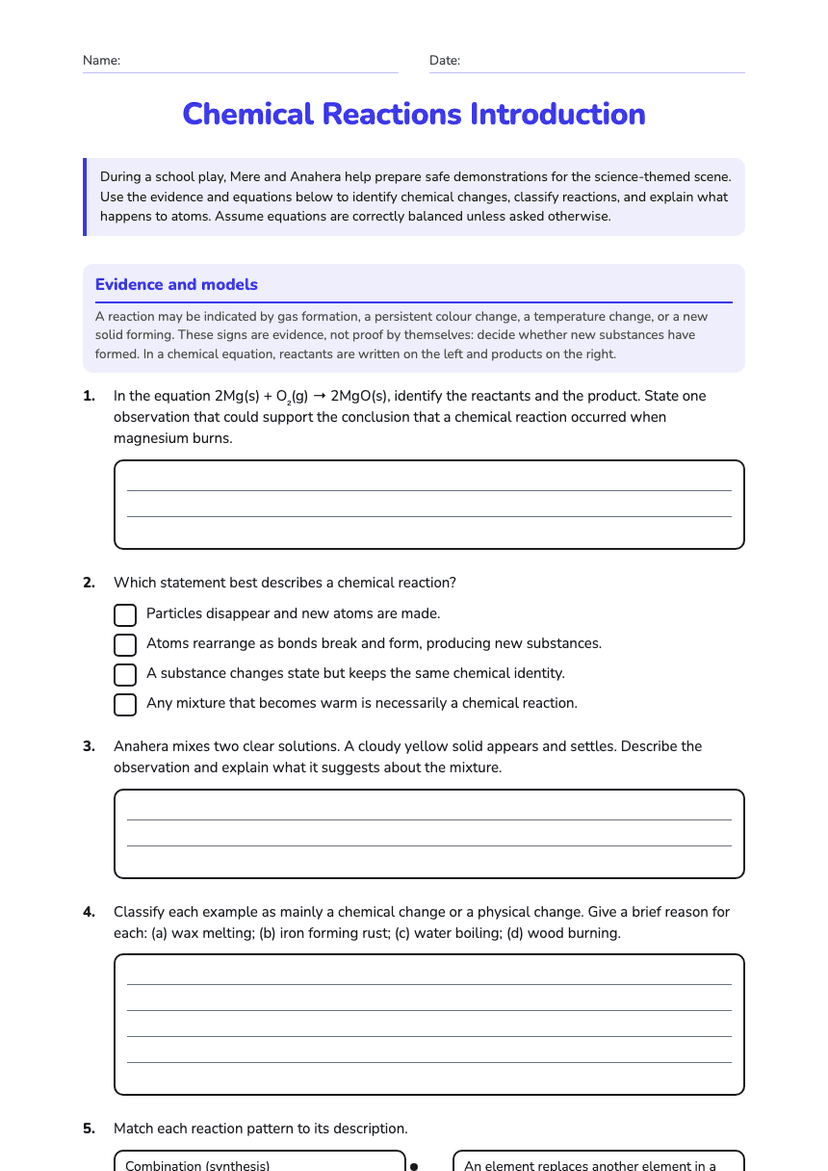
Chemical Reactions Introduction
Free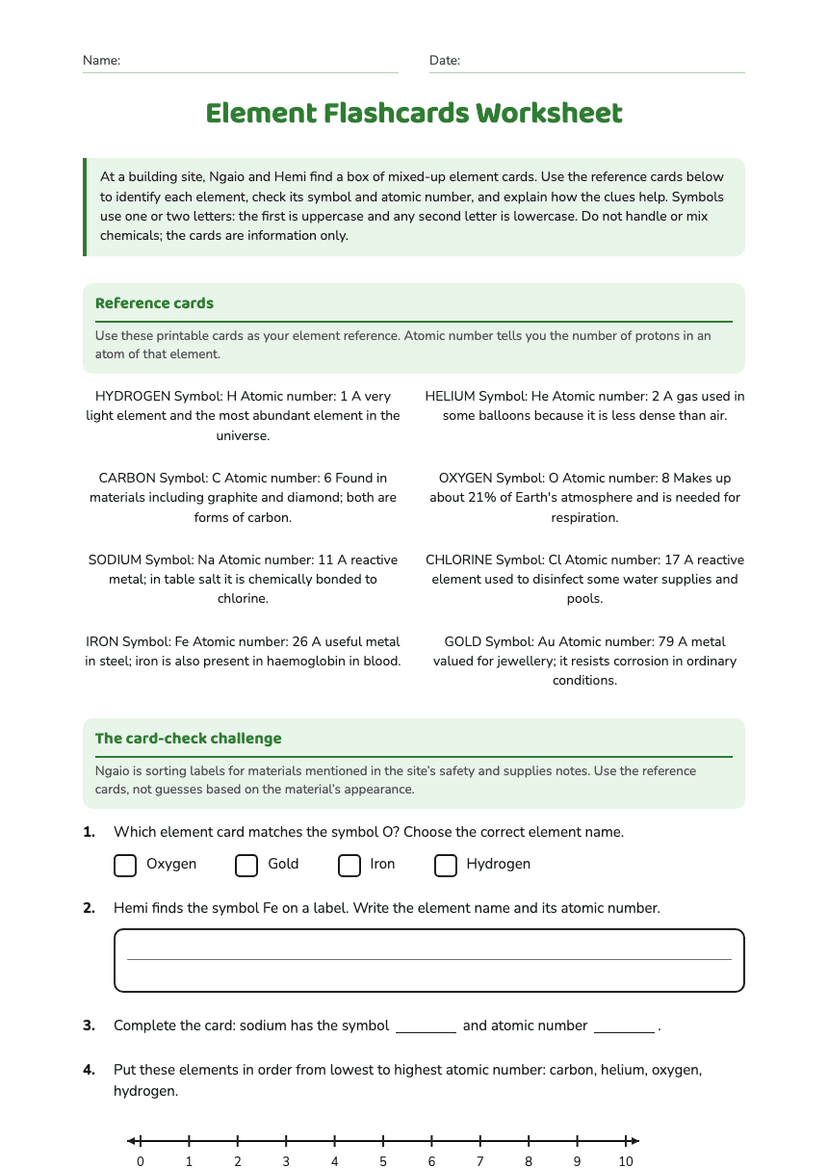
Element Flashcards Worksheet
Free