Whakawhanaungatanga: Building Connections
A free te reo māori worksheet ready for your classroom. Open in Kuraplan to grab the print-ready PDF, customize it for your students, or generate a fresh version in seconds.
Whakawhanaungatanga: Building Connections
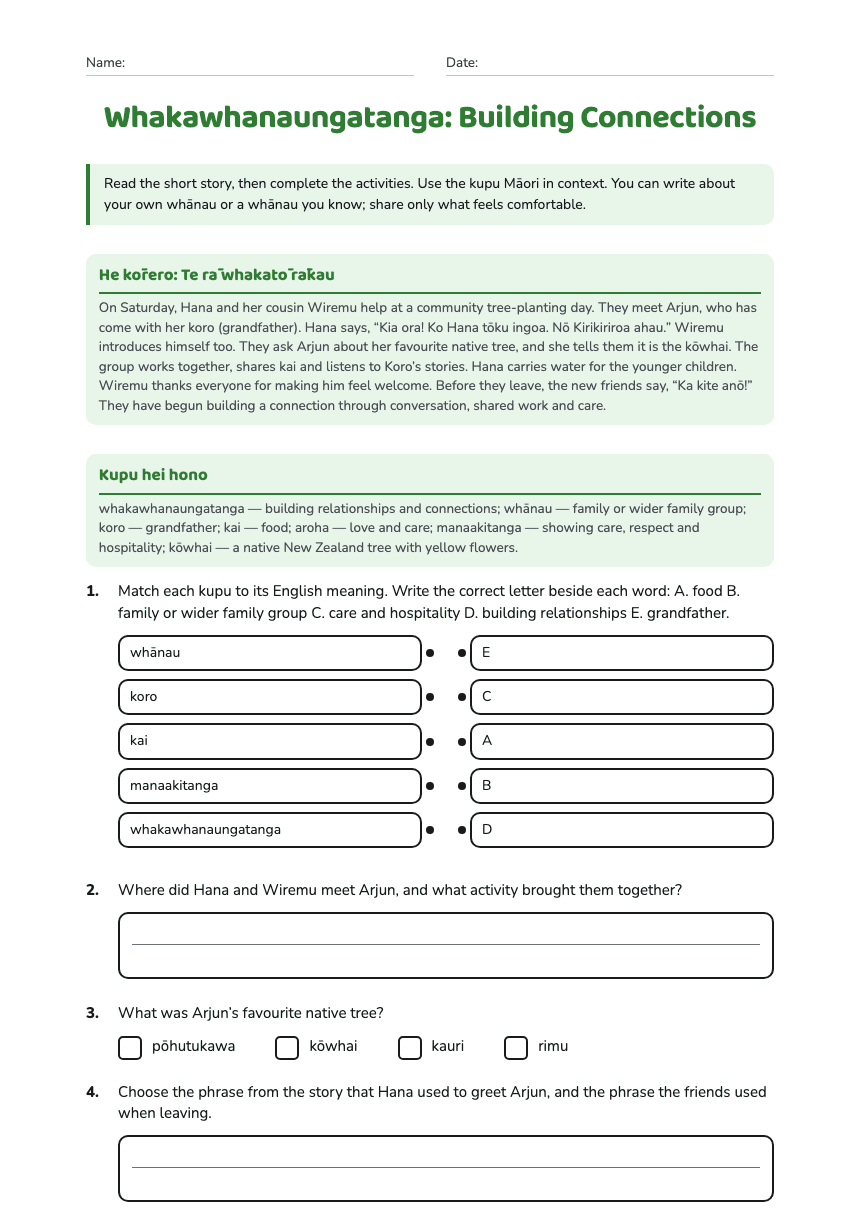
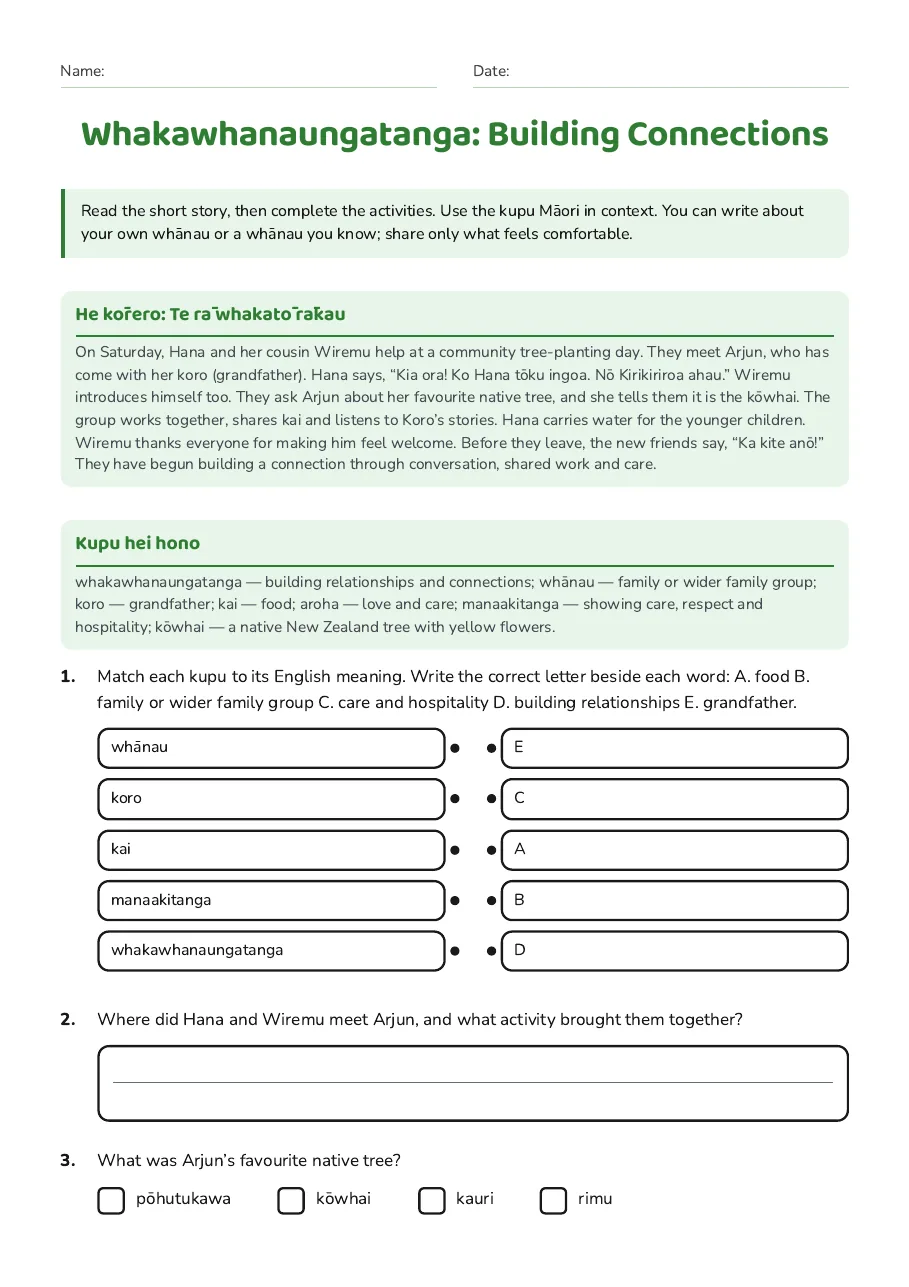
He kōrero: Te rā whakatō rākau
On Saturday, Hana and her cousin Wiremu help at a community tree-planting day. They meet Arjun, who has come with her koro (grandfather). Hana says, “Kia ora! Ko Hana tōku ingoa. Nō Kirikiriroa ahau.” Wiremu introduces himself too. They ask Arjun about her favourite native tree, and she tells them it is the kōwhai. The group works together, shares kai and listens to Koro’s stories. Hana carries water for the younger children. Wiremu thanks everyone for making him feel welcome. Before they leave, the new friends say, “Ka kite anō!” They have begun building a connection through conversation, shared work and care.
Kupu hei hono
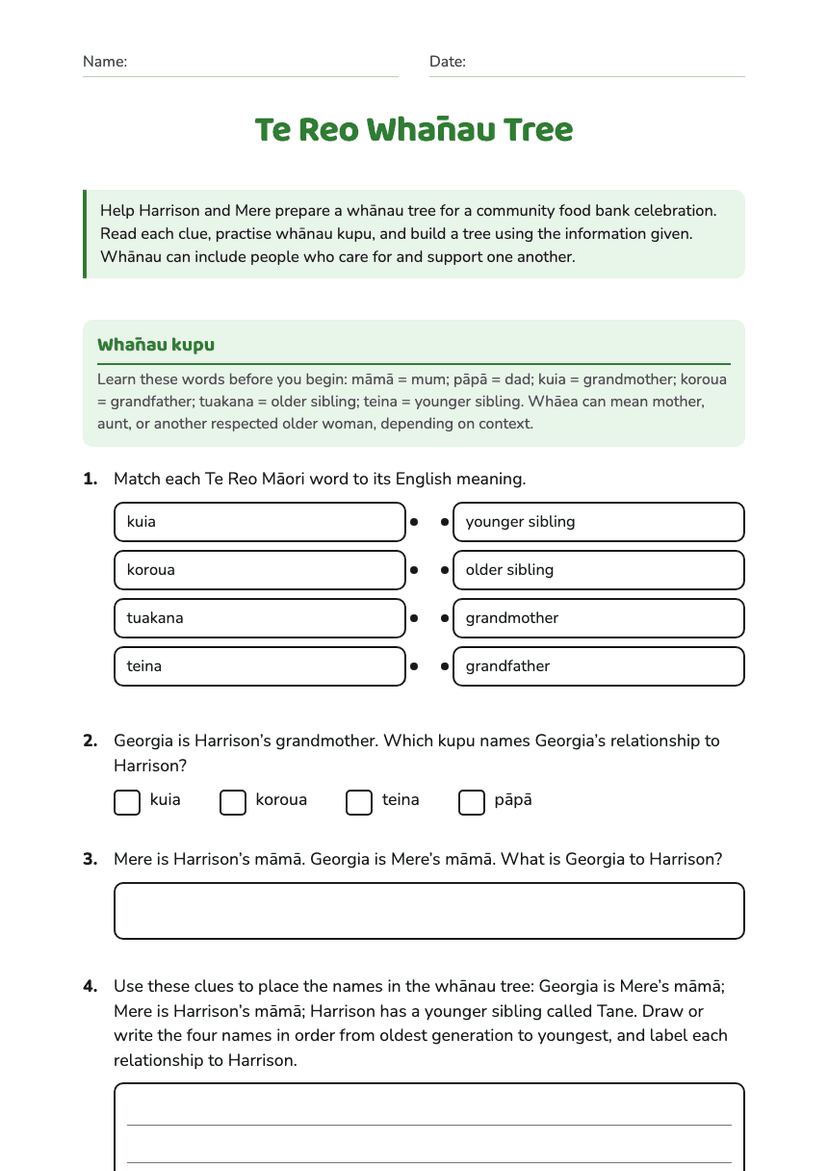
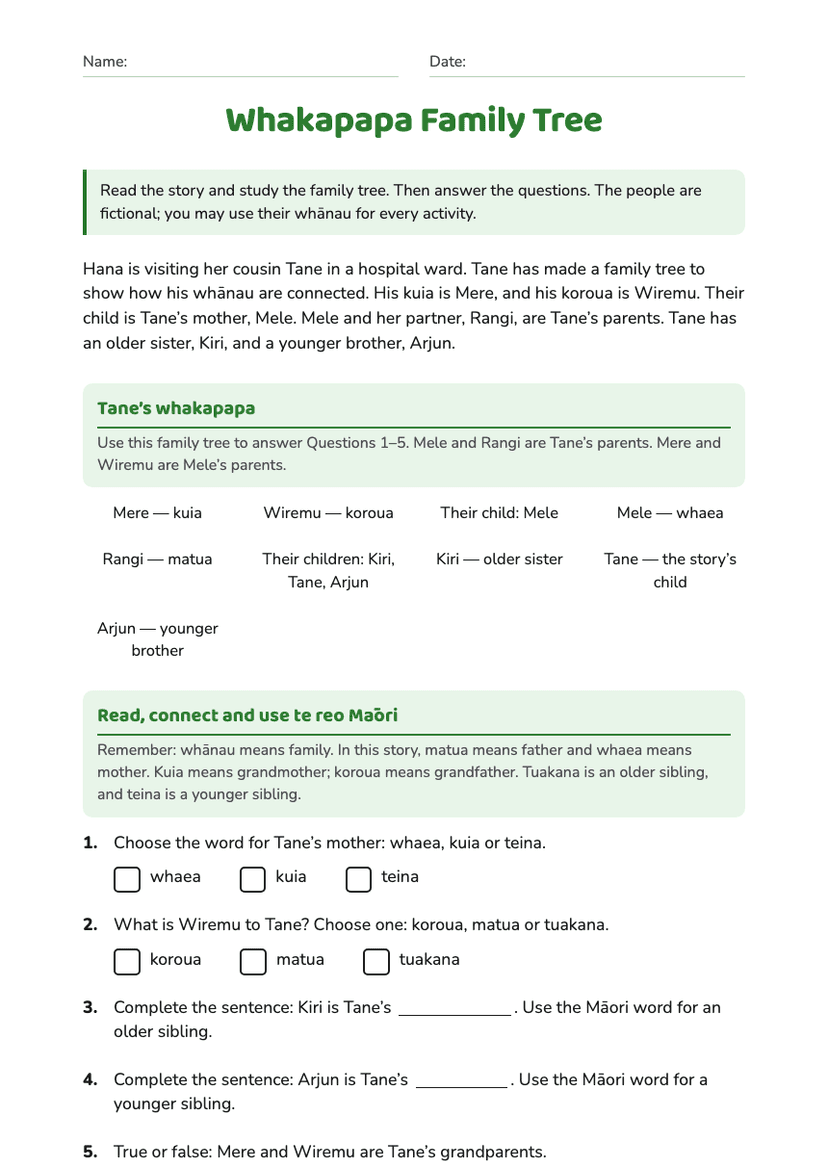
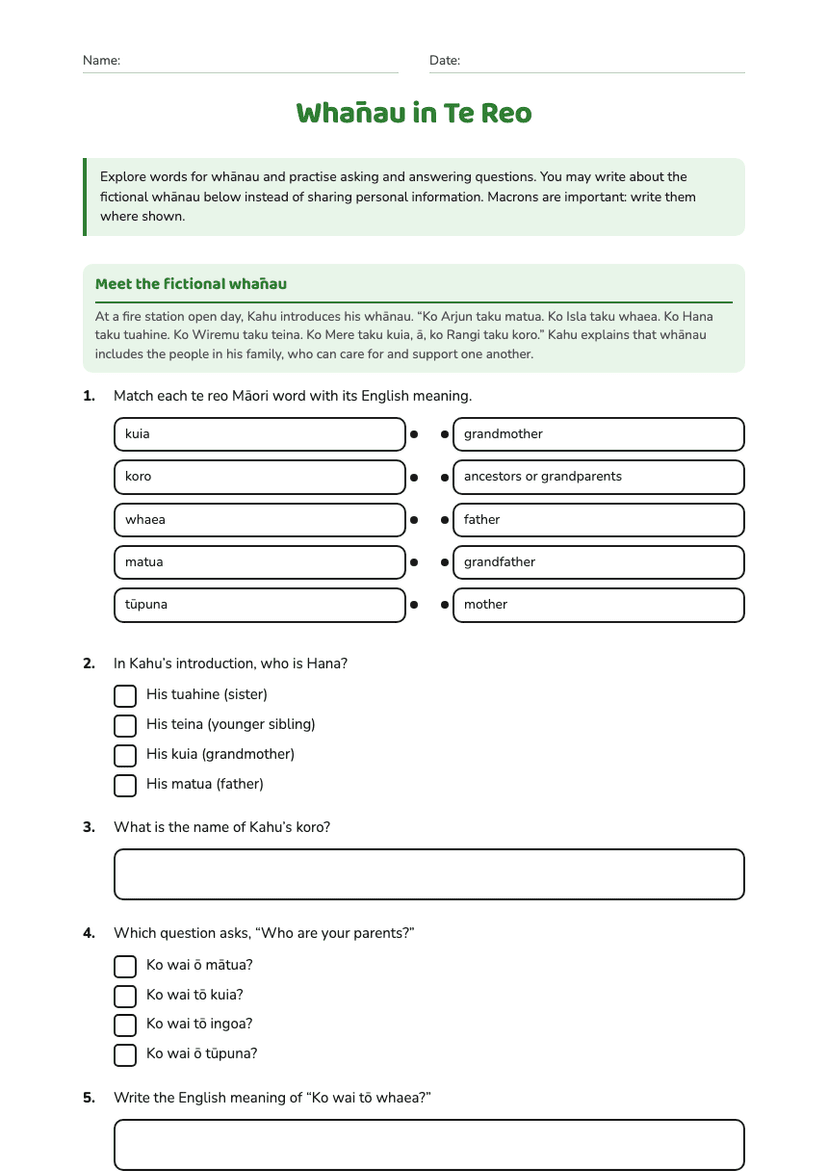
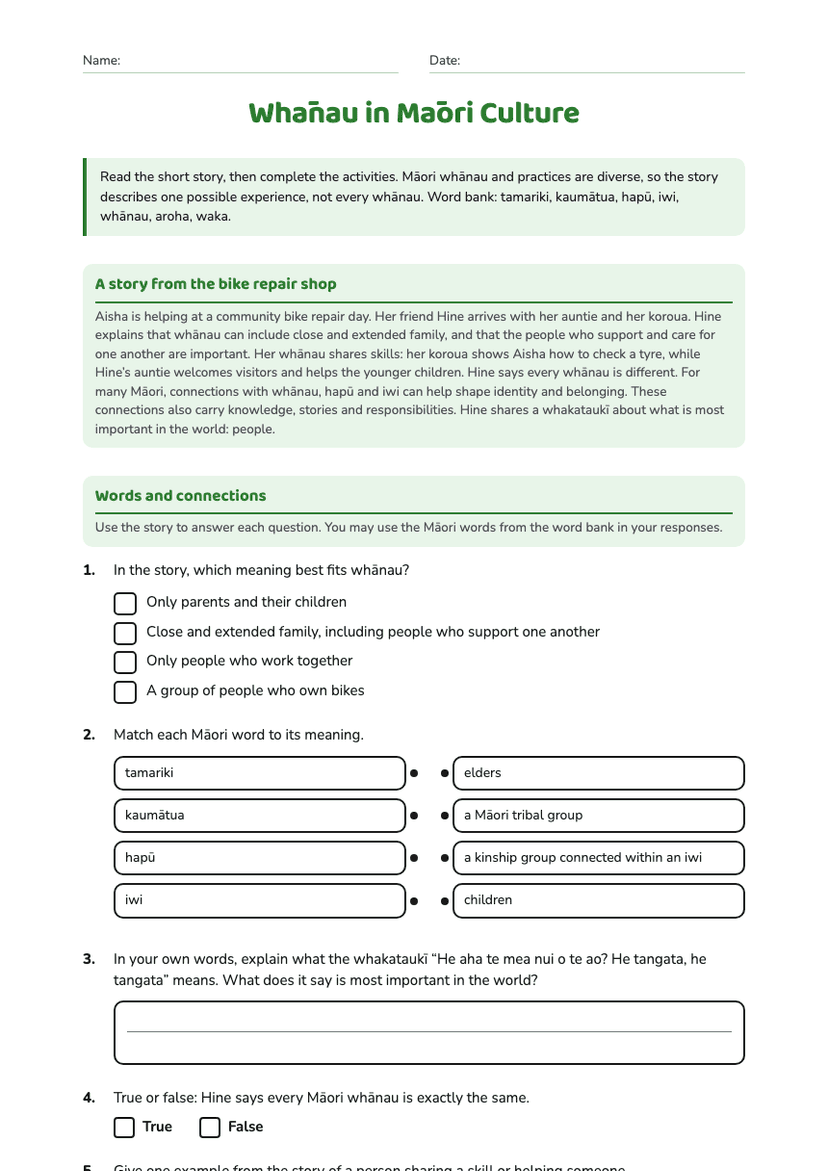
whakawhanaungatanga — building relationships and connections; whānau — family or wider family group; koro — grandfather; kai — food; aroha — love and care; manaakitanga — showing care, respect and hospitality; kōwhai — a native New Zealand tree with yellow flowers.
- whānau
- koro
- kai
- manaakitanga
- whakawhanaungatanga
- E
- C
- A
- B
- D
- pōhutukawa
- kōwhai
- kauri
- rimu
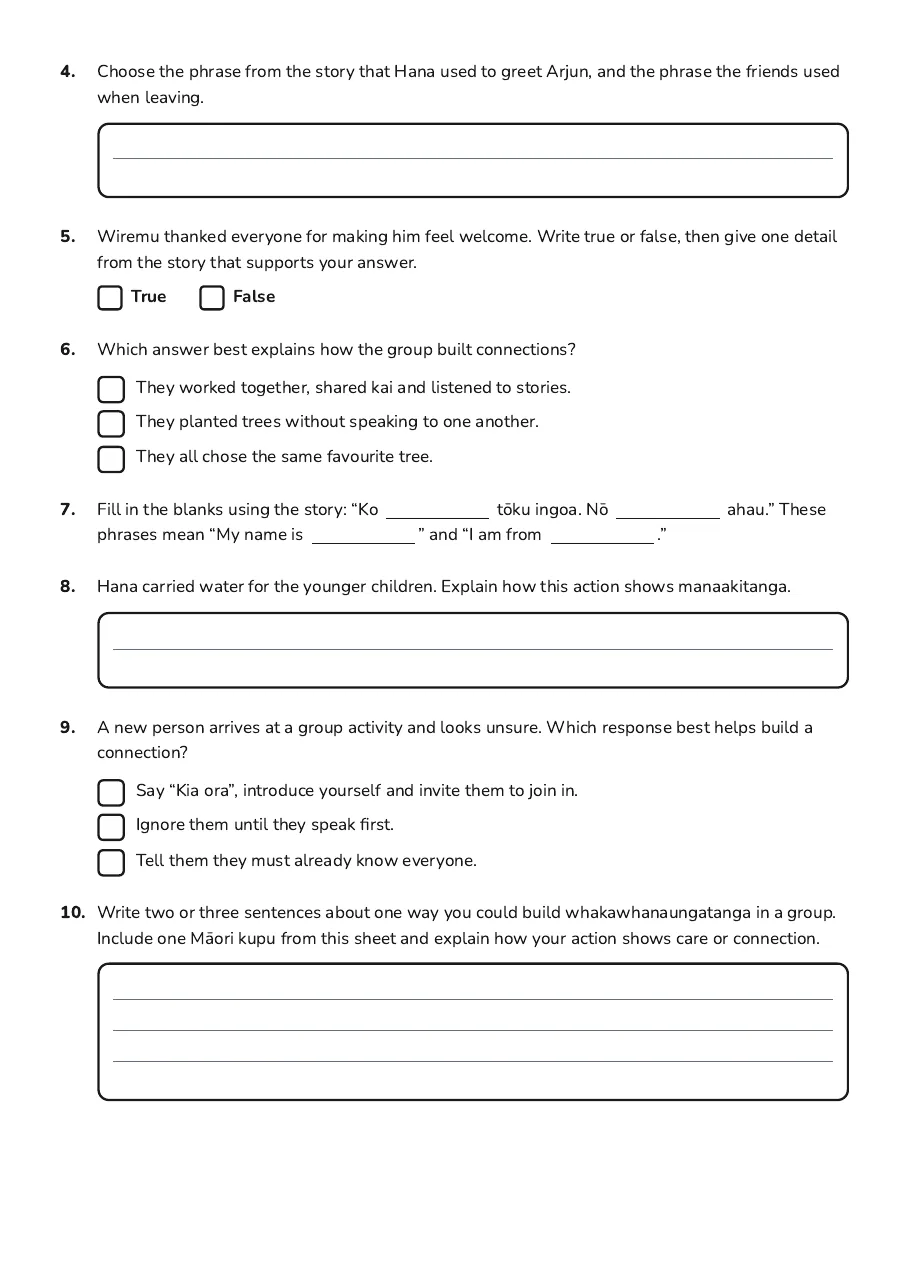
- They worked together, shared kai and listened to stories.
- They planted trees without speaking to one another.
- They all chose the same favourite tree.
- Say “Kia ora”, introduce yourself and invite them to join in.
- Ignore them until they speak first.
- Tell them they must already know everyone.
2 printable pages
Page 1
Page 2
About This Worksheet
Free in Kuraplan
Sign up free, grab the PDF, and customize it for your class.
Print-Ready
Formatted for standard paper. Clean layout, easy to read.
AI-Generated
Created with Kuraplan's AI, designed for real classroom use.
For Teachers & Parents
Use in classrooms, for homework, tutoring, or homeschool.
Need a custom version of this worksheet?
Kuraplan's AI generates custom worksheets in seconds — differentiated for every learner, aligned to your curriculum.
Generate Custom Worksheets — Free