World Changers Comprehension Activity
A free english worksheet ready for your classroom. Open in Kuraplan to grab the print-ready PDF, customize it for your students, or generate a fresh version in seconds.
World Changers Comprehension Activity
📖 Reading Text: People, Places, and Events That Changed Our World
Throughout history, remarkable individuals, extraordinary places, and pivotal events have shaped our world for the better. Their stories of courage, innovation, and determination continue to inspire us today.
Wangari Maathai: The Green Belt Movement
In Kenya, Wangari Maathai witnessed the devastating effects of deforestation on her community. Women had to walk further for firewood, soil erosion destroyed farmland, and clean water became scarce. Rather than accept this situation, Maathai began an environmental activism campaign that would transform East Africa. In 1977, she founded the Green Belt Movement, encouraging rural women to plant native trees. This simple act of innovation grew into a powerful movement that planted over 51 million trees across Kenya. Maathai's work didn't just restore the environment—it empowered women, created jobs, and promoted democracy. Her legacy earned her the Nobel Peace Prize in 2004, making her the first African woman to receive this honour.
Malala Yousafzai: The Fight for Education
In Pakistan's Swat Valley, young Malala Yousafzai discovered her passion for learning in a world where girls' education was under threat. When the Taliban banned girls from attending school, Malala refused to stay silent. At just eleven years old, she began writing a blog for the BBC about life under Taliban rule, showing remarkable courage in her activism for educational rights. In 2012, her advocacy nearly cost her life when she was shot by a Taliban gunman. However, this attack only strengthened her resolve. Malala's recovery and continued fight for education captured global attention. Her innovation in using media and storytelling to highlight educational inequality has opened classroom doors for millions of girls worldwide. Today, the Malala Fund continues her legacy by advocating for 12 years of free, safe, quality education for every girl.
New Zealand: Leading Climate Action
New Zealand has become a beacon of environmental leadership on the global stage. In 2019, the country made history by passing the Zero Carbon Act, legally committing to net-zero carbon emissions by 2050. This groundbreaking legislation demonstrates innovation in climate policy, establishing an independent Climate Change Commission to guide the nation's transition to sustainability. New Zealand was also the first country to introduce a wellbeing budget, measuring success not just by economic growth but by citizen happiness and environmental health. The government's activism extends to protecting indigenous rights and biodiversity, with initiatives to restore native forests and marine sanctuaries. Prime Minister Jacinda Ardern's leadership during crises, from the Christchurch shooting to COVID-19, has shown the world that compassionate governance is possible. New Zealand's legacy as a progressive nation continues to influence international policy and inspire other countries to prioritise both people and planet.
The Internet: Connecting Humanity
The development of the internet represents one of humanity's greatest collaborative achievements. What began as a military communication project in the 1960s evolved into a global network that has revolutionised how we learn, communicate, and solve problems. This technological innovation has democratised access to information, allowing a student in rural Kenya to access the same educational resources as someone in London. The internet has amplified voices of activism, enabling movements like #MeToo and climate action campaigns to spread across continents in hours. During the COVID-19 pandemic, the internet's legacy became even more apparent as it enabled remote learning, telemedicine, and global scientific collaboration that led to vaccine development in record time.
Marie Curie: Breaking Barriers in Science
In an era when women were excluded from most universities, Marie Curie's determination to pursue science changed the world forever. Born in Poland in 1867, she moved to Paris to study physics and mathematics. Her groundbreaking research on radioactivity—a term she coined—led to revolutionary discoveries in medicine and energy. Curie's innovation in scientific methodology and her discovery of the elements polonium and radium opened new frontiers in physics and chemistry. Her activism for women's rights in science paved the way for future generations of female researchers. During World War I, she developed mobile X-ray units, personally driving them to the front lines to help wounded soldiers. Marie Curie's legacy includes being the first woman to win a Nobel Prize, the first person to win Nobel Prizes in two different sciences, and inspiring countless women to pursue careers in STEM fields.
These remarkable stories remind us that positive change often begins with a single person's vision and determination. Whether through environmental protection, education advocacy, progressive governance, technological advancement, or scientific discovery, these world changers have left lasting impacts that continue to benefit humanity today.
🤔 Part 1: Comprehension Questions
Person: _________________ Age: _______
💭 Part 2: Critical Thinking and Reflection
About This Worksheet
Free in Kuraplan
Sign up free, grab the PDF, and customize it for your class.
Print-Ready
Formatted for standard paper. Clean layout, easy to read.
AI-Generated
Created with Kuraplan's AI, designed for real classroom use.
For Teachers & Parents
Use in classrooms, for homework, tutoring, or homeschool.
Need a custom version of this worksheet?
Kuraplan's AI generates custom worksheets in seconds — differentiated for every learner, aligned to your curriculum.
Generate Custom Worksheets — FreeMore English Worksheets
Camp D Tent Reading Comprehension
Free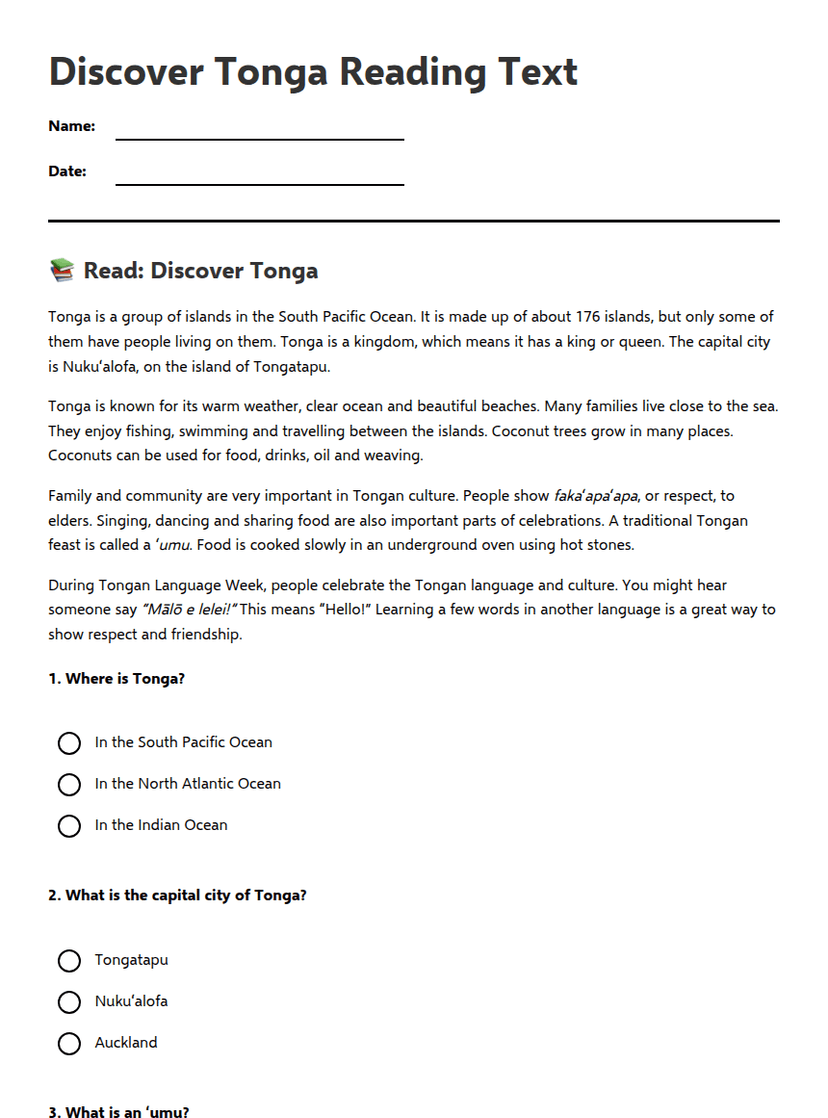
Discover Tonga Reading Text
Free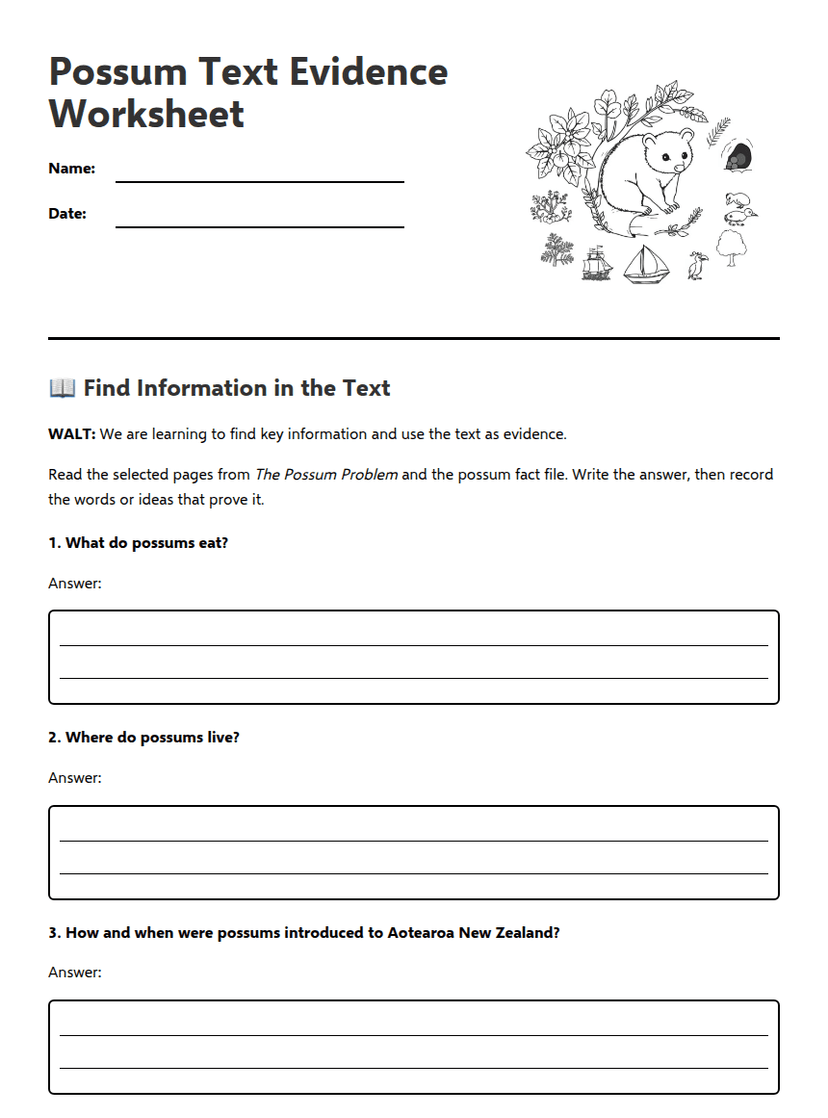
Possum Text Evidence Worksheet
Free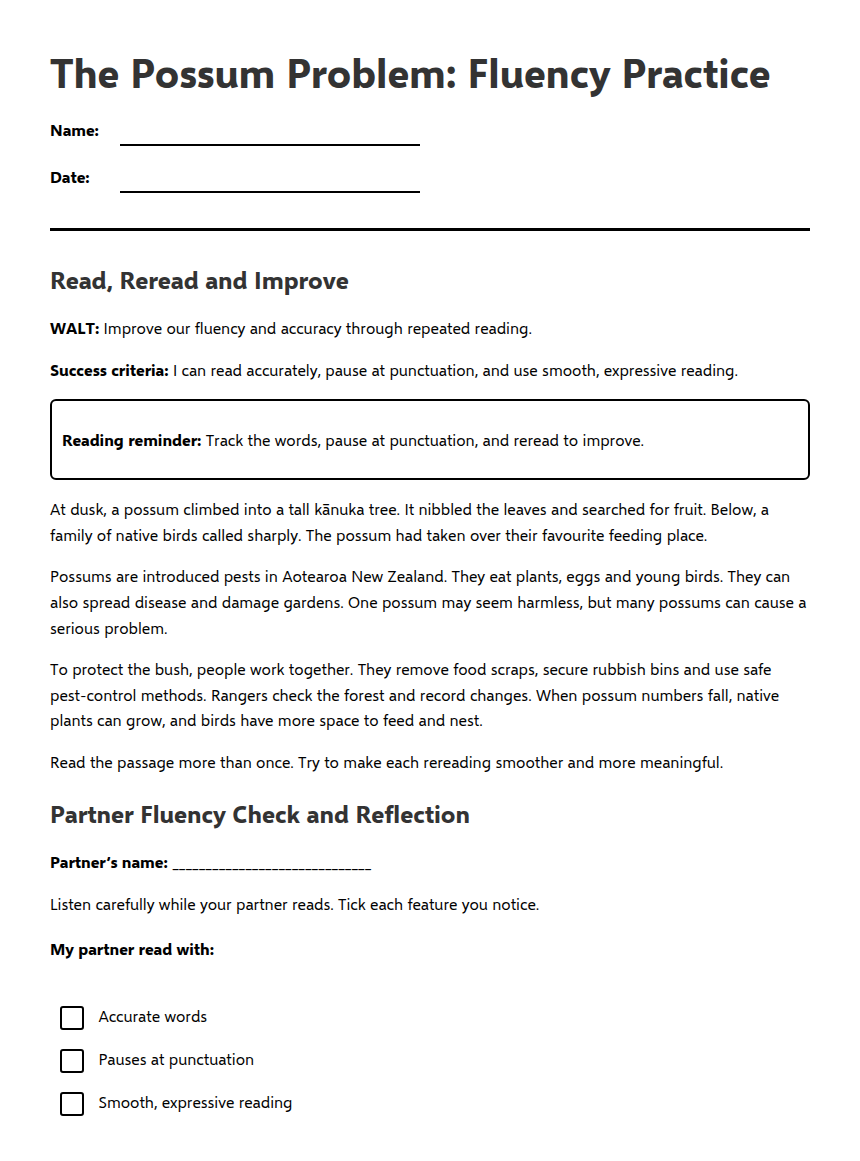
Possum Fluency Practice
Free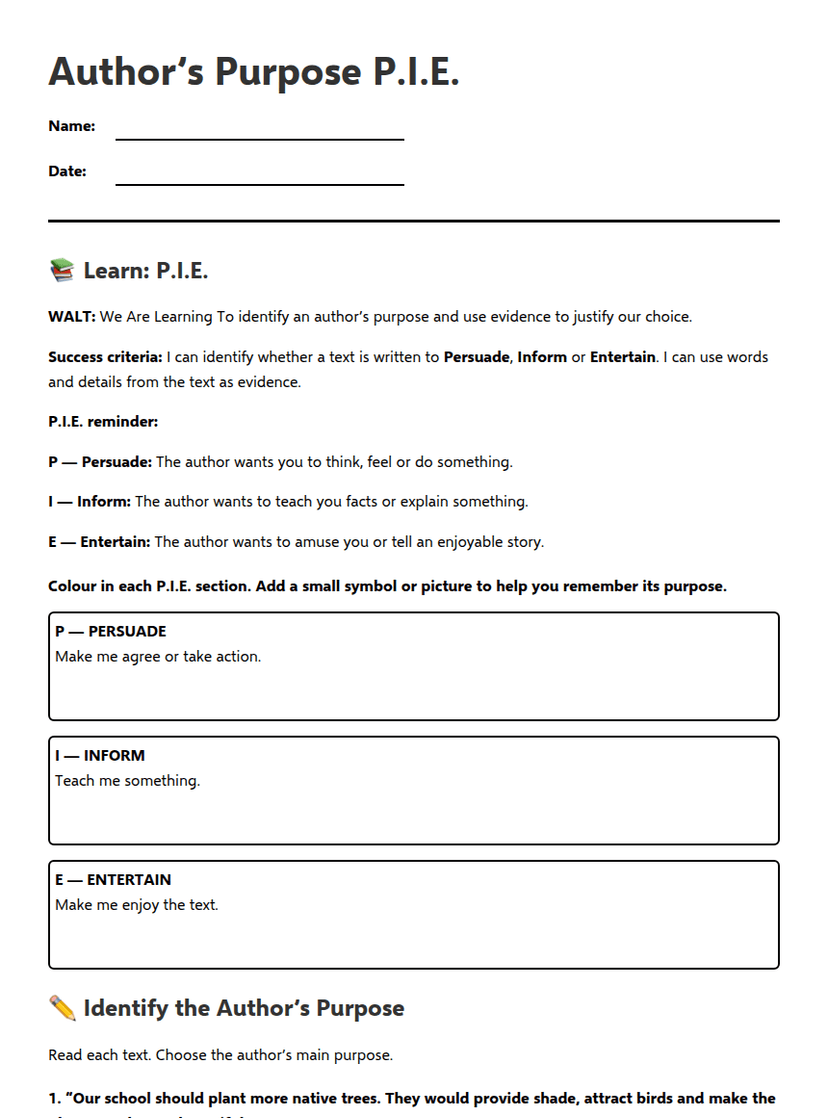
Author’s Purpose P.I.E.
Free
Sentence Meaning Detectives
Free
Māui and the Birds: Reading Comprehension
Free