World War 1 Writing Prompts
A free english worksheet ready for your classroom. Open in Kuraplan to grab the print-ready PDF, customize it for your students, or generate a fresh version in seconds.

World War 1 Writing Prompts
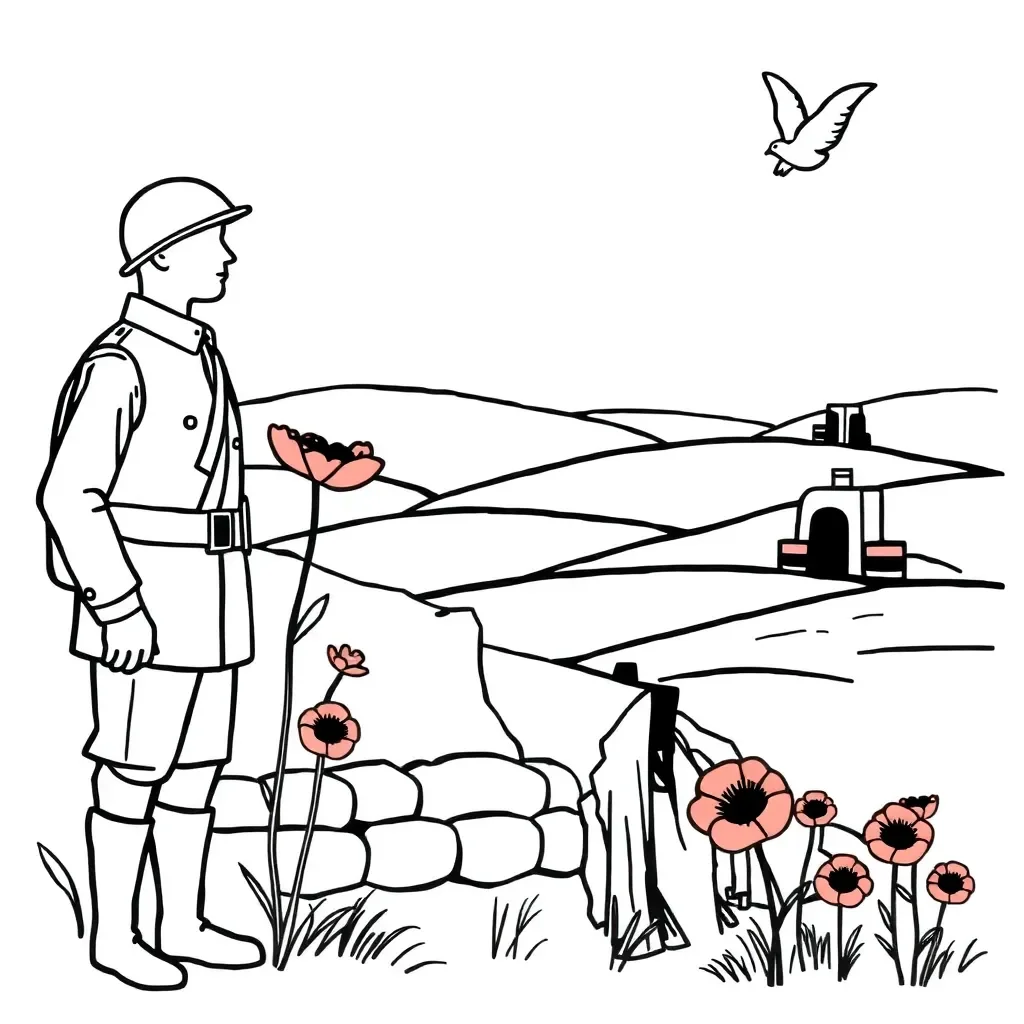
🎯 Learning Intention & Success Criteria
Learning Intention: I am learning to write descriptively about World War 1 using topic vocabulary and varied sentence structures.
Success Criteria — I can:
Use at least three topic vocabulary words in my writing. Write in complete sentences with correct punctuation. Include descriptive language (adjectives and adverbs) to paint a picture for the reader. Show empathy and understanding of the experiences of soldiers and families.📖 Background: World War 1
World War 1 (also called The Great War) lasted from 1914 to 1918. It was one of the deadliest conflicts in history, fought mainly in Europe. New Zealand sent thousands of young men — known as ANZACs (Australian and New Zealand Army Corps) — to fight far from home. Soldiers lived in muddy trenches, faced dangerous conditions, and showed incredible courage. The war ended on 11th November 1918. We remember those who served on ANZAC Day, 25th April every year.
📝 Topic Vocabulary Bank
Use these words to help with your writing:
trench | courage | sacrifice | battlefield | memorial | ANZAC | muddy | exhausted | determined | honour | gunfire | homesick | bravery | loyalty
💡 Sentence Starters to Help You
As the soldier stepped into the trench, he felt...
The battlefield was filled with the sound of...
Despite being far from home, the young ANZAC...
When the war finally ended, people felt...
We remember the soldiers because...
✏️ Writing Prompts
✅ Example Answers & Guidance
Use these examples to check and improve your writing.
Question 1 — Example Letter:
"Dear Mum, I am writing to you from the cold, muddy trenches of Gallipoli. All around me I can hear the distant rumble of gunfire and the voices of my fellow ANZAC soldiers. The ground is wet and my boots are soaking, but we remain determined. I miss home terribly and think of you every night. Despite feeling exhausted, I know we are fighting for something important. Your loving son, Thomas."
Question 2 — Example Answer:
"It is important to remember the soldiers of World War 1 for two key reasons. Firstly, they made an enormous sacrifice by leaving their families and risking their lives for our country's freedom. Secondly, remembering them on ANZAC Day helps us honour their bravery and ensure their stories are never forgotten. Without their courage, New Zealand would be a very different place today."
Question 3 — Example Description:
"Life in the trenches was incredibly difficult. Soldiers lived in deep, muddy ditches dug into the earth, often cold, wet, and crowded. They faced the constant threat of enemy gunfire and had very little sleep. Food was scarce and the smell was terrible. Despite these harsh conditions, the soldiers showed remarkable loyalty and bravery, looking after one another and staying determined to carry on."
Question 4 — Example Paragraph:
"World War 1 changed New Zealand in many lasting ways. Thousands of young men never returned home, leaving families and communities heartbroken. For those who did come back, many carried physical injuries or painful memories. At home, women took on new roles in the workforce, showing incredible strength and resilience. As a nation, New Zealand developed a stronger sense of identity and pride — we were no longer just a small country far away, but a nation that had shown the world its courage and sacrifice."
Key things to look for in strong writing:
✔ Topic vocabulary used correctly (e.g. trench, sacrifice, ANZAC, courage)
✔ Descriptive adjectives (muddy, exhausted, cold, distant)
✔ Varied sentence starters — not every sentence begins with "I" or "The"
✔ Empathy shown for soldiers and families
✔ Clear paragraphs with a main idea in each
About This Worksheet
Free in Kuraplan
Sign up free, grab the PDF, and customize it for your class.
Print-Ready
Formatted for standard paper. Clean layout, easy to read.
AI-Generated
Created with Kuraplan's AI, designed for real classroom use.
For Teachers & Parents
Use in classrooms, for homework, tutoring, or homeschool.
Need a custom version of this worksheet?
Kuraplan's AI generates custom worksheets in seconds — differentiated for every learner, aligned to your curriculum.
Generate Custom Worksheets — Free