Year 4 Handwriting Rubric
A free english worksheet ready for your classroom. Open in Kuraplan to grab the print-ready PDF, customize it for your students, or generate a fresh version in seconds.
Year 4 Handwriting Rubric
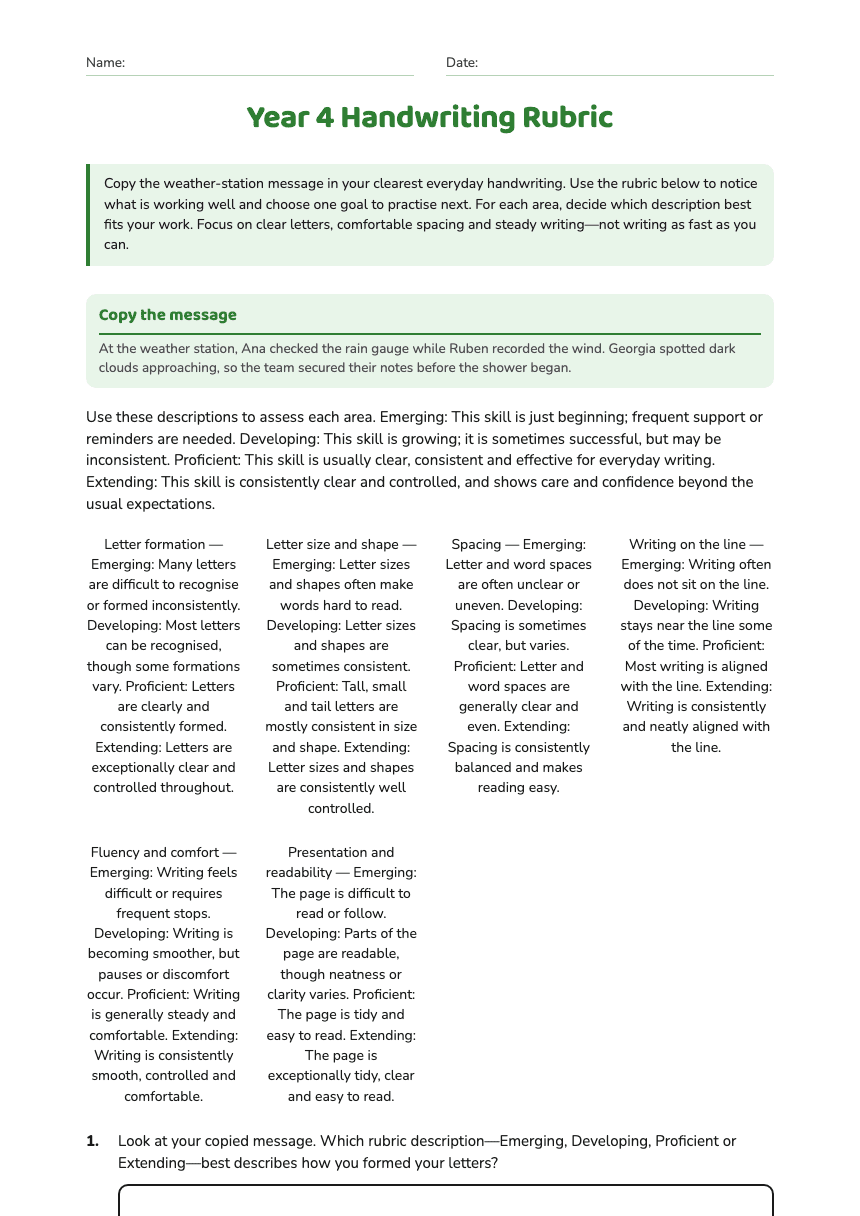
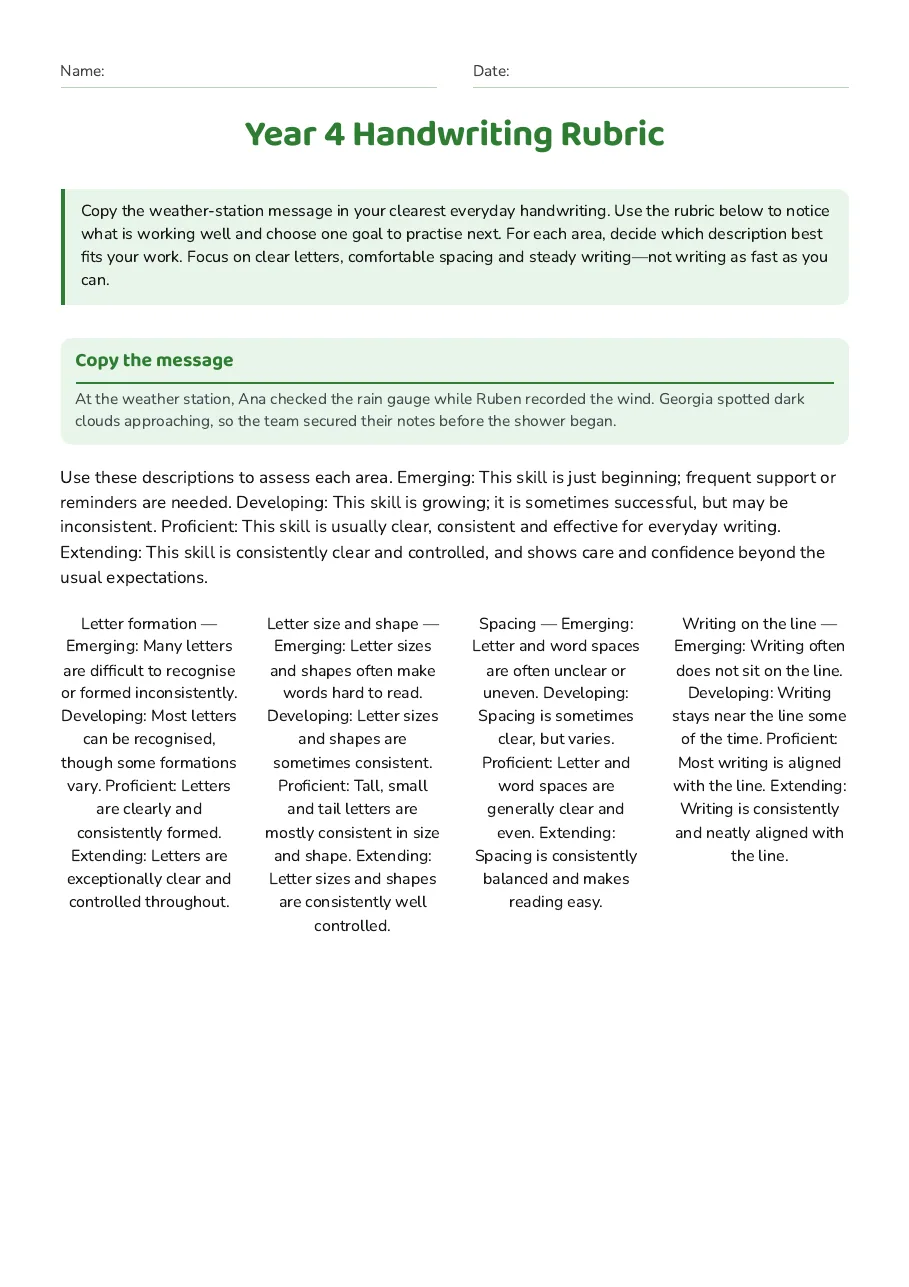
Copy the message
At the weather station, Ana checked the rain gauge while Ruben recorded the wind. Georgia spotted dark clouds approaching, so the team secured their notes before the shower began.
Letter formation — Emerging: Many letters are difficult to recognise or formed inconsistently. Developing: Most letters can be recognised, though some formations vary. Proficient: Letters are clearly and consistently formed. Extending: Letters are exceptionally clear and controlled throughout.
Letter size and shape — Emerging: Letter sizes and shapes often make words hard to read. Developing: Letter sizes and shapes are sometimes consistent. Proficient: Tall, small and tail letters are mostly consistent in size and shape. Extending: Letter sizes and shapes are consistently well controlled.
Spacing — Emerging: Letter and word spaces are often unclear or uneven. Developing: Spacing is sometimes clear, but varies. Proficient: Letter and word spaces are generally clear and even. Extending: Spacing is consistently balanced and makes reading easy.
Writing on the line — Emerging: Writing often does not sit on the line. Developing: Writing stays near the line some of the time. Proficient: Most writing is aligned with the line. Extending: Writing is consistently and neatly aligned with the line.
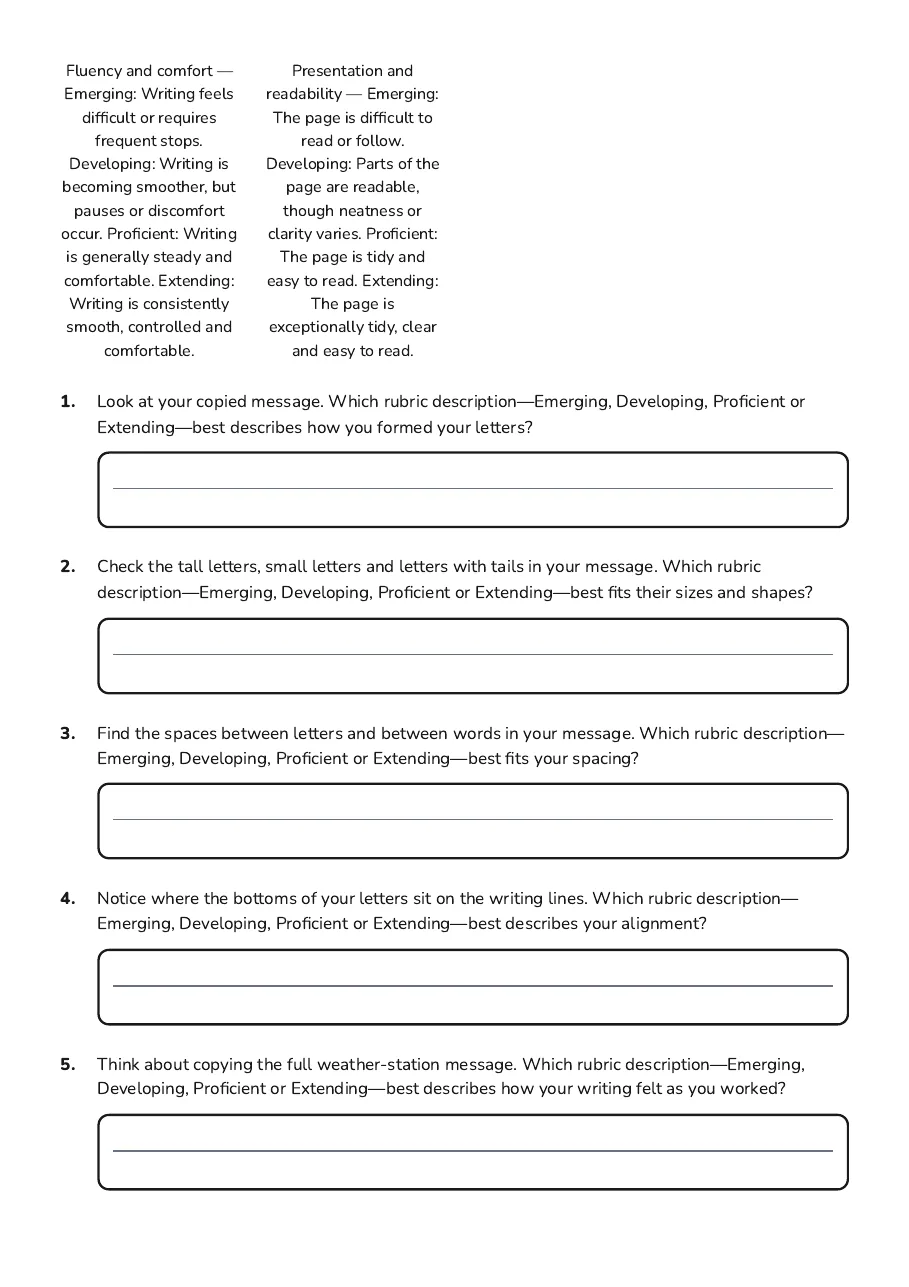
Fluency and comfort — Emerging: Writing feels difficult or requires frequent stops. Developing: Writing is becoming smoother, but pauses or discomfort occur. Proficient: Writing is generally steady and comfortable. Extending: Writing is consistently smooth, controlled and comfortable.
Presentation and readability — Emerging: The page is difficult to read or follow. Developing: Parts of the page are readable, though neatness or clarity varies. Proficient: The page is tidy and easy to read. Extending: The page is exceptionally tidy, clear and easy to read.
3 printable pages
Page 1
Page 2
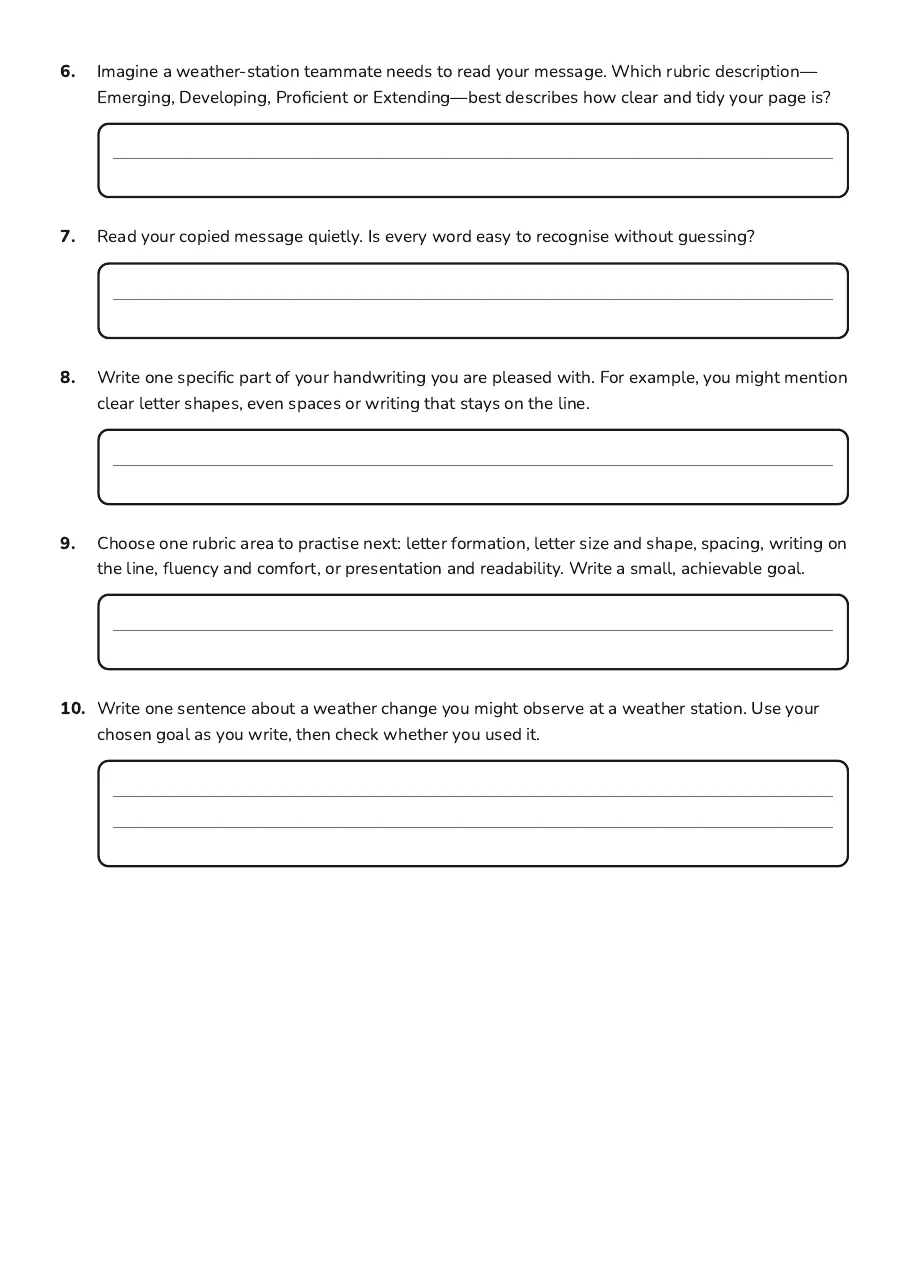
Page 3
About This Worksheet
Free in Kuraplan
Sign up free, grab the PDF, and customize it for your class.
Print-Ready
Formatted for standard paper. Clean layout, easy to read.
AI-Generated
Created with Kuraplan's AI, designed for real classroom use.
For Teachers & Parents
Use in classrooms, for homework, tutoring, or homeschool.
Need a custom version of this worksheet?
Kuraplan's AI generates custom worksheets in seconds — differentiated for every learner, aligned to your curriculum.
Generate Custom Worksheets — FreeMore English Worksheets
Paragraphing with Adverbial Starters
Free
SCAR Narrative Writing Guide
Free
Year 12 Writing Scaffolds
Free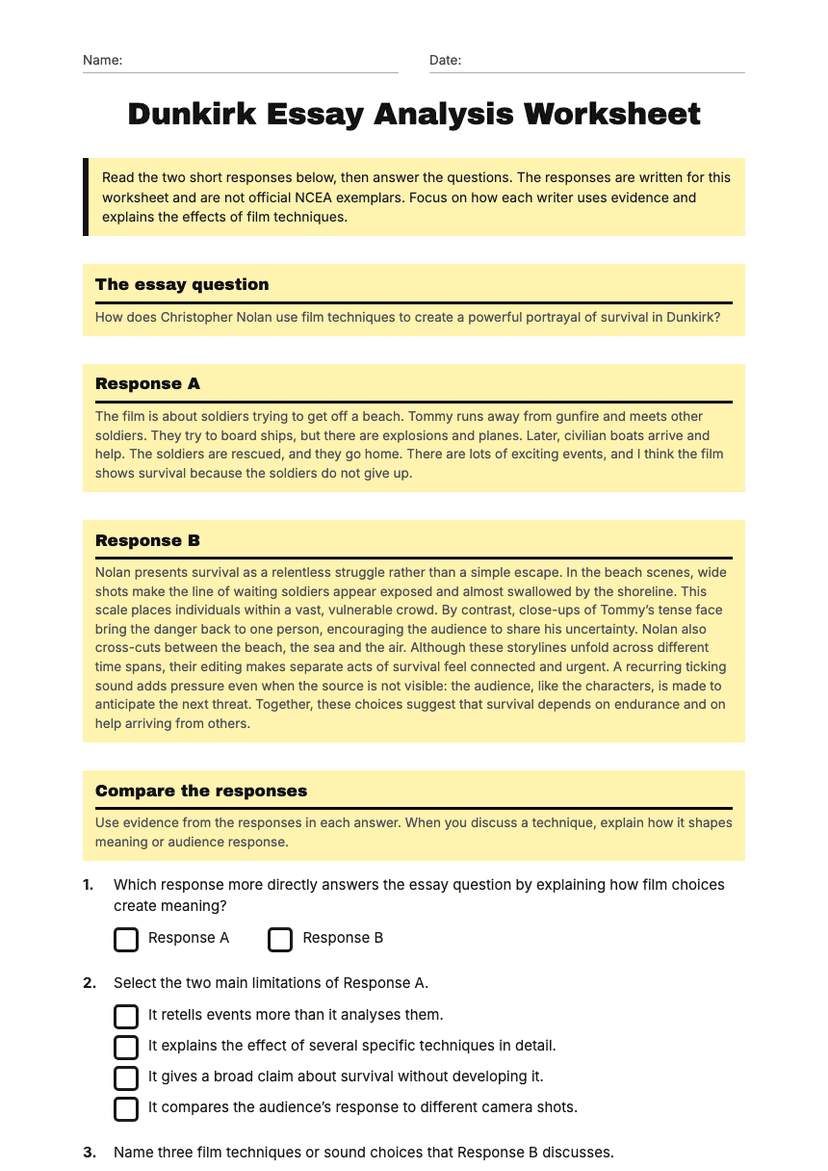
Dunkirk Essay Analysis Worksheet
Free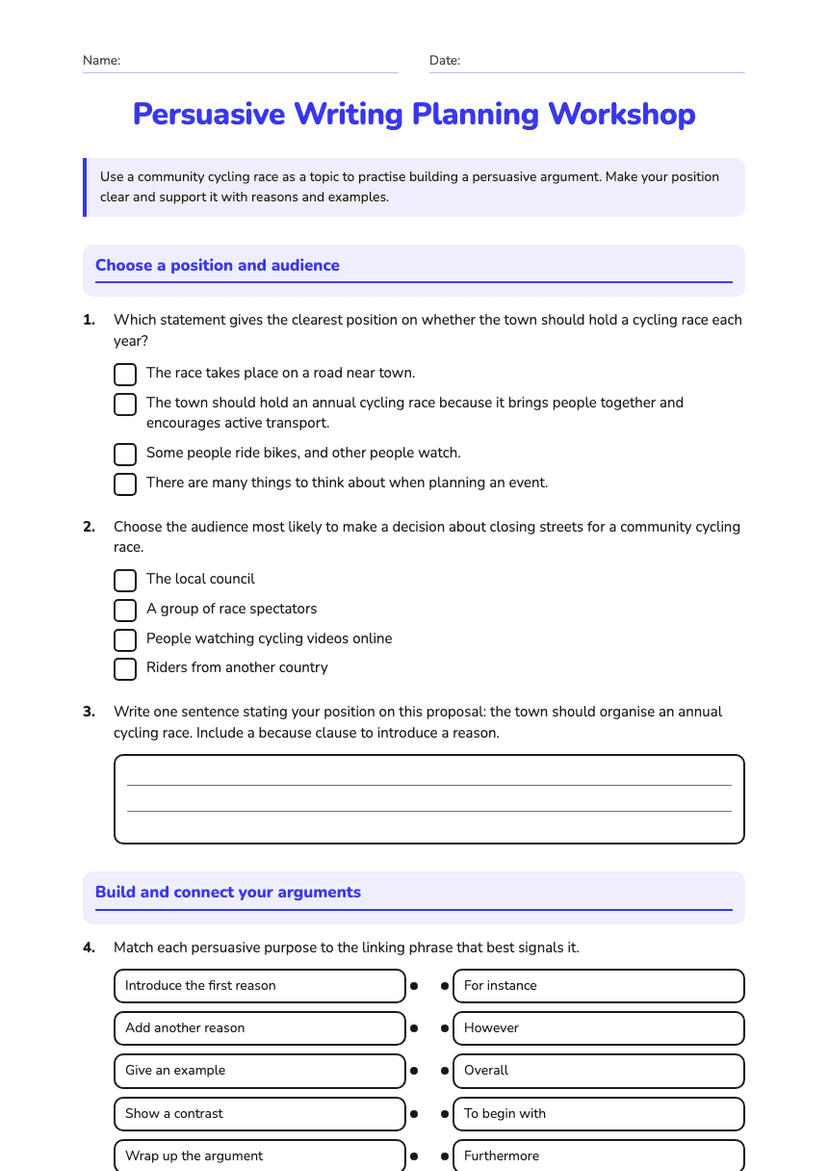
Persuasive Writing Planning Workshop
Free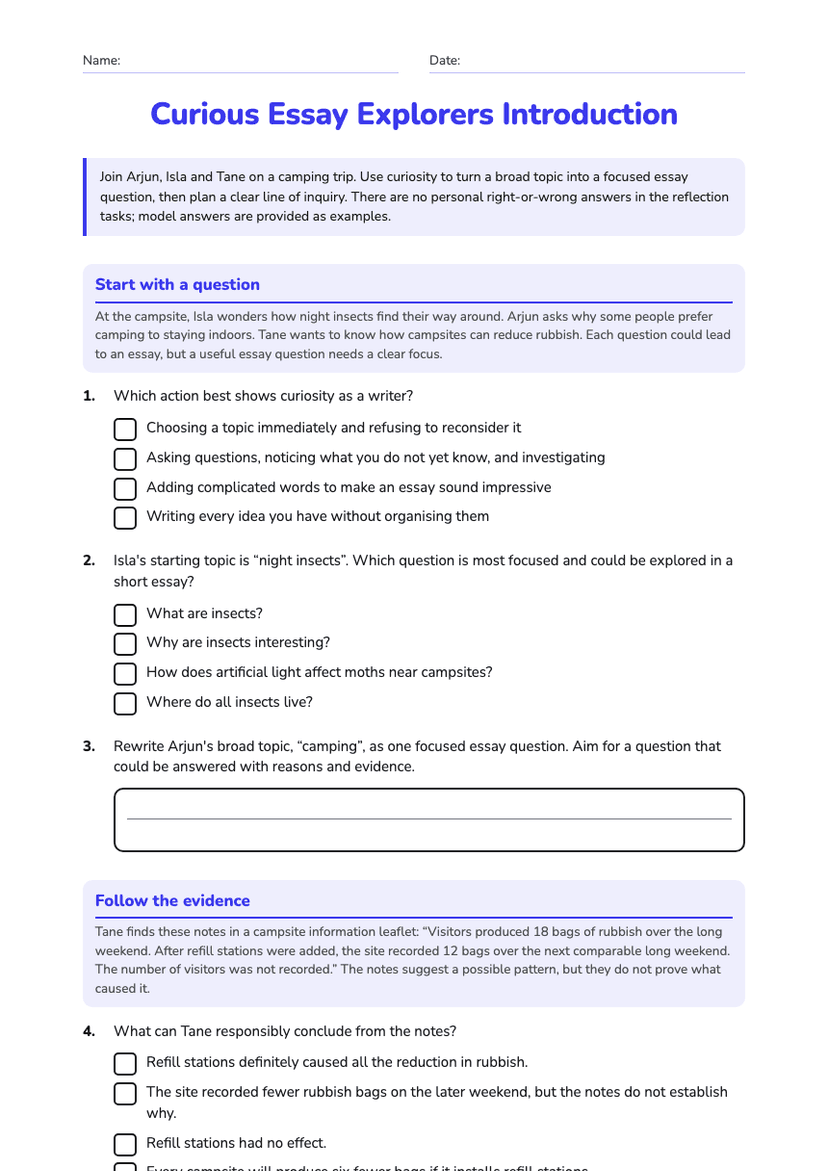
Curious Essay Explorers Introduction
Free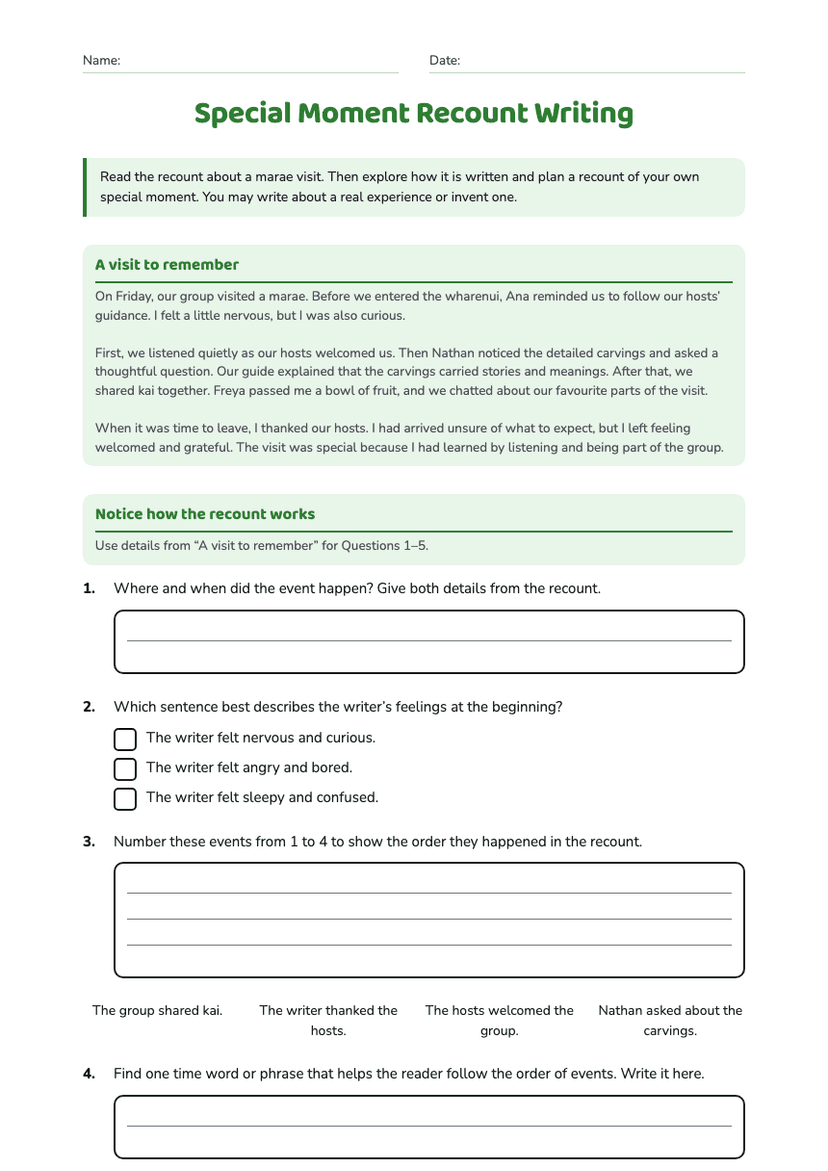
Special Moment Recount Writing
Free