You know the moment. Students can tell you a character is “nice,” “mean,” or “brave,” but when you ask why, the room gets quiet. They remember plot points, but they struggle to explain motivation, conflict, and change in a way that leads to real literary analysis.
That's why I keep a solid characters graphic organizer close at hand. These tools help students move from vague impressions to text-based thinking. They make character study visible, manageable, and repeatable. That matters because character graphic organizers are a long-established reading comprehension tool used to help students analyze traits, motivations, relationships, actions, and growth, and major education sources describe them as visual frameworks for step-by-step character study rather than one fixed worksheet format, as explained in this overview of character analysis graphic organizers.
Good organizers also make it easier to connect character work to bigger reading goals. Students aren't just listing traits. They're linking a character's decisions to the story's events and outcomes, which is exactly where stronger discussion and writing start. If you're also teaching growth and transformation in fiction, this quick guide to different character arc types pairs well with the tools below.
1. Character Profile Card Template
If you want the fastest possible win, start here. Kuraplan's Character Profile Card Template is a free printable PNG with clear fields for Name, Age, Likes, Dislikes, and Personality. It's simple enough for younger students, but it's also useful as a warm-up or prewriting tool in upper grades when you want students to capture the essentials before moving into deeper analysis.
What I like most is the low-prep factor. You download it, print it, and use it. No account setup, no formatting rabbit hole, no “I'll fix this template later” problem. For busy weeks, that matters more than teachers sometimes admit.
Why it works in real classrooms
This template works well when students need structure without overload. A lot of character sheets fail because they ask for too much too early. This one gets students writing quickly, which makes it useful for first reads, book clubs, intervention groups, creative writing, and even SEL check-ins built around fictional or historical figures.
It also fits the broader way character graphic organizers are used in literacy instruction. In practice, teachers commonly adapt them from simple one-page character maps to more detailed sheets with physical traits, personality traits, motivations, key decisions, and changes over a text. Kuraplan's version sits at the clean, accessible end of that spectrum, which is often exactly what you need at the start.
Practical rule: Use a simpler organizer before a deeper one. Students usually produce better evidence later if they've already captured the basic profile first.
If you want a next step after the profile card, pair it with Kuraplan's character map creation worksheet. That combination gives you an easy progression from basic identity details to more analytical thinking.
Best use cases and trade-offs
- Best for quick setup: Great for bell ringers, centers, substitute plans, and exit tickets.
- Best for broad grade use: The fields are student-friendly and don't intimidate struggling readers.
- Best for creative crossover: It works for original character creation just as well as novel study.
The trade-off is that it's static. Because it's a PNG, students either write by hand or you edit it elsewhere before assigning it digitally. It's also not the organizer I'd use for a full literary essay on a complex protagonist.
For deeper writing projects, I'd treat it like the front page of a larger file. It's a strong starting point, not the whole analysis. If you're building more extensive student-created profiles for fiction writing, this guide to character bibles can help extend the work.
2. Scholastic Teachables
Scholastic Teachables is the kind of resource library many teachers end up using when they need something reliable fast. If you teach elementary or upper elementary, it gives you a large bank of printable organizers and literacy resources from a publisher most schools already know and trust.
The biggest advantage is consistency. The worksheets generally look classroom-ready right away, and that saves time when you're building a unit under pressure.
Where it fits best
Scholastic Teachables is strongest when you want printable character-traits work, compare-and-contrast pages, and ready-made ELA supports that won't need much cleanup. It's especially helpful if your team likes using materials that feel familiar across grade levels.
The downside is flexibility. You'll usually find something usable, but not always something that feels tailor-made to the exact novel, short story, or standards focus in front of you. For older students, some options can feel a bit elementary unless you curate carefully.
- Best for trusted printables: Good for teachers who want publisher-backed materials rather than open marketplaces.
- Best for unit support: Helpful when character analysis needs to sit alongside vocabulary, comprehension, and writing resources.
- Watch for grade fit: It's strongest in PreK through 6, so middle school teachers may need to sort more selectively.
I'd recommend it for teachers who value speed and reliability over customization. If your workflow is “print, teach, move on,” this one earns its place.
3. ReadWriteThink
ReadWriteThink has been a dependable free option for years, and it still holds up. When I need a clean PDF character map without paywalls or account setup, this is one of the first places I check.
Its strength is that the organizers tend to be straightforward and instruction-friendly. Students can look at the page and understand what belongs where, which sounds minor until you've lost ten minutes explaining a cluttered worksheet.
Why teachers still use it
The historical staying power of character graphic organizers shows up in tools like this. The broader model has remained consistent over time. Students identify a character, record observable evidence, and chart progression or change. That enduring structure has helped make character organizers a standard part of literacy instruction across print and digital formats, as reflected in this overview of character organizer publishing and classroom use.
That's also why ReadWriteThink works so well. It doesn't try to reinvent the form. It gives you practical, student-ready versions of a format teachers already know how to use.
Keep a few static PDFs in your back pocket for the weeks when tech access falls apart. Character analysis still needs to happen even when devices don't cooperate.
The main trade-off is customization. These are mostly print-and-go PDFs, so you won't get the design flexibility of a more editable platform. Still, for free, immediate access, it's hard to beat.
4. Storyboard That
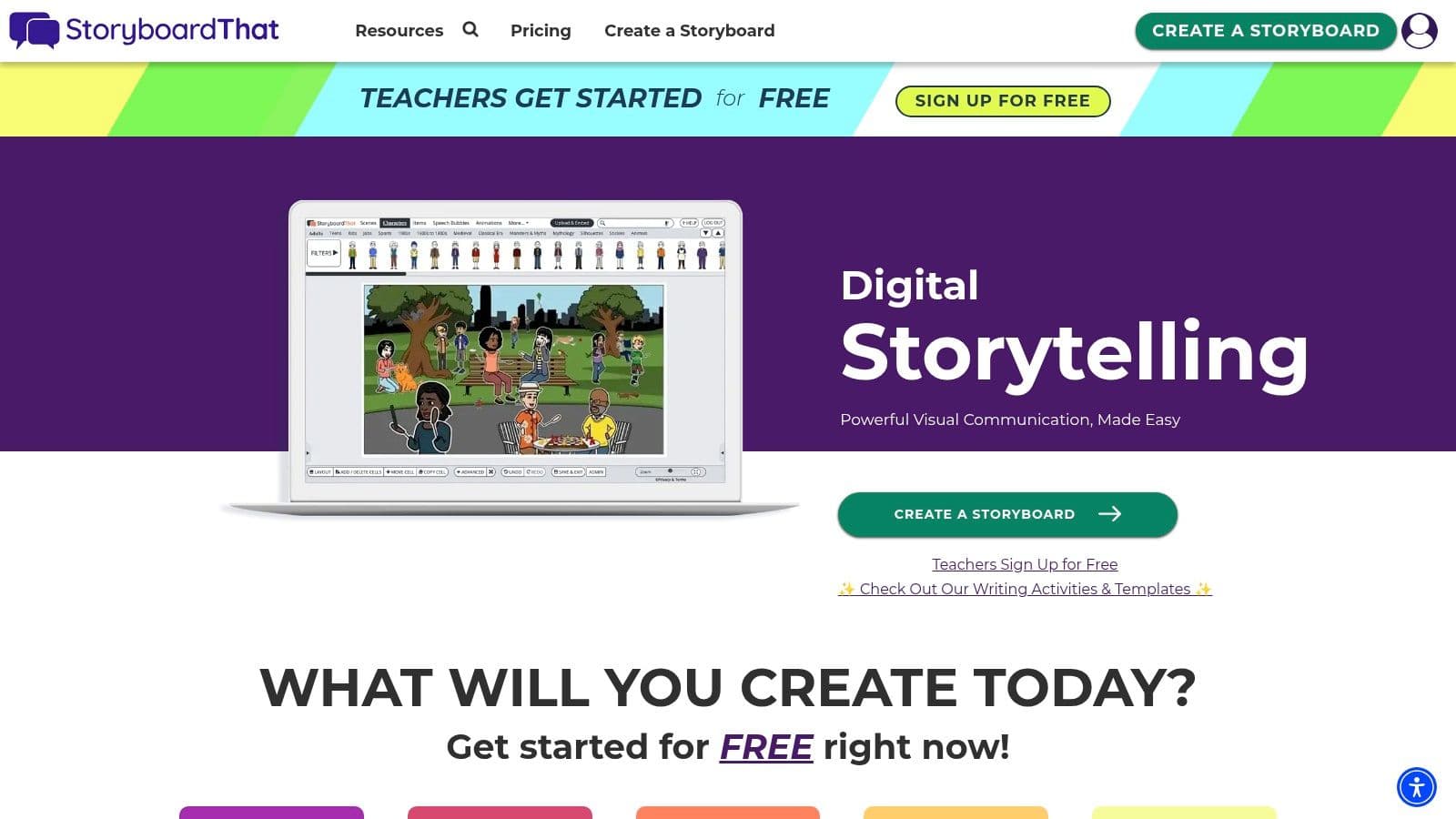
Storyboard That is a strong pick when your students think better visually than they write on a blank page. Its character map templates make it easier for students to connect traits, quotes, motives, and events without feeling like they're just filling out another worksheet.
This is one I like for project-based work, literature circles, drama study, and film analysis. Students who drag their feet on written analysis will often engage more readily when they can build scenes and map relationships visually.
Best for visual and collaborative work
The platform shines when you want students to show character understanding through layout and image choice, not just sentences. That can be especially helpful for multilingual learners, reluctant writers, and students who need an alternative entry point into discussion.
If you're mapping character alongside plot, Kuraplan's story elements graphic organizer makes a good companion resource. I've found that pairing a visual character task with a more traditional story-structure organizer often leads to better whole-text understanding.
- What works well: Visual storytelling, quote analysis, and group presentations.
- What takes setup: Accounts, rostering, and managing student access.
- What to watch: The free tier is limited, so it's best to confirm what students can create before planning a full lesson around it.
This is not my first choice for a quick print-and-go day. It is one of my favorites when the lesson calls for student ownership and a stronger visual product.
5. Canva for Education
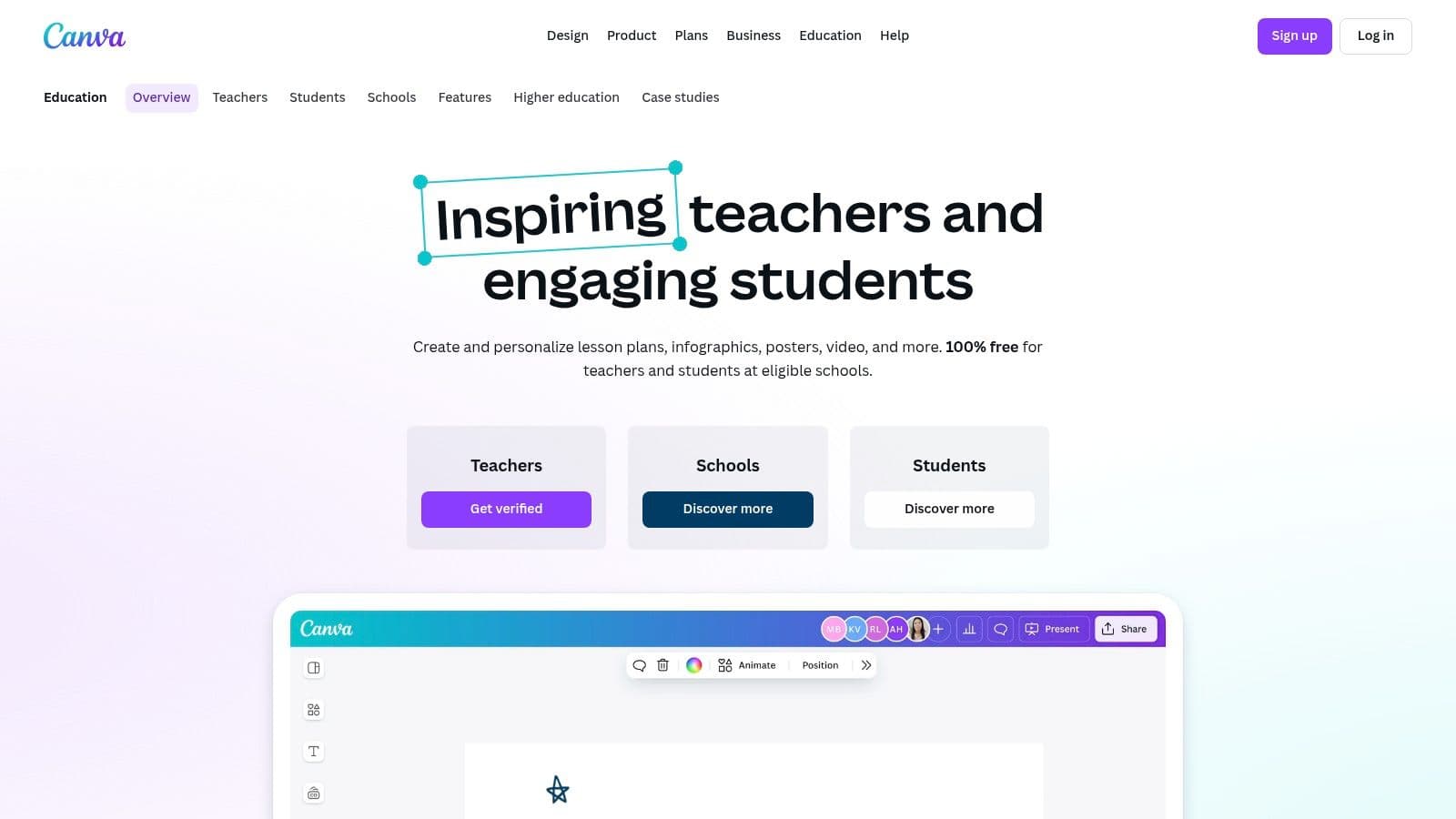
Canva for Education is the option I'd choose when customization really matters. If you want students to build a polished character dossier, redesign a template for a specific novel, or submit something digital that still looks clean when printed, Canva handles that well.
Its biggest strength is flexibility. You can start with a basic character sheet and adapt it into something much more detailed, with room for quotes, relationship webs, conflict notes, or theme connections.
Where Canva helps and where it slows you down
For differentiation, Canva can be excellent. You can duplicate one organizer and create leveled versions without rebuilding from scratch. That's helpful when one class needs sentence stems and another is ready for open-ended evidence boxes.
The catch is that freedom creates decision fatigue. Canva has plenty of strong templates, but it also has plenty that look attractive and function poorly in an actual classroom. Students can also get distracted by design choices if you don't define the task clearly.
Teacher move: Lock down the structure first. Then let students personalize fonts, colors, or images after the analytical work is complete.
I'd use Canva when the organizer is part of a finished product or portfolio piece. For a ten-minute warm-up, it's usually more tool than you need.
6. Education.com
Education.com works well when you need differentiated resources and don't want to build several versions yourself. Its character analysis materials span printable and assignable formats, which is useful if your classroom moves back and forth between paper and devices.
I've found it especially practical for upper elementary instruction where one group needs simple trait identification and another is ready to compare characters, emotions, and decisions in more detail.
A solid middle-ground option
This platform sits in the middle between a giant publisher library and a fully custom design tool. You get grade tags, standards indicators, and enough variety to support different learners without having to start from scratch every time.
That said, the search experience can be uneven. If you don't filter carefully, you'll get a mixed bag of materials across grade bands and skill levels. It's worth previewing before you promise yourself it'll solve tomorrow's lesson.
- Best for mixed-format teaching: Useful if you assign some work digitally and still print for centers or small groups.
- Best for differentiation: Stronger than many single-format worksheet sites.
- Watch for curation time: You may need a few extra minutes to sort through results.
For teachers who juggle intervention, whole group, and homework formats in one week, Education.com can save a lot of planning time.
7. Twinkl USA

Twinkl USA has a huge catalog, and that's both the strength and the challenge. When you need a character profile, traits organizer, comparison sheet, or literacy pack with a consistent look, Twinkl usually has something close.
Teachers who like neatly formatted downloads often appreciate it right away. The resources tend to look polished and classroom-ready without much editing.
Best when you want volume and consistency
Twinkl is useful for schools that prefer one membership with broad coverage across subjects and grade levels. If your team values having a shared resource bank with similar formatting, this one can be convenient.
The trade-off is search time. A large library doesn't automatically mean the best resource appears first. Some topics are richly covered, while others need more digging.
A practical way to use Twinkl is to treat it as a base library, not a final answer. Pull a solid organizer, then adapt your prompts and discussion questions around it so it feels less generic and more tied to your text.
8. Lucidchart for Education
Lucidchart for Education is the tool I reach for when a novel or play has a complicated cast. If students need to map relationships, alliances, conflicts, family ties, and shifting loyalties, Lucidchart handles that better than most standard character worksheets.
A characters graphic organizer becomes more than a trait chart. It turns into a visual network of people, choices, and consequences.
Strong for complex texts
Lucidchart isn't built specifically for ELA, but that's part of the appeal. It gives you flexible diagrams, webs, and cluster maps that can be shaped to fit Shakespeare, historical fiction, mystery novels, or any text where character interaction drives the reading work.
It also fits what we know about classroom adoption. Innovation uptake is highly sensitive to relative advantage, compatibility, and complexity, and Everett Rogers' diffusion framework explains 49% to 87% of adoption variance. In practice, that means a tool like Lucidchart is more likely to stick if teachers use a simple shared template that fits existing routines, rather than asking everyone to build complex diagrams from scratch.
- Use it for relationship webs: Especially effective for ensemble casts.
- Keep the template simple: Too many arrows and color codes can overwhelm students fast.
- Plan the rollout: It works best when students already know the basic interface.
Lucidchart is excellent for advanced mapping. It's not the quickest option for a spontaneous lesson.
9. K5 Learning
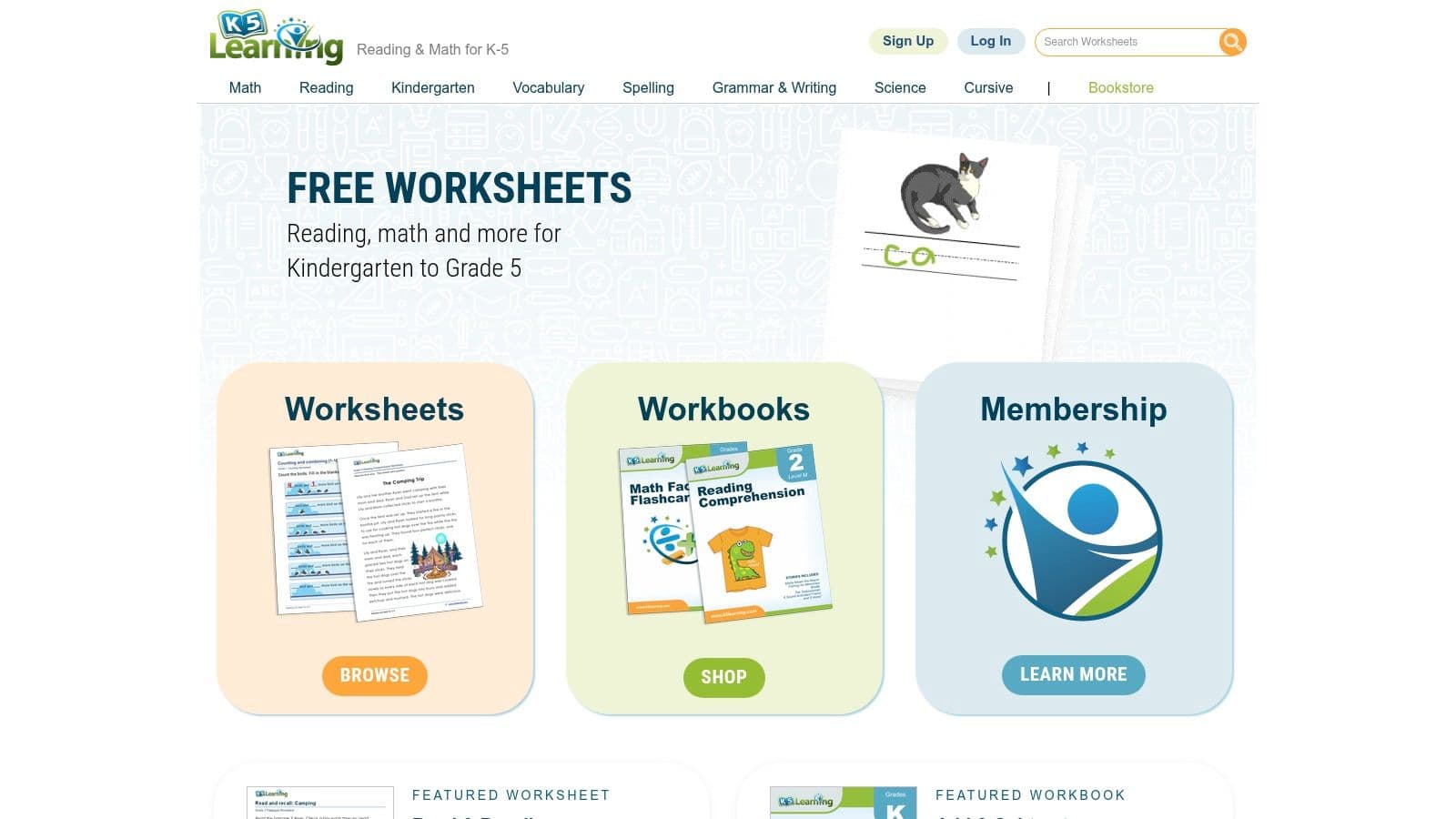
K5 Learning is uncomplicated in the best way. Its worksheets are aimed at elementary grades, and that focus helps. The layouts are clear, the prompts are manageable, and the pages work well for independent practice, intervention, and literacy centers.
Not every character organizer needs to be flashy. Sometimes you need a worksheet that gets handed out, understood, and completed with minimal explanation. This is that kind of resource.
A good fit for elementary classrooms
K5 Learning works well for grades 2 through 5, especially when students are just starting to support trait ideas with evidence from the text. The simpler design reduces cognitive load, which is useful for younger readers and students who need repeated, structured practice.
The limitation is range. You won't get the breadth of a giant marketplace or the customization of a design platform. But for quick elementary character analysis, it does the job well.
Elementary students often need the organizer to disappear into the task. If the layout is too busy, they spend their energy decoding the worksheet instead of thinking about the character.
I'd keep K5 Learning in rotation for center work, homework, and reteaching days.
10. EdrawMax
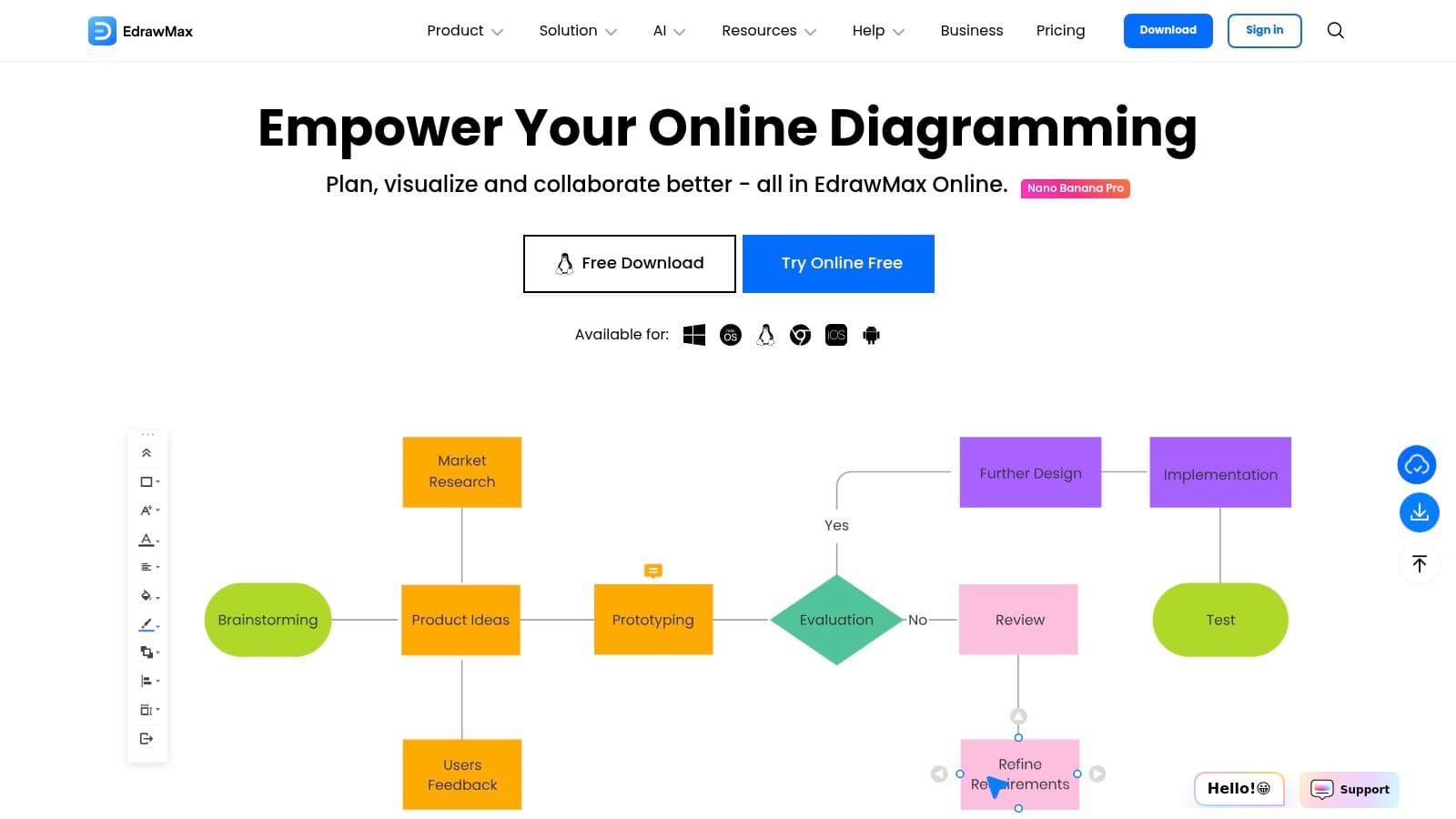
EdrawMax is a better fit for teachers who want to build or heavily adapt their own organizer. If standard worksheets never quite match the way you teach character analysis, EdrawMax gives you more control over structure, layout, and export options.
I'd use it for custom handouts, drama units, or advanced secondary classes where you want something more specific than a basic trait box organizer.
Good for tailored designs
The advantage here is flexibility with structure. You can create a relationship web, a character-change map, or a hybrid organizer that combines traits, evidence, conflict, and emotional shifts in one place. That's useful when your text demands something beyond a standard printable.
If you need a simpler companion for younger students or for a warm-up before moving into a custom diagram, Kuraplan's character traits and emotions worksheet pairs nicely with a more advanced EdrawMax organizer.
The caution is that EdrawMax is still a general diagramming tool. Some templates are community-created, so I'd always preview and clean up language before using one with students. It's powerful, but it asks more from the teacher up front.
Characters Graphic Organizer: Top 10 Comparison
| Product | Core Features | UX & Quality (★) | Value / Price (💰) | Target Audience (👥) | Unique Selling Points (✨/🏆) |
|---|---|---|---|---|---|
| Character Profile Card Template, Free Printable Diagram (Kuraplan) | Free PNG template: Name/Age/Likes/Dislikes/Personality, printable | ★★★★, low‑prep, student‑friendly | Free 💰 | K–12 teachers & students 👥 | ✨ Instant, curriculum-aware, classroom-use terms; 🏆 trusted by schools |
| Scholastic Teachables | 30k+ vetted printables, standards-aware ELA sets | ★★★★, consistent publisher quality | Subscription required 💰 | PreK–6 teachers 👥 | 🏆 Scholastic-vetted ELA resources, deep curriculum fit ✨ |
| ReadWriteThink (NCTE/IRA) | Research-based character maps & PDFs, no account needed | ★★★★, clean, standards-friendly | Free 💰 | Evidence-based literacy teachers 👥 | ✨ Research-backed, ready-to-print handouts |
| Storyboard That | Drag‑and‑drop storyboards, character map templates, illustrations | ★★★★, highly visual, engaging | Freemium / Edu plans 💰 | Visual/project-based classrooms 👥 | ✨ Visual storytelling + real-time collaboration; great for projects |
| Canva for Education | Editable templates, collaboration, one-click export to PDF | ★★★★★, highly customizable & polished | Free for verified K–12 💰 | Teachers & students needing customization 👥 | ✨ Vast template library + classroom tools; easy print/export 🏆 |
| Education.com | Grade-banded printables & assignable digital PDFs, standards tags | ★★★, broad coverage, mixed UX | Some paid membership content 💰 | K–12 teachers needing differentiation 👥 | ✨ Differentiated grade-level resources; digital & print workflows |
| Twinkl USA | U.S.-focused editable PDFs, literacy packs, grade taxonomy | ★★★★, reliable formatting | Membership required 💰 | U.S. K–12 teachers 👥 | ✨ Large U.S. catalog + editable classroom resources |
| Lucidchart for Education | Diagramming, relationship webs, Google integration | ★★★★, strong for complex maps | Edu licensing / paid tiers 💰 | Teachers mapping multi-character relationships 👥 | ✨ Robust diagram tools + Google Classroom integration |
| K5 Learning | Grade‑leveled character analysis worksheets (grades 2–5) | ★★★, simple, print-and-go | Mixed (free & paid) 💰 | Elementary teachers (Gr 2–5) 👥 | ✨ Intervention-friendly, quick prep materials |
| EdrawMax – Character Analysis Templates | Editable diagram templates, drag‑and‑drop shapes, multi-format export | ★★★, flexible but general-purpose | Paid software 💰 | Teachers needing custom diagrams & handouts 👥 | ✨ High customization & export options for tailored organizers |
Making Character Analysis Stick
The best characters graphic organizer isn't the one with the most boxes. It's the one your students can use well. If the format is too busy, too open-ended, or too hard to explain, the tool gets in the way of the reading. When the structure is clear, students have a much better shot at moving from “this character is nice” to “this character changes because this event forces a different choice.”
That's why I'd think about these tools in three groups. First, there are quick-start printables like Kuraplan's Character Profile Card, ReadWriteThink, and K5 Learning. These are ideal when you need low prep, clean structure, and fast classroom use. Second, there are resource libraries like Scholastic Teachables, Education.com, and Twinkl USA. These help when you want breadth and the ability to pull several related materials for a unit. Third, there are more flexible digital builders like Storyboard That, Canva for Education, Lucidchart, and EdrawMax. Those shine when students need to create, collaborate, or map more complex relationships.
What usually works best in practice is not choosing one forever. It's matching the organizer to the lesson. Early in a novel, I'd keep things simple. During close reading, I'd ask for evidence and motivations. Near the end of a unit, I'd shift to relationship maps, growth tracking, or a more polished final product. Students don't need a brand-new routine every week, but they do benefit from a tool that fits the thinking you're asking them to do.
I'd also model the organizer before assigning it independently. That matters more than the platform. A strong think-aloud, one shared example, and a clear expectation for text evidence will usually improve student work more than a fancier template ever will.
If you're deciding where to start, begin with the lowest-friction option that still gives students enough structure. In most classrooms, adoption sticks when the tool fits the routine instead of disrupting it. That's true for teachers and students alike. A good organizer becomes part of how the class reads, talks, and writes about literature.
Use these tools as scaffolds, not decorations. The page itself isn't the goal. Stronger reading, sharper discussion, and more grounded writing are the goal. When a characters graphic organizer helps students see how traits, motives, relationships, and decisions shape the story, character analysis stops feeling like a compliance task and starts becoming real thinking.
If you want to save planning time while building stronger literacy lessons, Kuraplan is worth a look. It goes beyond a single printable. You can create standards-aligned lessons, generate worksheets, build visuals, and adapt resources for different learners without spending your prep period formatting everything by hand. For teachers who want character analysis materials that are practical and classroom-ready, Kuraplan is an easy tool to keep in the mix.