Anglo-Saxon Daily Life
A free history worksheet ready for your classroom. Open in Kuraplan to grab the print-ready PDF, customize it for your students, or generate a fresh version in seconds.
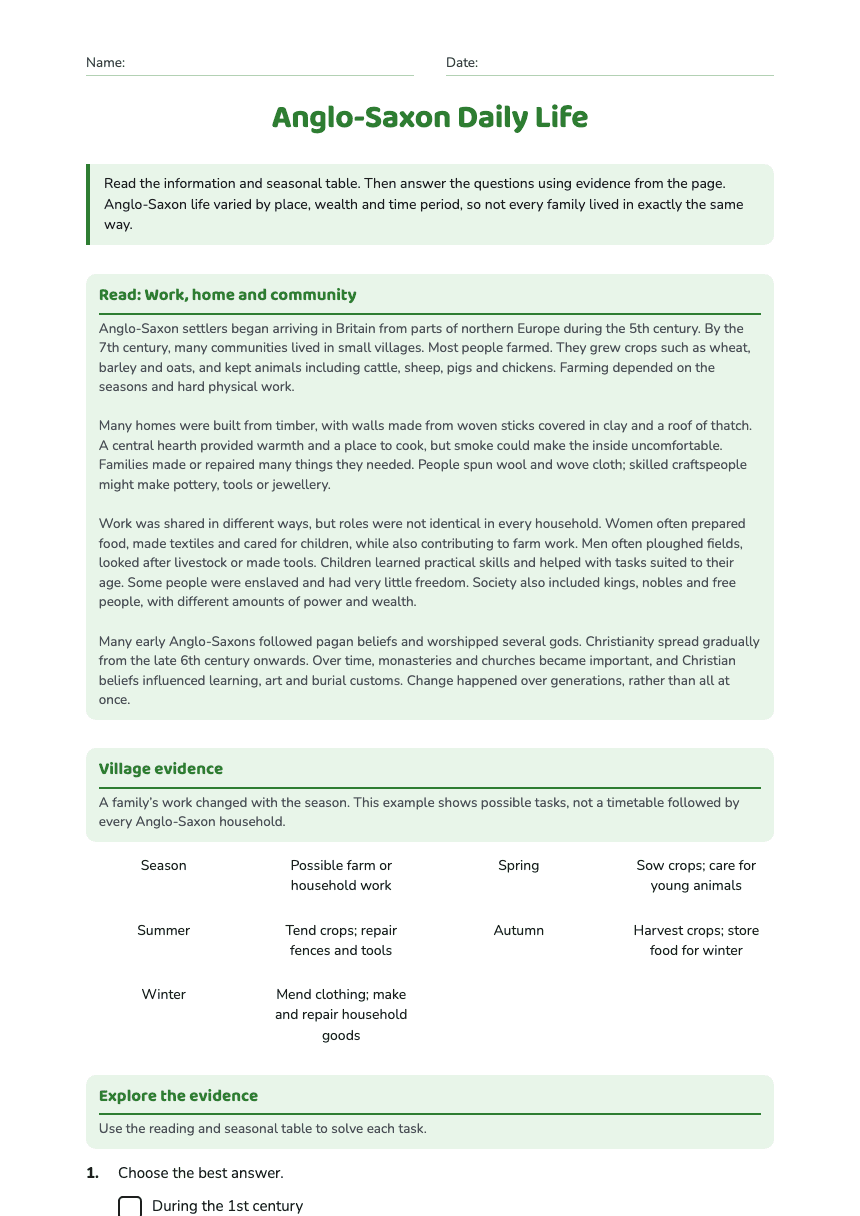
Anglo-Saxon Daily Life
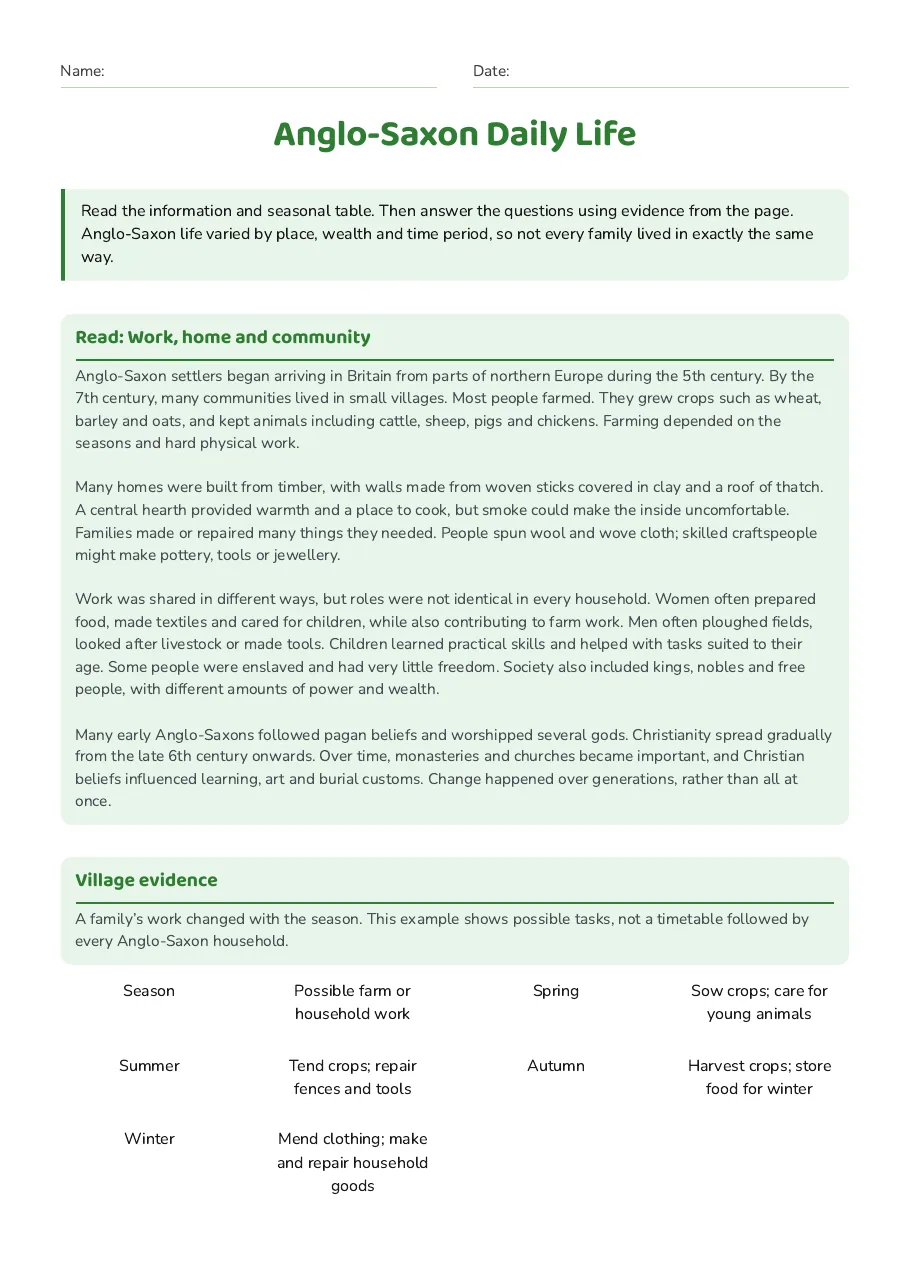
Read: Work, home and community
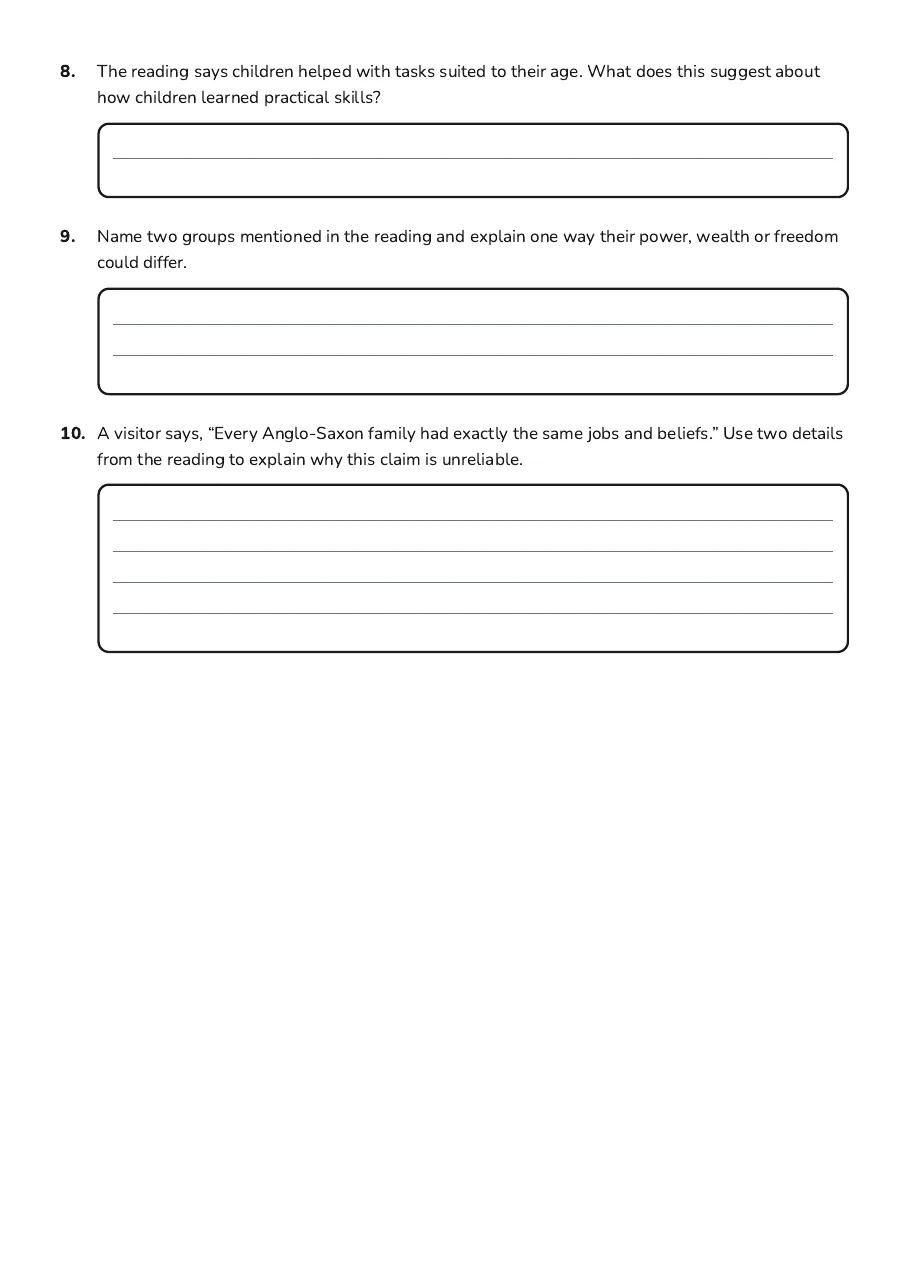
Anglo-Saxon settlers began arriving in Britain from parts of northern Europe during the 5th century. By the 7th century, many communities lived in small villages. Most people farmed. They grew crops such as wheat, barley and oats, and kept animals including cattle, sheep, pigs and chickens. Farming depended on the seasons and hard physical work. Many homes were built from timber, with walls made from woven sticks covered in clay and a roof of thatch. A central hearth provided warmth and a place to cook, but smoke could make the inside uncomfortable. Families made or repaired many things they needed. People spun wool and wove cloth; skilled craftspeople might make pottery, tools or jewellery. Work was shared in different ways, but roles were not identical in every household. Women often prepared food, made textiles and cared for children, while also contributing to farm work. Men often ploughed fields, looked after livestock or made tools. Children learned practical skills and helped with tasks suited to their age. Some people were enslaved and had very little freedom. Society also included kings, nobles and free people, with different amounts of power and wealth. Many early Anglo-Saxons followed pagan beliefs and worshipped several gods. Christianity spread gradually from the late 6th century onwards. Over time, monasteries and churches became important, and Christian beliefs influenced learning, art and burial customs. Change happened over generations, rather than all at once.
Village evidence
A family’s work changed with the season. This example shows possible tasks, not a timetable followed by every Anglo-Saxon household.
Season
Possible farm or household work
Spring
Sow crops; care for young animals
Summer
Tend crops; repair fences and tools
Autumn
Harvest crops; store food for winter
Winter
Mend clothing; make and repair household goods
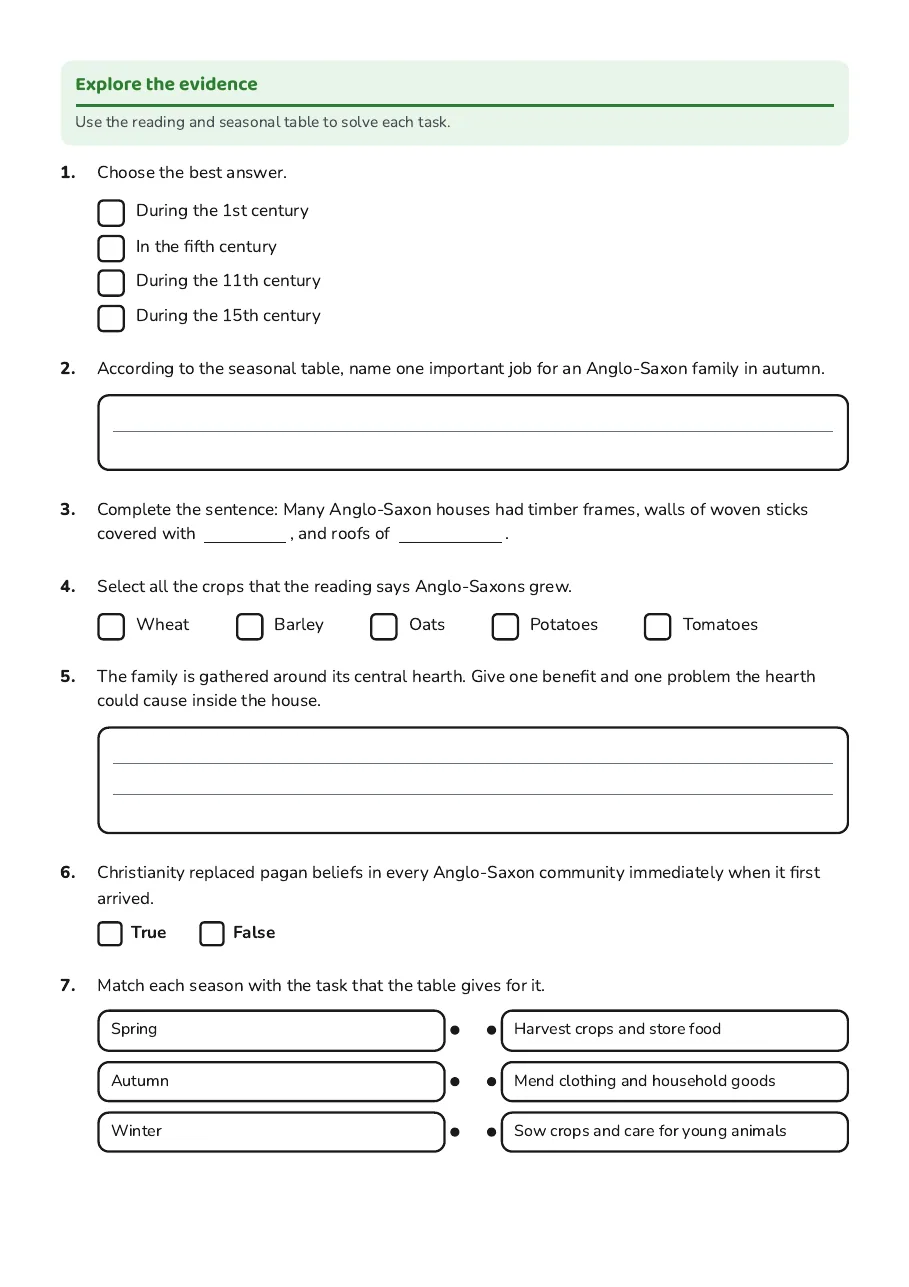
Explore the evidence
Use the reading and seasonal table to solve each task.
- During the 1st century
- In the fifth century
- During the 11th century
- During the 15th century
- Wheat
- Barley
- Oats
- Potatoes
- Tomatoes
- Spring
- Autumn
- Winter
- Harvest crops and store food
- Mend clothing and household goods
- Sow crops and care for young animals
3 printable pages
Page 1
Page 2
Page 3
About This Worksheet
Free in Kuraplan
Sign up free, grab the PDF, and customize it for your class.
Print-Ready
Formatted for standard paper. Clean layout, easy to read.
AI-Generated
Created with Kuraplan's AI, designed for real classroom use.
For Teachers & Parents
Use in classrooms, for homework, tutoring, or homeschool.
Need a custom version of this worksheet?
Kuraplan's AI generates custom worksheets in seconds — differentiated for every learner, aligned to your curriculum.
Generate Custom Worksheets — FreeMore History Worksheets
League of Nations Weaknesses
Free
Ancient vs Modern Benin
Free
Year 7 History Exploration: Britain Through Time
Free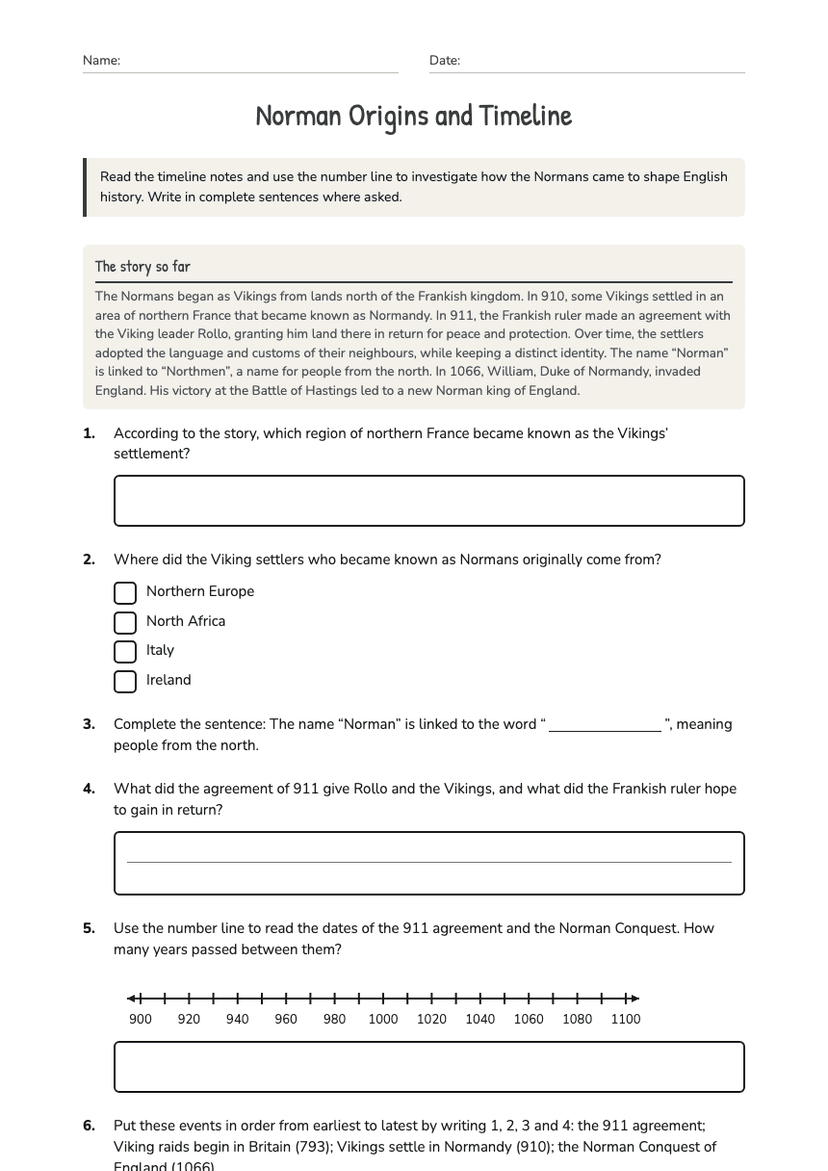
Norman Origins and Timeline
Free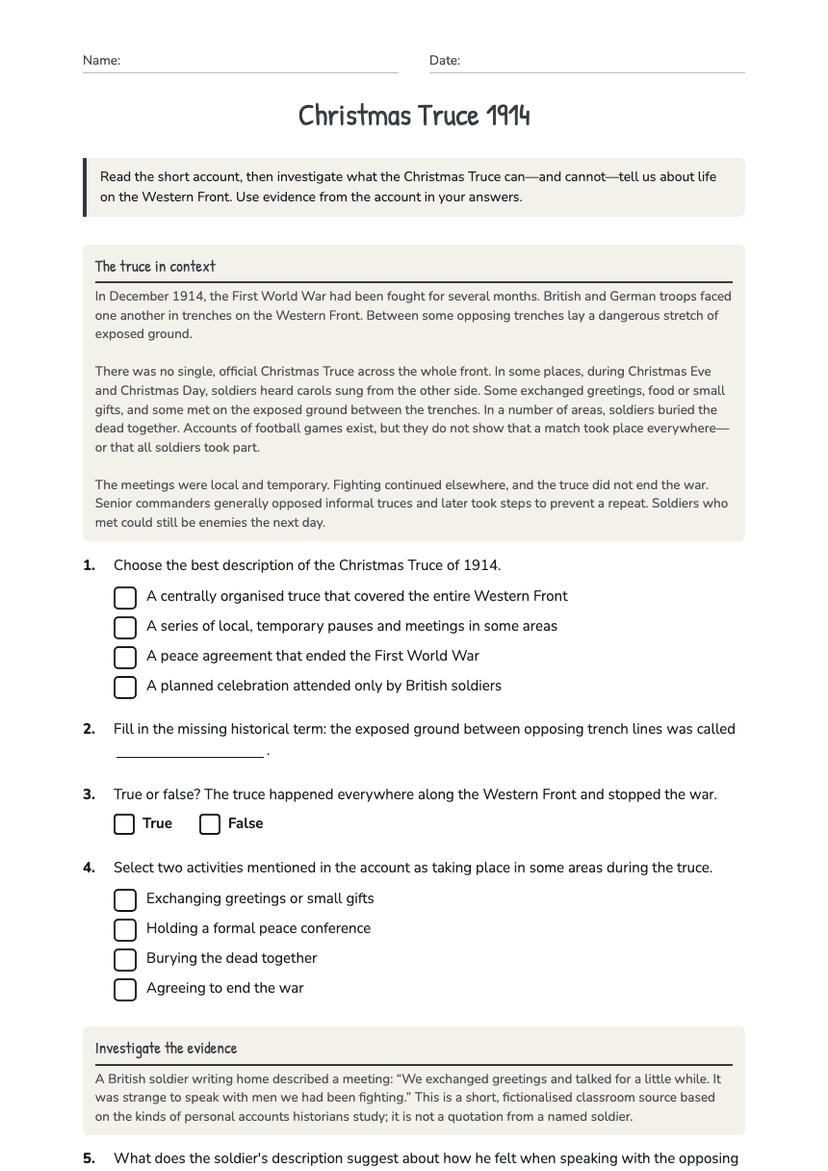
Christmas Truce 1914
Free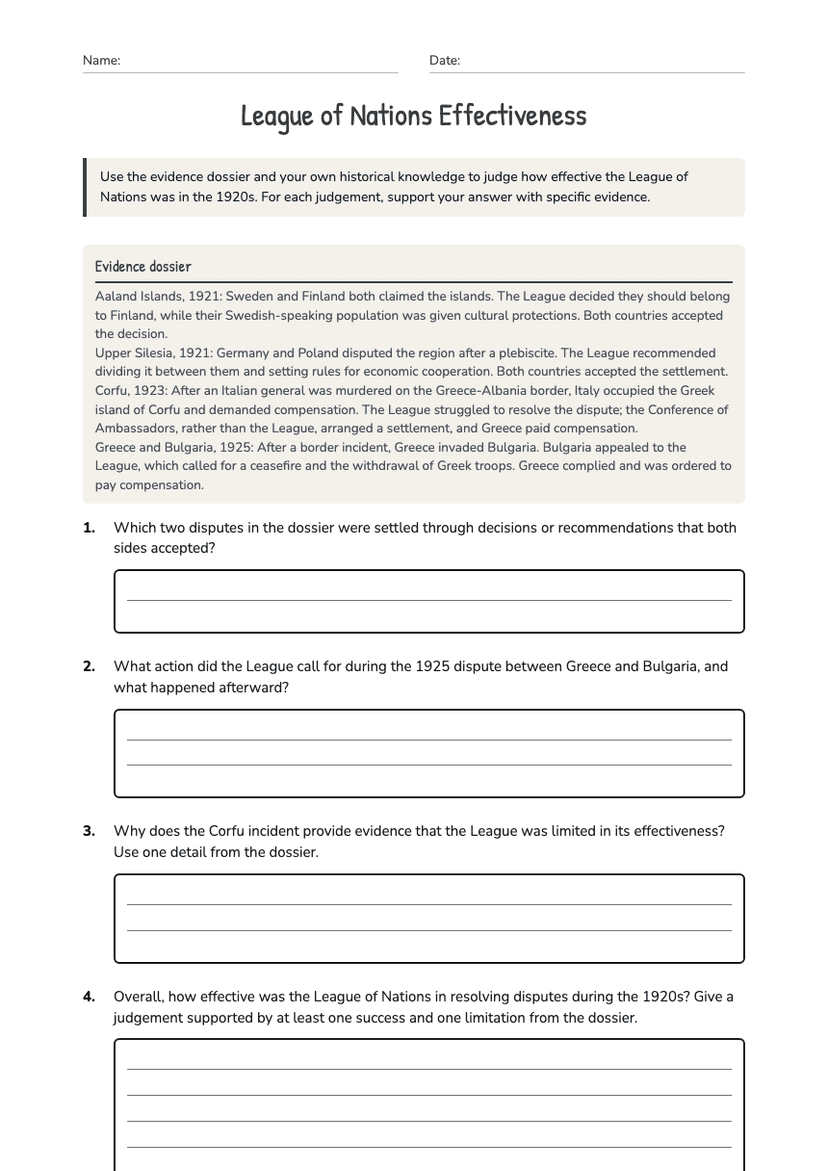
League of Nations Effectiveness
Free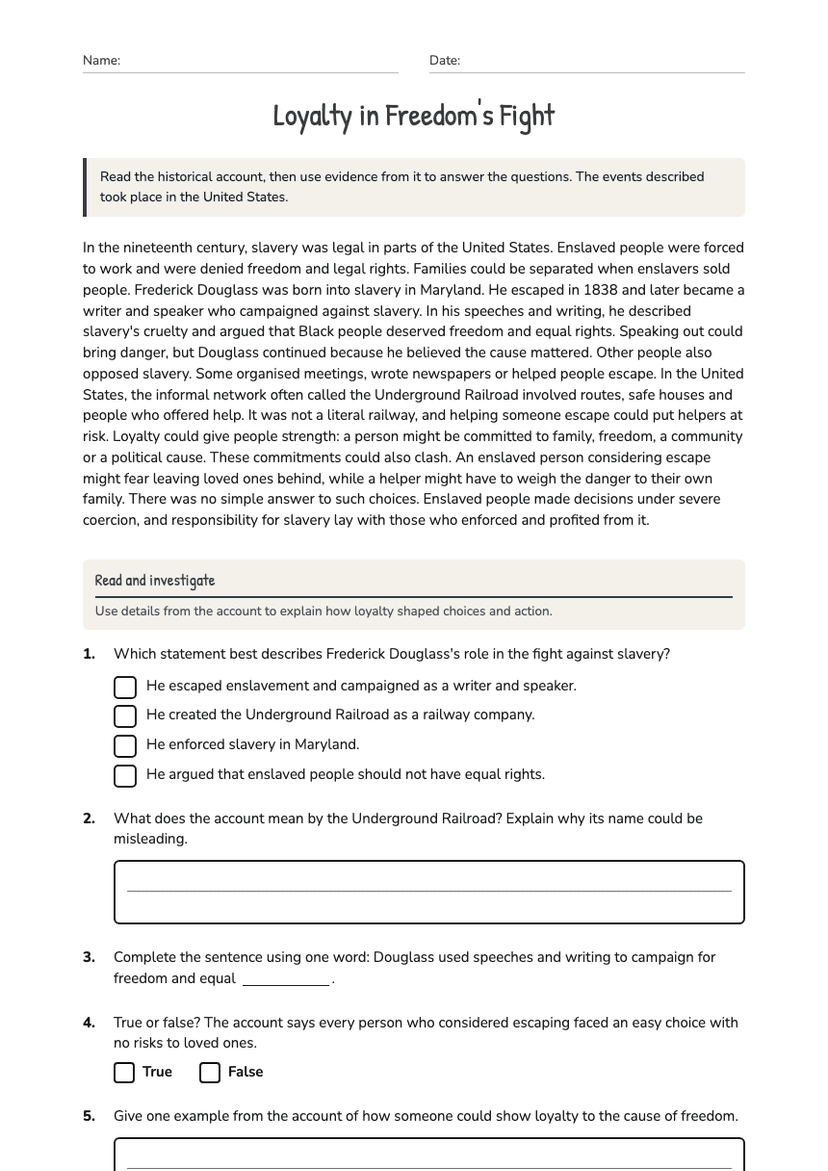
Loyalty in Freedom's Fight
Free