London's Post-Blitz Reconstruction
A free history worksheet ready for your classroom. Open in Kuraplan to grab the print-ready PDF, customize it for your students, or generate a fresh version in seconds.
London's Post-Blitz Reconstruction
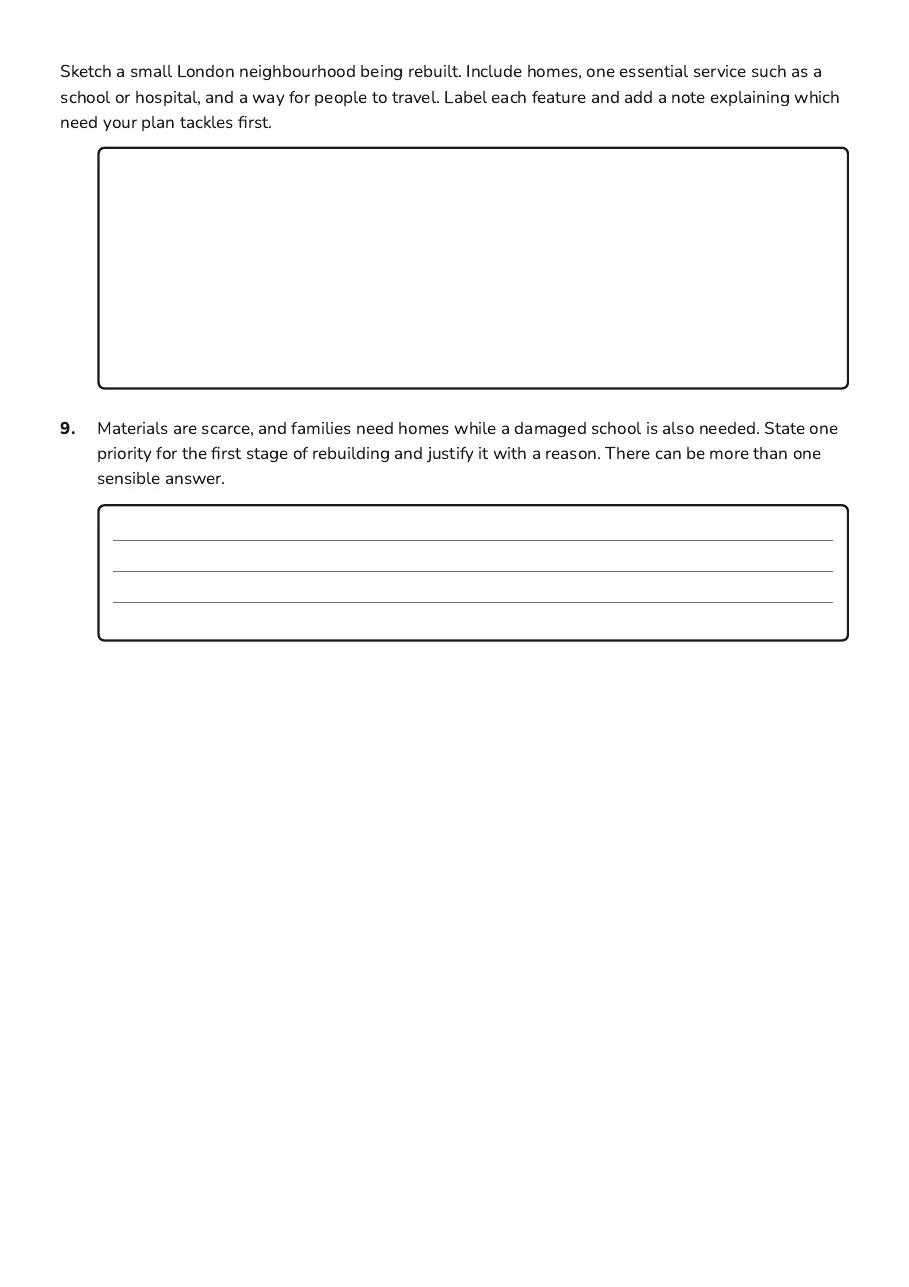
Read the briefing: rebuilding a capital
The Blitz was a sustained campaign of German bombing against British cities. London was heavily bombed from September 1940 to May 1941, and raids continued at other times during the war. Homes, factories, railways, docks, shops and public buildings were damaged or destroyed. By 1945, many Londoners needed somewhere safe to live, while the city also had to repair essential services. Reconstruction was not simply a matter of replacing each building exactly as it had been. Planners considered how housing, roads, workplaces and open spaces might fit together. The 1943 County of London Plan, associated with planner Patrick Abercrombie, proposed changes to improve living conditions and organise the growing city. Not every proposal was carried out, and rebuilding took many years. There was an urgent shortage of homes. Some families moved into temporary prefabricated homes, often called prefabs. These factory-made homes could be put up more quickly than traditional houses. They were intended as temporary accommodation, but many residents valued their modern conveniences and stayed in them for years. London also had to restore transport, schools, hospitals and places of work. In 1951, the Festival of Britain brought visitors to the South Bank and presented ideas about design, science and a hopeful future. It did not solve every housing problem, but it showed how the country was looking beyond wartime hardship. Rebuilding involved public authorities, building workers and Londoners themselves, and priorities had to be weighed against limited money, labour and materials.
- Bombing had damaged homes and important services, and many people needed housing.
- The whole city had been moved to a new location.
- London had run out of roads before the war began.
- The Festival of Britain had destroyed the city centre.
- Provide temporary homes and repair essential services, while planning permanent rebuilding.
- Spend all available materials on decorative monuments.
- Wait until every damaged building can be rebuilt at once.
- Close transport routes so no one can reach work.
3 printable pages
Page 1
Page 2
Page 3
About This Worksheet
Free in Kuraplan
Sign up free, grab the PDF, and customize it for your class.
Print-Ready
Formatted for standard paper. Clean layout, easy to read.
AI-Generated
Created with Kuraplan's AI, designed for real classroom use.
For Teachers & Parents
Use in classrooms, for homework, tutoring, or homeschool.
Need a custom version of this worksheet?
Kuraplan's AI generates custom worksheets in seconds — differentiated for every learner, aligned to your curriculum.
Generate Custom Worksheets — FreeMore History Worksheets
League of Nations Weaknesses
Free
Ancient vs Modern Benin
Free
Year 7 History Exploration: Britain Through Time
Free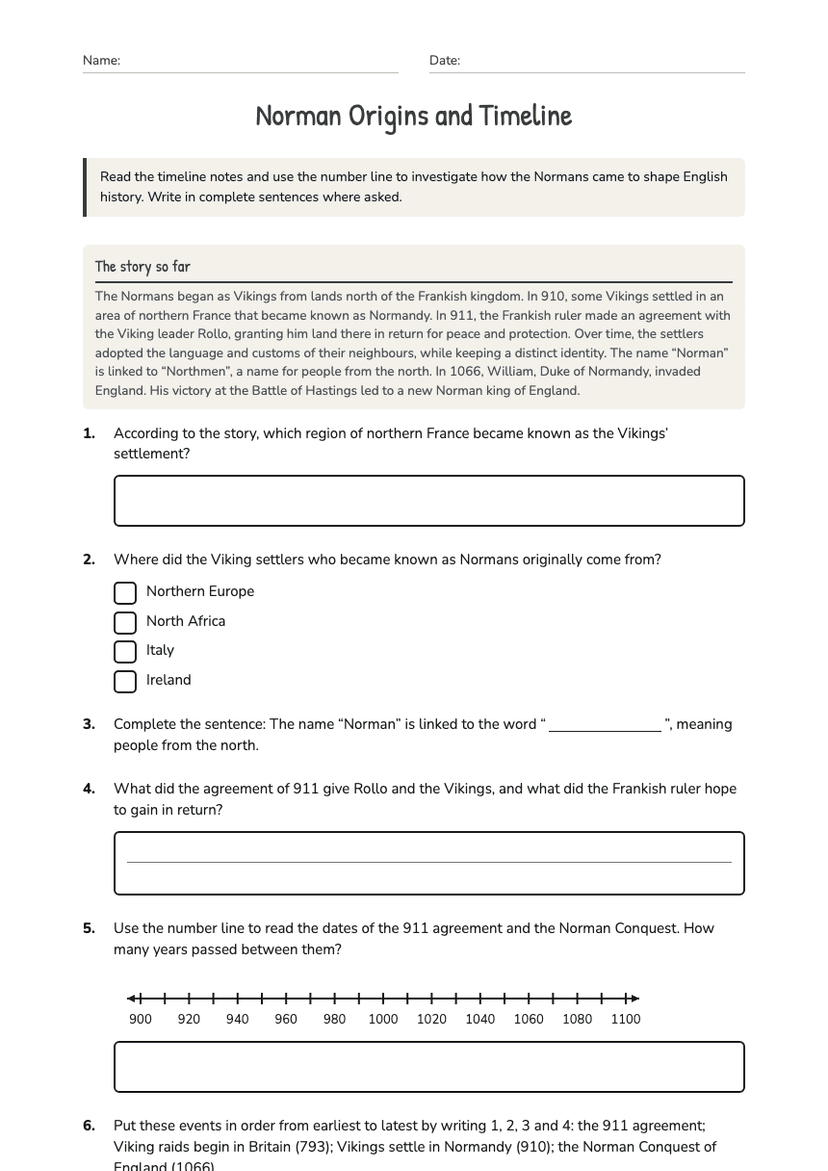
Norman Origins and Timeline
Free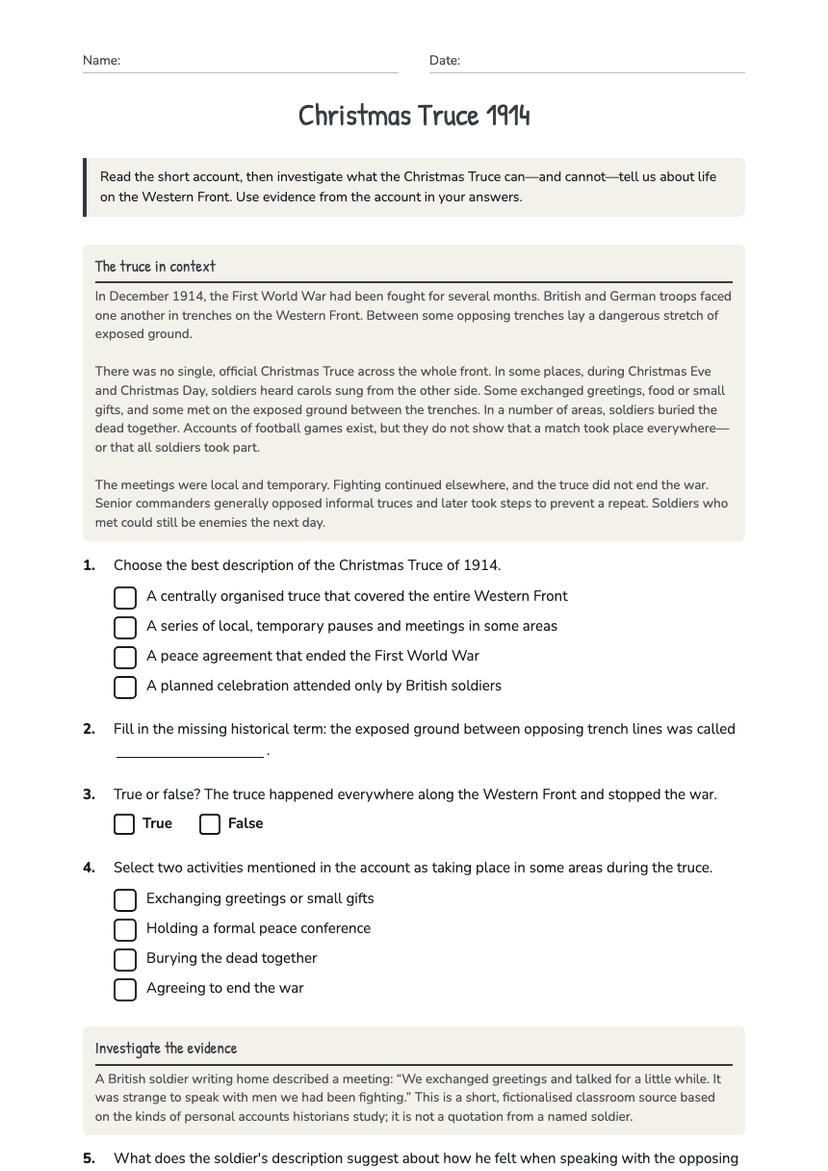
Christmas Truce 1914
Free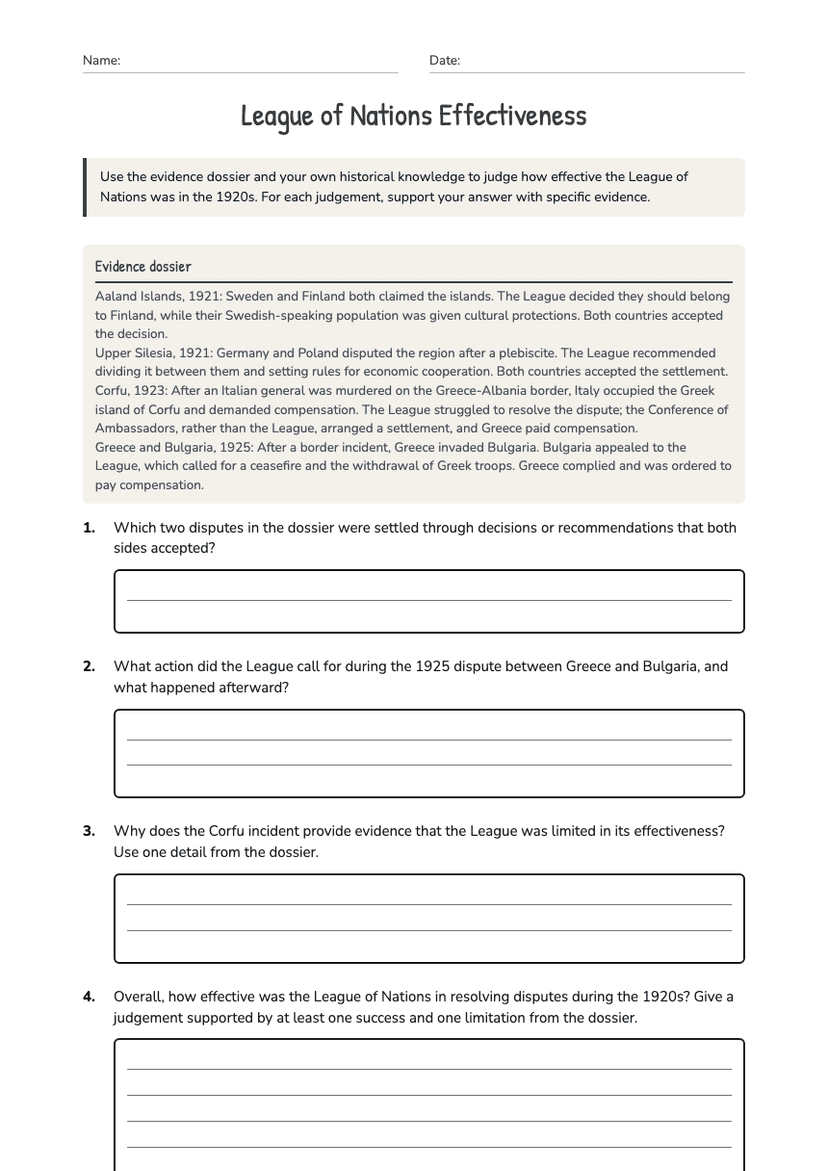
League of Nations Effectiveness
Free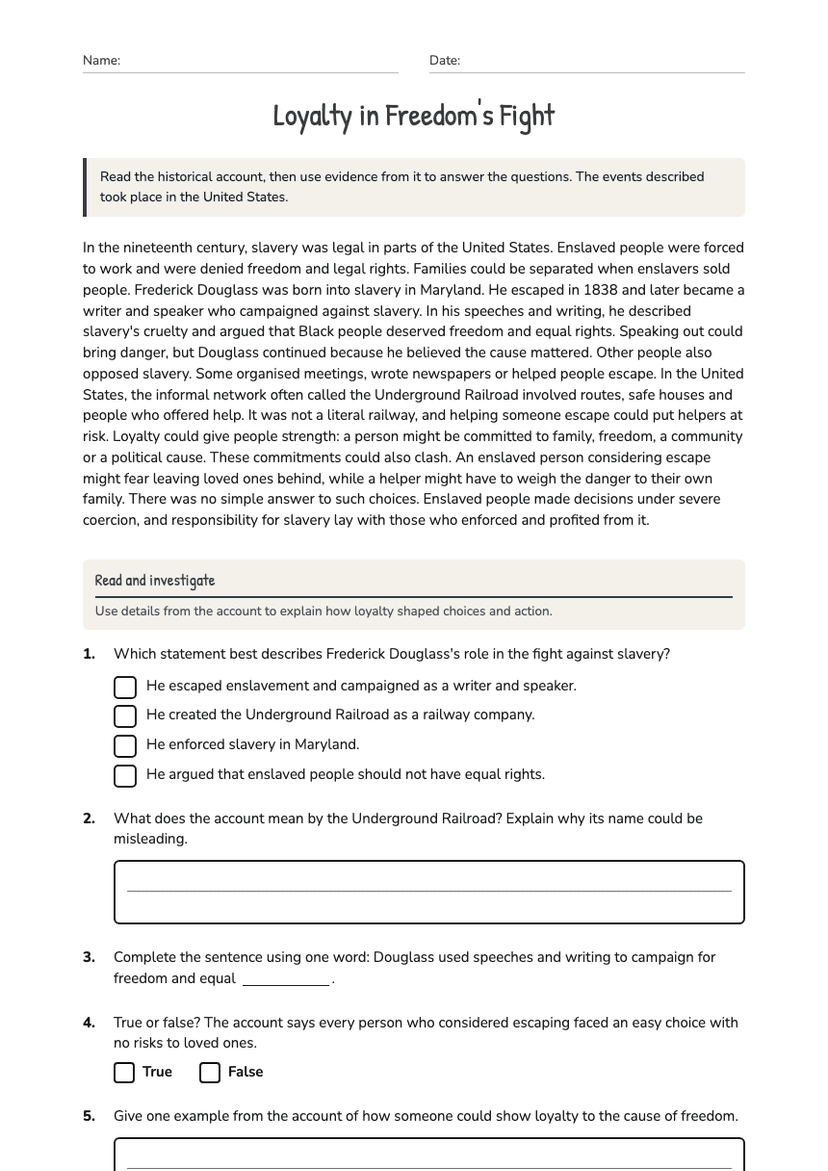
Loyalty in Freedom's Fight
Free