Comparing Sweet Texts
A free english worksheet ready for your classroom. Open in Kuraplan to grab the print-ready PDF, customize it for your students, or generate a fresh version in seconds.
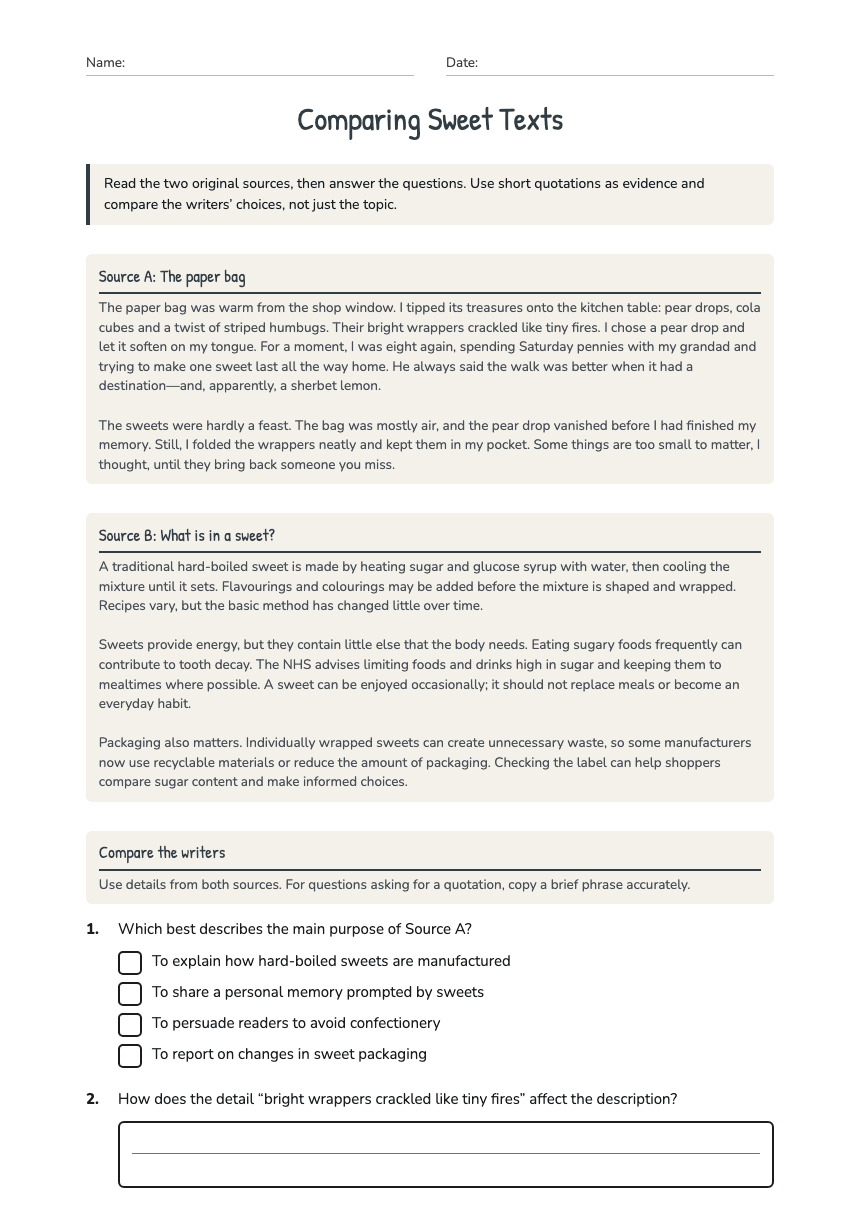
Comparing Sweet Texts
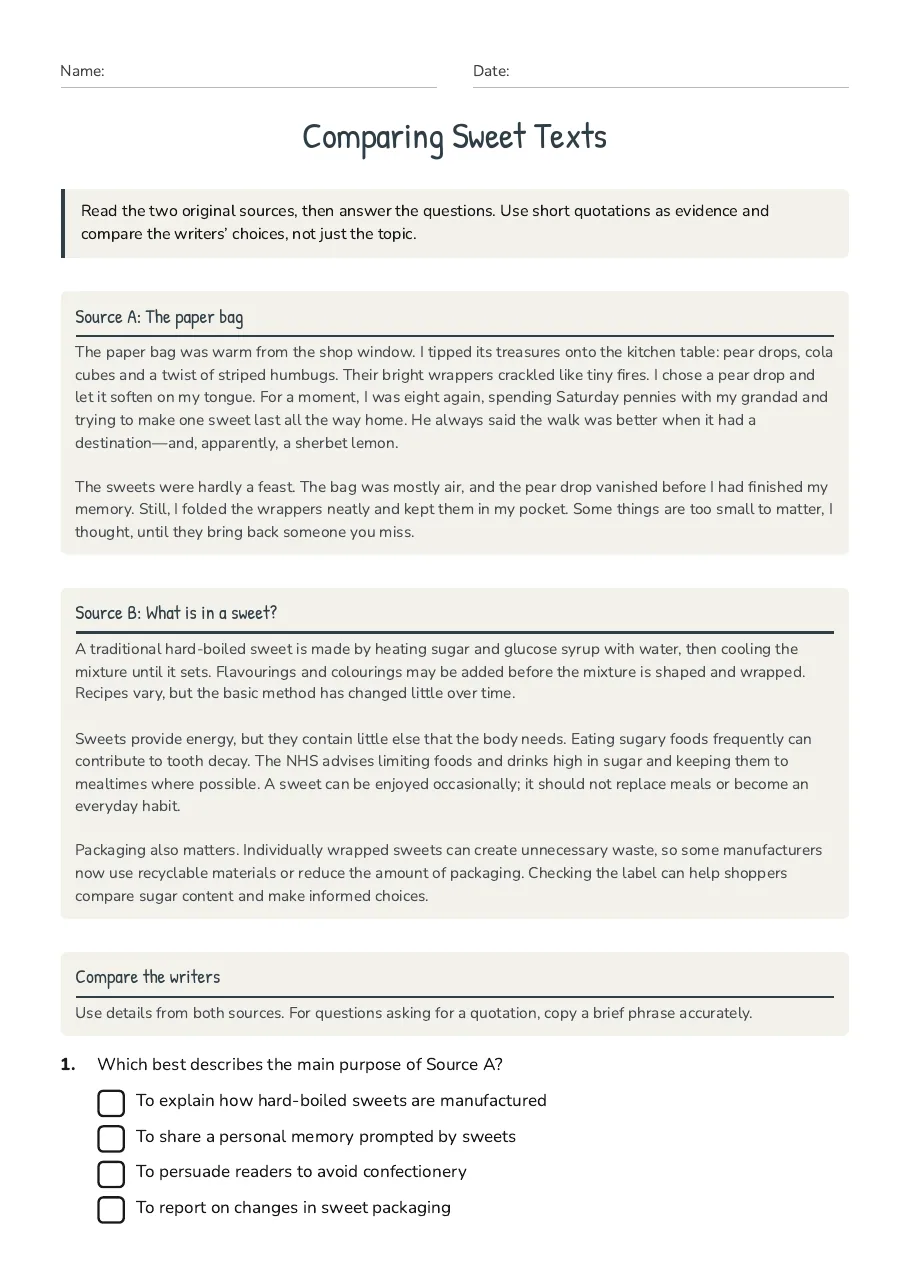
Source A: The paper bag
The paper bag was warm from the shop window. I tipped its treasures onto the kitchen table: pear drops, cola cubes and a twist of striped humbugs. Their bright wrappers crackled like tiny fires. I chose a pear drop and let it soften on my tongue. For a moment, I was eight again, spending Saturday pennies with my grandad and trying to make one sweet last all the way home. He always said the walk was better when it had a destination—and, apparently, a sherbet lemon. The sweets were hardly a feast. The bag was mostly air, and the pear drop vanished before I had finished my memory. Still, I folded the wrappers neatly and kept them in my pocket. Some things are too small to matter, I thought, until they bring back someone you miss.
Source B: What is in a sweet?
A traditional hard-boiled sweet is made by heating sugar and glucose syrup with water, then cooling the mixture until it sets. Flavourings and colourings may be added before the mixture is shaped and wrapped. Recipes vary, but the basic method has changed little over time. Sweets provide energy, but they contain little else that the body needs. Eating sugary foods frequently can contribute to tooth decay. The NHS advises limiting foods and drinks high in sugar and keeping them to mealtimes where possible. A sweet can be enjoyed occasionally; it should not replace meals or become an everyday habit. Packaging also matters. Individually wrapped sweets can create unnecessary waste, so some manufacturers now use recyclable materials or reduce the amount of packaging. Checking the label can help shoppers compare sugar content and make informed choices.
Compare the writers
Use details from both sources. For questions asking for a quotation, copy a brief phrase accurately.
- To explain how hard-boiled sweets are manufactured
- To share a personal memory prompted by sweets
- To persuade readers to avoid confectionery
- To report on changes in sweet packaging
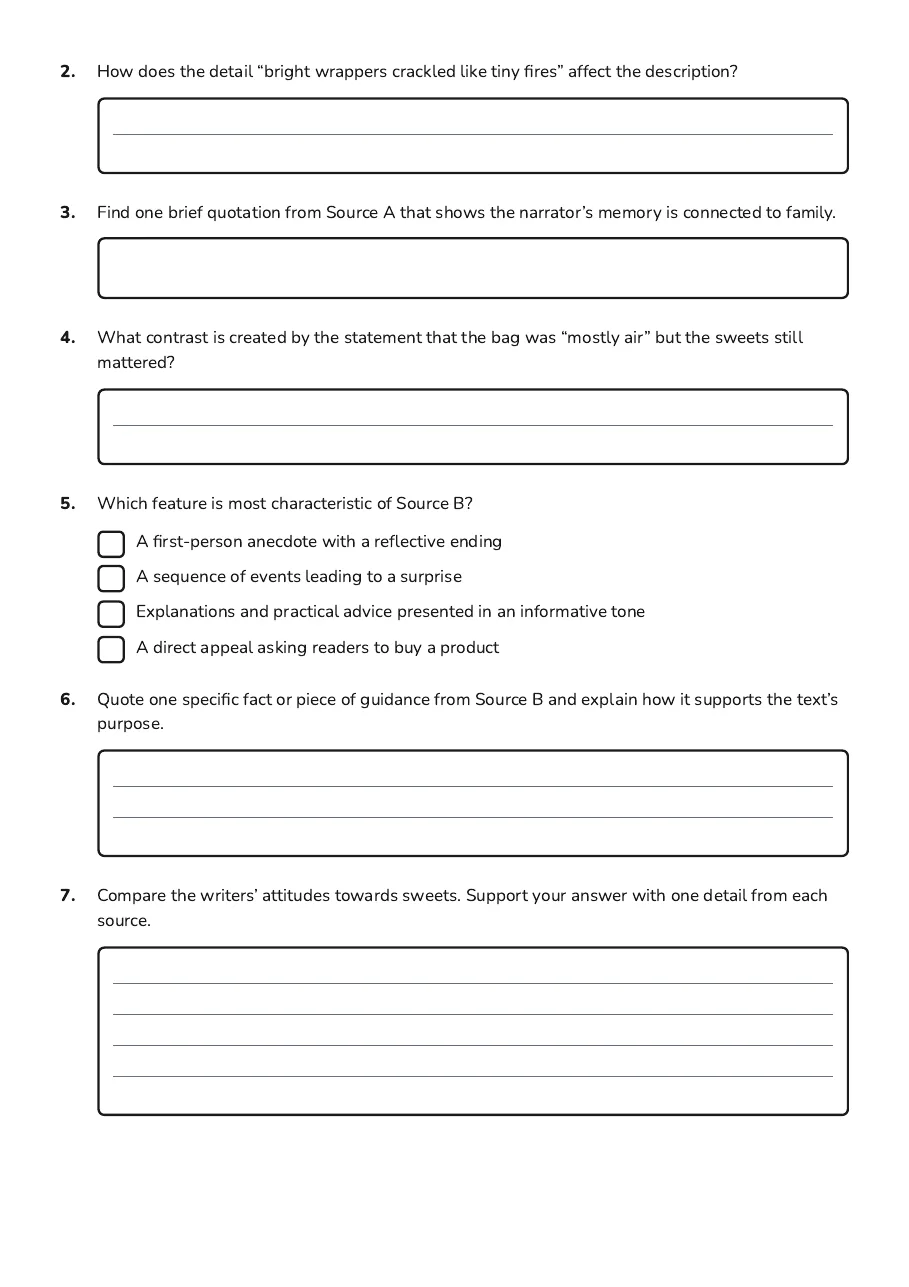
- A first-person anecdote with a reflective ending
- A sequence of events leading to a surprise
- Explanations and practical advice presented in an informative tone
- A direct appeal asking readers to buy a product
3 printable pages
Page 1
Page 2
Page 3
About This Worksheet
Free in Kuraplan
Sign up free, grab the PDF, and customize it for your class.
Print-Ready
Formatted for standard paper. Clean layout, easy to read.
AI-Generated
Created with Kuraplan's AI, designed for real classroom use.
For Teachers & Parents
Use in classrooms, for homework, tutoring, or homeschool.
Need a custom version of this worksheet?
Kuraplan's AI generates custom worksheets in seconds — differentiated for every learner, aligned to your curriculum.
Generate Custom Worksheets — Free