League of Nations Crises
A free history worksheet ready for your classroom. Open in Kuraplan to grab the print-ready PDF, customize it for your students, or generate a fresh version in seconds.
League of Nations Crises
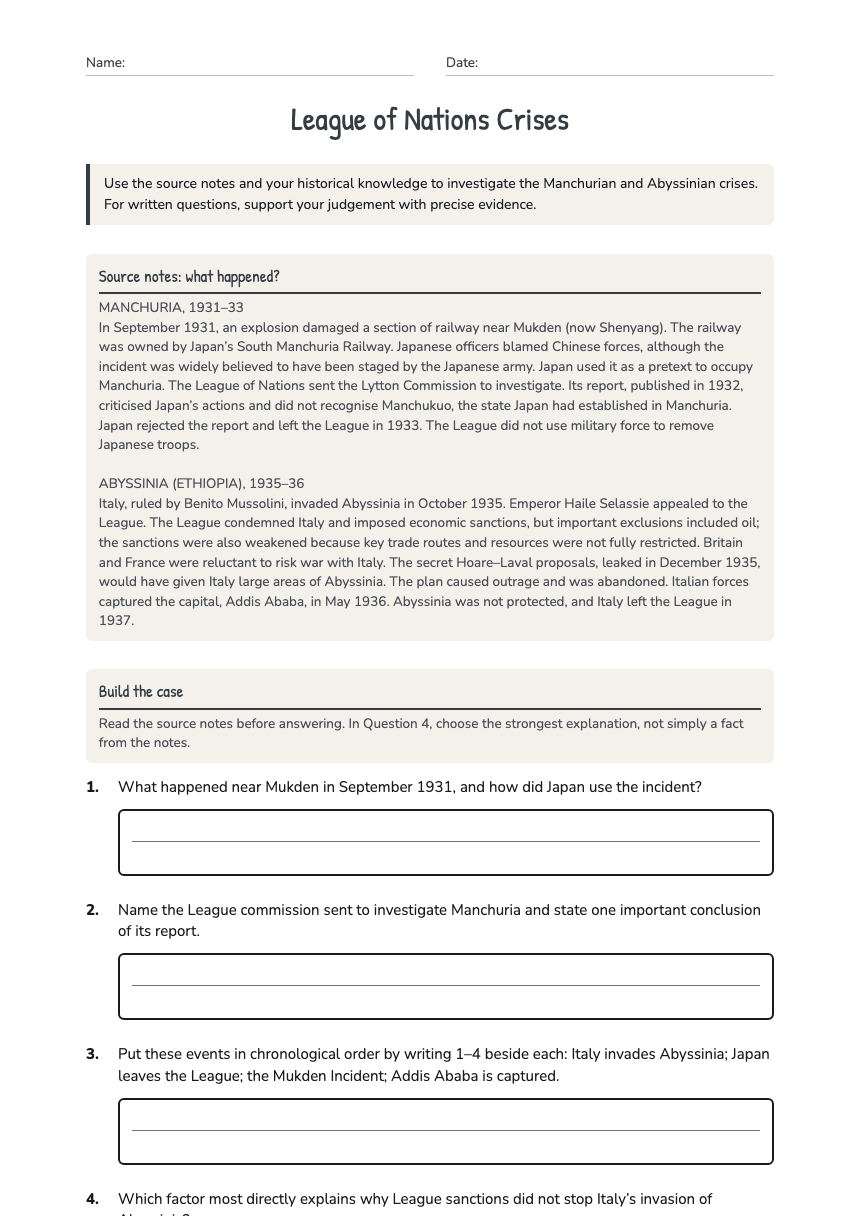
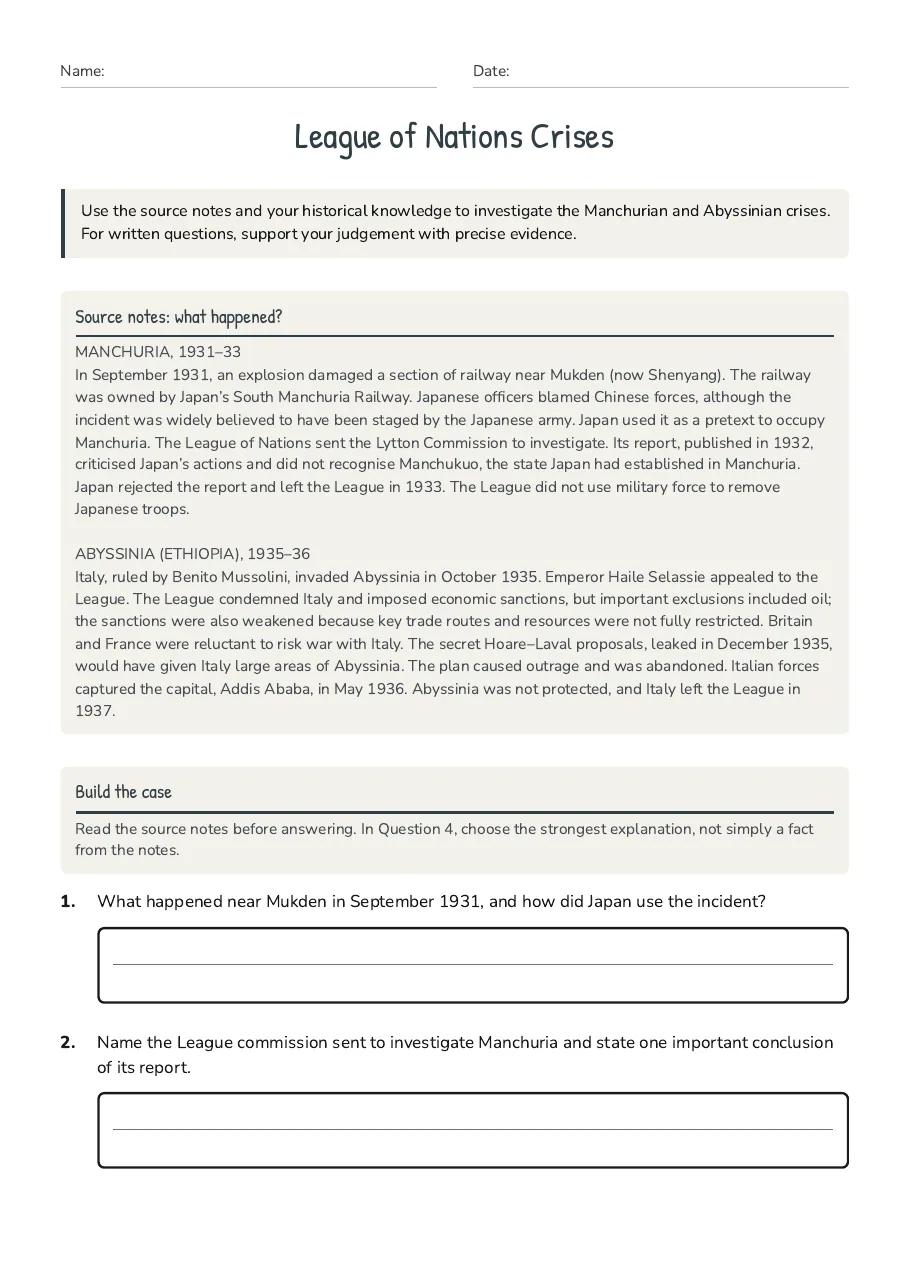
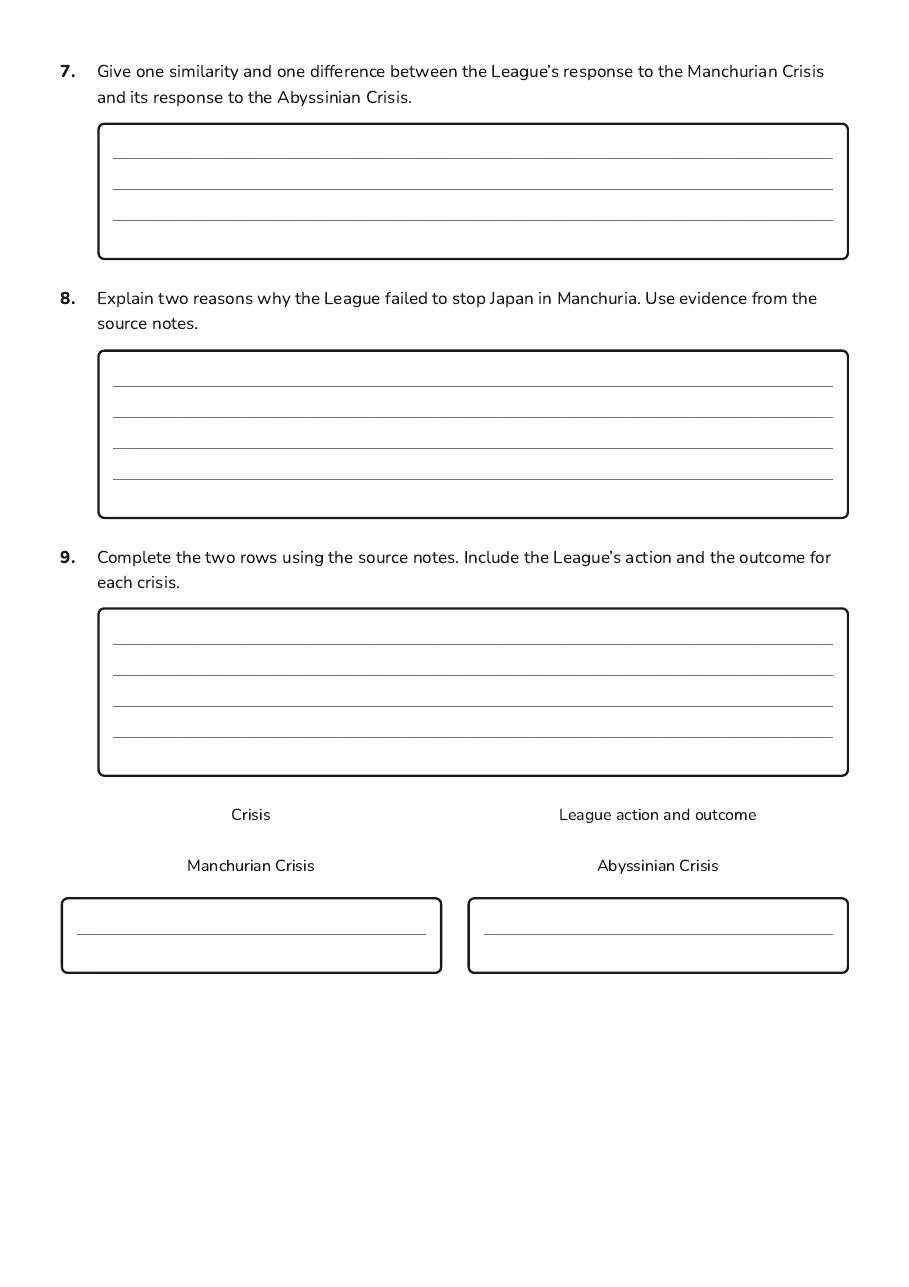
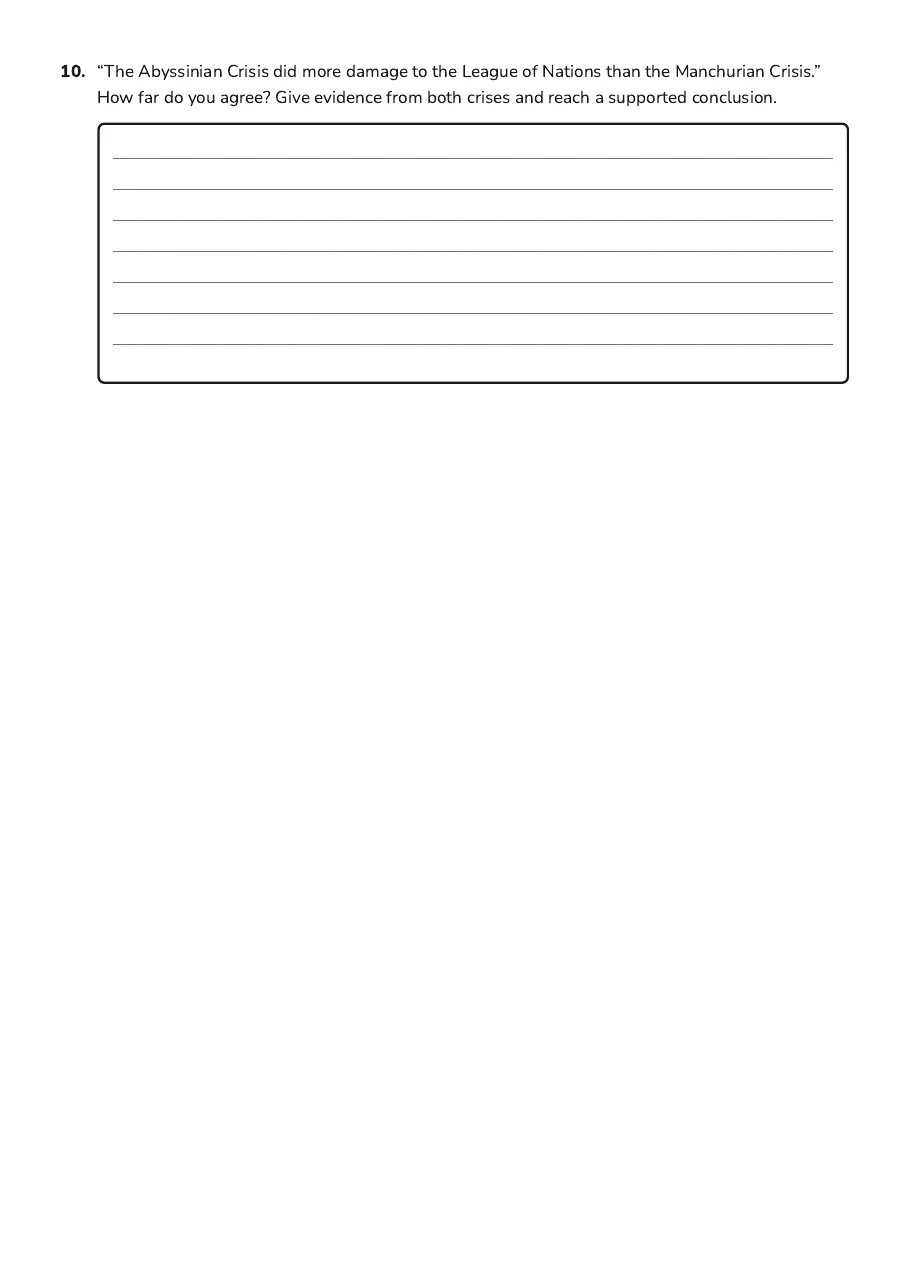
Source notes: what happened?
MANCHURIA, 1931–33 In September 1931, an explosion damaged a section of railway near Mukden (now Shenyang). The railway was owned by Japan’s South Manchuria Railway. Japanese officers blamed Chinese forces, although the incident was widely believed to have been staged by the Japanese army. Japan used it as a pretext to occupy Manchuria. The League of Nations sent the Lytton Commission to investigate. Its report, published in 1932, criticised Japan’s actions and did not recognise Manchukuo, the state Japan had established in Manchuria. Japan rejected the report and left the League in 1933. The League did not use military force to remove Japanese troops. ABYSSINIA (ETHIOPIA), 1935–36 Italy, ruled by Benito Mussolini, invaded Abyssinia in October 1935. Emperor Haile Selassie appealed to the League. The League condemned Italy and imposed economic sanctions, but important exclusions included oil; the sanctions were also weakened because key trade routes and resources were not fully restricted. Britain and France were reluctant to risk war with Italy. The secret Hoare–Laval proposals, leaked in December 1935, would have given Italy large areas of Abyssinia. The plan caused outrage and was abandoned. Italian forces captured the capital, Addis Ababa, in May 1936. Abyssinia was not protected, and Italy left the League in 1937.
Build the case
Read the source notes before answering. In Question 4, choose the strongest explanation, not simply a fact from the notes.
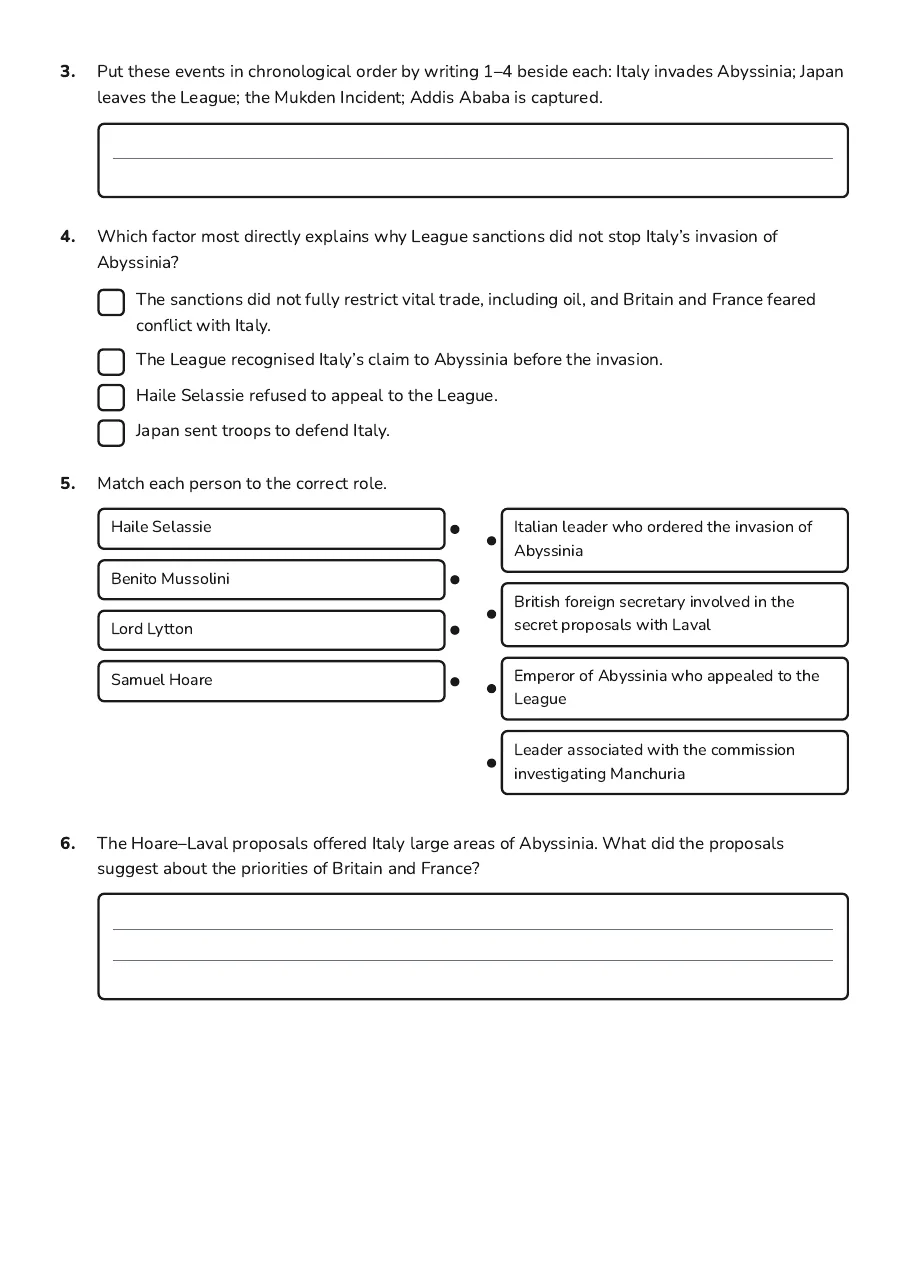
- The sanctions did not fully restrict vital trade, including oil, and Britain and France feared conflict with Italy.
- The League recognised Italy’s claim to Abyssinia before the invasion.
- Haile Selassie refused to appeal to the League.
- Japan sent troops to defend Italy.
- Haile Selassie
- Benito Mussolini
- Lord Lytton
- Samuel Hoare
- Italian leader who ordered the invasion of Abyssinia
- British foreign secretary involved in the secret proposals with Laval
- Emperor of Abyssinia who appealed to the League
- Leader associated with the commission investigating Manchuria
Crisis
League action and outcome
Manchurian Crisis
Abyssinian Crisis
4 printable pages
Page 1
Page 2
Page 3
Page 4
About This Worksheet
Free in Kuraplan
Sign up free, grab the PDF, and customize it for your class.
Print-Ready
Formatted for standard paper. Clean layout, easy to read.
AI-Generated
Created with Kuraplan's AI, designed for real classroom use.
For Teachers & Parents
Use in classrooms, for homework, tutoring, or homeschool.
Need a custom version of this worksheet?
Kuraplan's AI generates custom worksheets in seconds — differentiated for every learner, aligned to your curriculum.
Generate Custom Worksheets — FreeMore History Worksheets
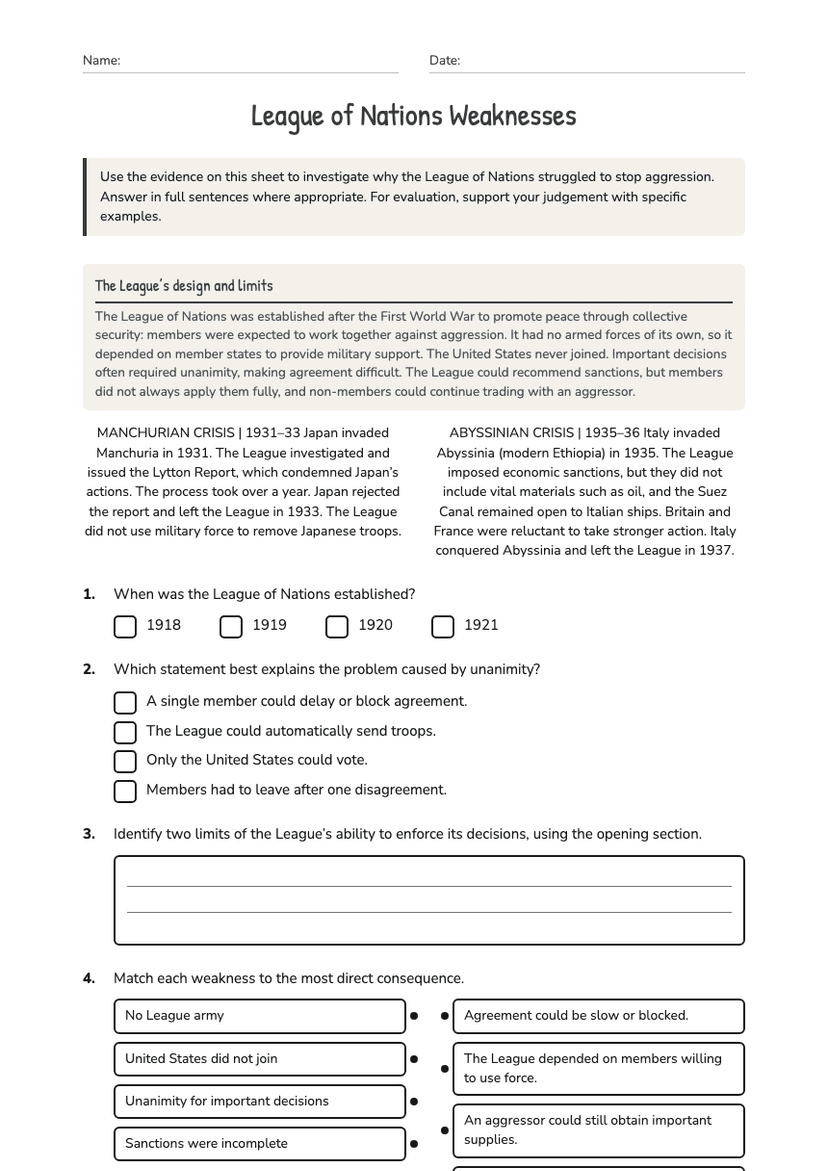
League of Nations Weaknesses
Free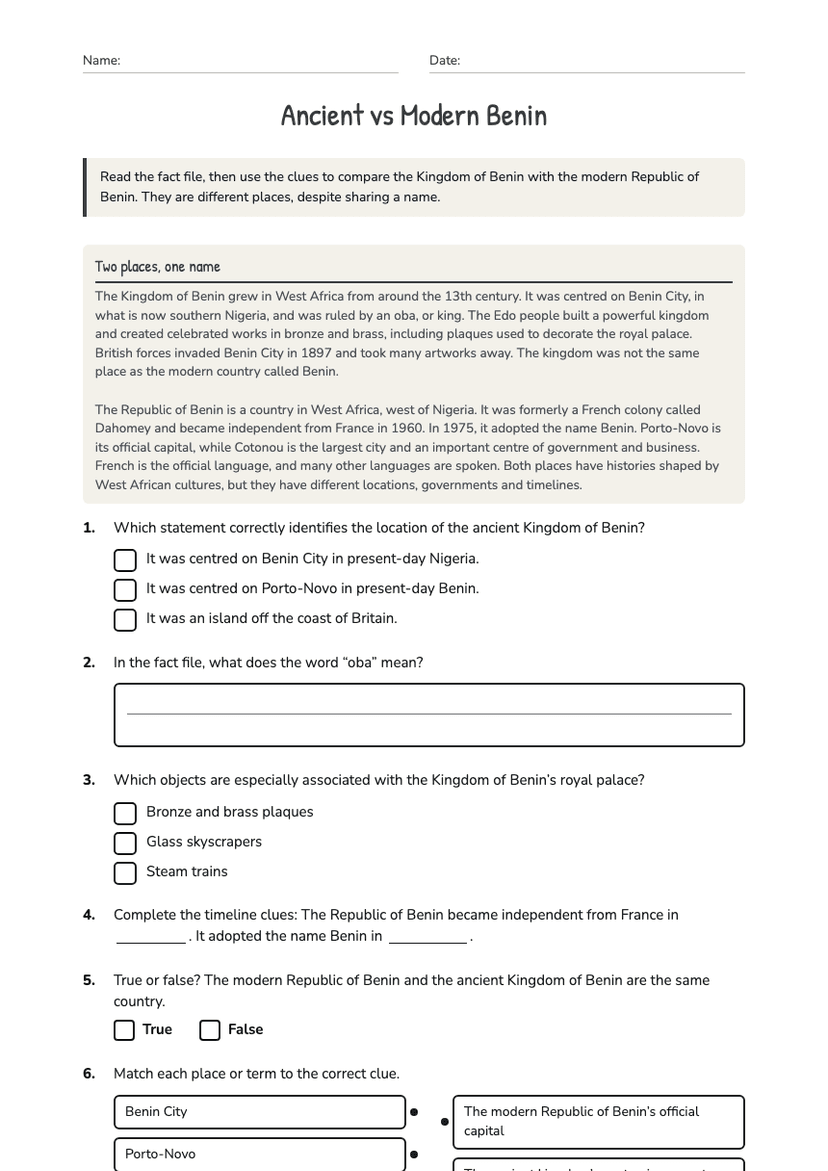
Ancient vs Modern Benin
Free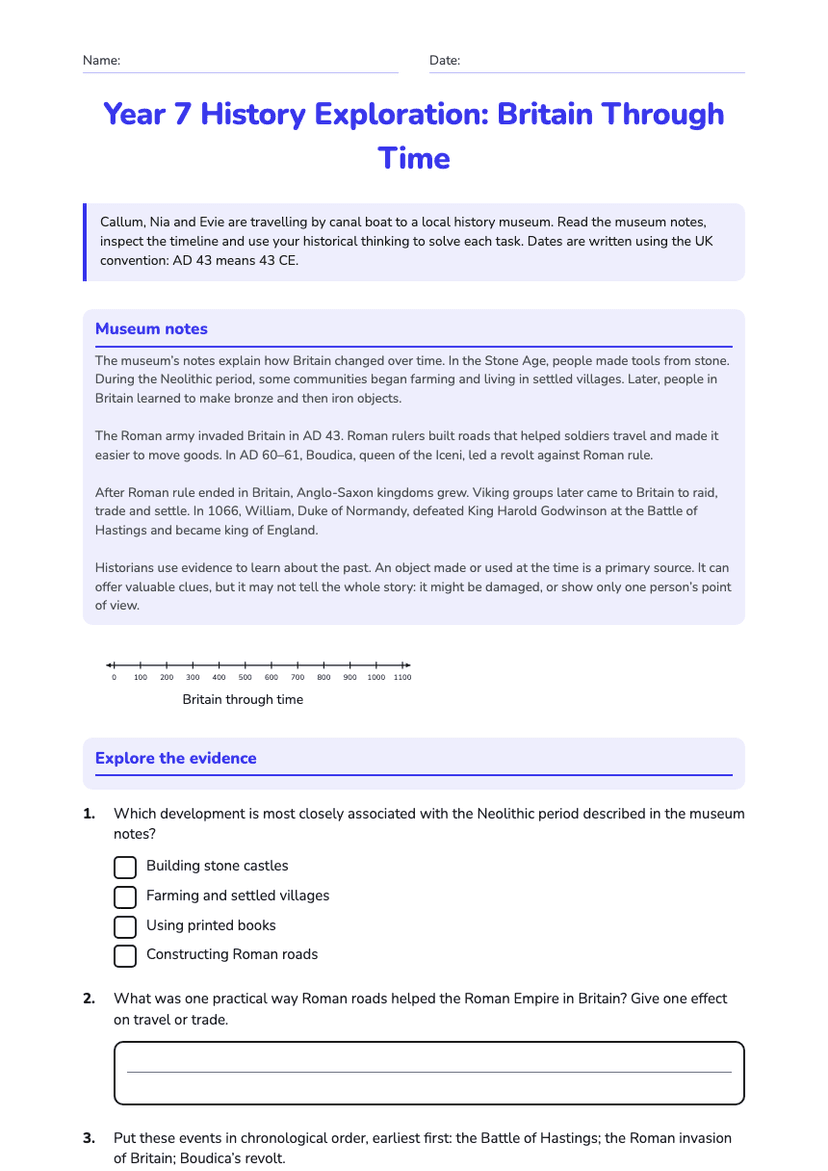
Year 7 History Exploration: Britain Through Time
Free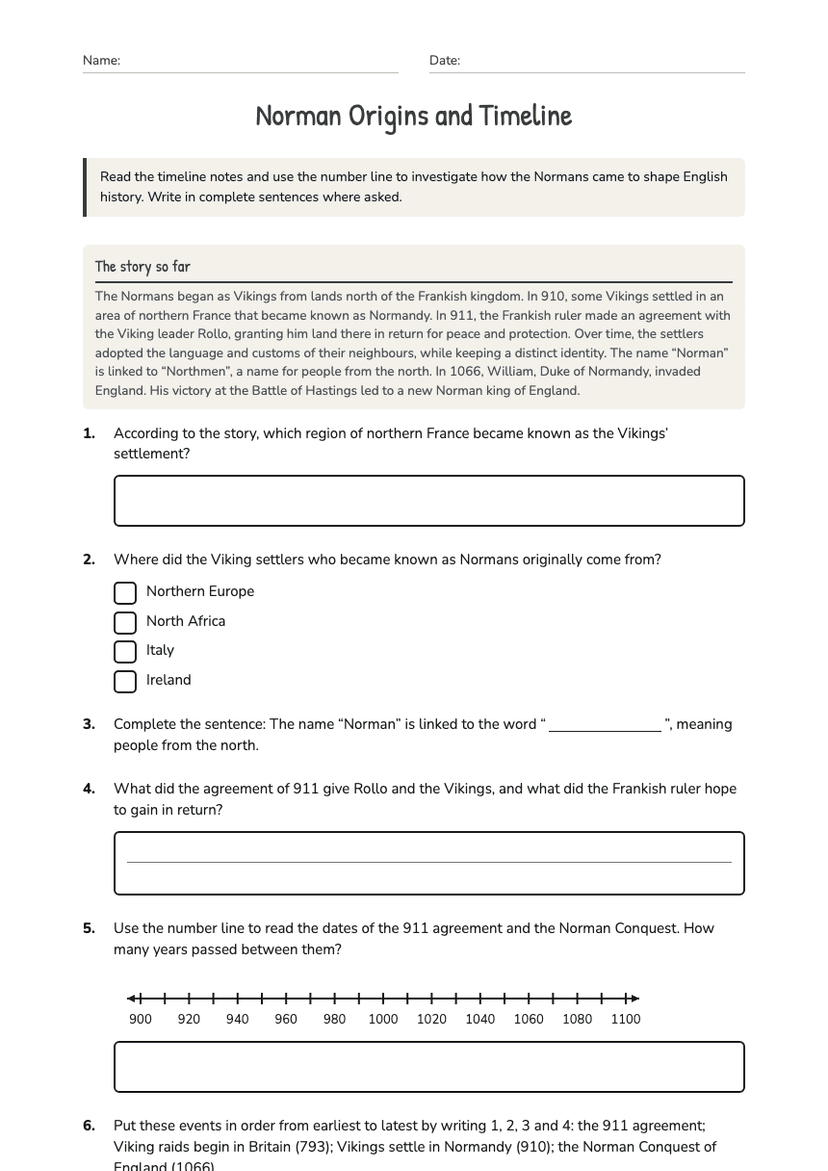
Norman Origins and Timeline
Free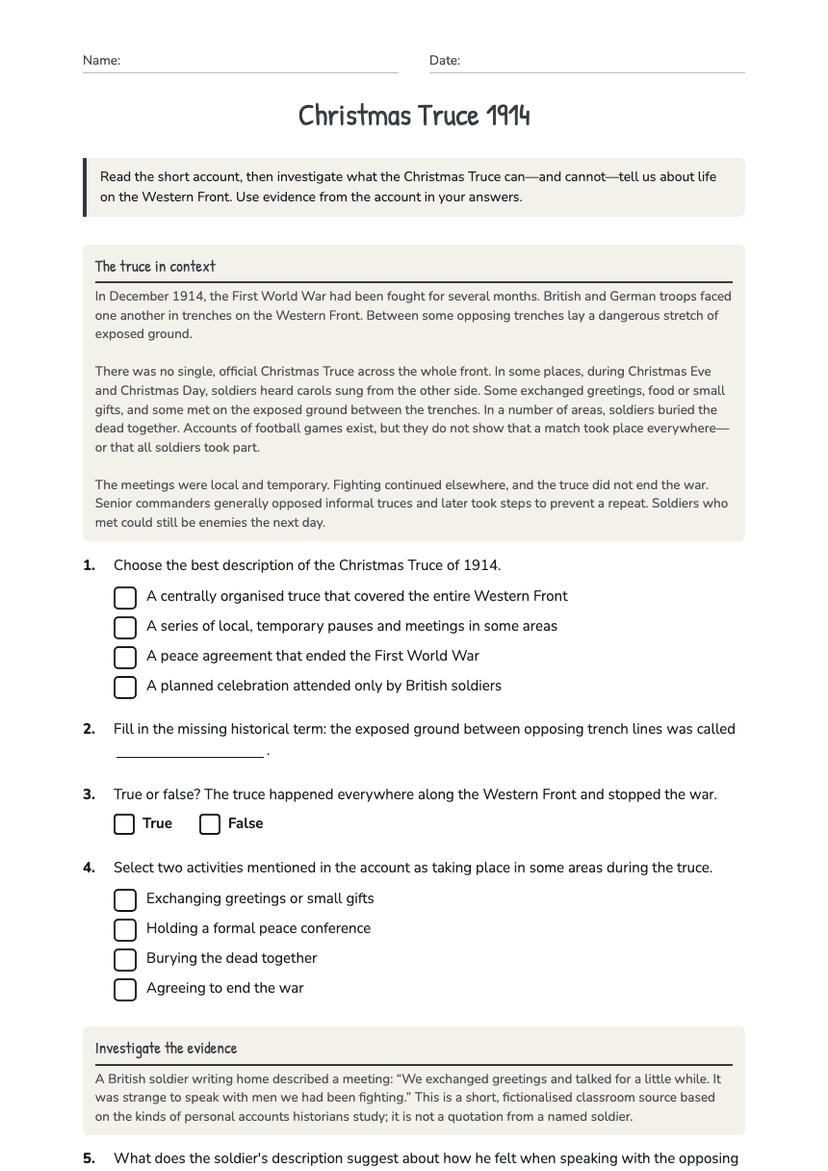
Christmas Truce 1914
Free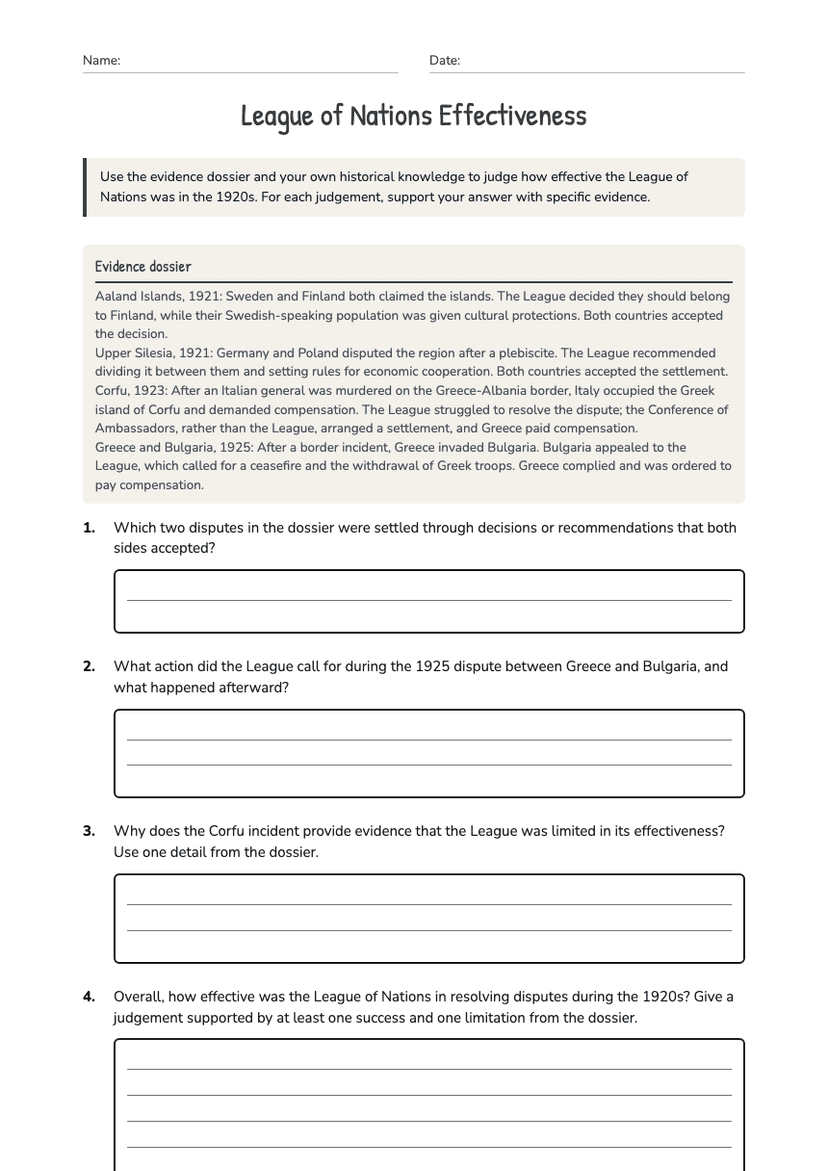
League of Nations Effectiveness
Free
Loyalty in Freedom's Fight
Free