League of Nations Weaknesses
A free history worksheet ready for your classroom. Open in Kuraplan to grab the print-ready PDF, customize it for your students, or generate a fresh version in seconds.
League of Nations Weaknesses
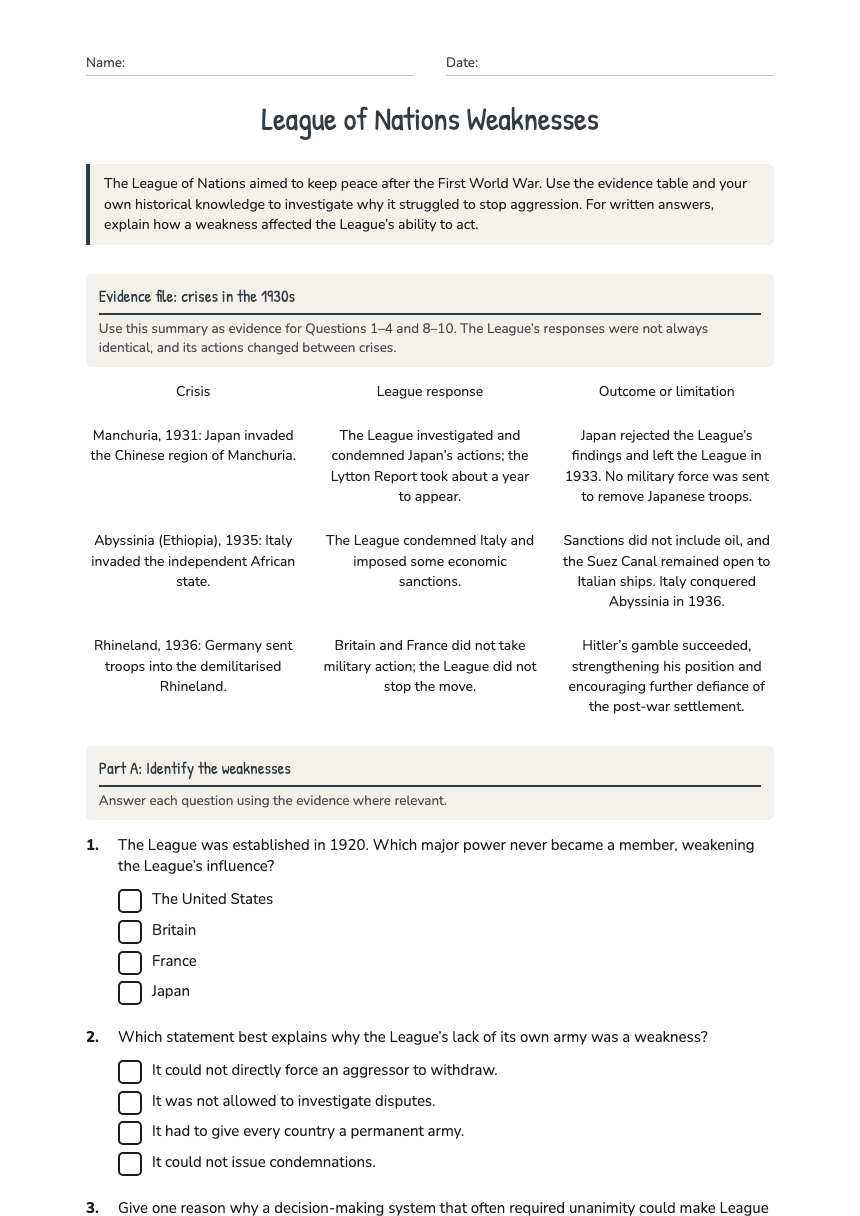
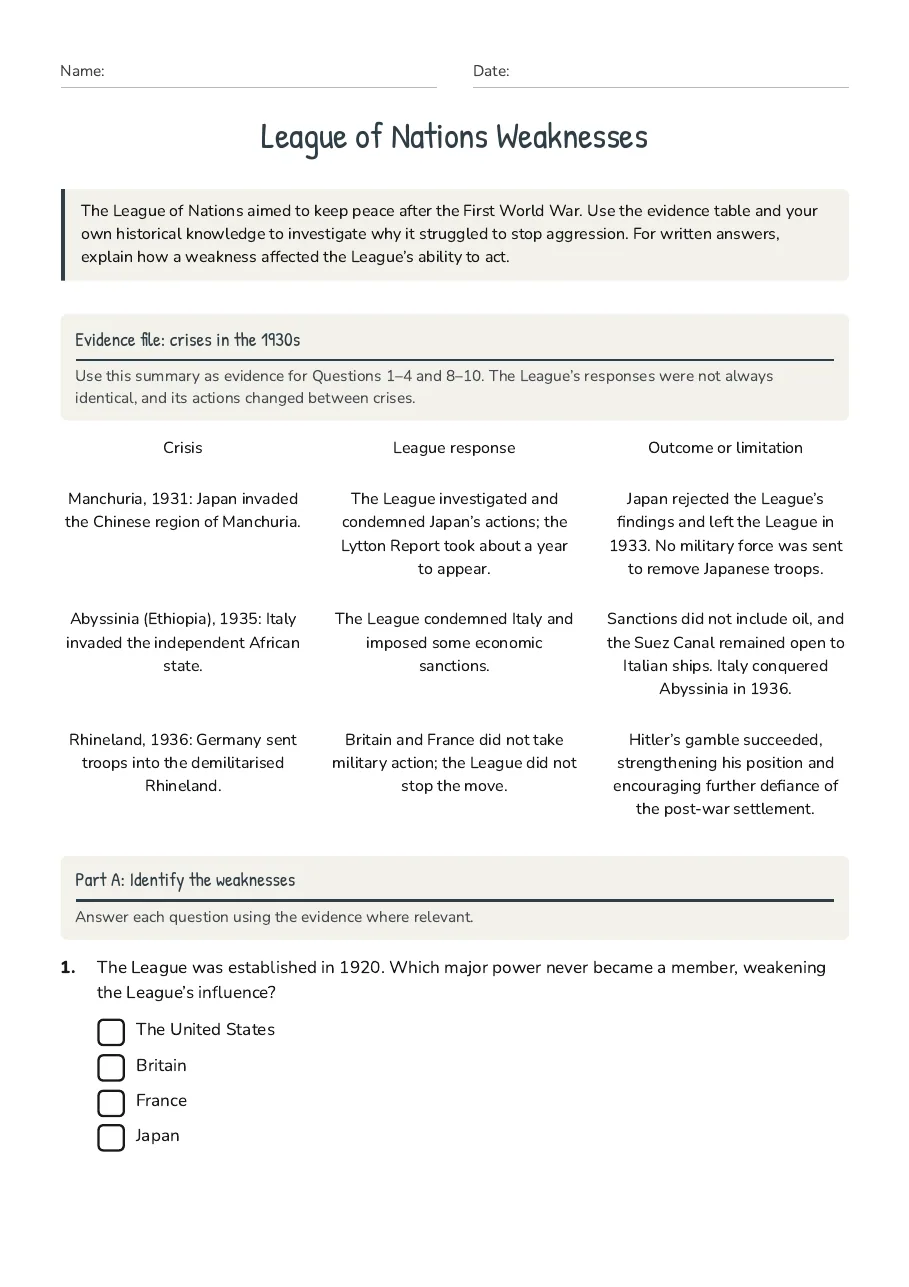
Evidence file: crises in the 1930s
Use this summary as evidence for Questions 1–4 and 8–10. The League’s responses were not always identical, and its actions changed between crises.
Crisis
League response
Outcome or limitation
Manchuria, 1931: Japan invaded the Chinese region of Manchuria.
The League investigated and condemned Japan’s actions; the Lytton Report took about a year to appear.
Japan rejected the League’s findings and left the League in 1933. No military force was sent to remove Japanese troops.
Abyssinia (Ethiopia), 1935: Italy invaded the independent African state.
The League condemned Italy and imposed some economic sanctions.
Sanctions did not include oil, and the Suez Canal remained open to Italian ships. Italy conquered Abyssinia in 1936.
Rhineland, 1936: Germany sent troops into the demilitarised Rhineland.
Britain and France did not take military action; the League did not stop the move.
Hitler’s gamble succeeded, strengthening his position and encouraging further defiance of the post-war settlement.
Part A: Identify the weaknesses
Answer each question using the evidence where relevant.
- The United States
- Britain
- France
- Japan
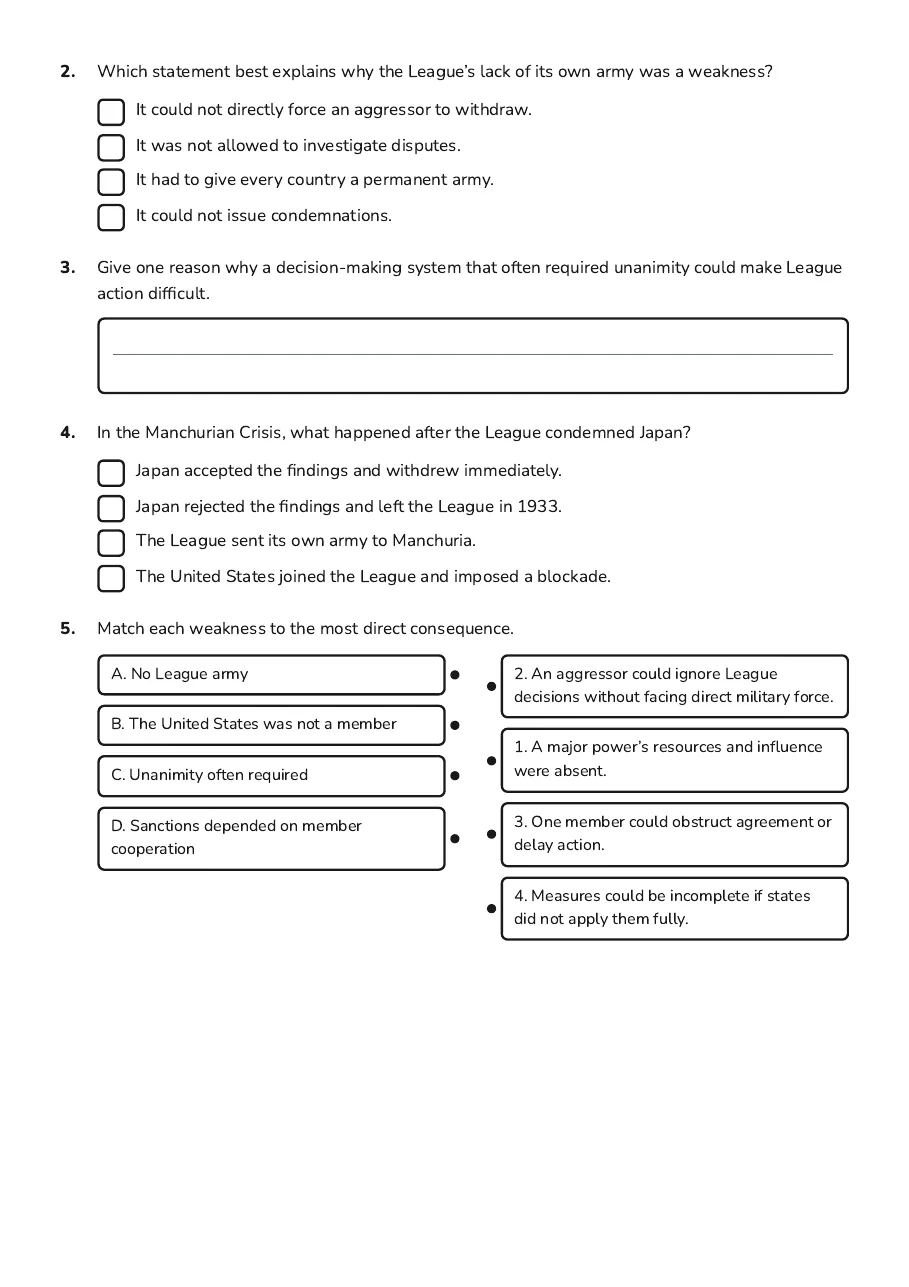
- It could not directly force an aggressor to withdraw.
- It was not allowed to investigate disputes.
- It had to give every country a permanent army.
- It could not issue condemnations.
- Japan accepted the findings and withdrew immediately.
- Japan rejected the findings and left the League in 1933.
- The League sent its own army to Manchuria.
- The United States joined the League and imposed a blockade.
- A. No League army
- B. The United States was not a member
- C. Unanimity often required
- D. Sanctions depended on member cooperation
- 2. An aggressor could ignore League decisions without facing direct military force.
- 1. A major power’s resources and influence were absent.
- 3. One member could obstruct agreement or delay action.
- 4. Measures could be incomplete if states did not apply them fully.
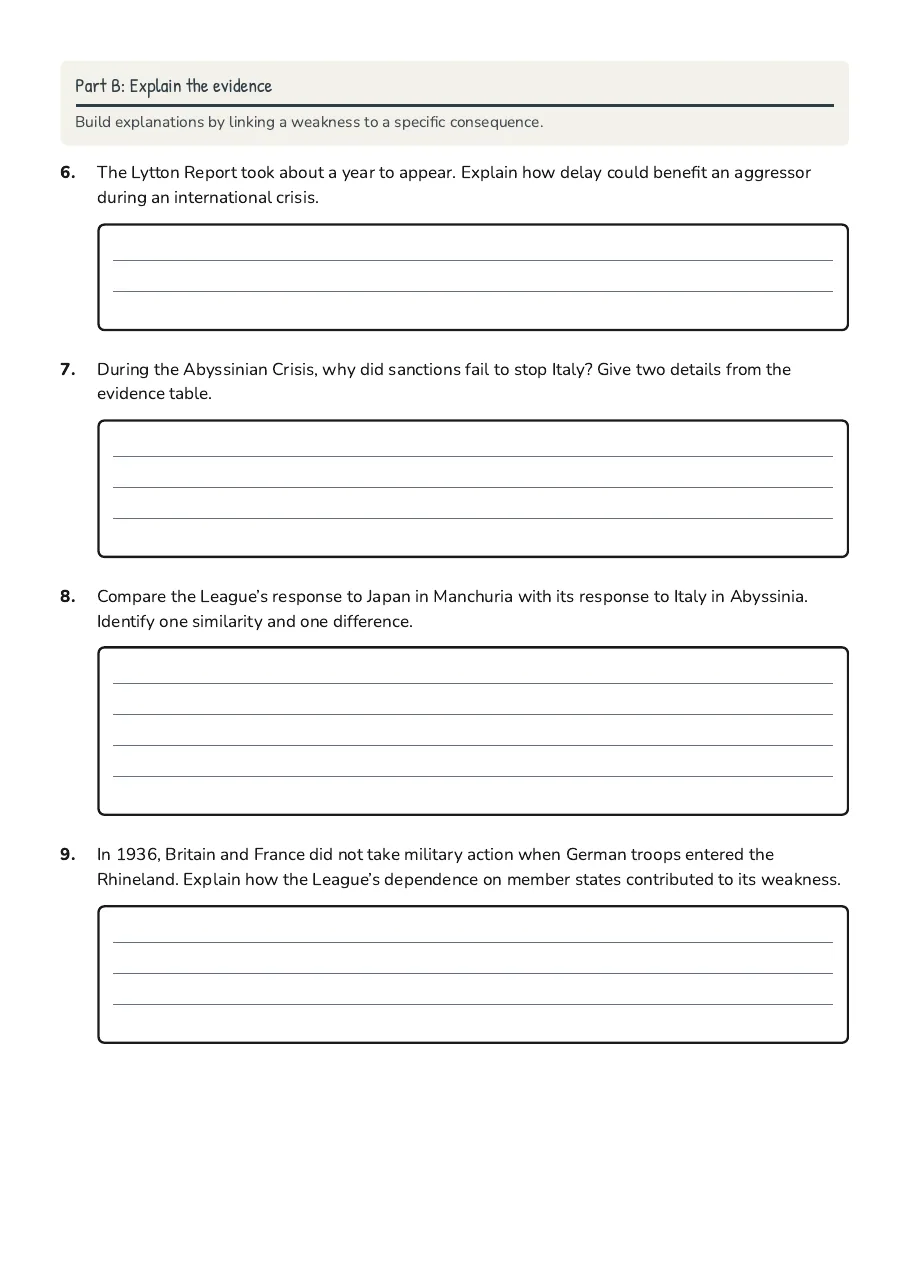
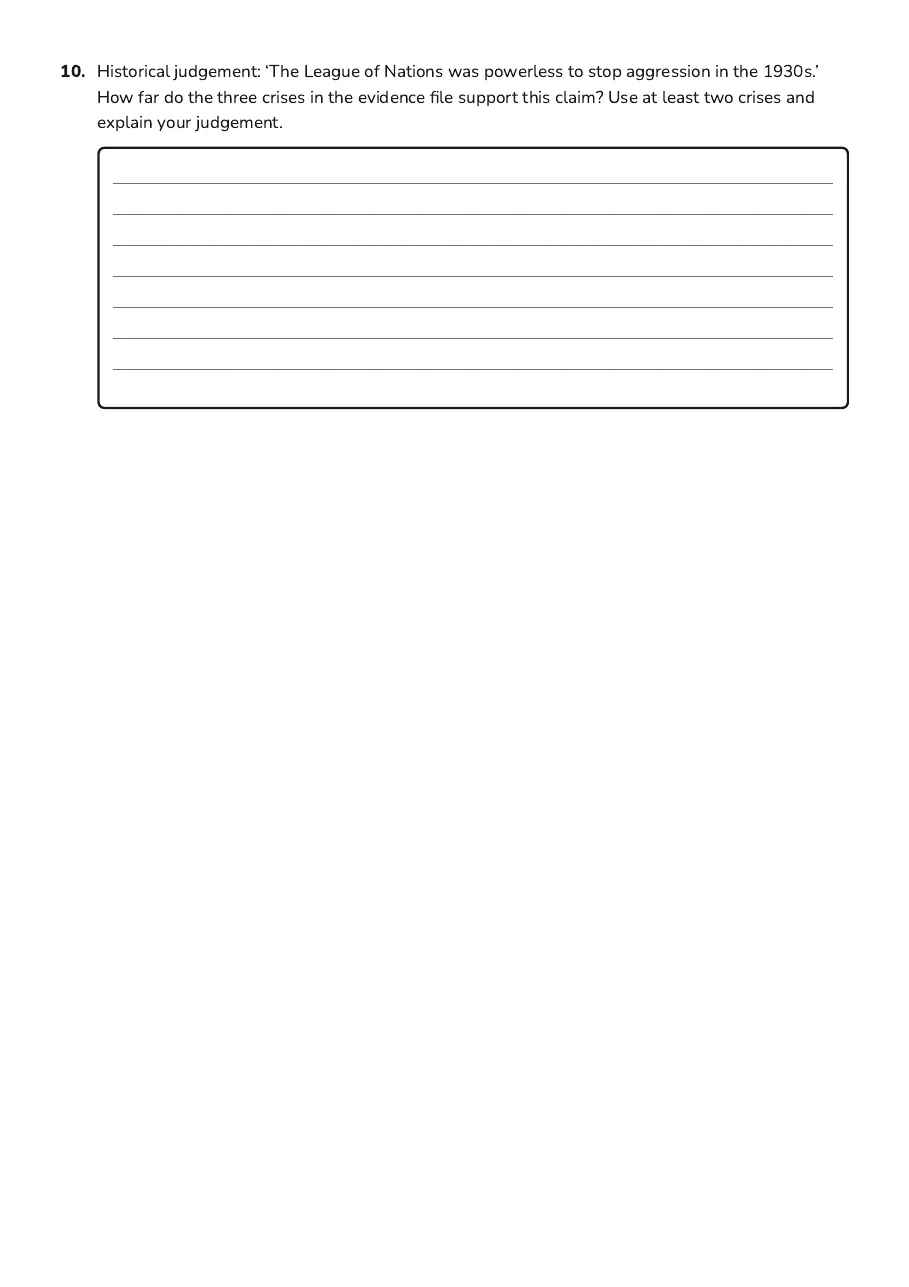
Part B: Explain the evidence
Build explanations by linking a weakness to a specific consequence.
4 printable pages
Page 1
Page 2
Page 3
Page 4
About This Worksheet
Free in Kuraplan
Sign up free, grab the PDF, and customize it for your class.
Print-Ready
Formatted for standard paper. Clean layout, easy to read.
AI-Generated
Created with Kuraplan's AI, designed for real classroom use.
For Teachers & Parents
Use in classrooms, for homework, tutoring, or homeschool.
Need a custom version of this worksheet?
Kuraplan's AI generates custom worksheets in seconds — differentiated for every learner, aligned to your curriculum.
Generate Custom Worksheets — FreeMore History Worksheets
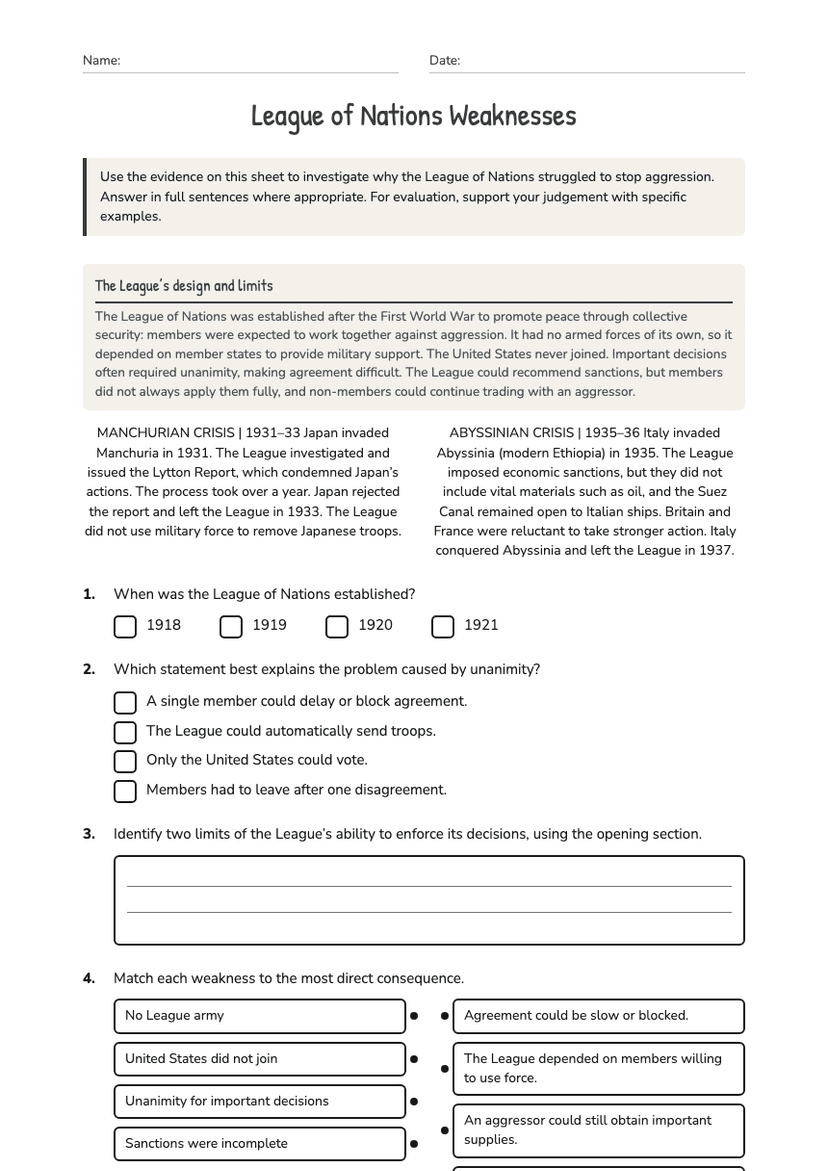
League of Nations Weaknesses
Free
Ancient vs Modern Benin
Free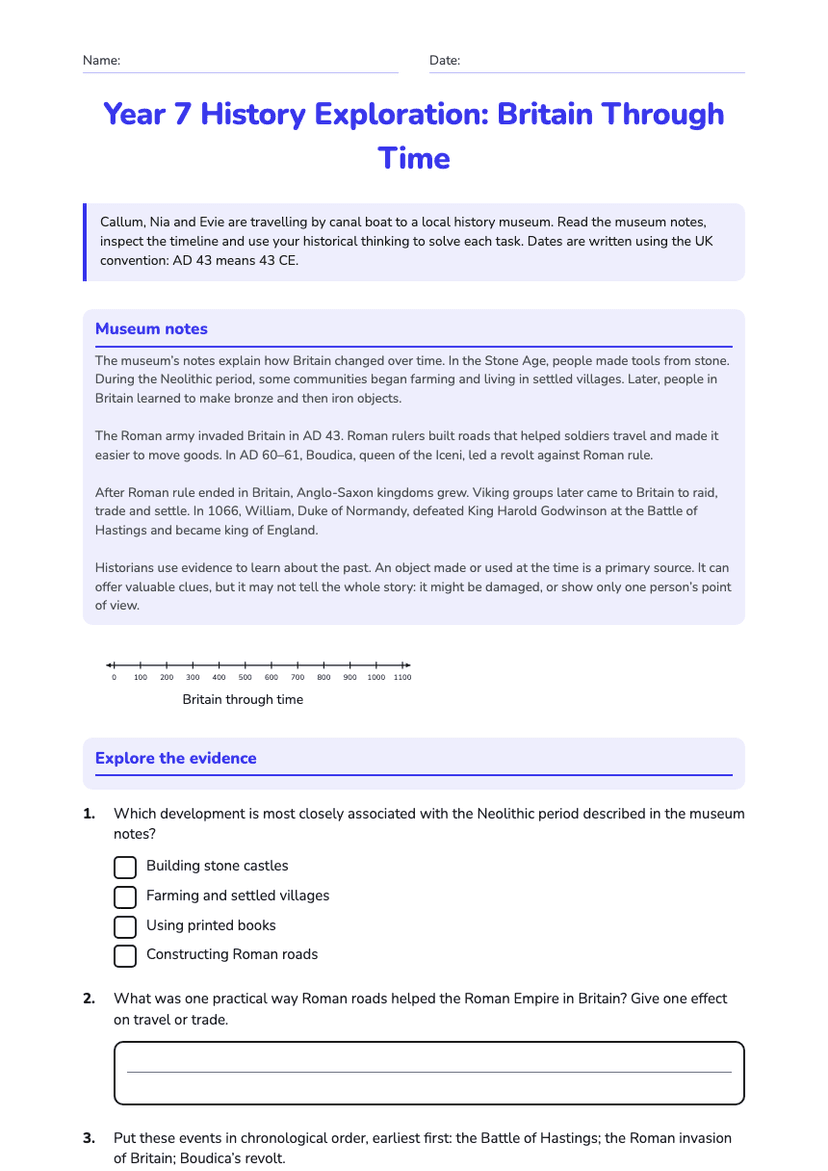
Year 7 History Exploration: Britain Through Time
Free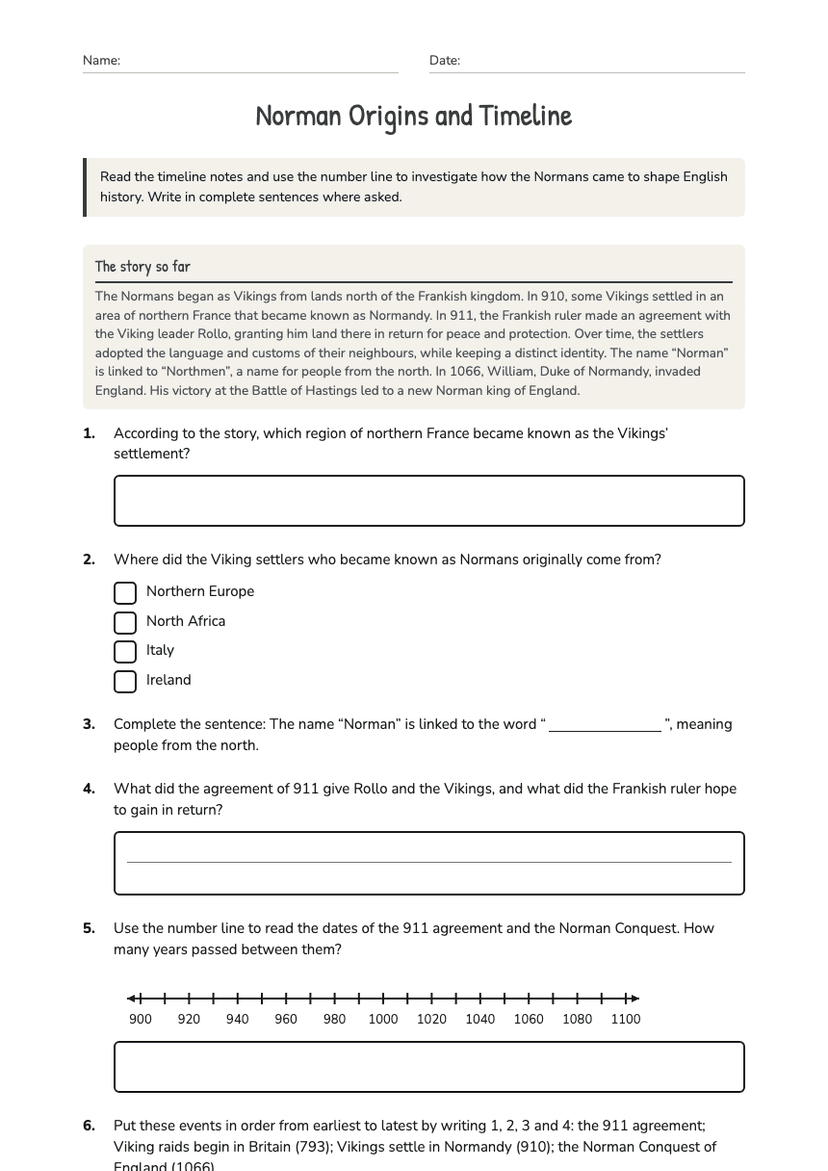
Norman Origins and Timeline
Free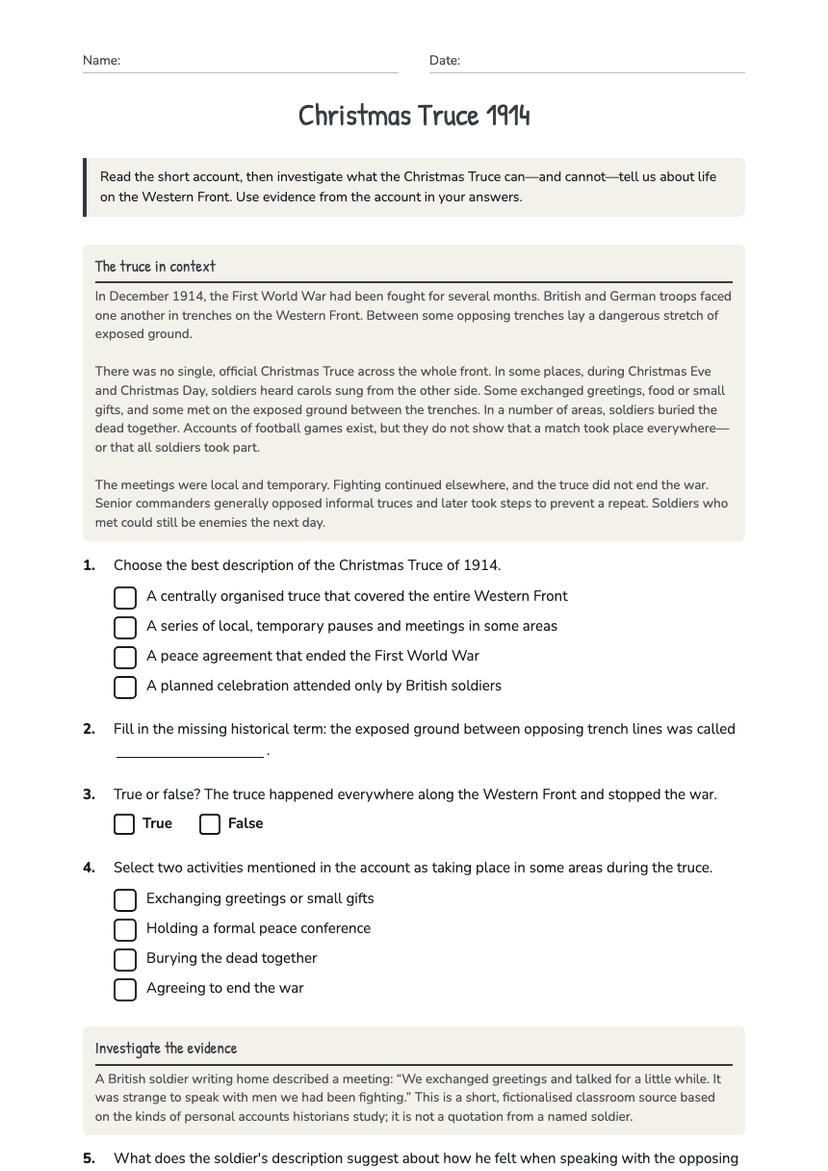
Christmas Truce 1914
Free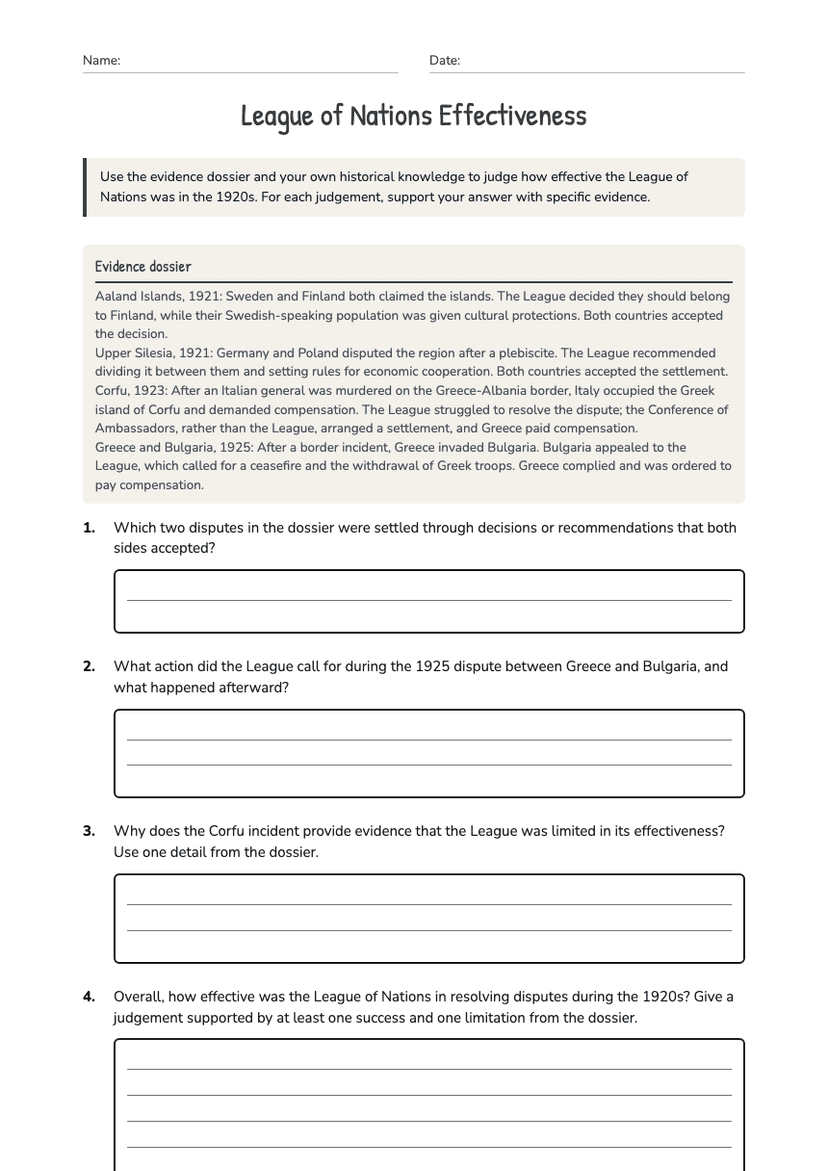
League of Nations Effectiveness
Free
Loyalty in Freedom's Fight
Free