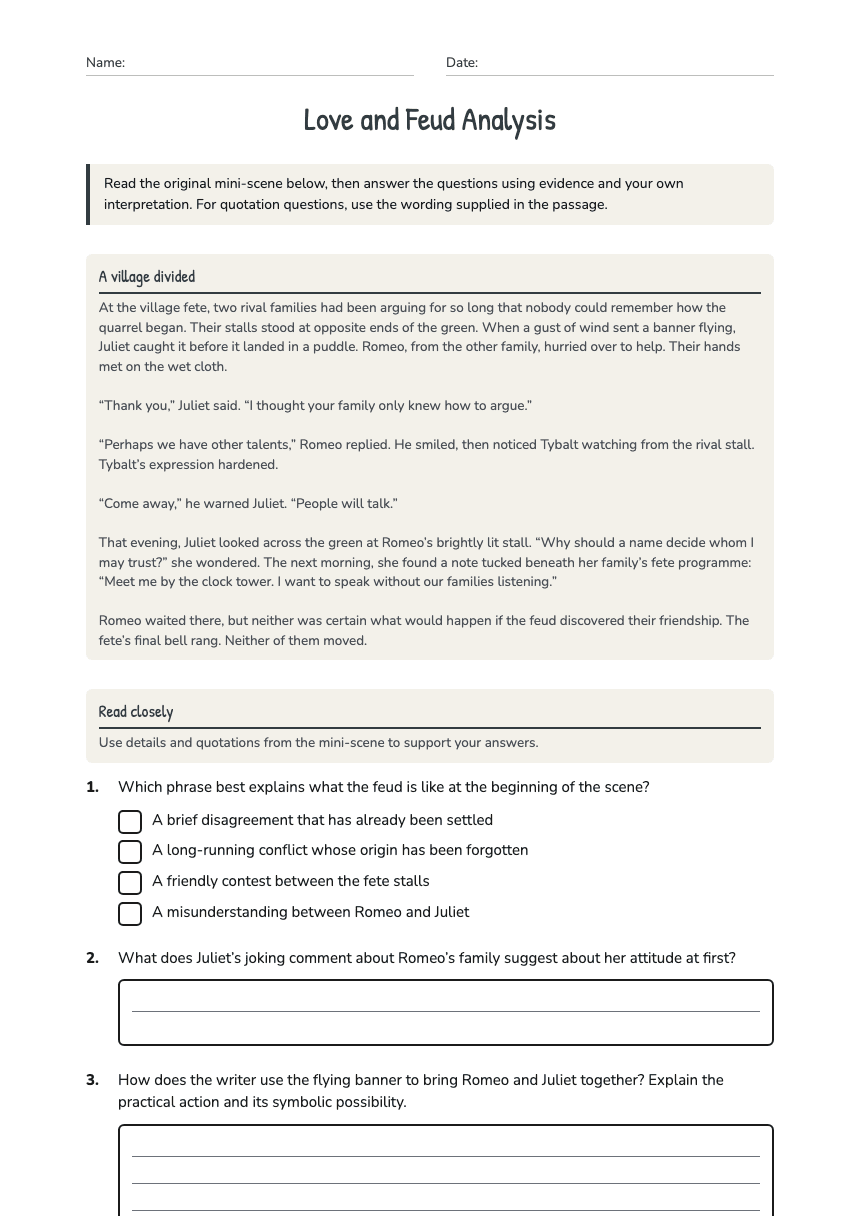
Love and Feud Analysis
A free english worksheet ready for your classroom. Open in Kuraplan to grab the print-ready PDF, customize it for your students, or generate a fresh version in seconds.
Love and Feud Analysis
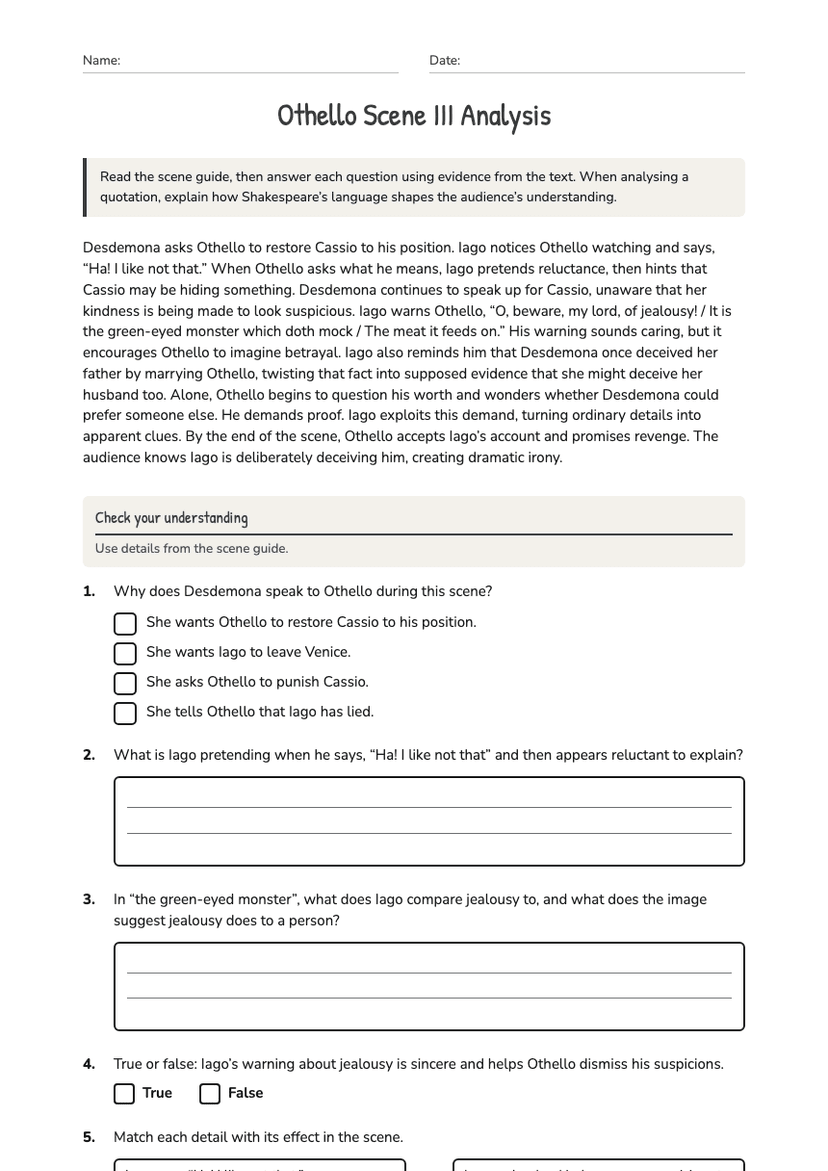
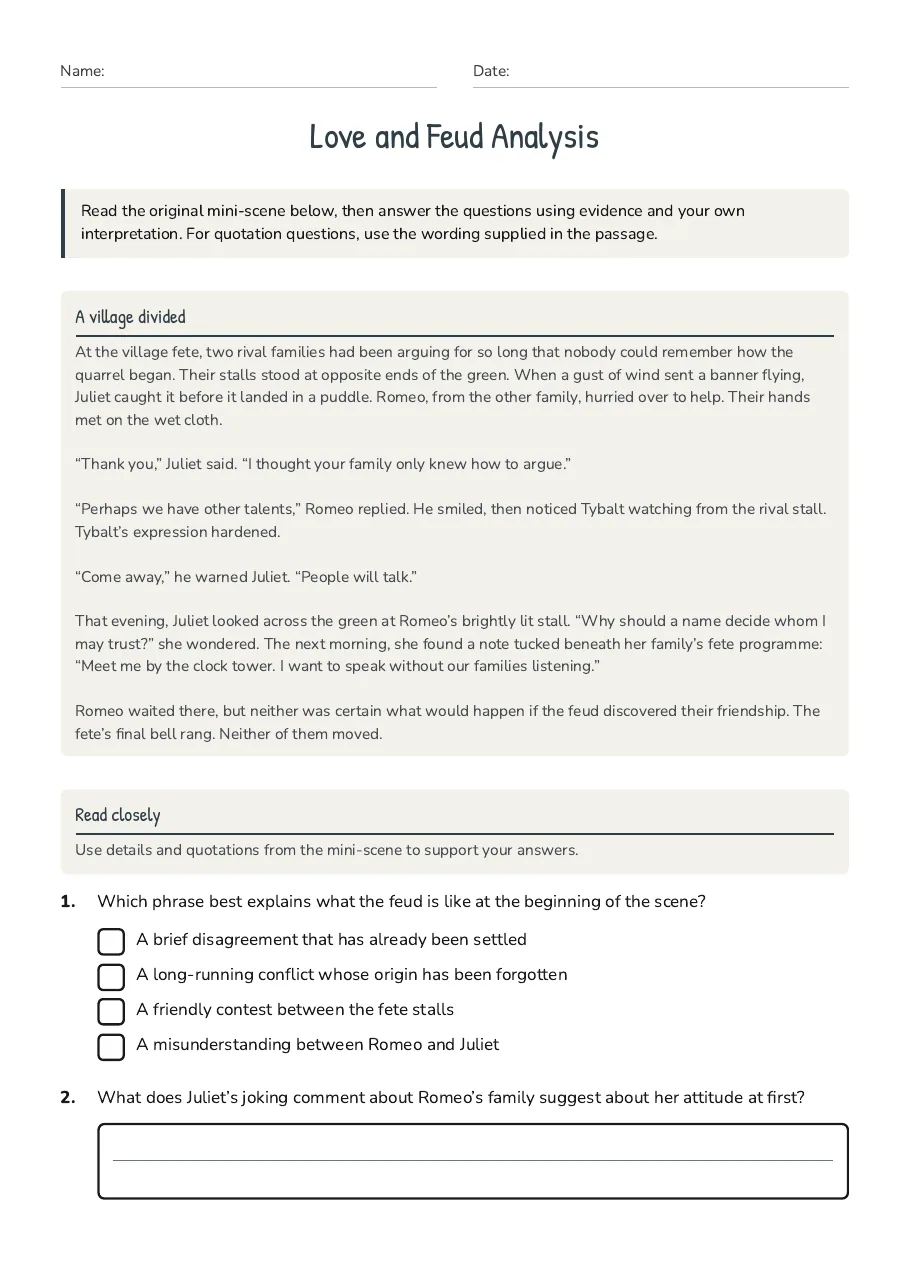
A village divided
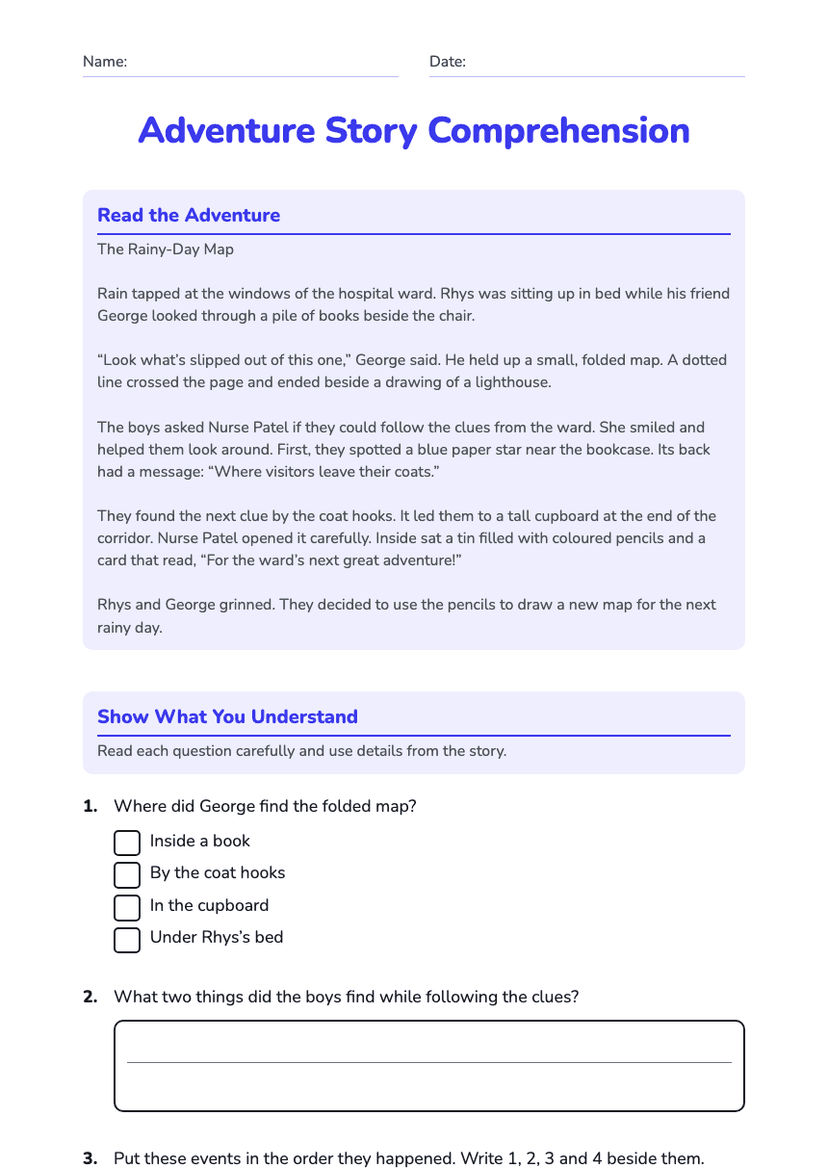
At the village fete, two rival families had been arguing for so long that nobody could remember how the quarrel began. Their stalls stood at opposite ends of the green. When a gust of wind sent a banner flying, Juliet caught it before it landed in a puddle. Romeo, from the other family, hurried over to help. Their hands met on the wet cloth. “Thank you,” Juliet said. “I thought your family only knew how to argue.” “Perhaps we have other talents,” Romeo replied. He smiled, then noticed Tybalt watching from the rival stall. Tybalt’s expression hardened. “Come away,” he warned Juliet. “People will talk.” That evening, Juliet looked across the green at Romeo’s brightly lit stall. “Why should a name decide whom I may trust?” she wondered. The next morning, she found a note tucked beneath her family’s fete programme: “Meet me by the clock tower. I want to speak without our families listening.” Romeo waited there, but neither was certain what would happen if the feud discovered their friendship. The fete’s final bell rang. Neither of them moved.
Read closely
Use details and quotations from the mini-scene to support your answers.
- A brief disagreement that has already been settled
- A long-running conflict whose origin has been forgotten
- A friendly contest between the fete stalls
- A misunderstanding between Romeo and Juliet
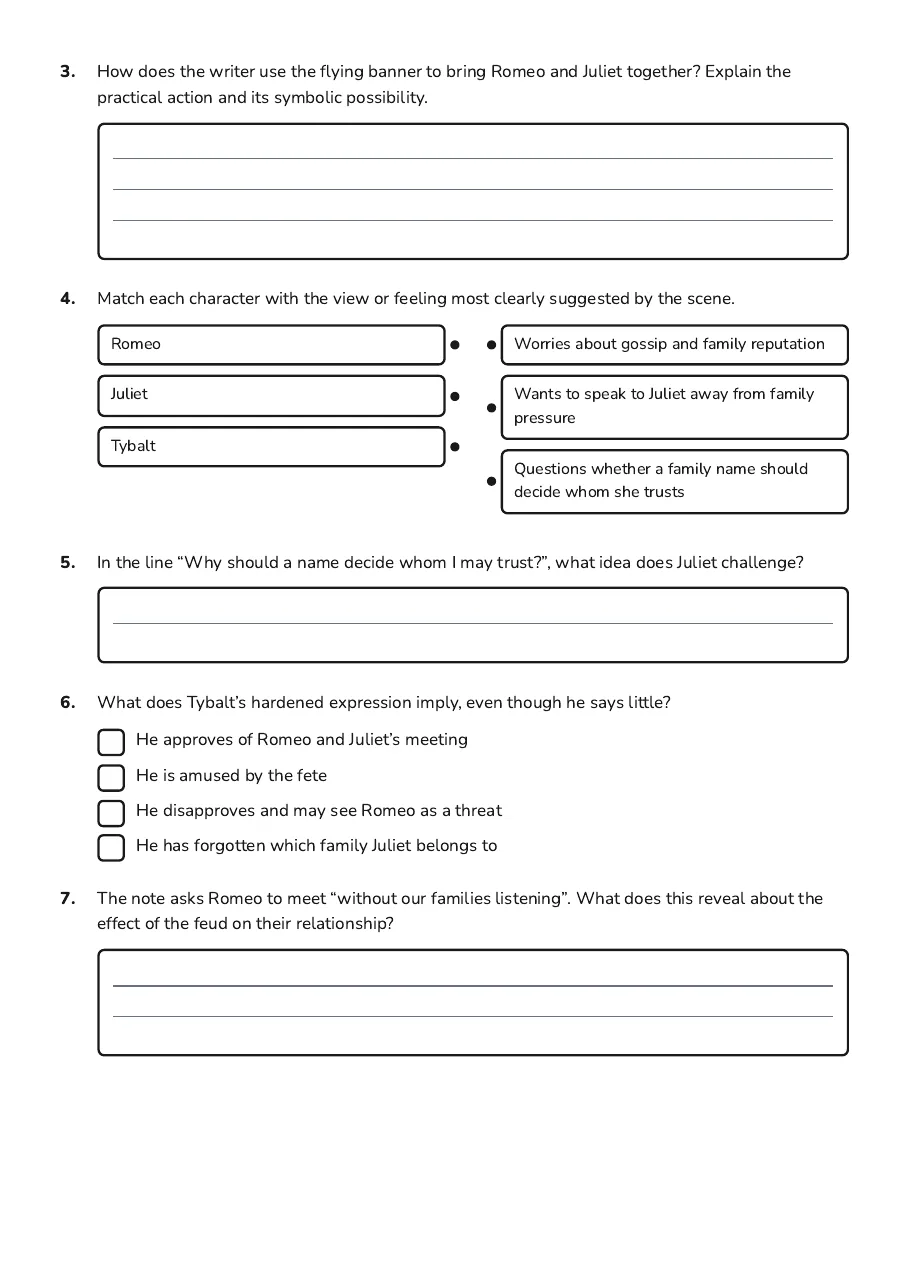
- Romeo
- Juliet
- Tybalt
- Worries about gossip and family reputation
- Wants to speak to Juliet away from family pressure
- Questions whether a family name should decide whom she trusts
- He approves of Romeo and Juliet’s meeting
- He is amused by the fete
- He disapproves and may see Romeo as a threat
- He has forgotten which family Juliet belongs to
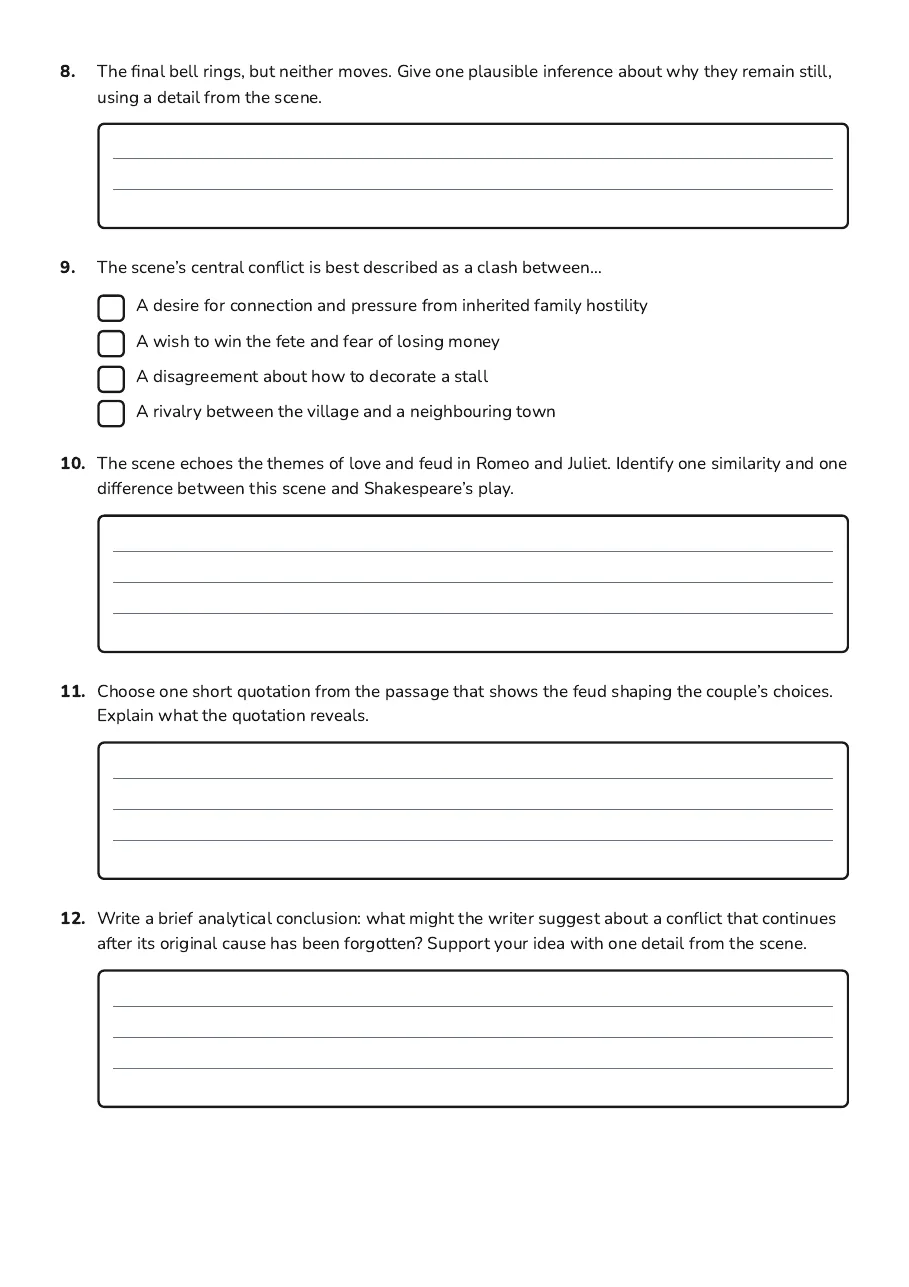
- A desire for connection and pressure from inherited family hostility
- A wish to win the fete and fear of losing money
- A disagreement about how to decorate a stall
- A rivalry between the village and a neighbouring town
3 printable pages
Page 1
Page 2
Page 3
About This Worksheet
Free in Kuraplan
Sign up free, grab the PDF, and customize it for your class.
Print-Ready
Formatted for standard paper. Clean layout, easy to read.
AI-Generated
Created with Kuraplan's AI, designed for real classroom use.
For Teachers & Parents
Use in classrooms, for homework, tutoring, or homeschool.
Need a custom version of this worksheet?
Kuraplan's AI generates custom worksheets in seconds — differentiated for every learner, aligned to your curriculum.
Generate Custom Worksheets — Free