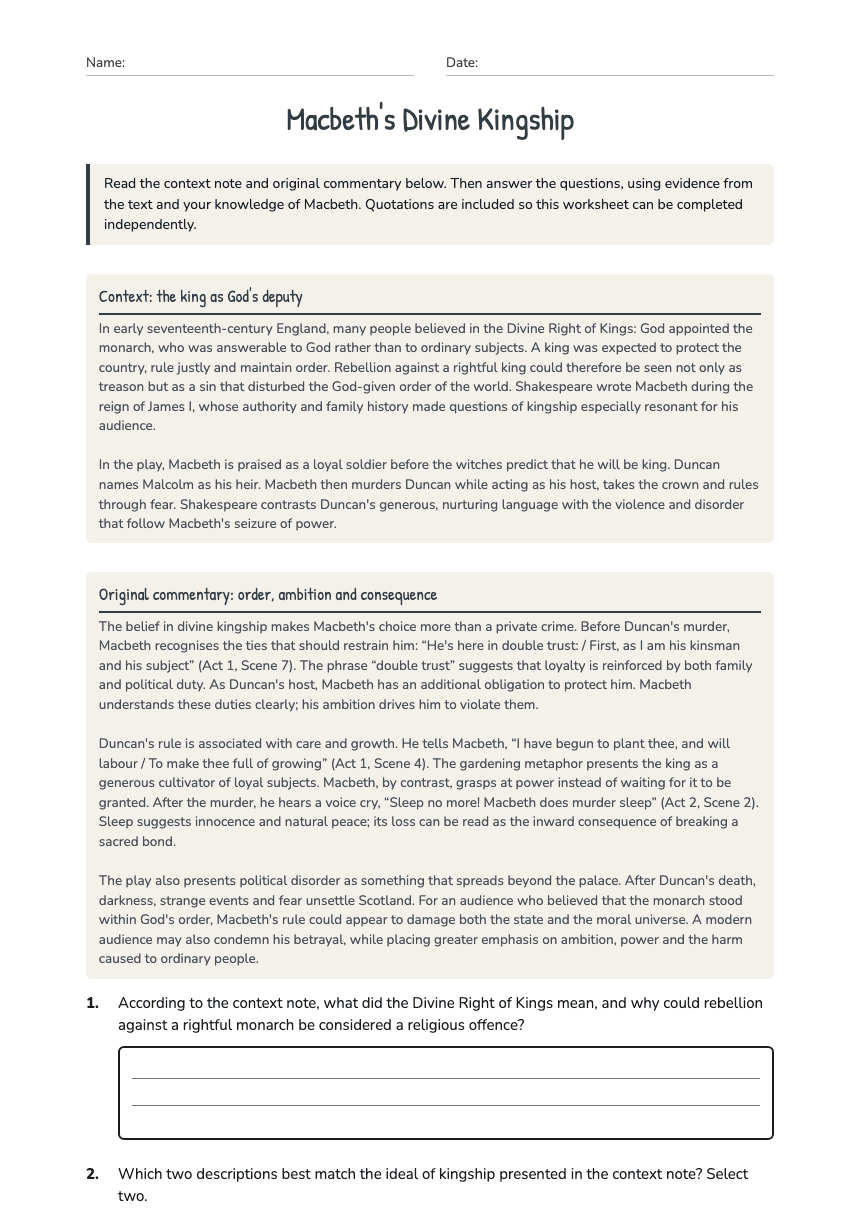
Macbeth's Divine Kingship
A free english worksheet ready for your classroom. Open in Kuraplan to grab the print-ready PDF, customize it for your students, or generate a fresh version in seconds.
Macbeth's Divine Kingship
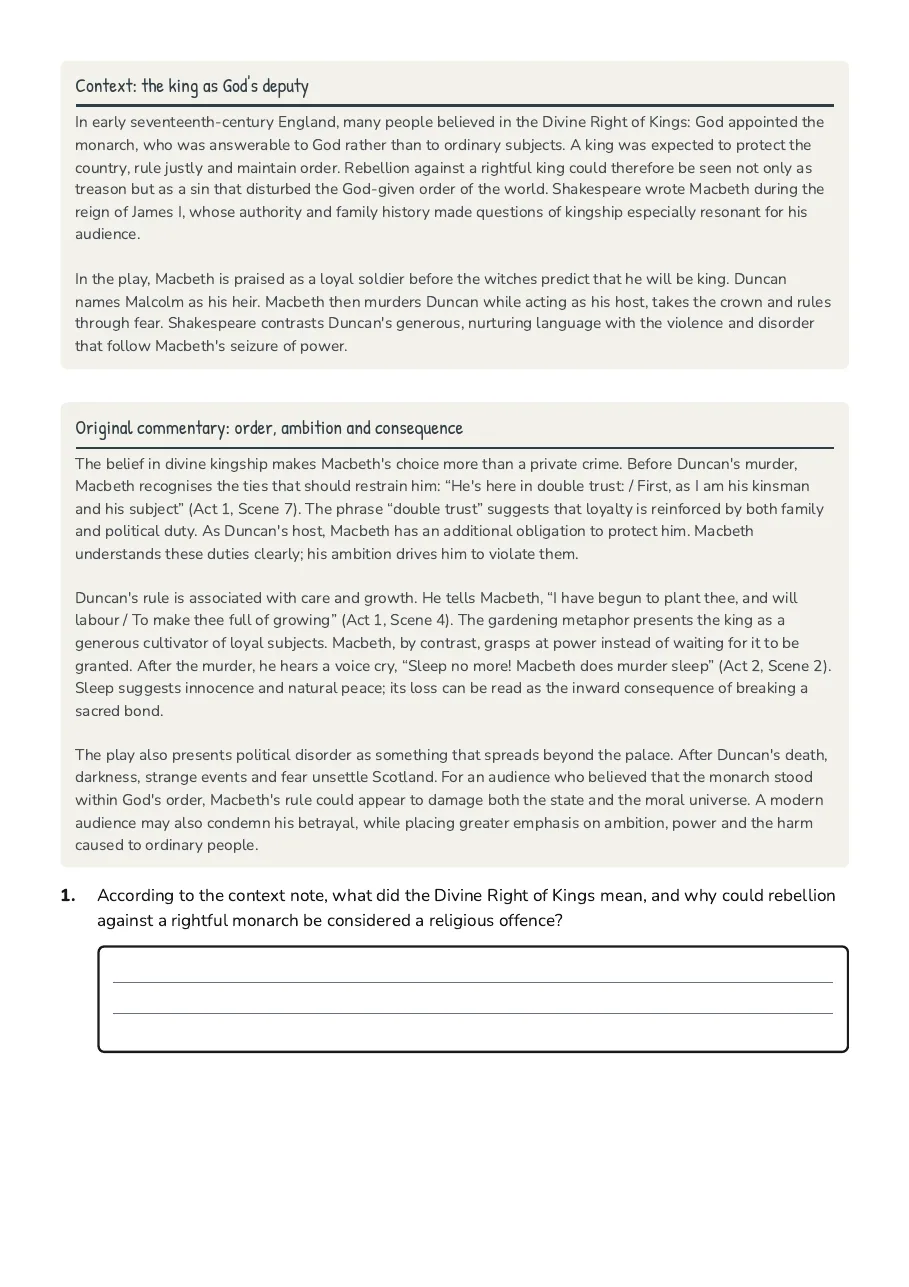
Context: the king as God's deputy
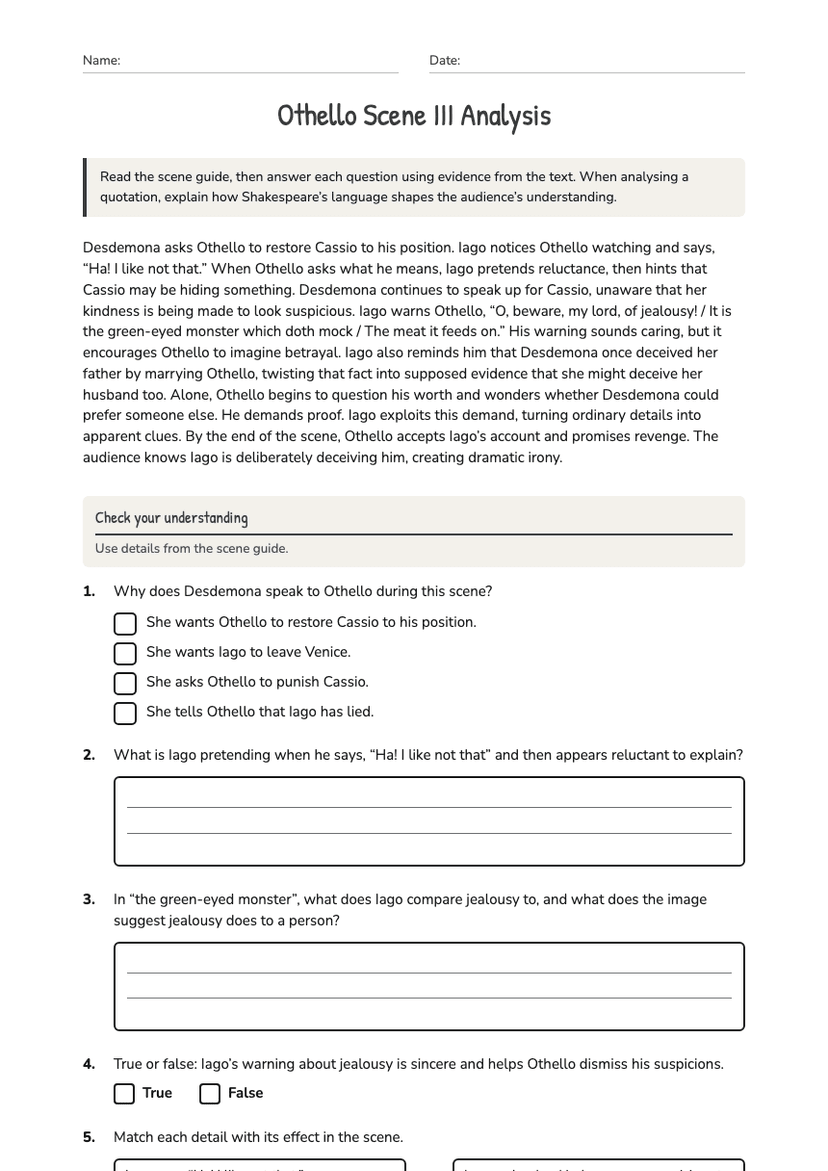
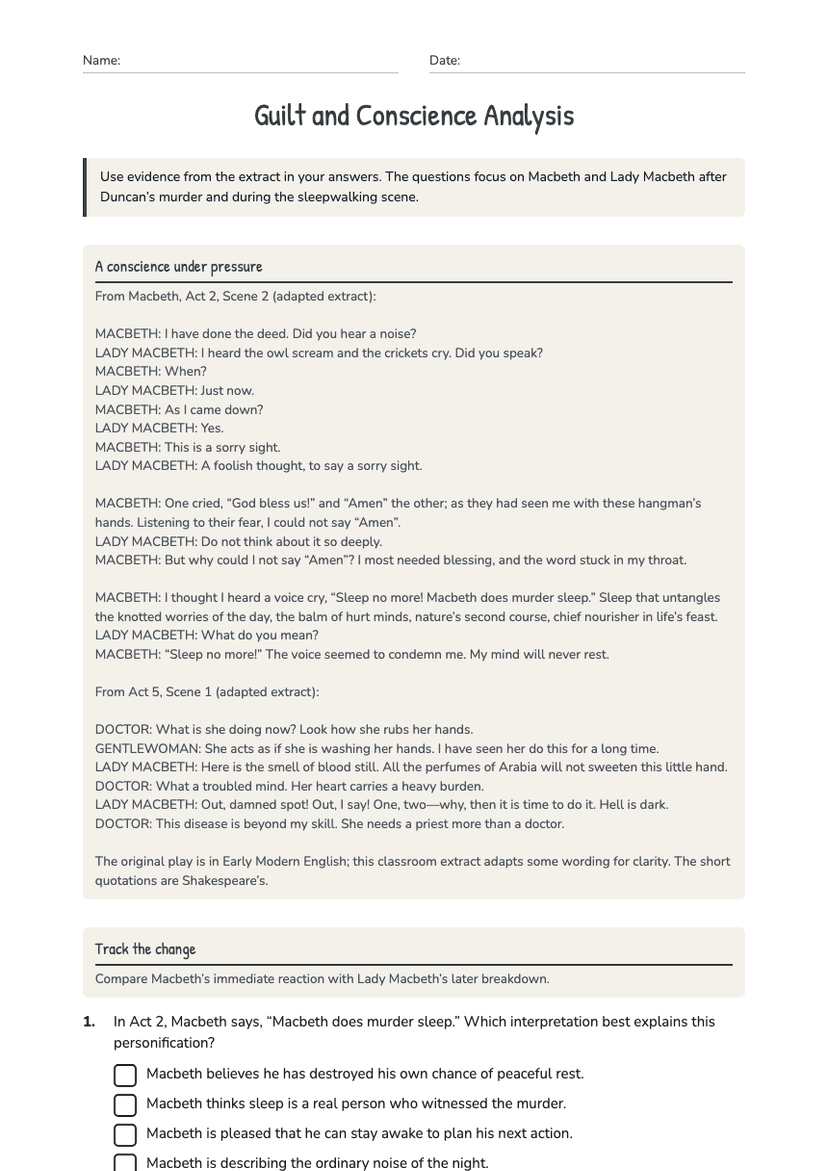
In early seventeenth-century England, many people believed in the Divine Right of Kings: God appointed the monarch, who was answerable to God rather than to ordinary subjects. A king was expected to protect the country, rule justly and maintain order. Rebellion against a rightful king could therefore be seen not only as treason but as a sin that disturbed the God-given order of the world. Shakespeare wrote Macbeth during the reign of James I, whose authority and family history made questions of kingship especially resonant for his audience. In the play, Macbeth is praised as a loyal soldier before the witches predict that he will be king. Duncan names Malcolm as his heir. Macbeth then murders Duncan while acting as his host, takes the crown and rules through fear. Shakespeare contrasts Duncan's generous, nurturing language with the violence and disorder that follow Macbeth's seizure of power.
Original commentary: order, ambition and consequence
The belief in divine kingship makes Macbeth's choice more than a private crime. Before Duncan's murder, Macbeth recognises the ties that should restrain him: “He's here in double trust: / First, as I am his kinsman and his subject” (Act 1, Scene 7). The phrase “double trust” suggests that loyalty is reinforced by both family and political duty. As Duncan's host, Macbeth has an additional obligation to protect him. Macbeth understands these duties clearly; his ambition drives him to violate them. Duncan's rule is associated with care and growth. He tells Macbeth, “I have begun to plant thee, and will labour / To make thee full of growing” (Act 1, Scene 4). The gardening metaphor presents the king as a generous cultivator of loyal subjects. Macbeth, by contrast, grasps at power instead of waiting for it to be granted. After the murder, he hears a voice cry, “Sleep no more! Macbeth does murder sleep” (Act 2, Scene 2). Sleep suggests innocence and natural peace; its loss can be read as the inward consequence of breaking a sacred bond. The play also presents political disorder as something that spreads beyond the palace. After Duncan's death, darkness, strange events and fear unsettle Scotland. For an audience who believed that the monarch stood within God's order, Macbeth's rule could appear to damage both the state and the moral universe. A modern audience may also condemn his betrayal, while placing greater emphasis on ambition, power and the harm caused to ordinary people.
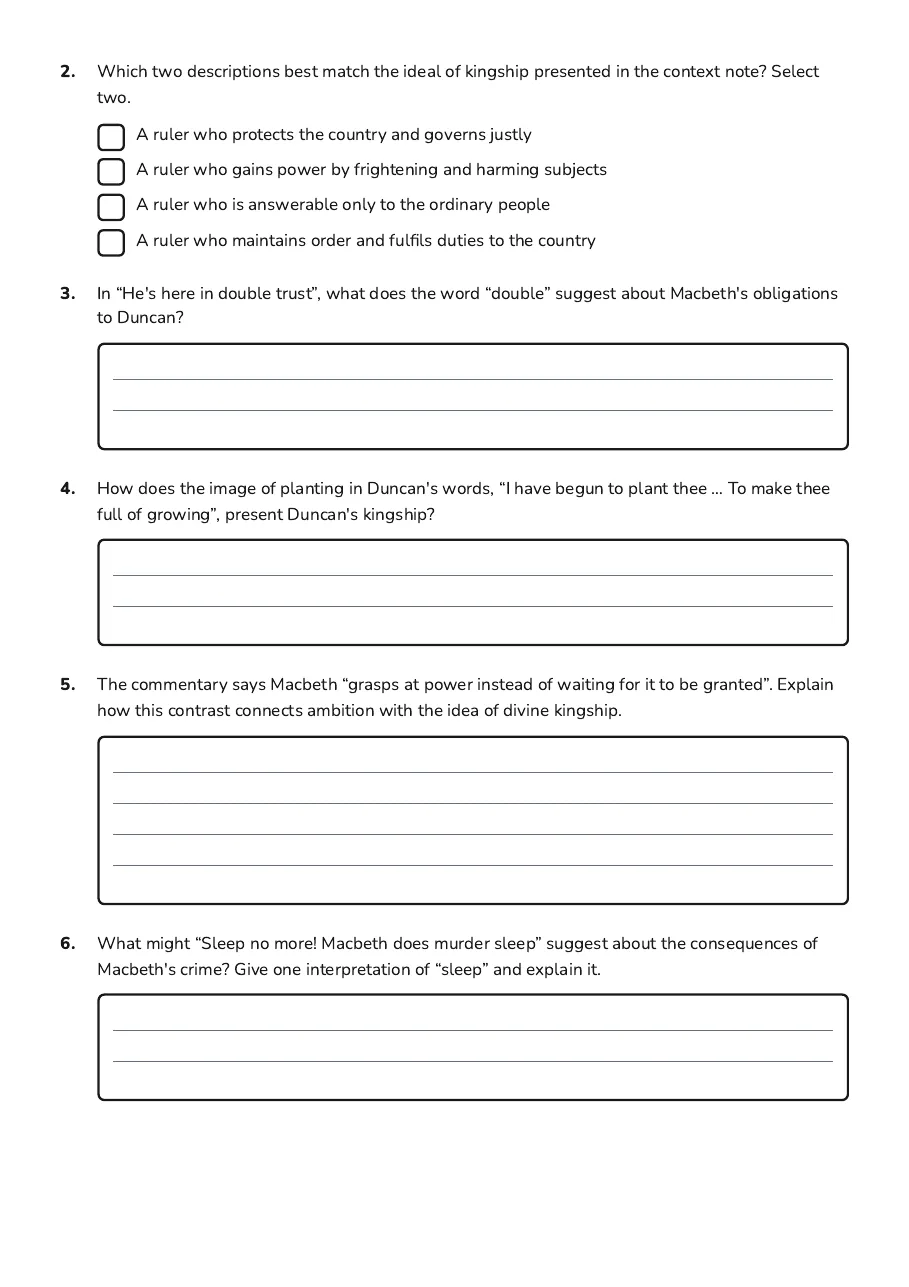
- A ruler who protects the country and governs justly
- A ruler who gains power by frightening and harming subjects
- A ruler who is answerable only to the ordinary people
- A ruler who maintains order and fulfils duties to the country
4 printable pages

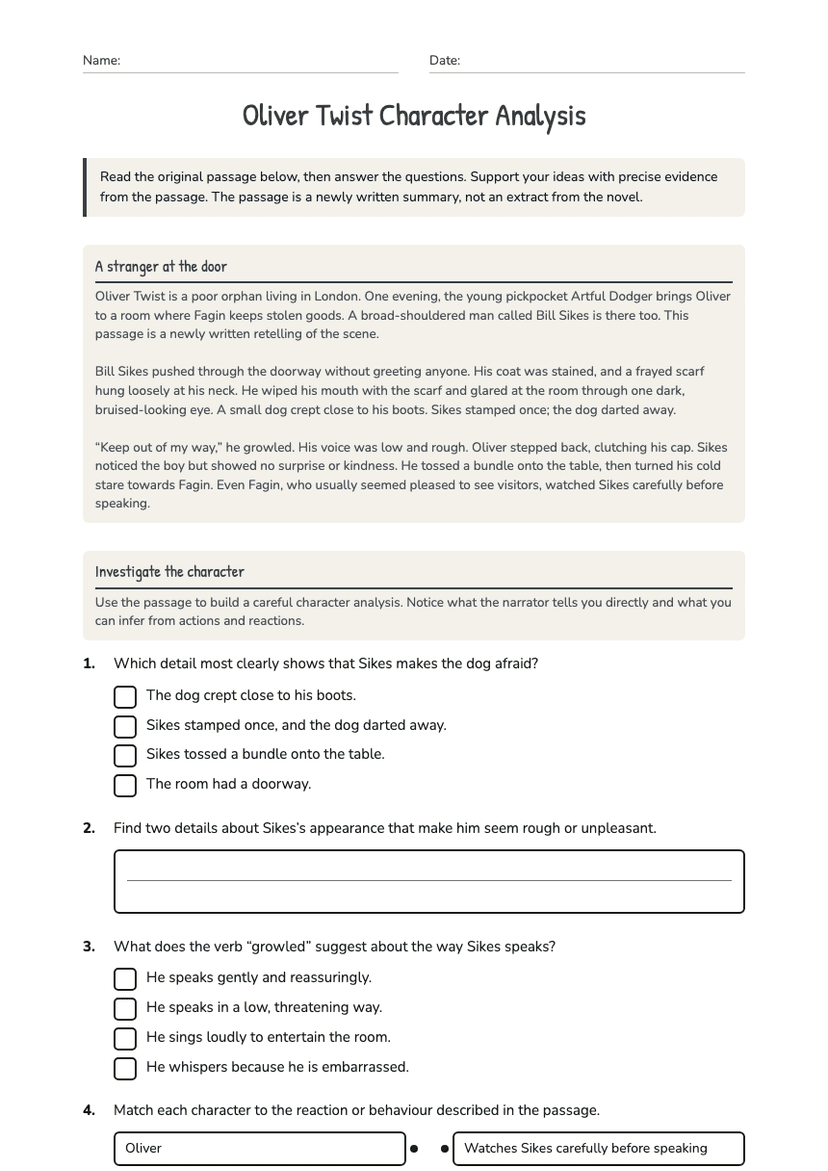
Page 1
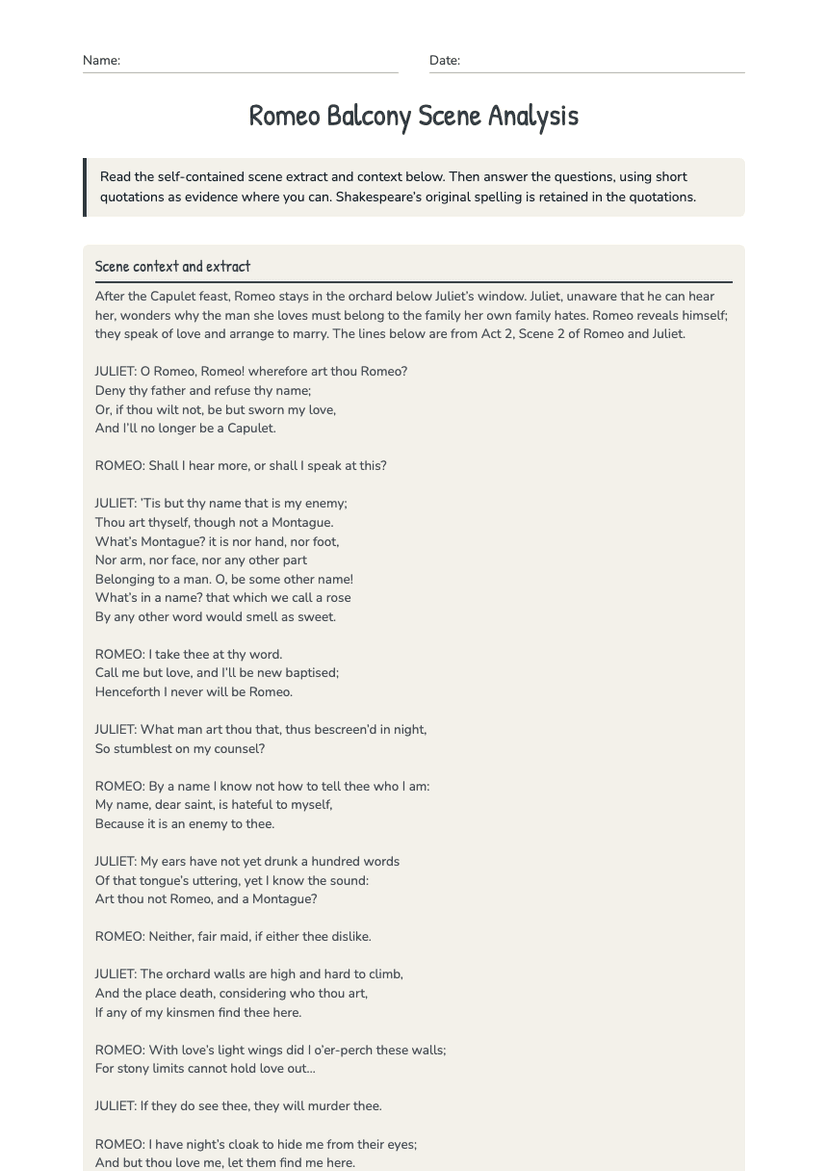
Page 2
Page 3
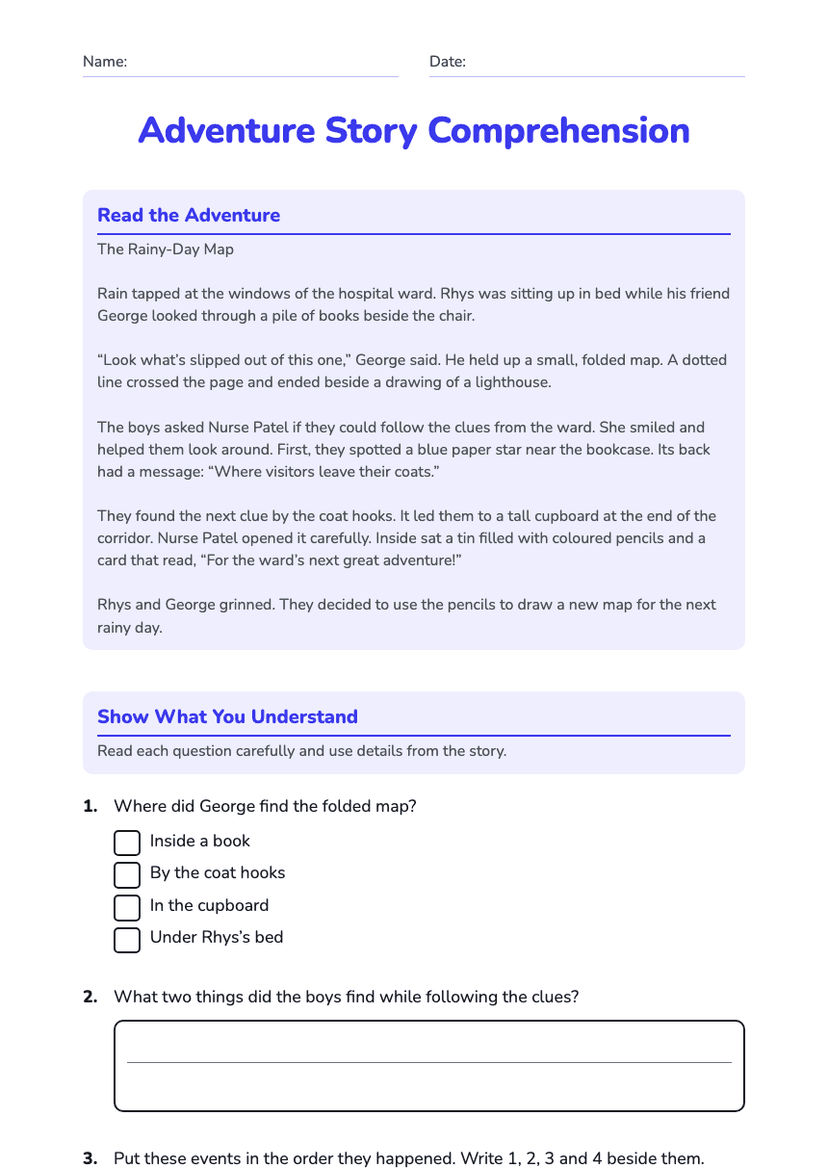
Page 4
About This Worksheet
Free in Kuraplan
Sign up free, grab the PDF, and customize it for your class.
Print-Ready
Formatted for standard paper. Clean layout, easy to read.
AI-Generated
Created with Kuraplan's AI, designed for real classroom use.
For Teachers & Parents
Use in classrooms, for homework, tutoring, or homeschool.
Need a custom version of this worksheet?
Kuraplan's AI generates custom worksheets in seconds — differentiated for every learner, aligned to your curriculum.
Generate Custom Worksheets — Free