Men's Attitudes Towards Women
A free history worksheet ready for your classroom. Open in Kuraplan to grab the print-ready PDF, customize it for your students, or generate a fresh version in seconds.
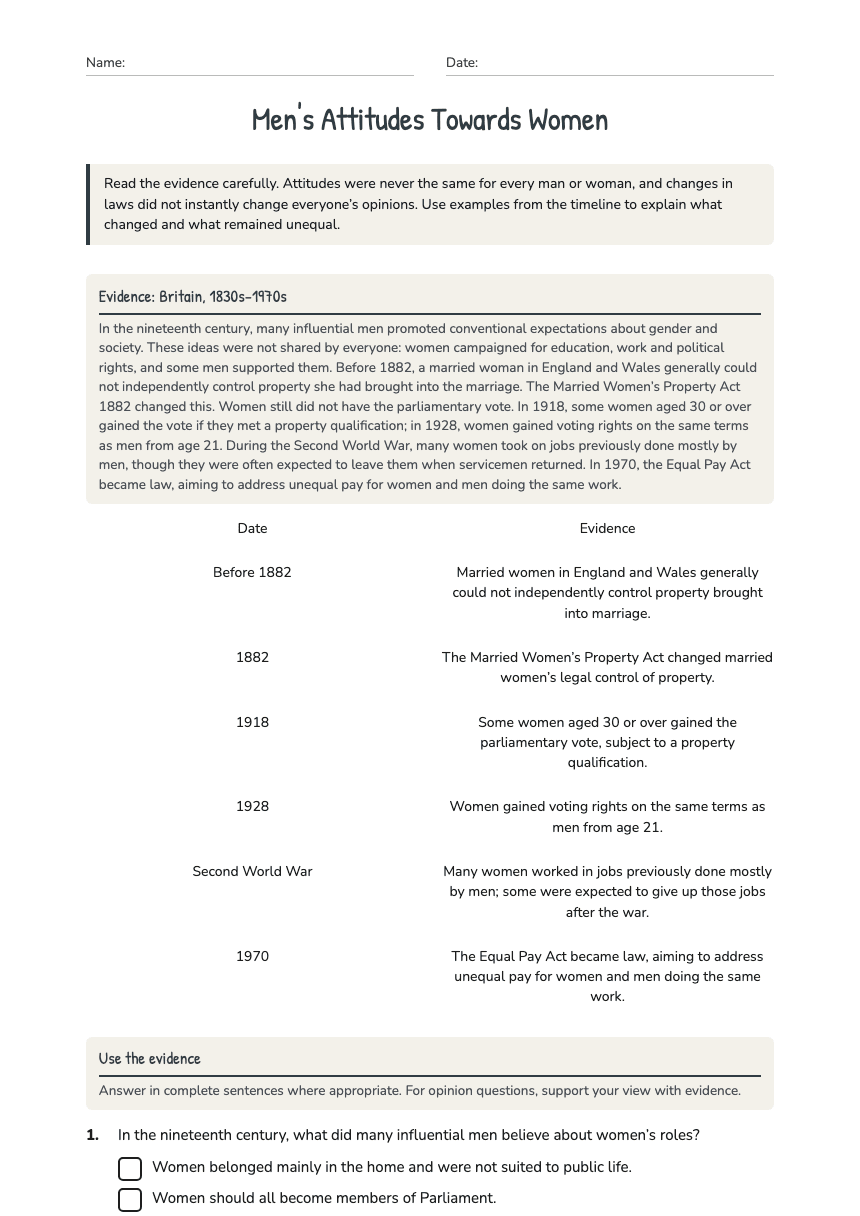
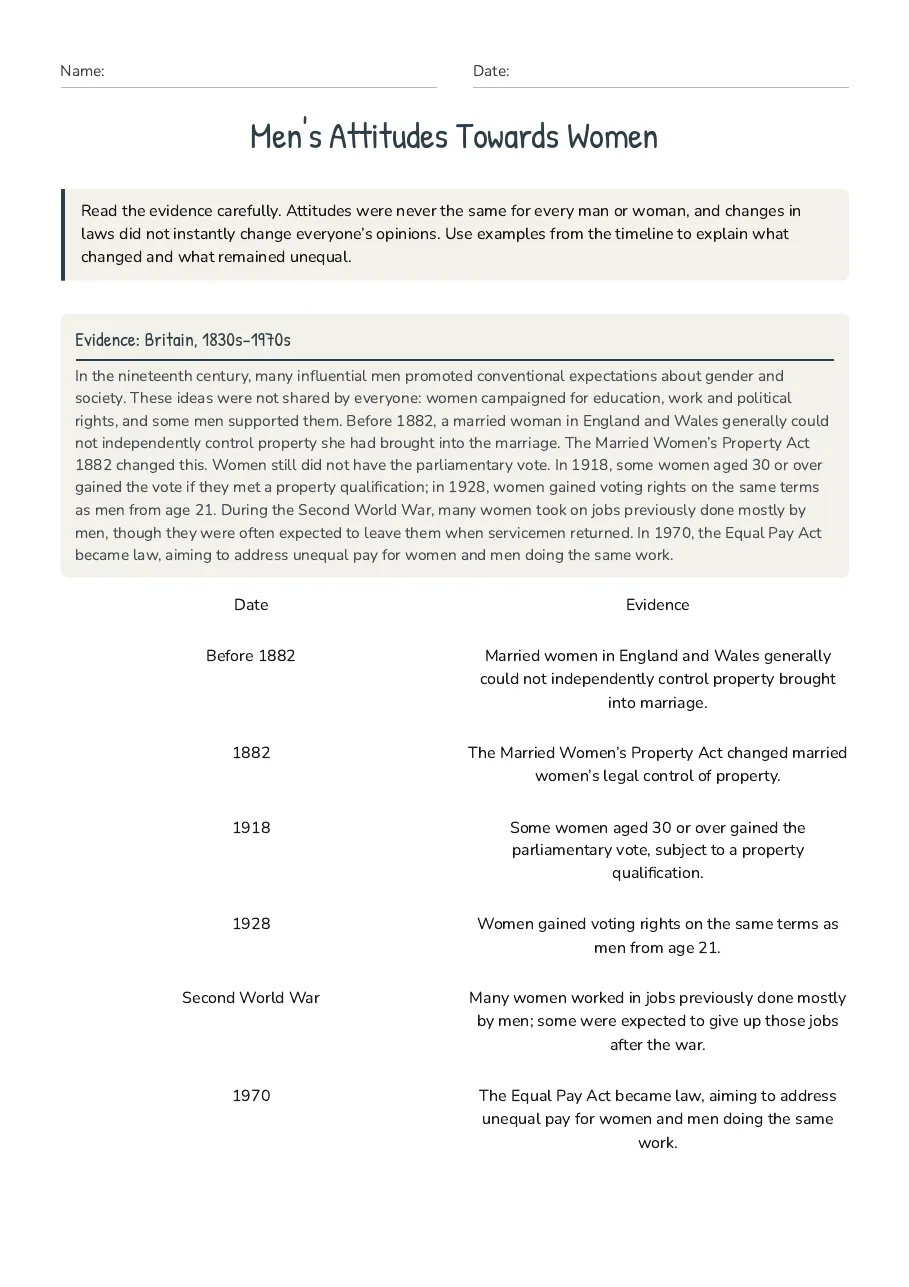
Men's Attitudes Towards Women
Evidence: Britain, 1830s–1970s
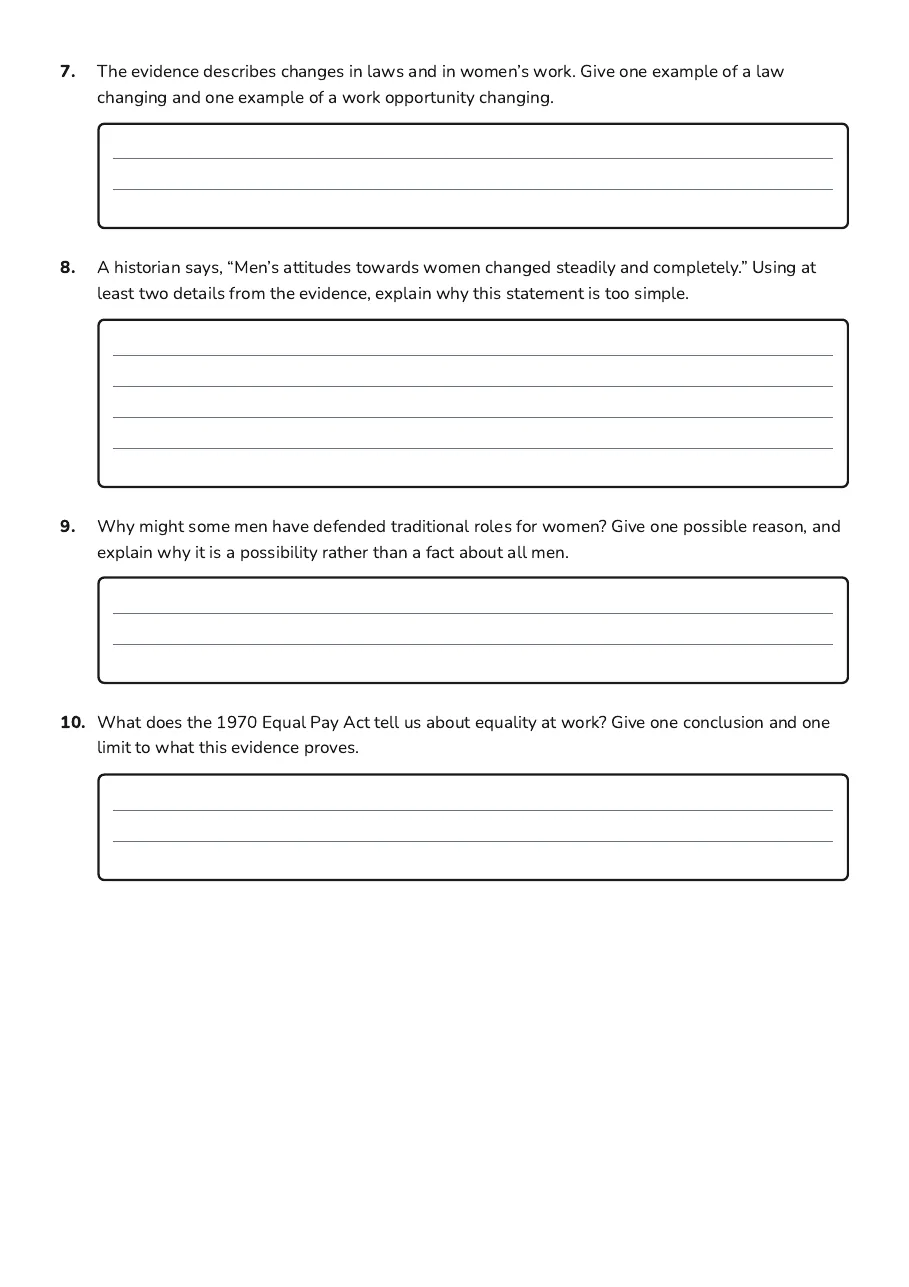
In the nineteenth century, many influential men promoted conventional expectations about gender and society. These ideas were not shared by everyone: women campaigned for education, work and political rights, and some men supported them. Before 1882, a married woman in England and Wales generally could not independently control property she had brought into the marriage. The Married Women’s Property Act 1882 changed this. Women still did not have the parliamentary vote. In 1918, some women aged 30 or over gained the vote if they met a property qualification; in 1928, women gained voting rights on the same terms as men from age 21. During the Second World War, many women took on jobs previously done mostly by men, though they were often expected to leave them when servicemen returned. In 1970, the Equal Pay Act became law, aiming to address unequal pay for women and men doing the same work.
Date
Evidence
Before 1882
Married women in England and Wales generally could not independently control property brought into marriage.
1882
The Married Women’s Property Act changed married women’s legal control of property.
1918
Some women aged 30 or over gained the parliamentary vote, subject to a property qualification.
1928
Women gained voting rights on the same terms as men from age 21.
Second World War
Many women worked in jobs previously done mostly by men; some were expected to give up those jobs after the war.
1970
The Equal Pay Act became law, aiming to address unequal pay for women and men doing the same work.
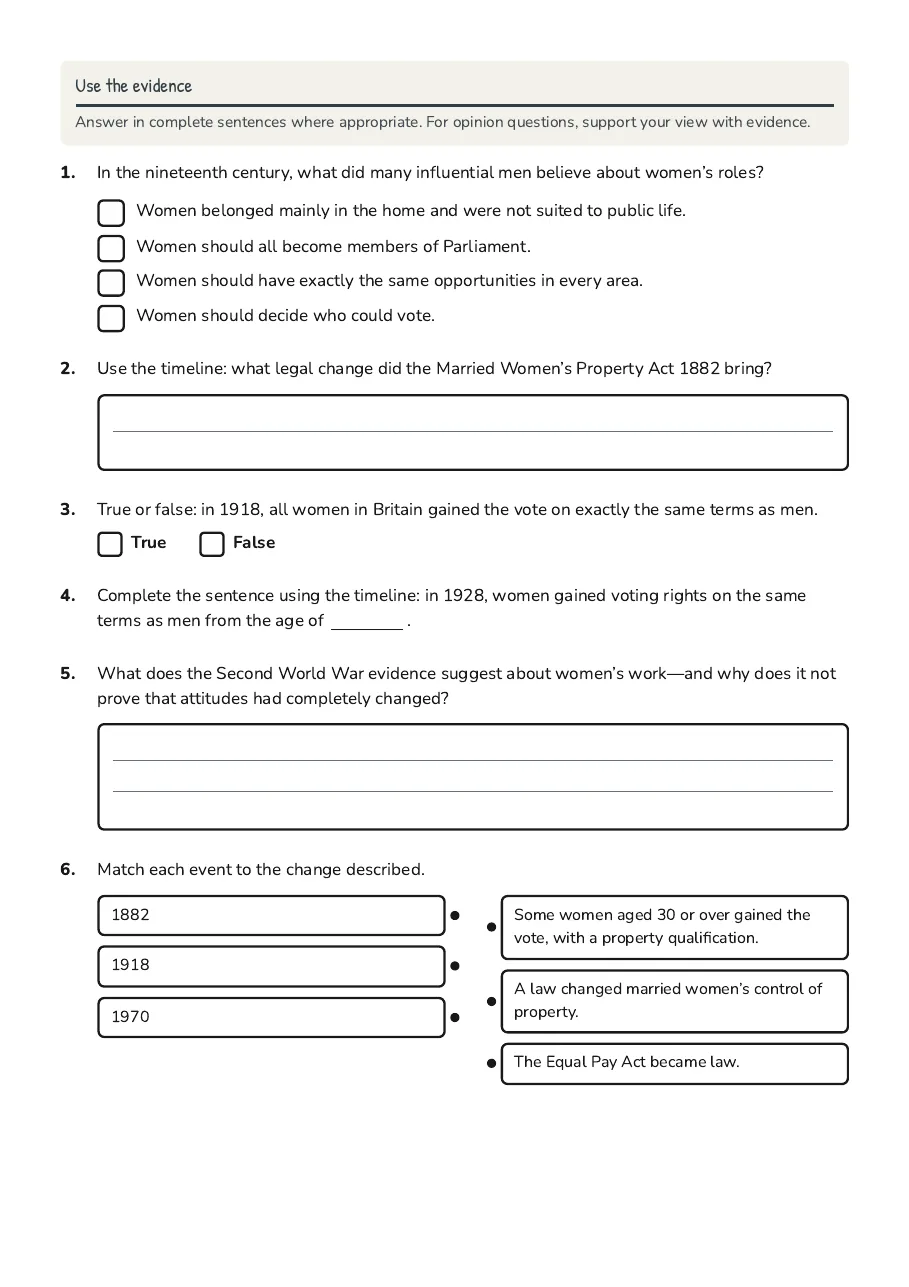
Use the evidence
Answer in complete sentences where appropriate. For opinion questions, support your view with evidence.
- Women belonged mainly in the home and were not suited to public life.
- Women should all become members of Parliament.
- Women should have exactly the same opportunities in every area.
- Women should decide who could vote.
- 1882
- 1918
- 1970
- Some women aged 30 or over gained the vote, with a property qualification.
- A law changed married women’s control of property.
- The Equal Pay Act became law.
3 printable pages
Page 1
Page 2
Page 3
About This Worksheet
Free in Kuraplan
Sign up free, grab the PDF, and customize it for your class.
Print-Ready
Formatted for standard paper. Clean layout, easy to read.
AI-Generated
Created with Kuraplan's AI, designed for real classroom use.
For Teachers & Parents
Use in classrooms, for homework, tutoring, or homeschool.
Need a custom version of this worksheet?
Kuraplan's AI generates custom worksheets in seconds — differentiated for every learner, aligned to your curriculum.
Generate Custom Worksheets — FreeMore History Worksheets
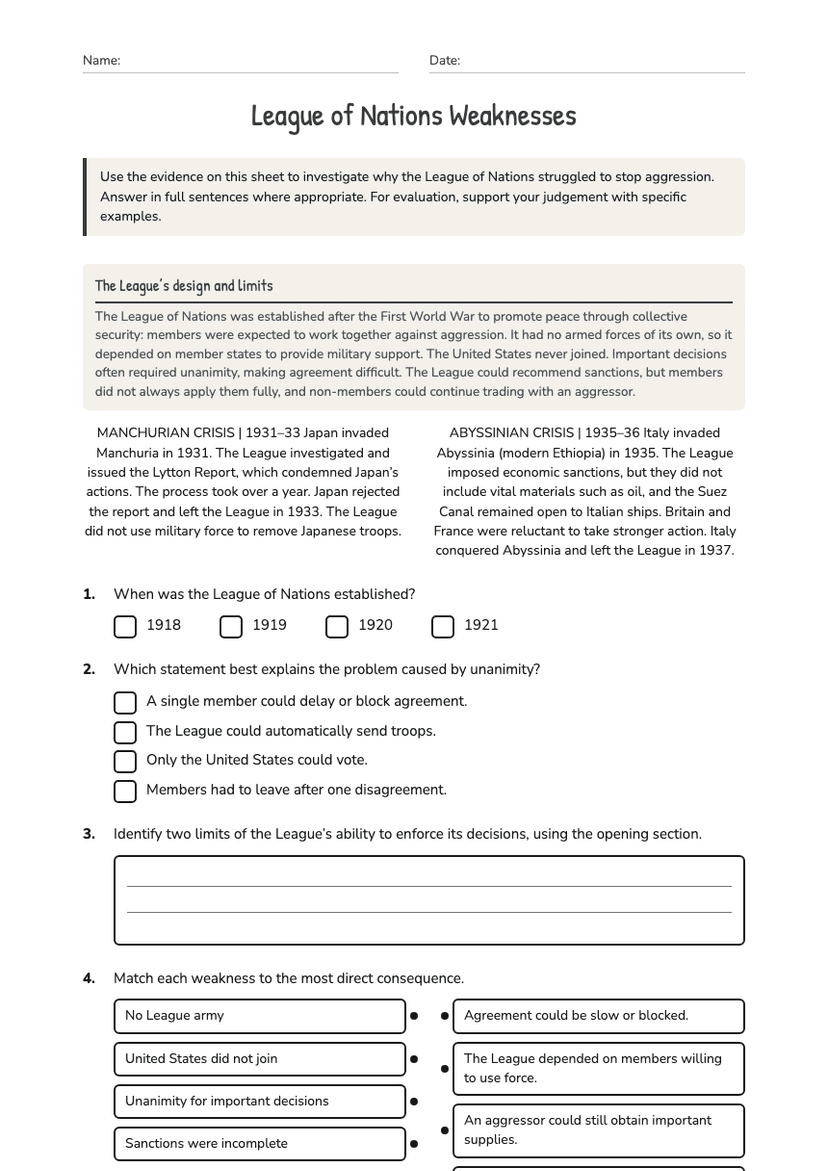
League of Nations Weaknesses
Free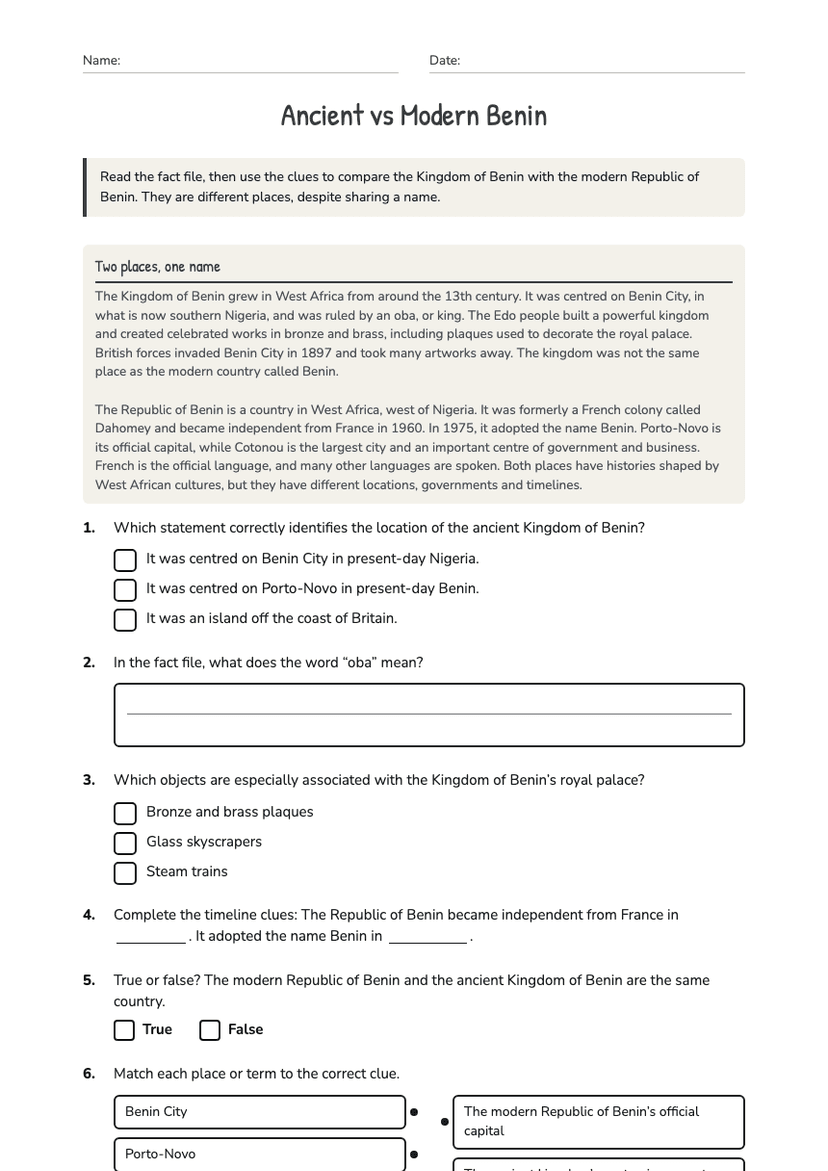
Ancient vs Modern Benin
Free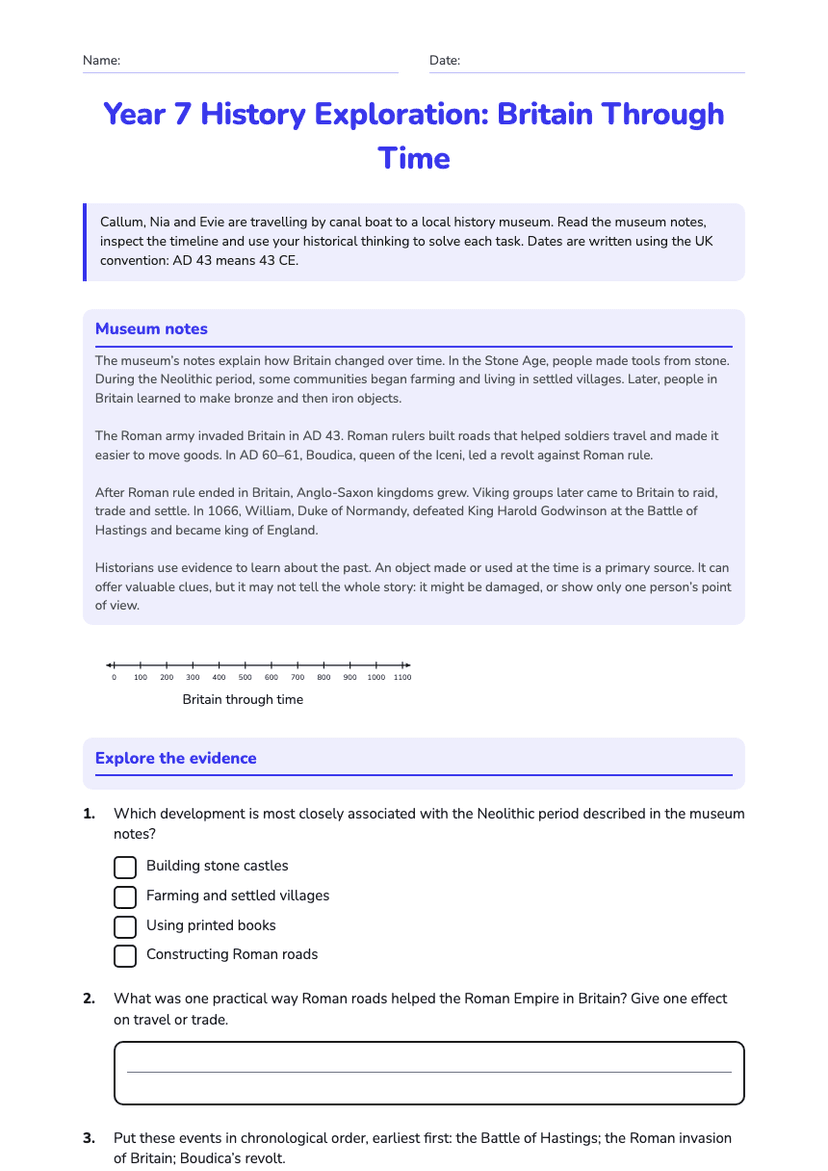
Year 7 History Exploration: Britain Through Time
Free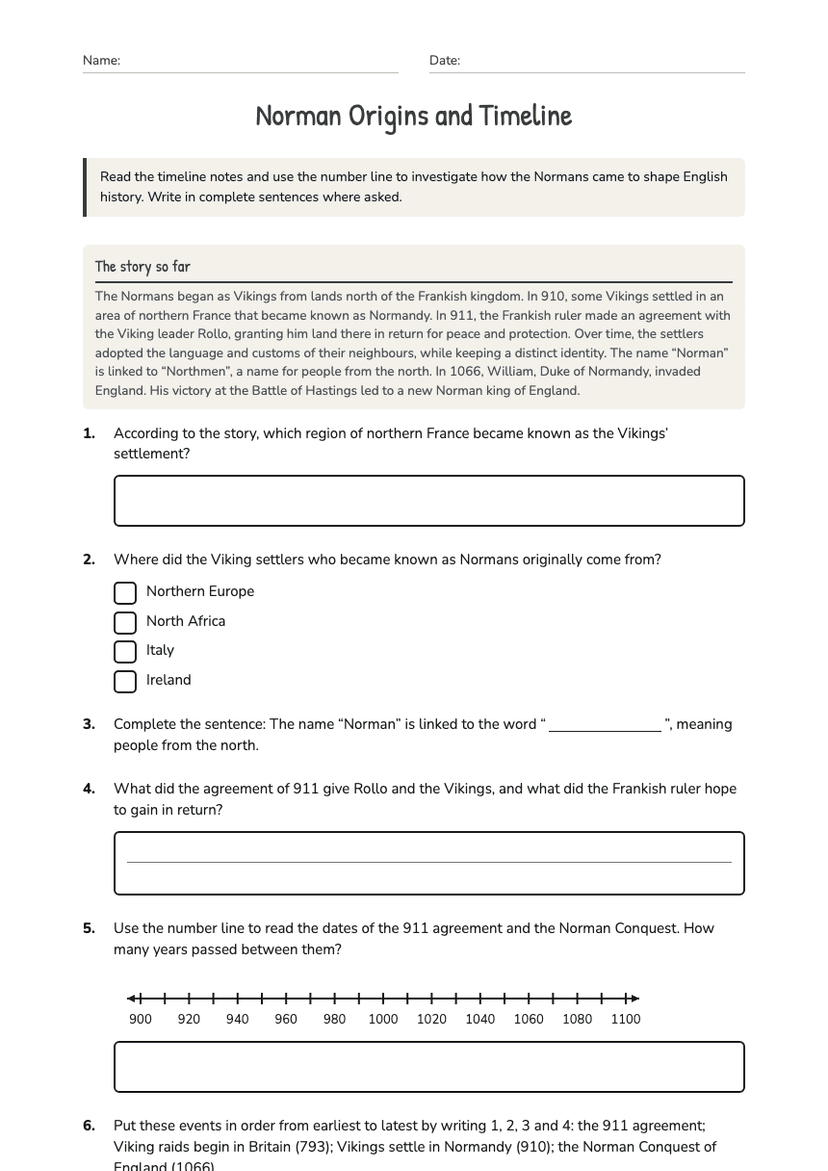
Norman Origins and Timeline
Free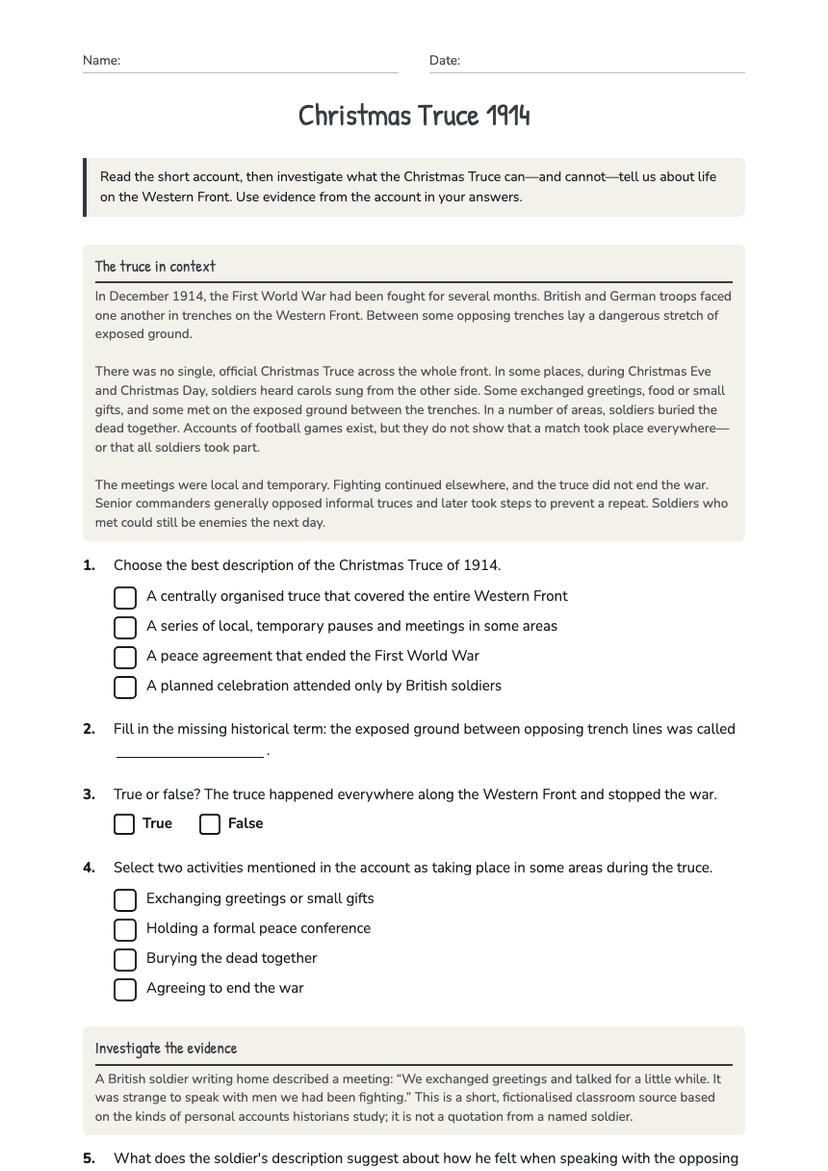
Christmas Truce 1914
Free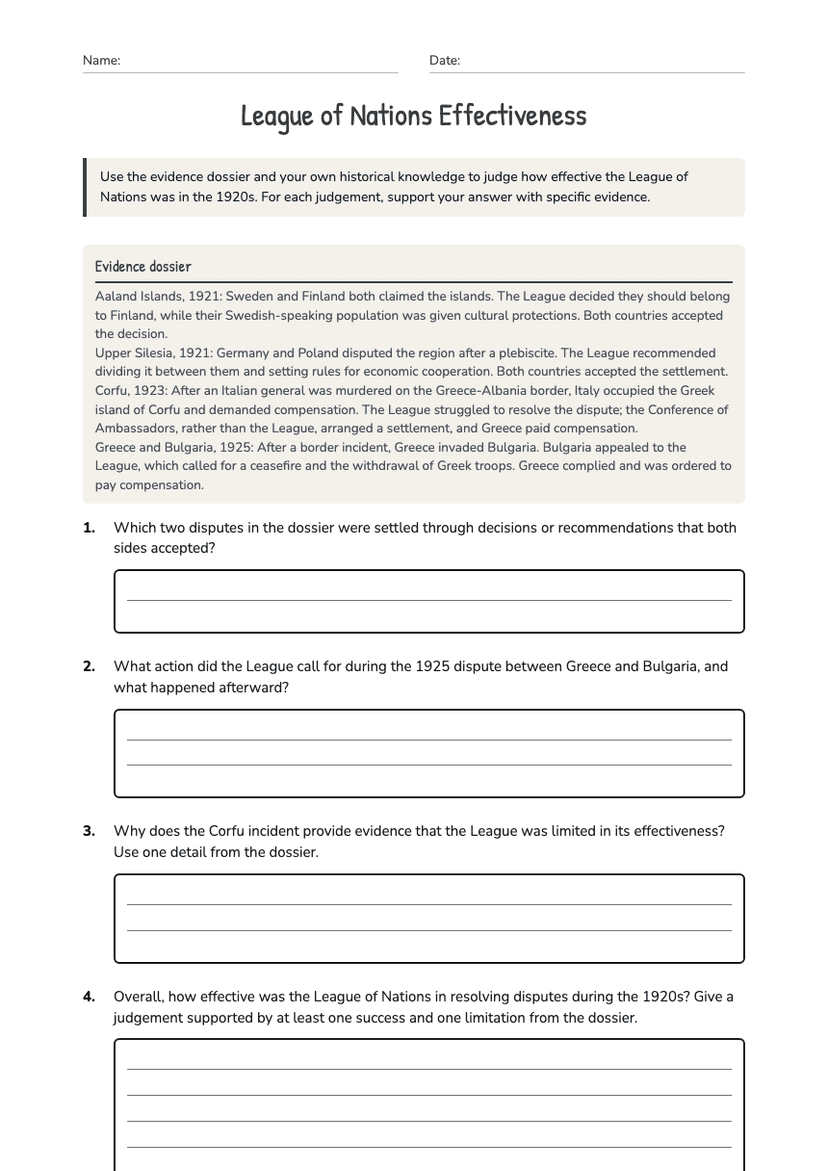
League of Nations Effectiveness
Free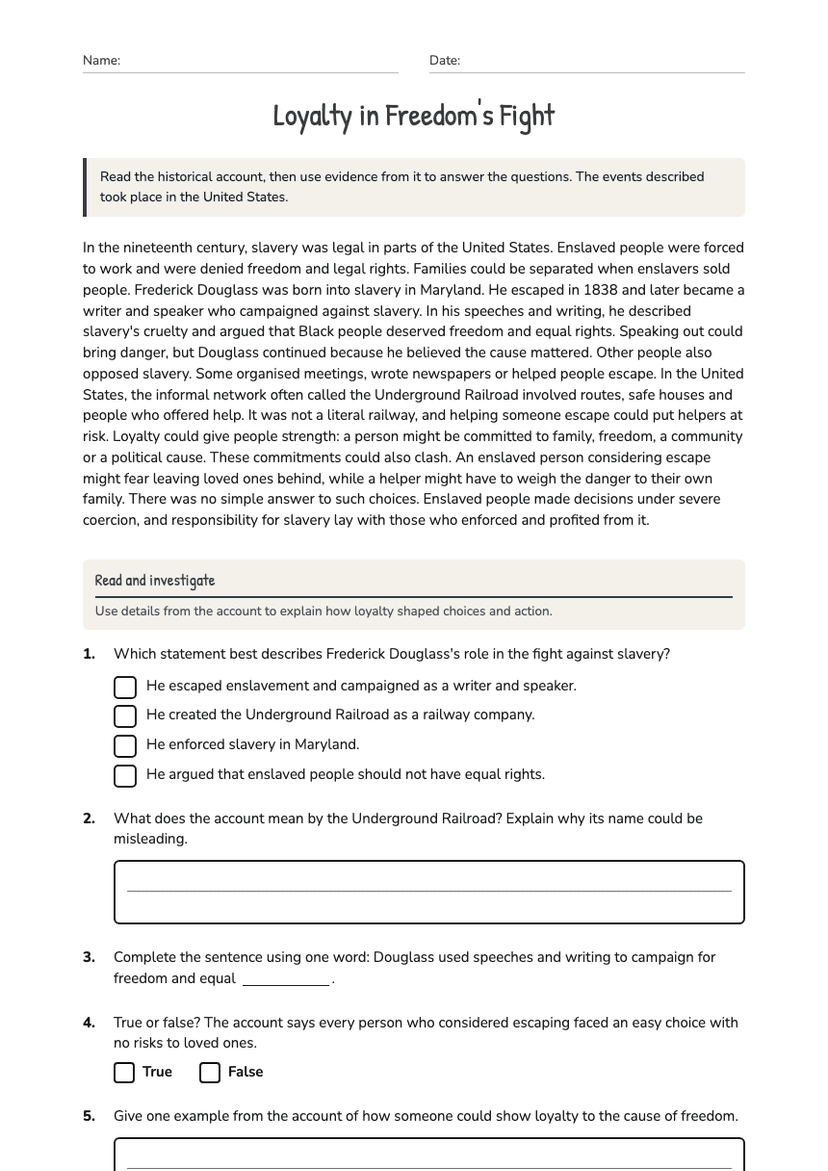
Loyalty in Freedom's Fight
Free