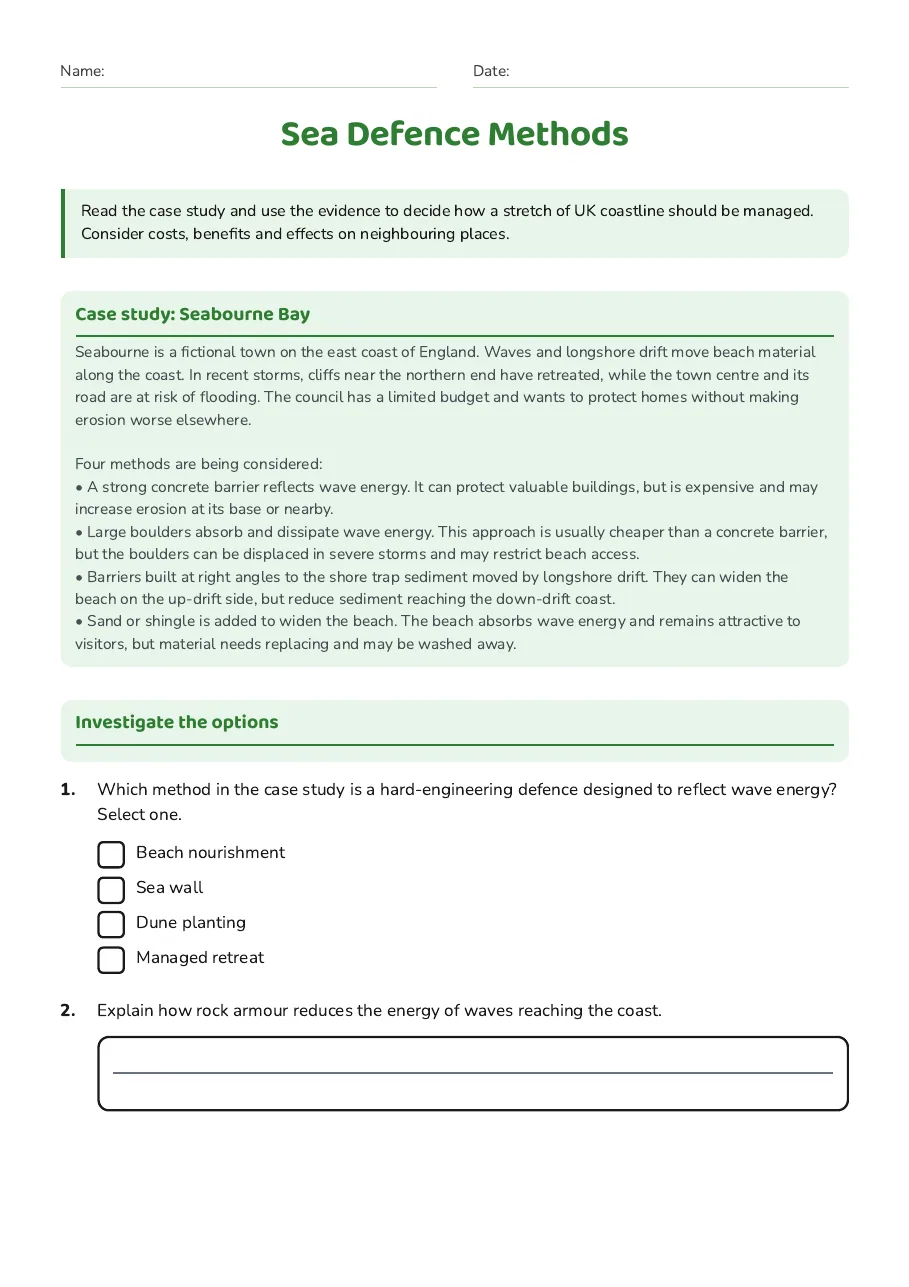
Sea Defence Methods
A free geography worksheet ready for your classroom. Open in Kuraplan to grab the print-ready PDF, customize it for your students, or generate a fresh version in seconds.

Sea Defence Methods
Case study: Seabourne Bay
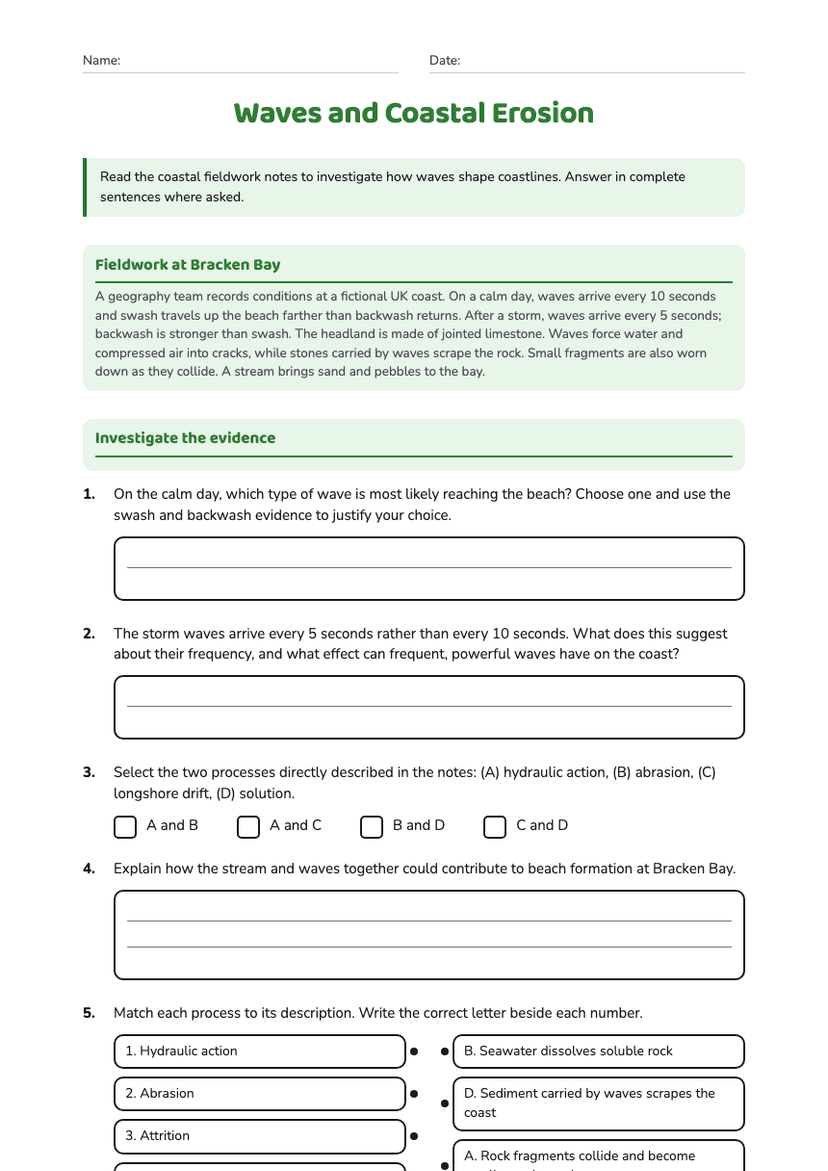
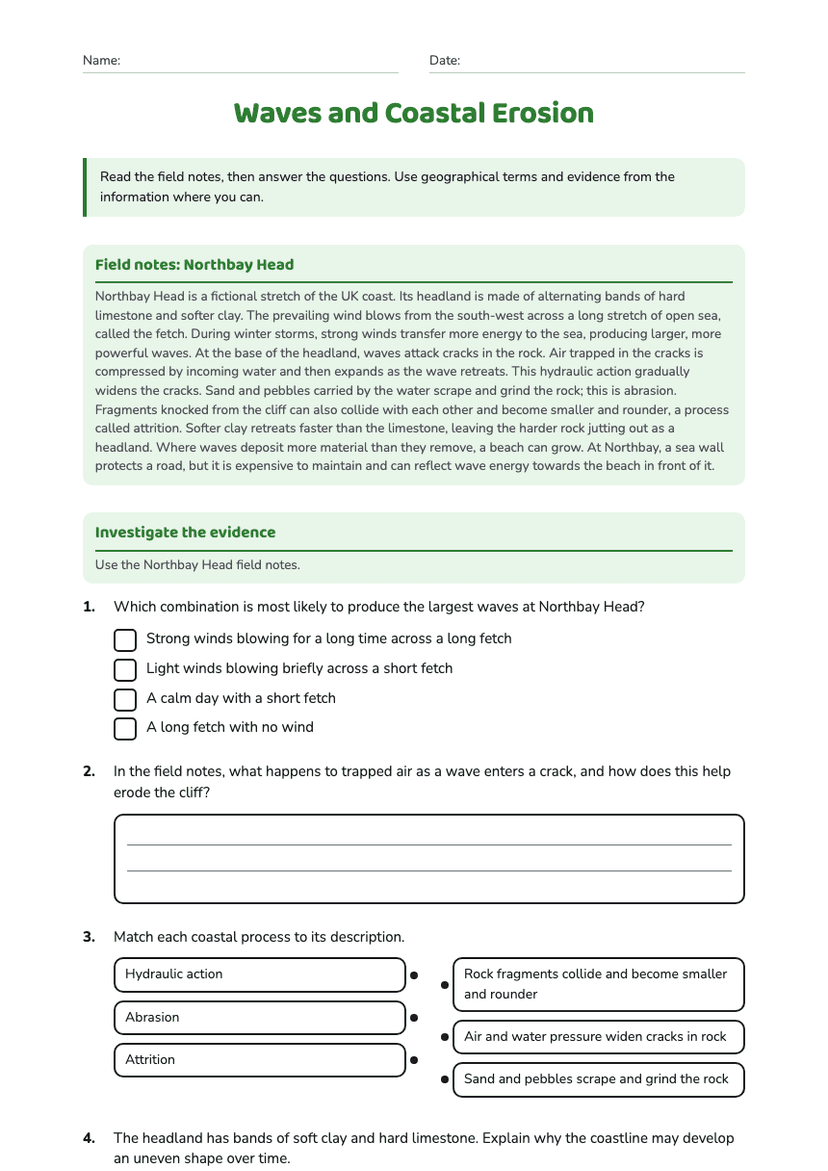
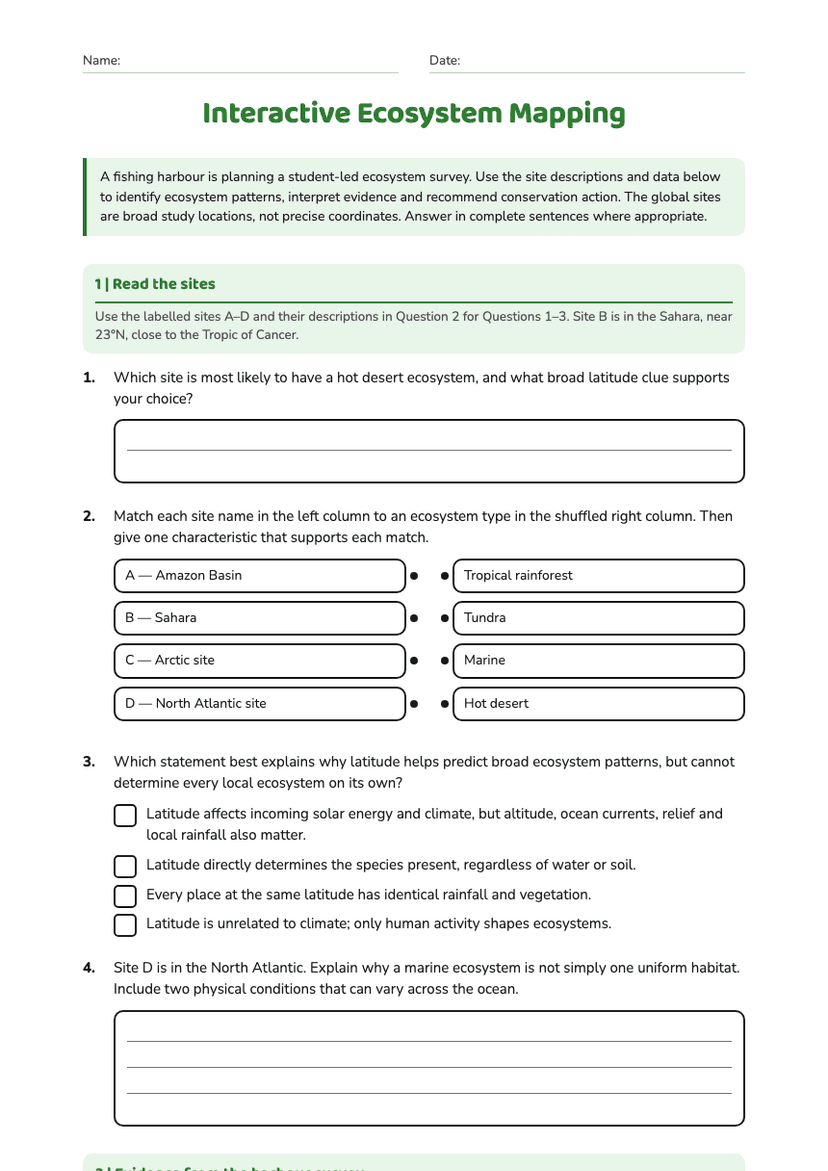
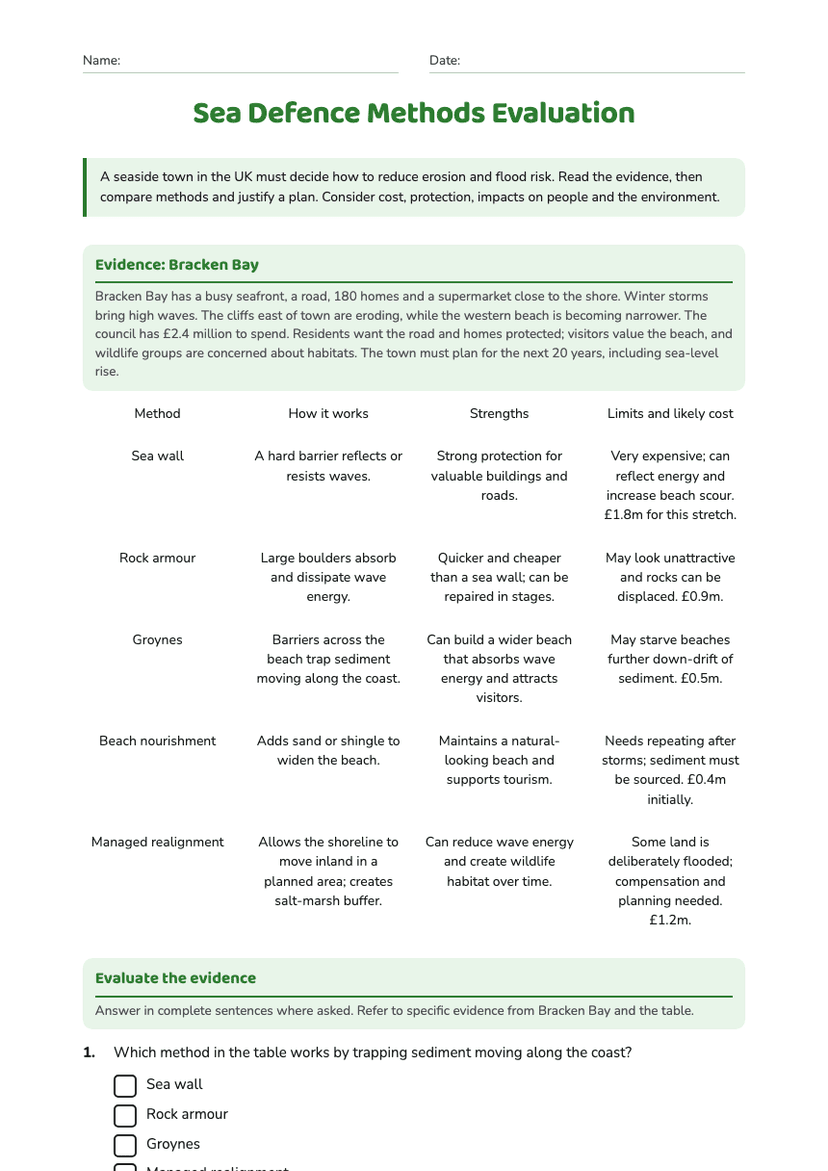
Seabourne is a fictional town on the east coast of England. Waves and longshore drift move beach material along the coast. In recent storms, cliffs near the northern end have retreated, while the town centre and its road are at risk of flooding. The council has a limited budget and wants to protect homes without making erosion worse elsewhere. Four methods are being considered: • A strong concrete barrier reflects wave energy. It can protect valuable buildings, but is expensive and may increase erosion at its base or nearby. • Large boulders absorb and dissipate wave energy. This approach is usually cheaper than a concrete barrier, but the boulders can be displaced in severe storms and may restrict beach access. • Barriers built at right angles to the shore trap sediment moved by longshore drift. They can widen the beach on the up-drift side, but reduce sediment reaching the down-drift coast. • Sand or shingle is added to widen the beach. The beach absorbs wave energy and remains attractive to visitors, but material needs replacing and may be washed away.
Investigate the options
- Beach nourishment
- Sea wall
- Dune planting
- Managed retreat
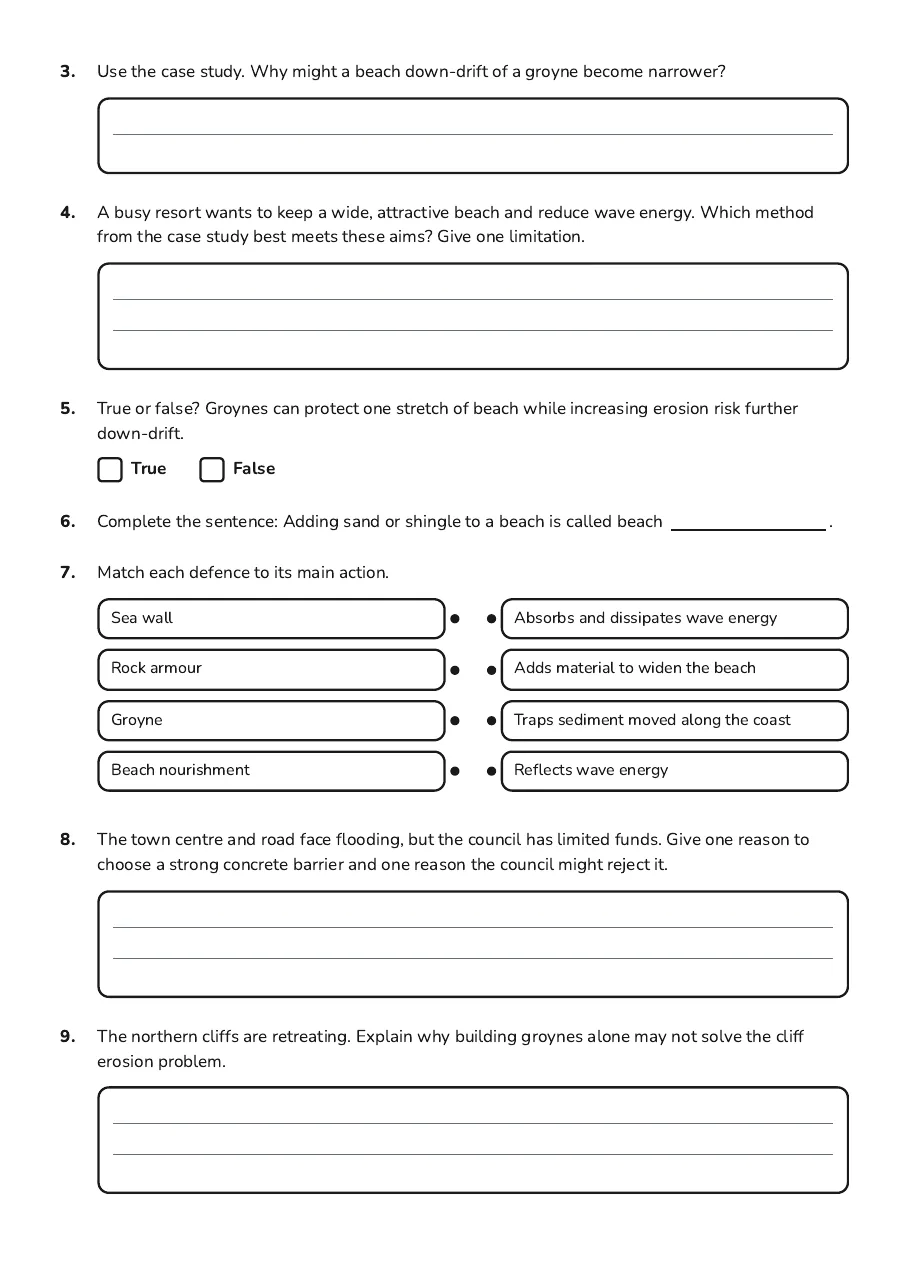
- Sea wall
- Rock armour
- Groyne
- Beach nourishment
- Absorbs and dissipates wave energy
- Adds material to widen the beach
- Traps sediment moved along the coast
- Reflects wave energy
3 printable pages
Page 1
Page 2
Page 3
About This Worksheet
Free in Kuraplan
Sign up free, grab the PDF, and customize it for your class.
Print-Ready
Formatted for standard paper. Clean layout, easy to read.
AI-Generated
Created with Kuraplan's AI, designed for real classroom use.
For Teachers & Parents
Use in classrooms, for homework, tutoring, or homeschool.
Need a custom version of this worksheet?
Kuraplan's AI generates custom worksheets in seconds — differentiated for every learner, aligned to your curriculum.
Generate Custom Worksheets — Free