Trench Warfare Deadlock Analysis
A free history worksheet ready for your classroom. Open in Kuraplan to grab the print-ready PDF, customize it for your students, or generate a fresh version in seconds.

Trench Warfare Deadlock Analysis
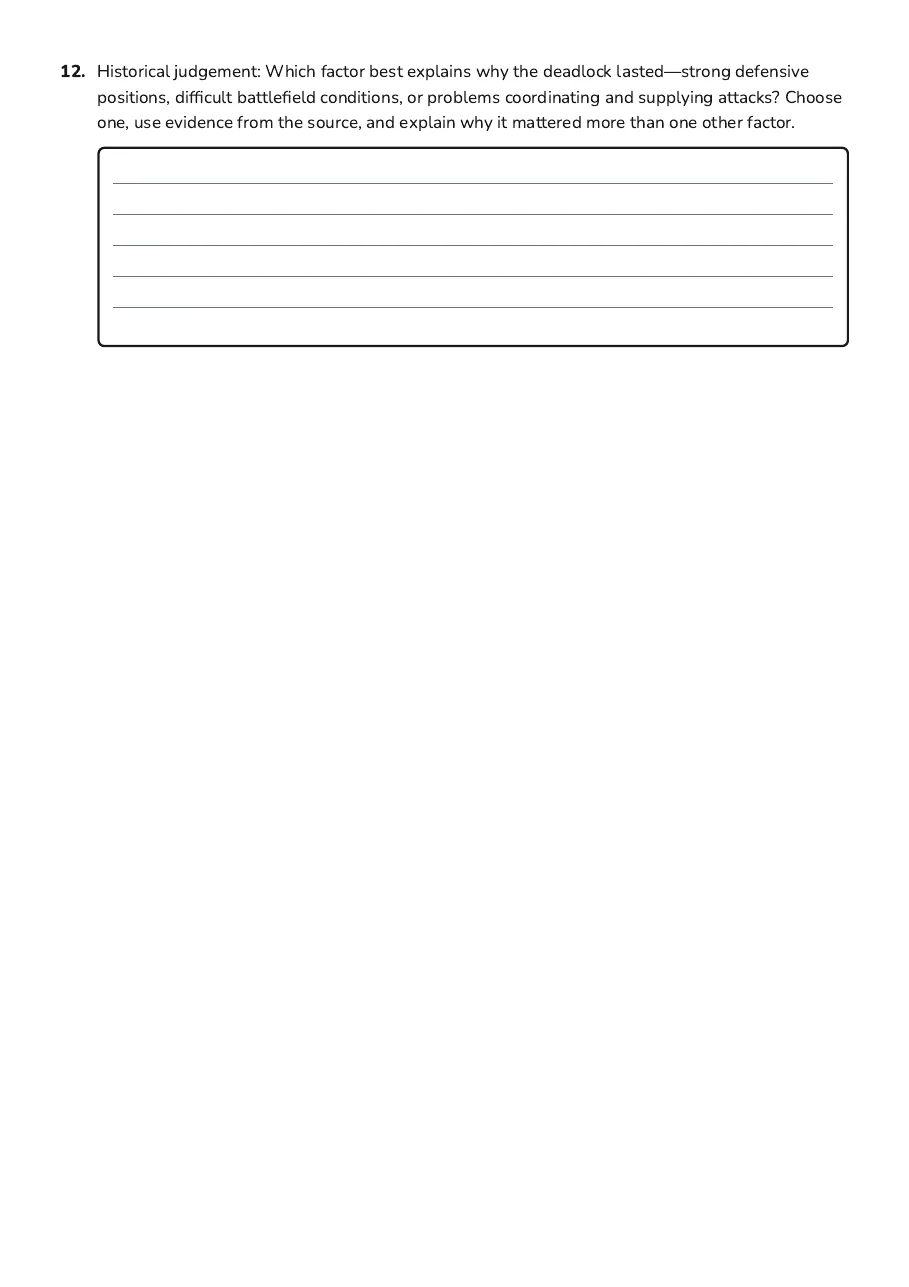
Source file: a front that barely moved
The Western Front was a long line of fighting across Belgium and northern France. By late 1914, armies had dug extensive trench systems. Front-line trenches were linked to support and reserve trenches by communication trenches. Barbed wire and machine-gun positions made attacks across the exposed ground between enemy lines—known as no man’s land—extremely dangerous. Defenders often had a major advantage. They could shelter in trenches and dugouts, while attacking soldiers had to cross open ground under rifle and machine-gun fire. Artillery bombardments could destroy trenches, but shell craters, broken wire and damaged ground also made it difficult for attackers and their supplies to move forward. Telephone wires were easily cut, so messages between troops and commanders could be delayed. Even when an attack captured ground, the attackers might be exhausted, short of supplies and unable to hold it against a renewed enemy assault. New weapons did not immediately solve the problem. Poison gas caused terrible suffering but depended on wind and could be countered with masks. Early tanks could cross some wire and trenches, but they were slow, mechanically unreliable and vulnerable to guns. Artillery and infantry tactics improved over time, yet coordinating an attack remained difficult. The result was a costly struggle in which enormous effort could bring only small changes to the front line.
- Attackers crossed exposed ground under machine-gun fire, and defenders sheltered in trenches and dugouts.
- Telephone messages always arrived instantly, and shell craters helped attackers move quickly.
- Poison gas was countered by artillery, and tanks were vulnerable to messages being cut.
- Defenders crossed exposed ground under machine-gun fire, and attackers sheltered in dugouts.
Why did new weapons not end the stalemate?
Compare the promise of a new weapon with the limits that reduced its effect.
- Poison gas
- Early tanks
- Artillery bombardment
- They were slow, unreliable and vulnerable to guns.
- It could damage ground and defences but leave obstacles for an advance.
- Its effect depended on wind; masks could counter it.
- Defences made attacks costly, and armies struggled to coordinate, supply and hold advances.
- Neither side had any weapons capable of harming soldiers.
- The armies agreed to stop fighting after the first trench was built.
- Every attack succeeded, so the front moved too quickly to defend.
4 printable pages
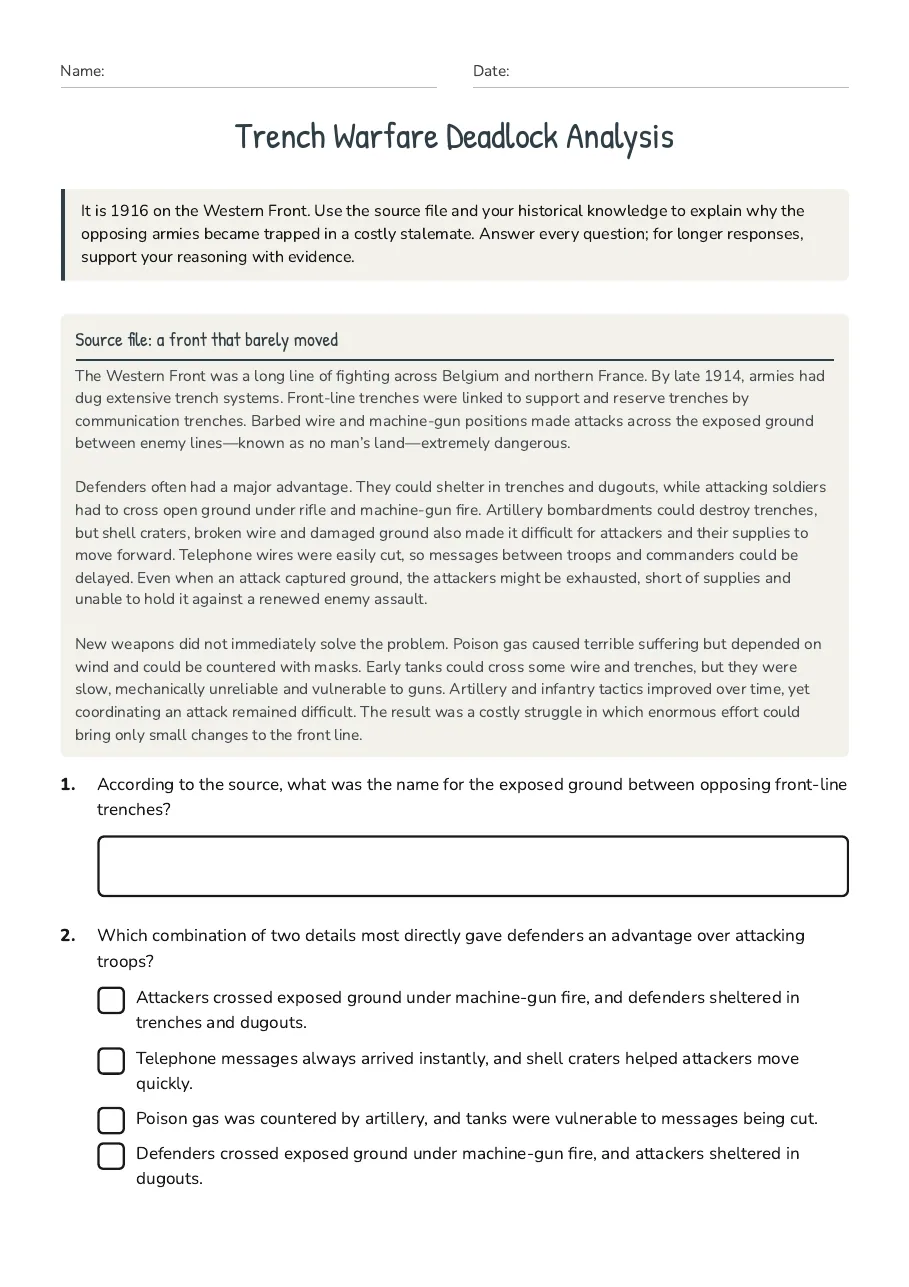
Page 1
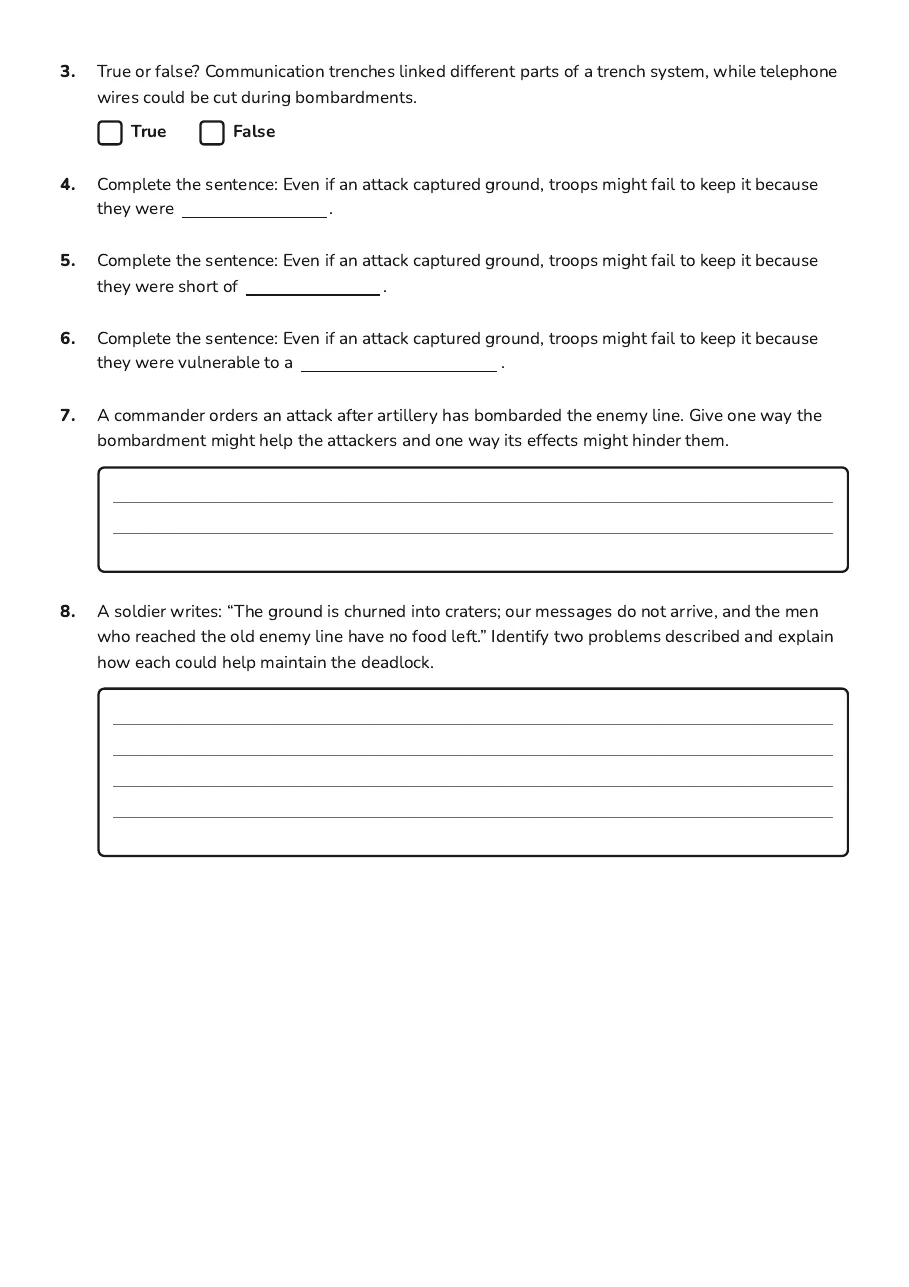
Page 2
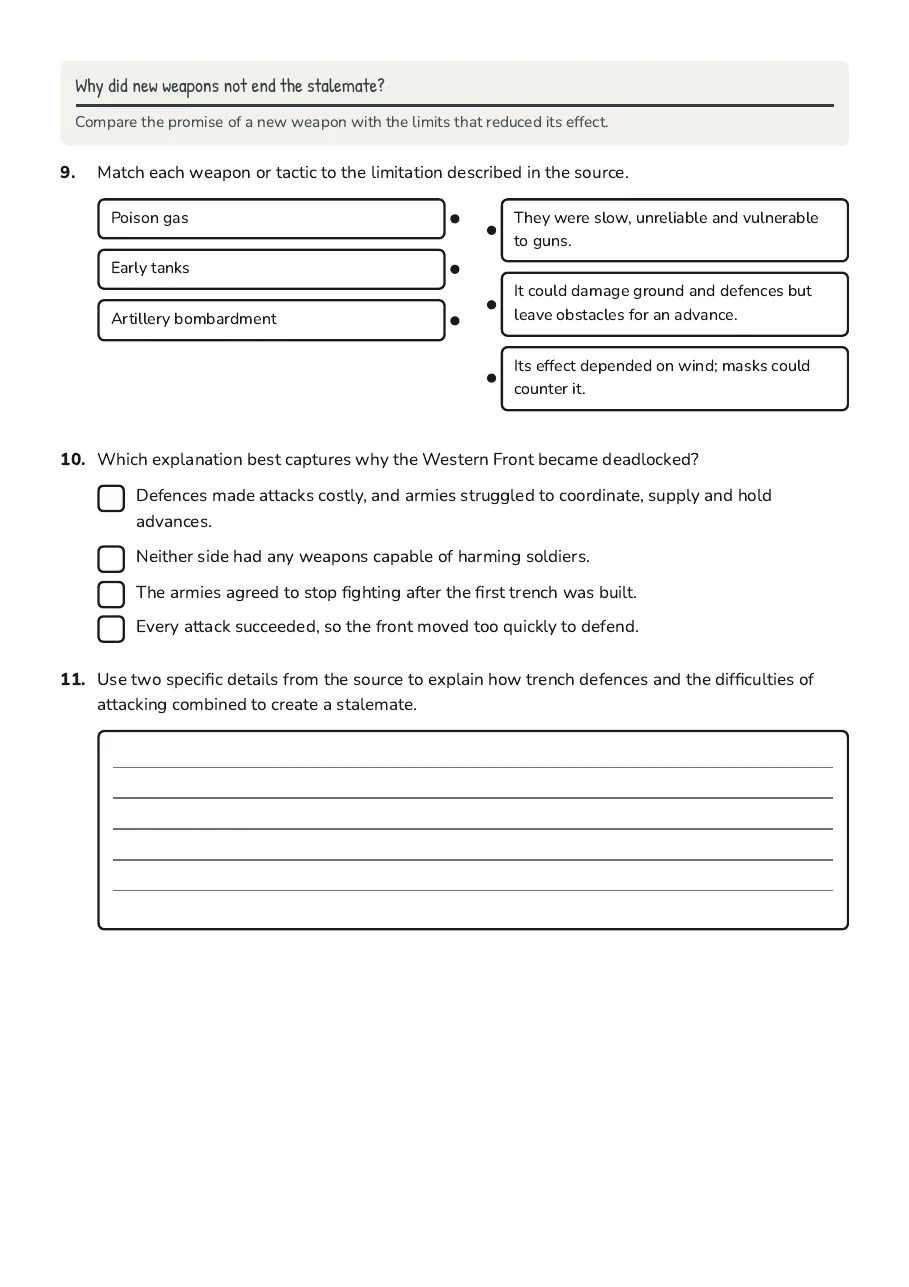
Page 3
Page 4
About This Worksheet
Free in Kuraplan
Sign up free, grab the PDF, and customize it for your class.
Print-Ready
Formatted for standard paper. Clean layout, easy to read.
AI-Generated
Created with Kuraplan's AI, designed for real classroom use.
For Teachers & Parents
Use in classrooms, for homework, tutoring, or homeschool.
Need a custom version of this worksheet?
Kuraplan's AI generates custom worksheets in seconds — differentiated for every learner, aligned to your curriculum.
Generate Custom Worksheets — FreeMore History Worksheets
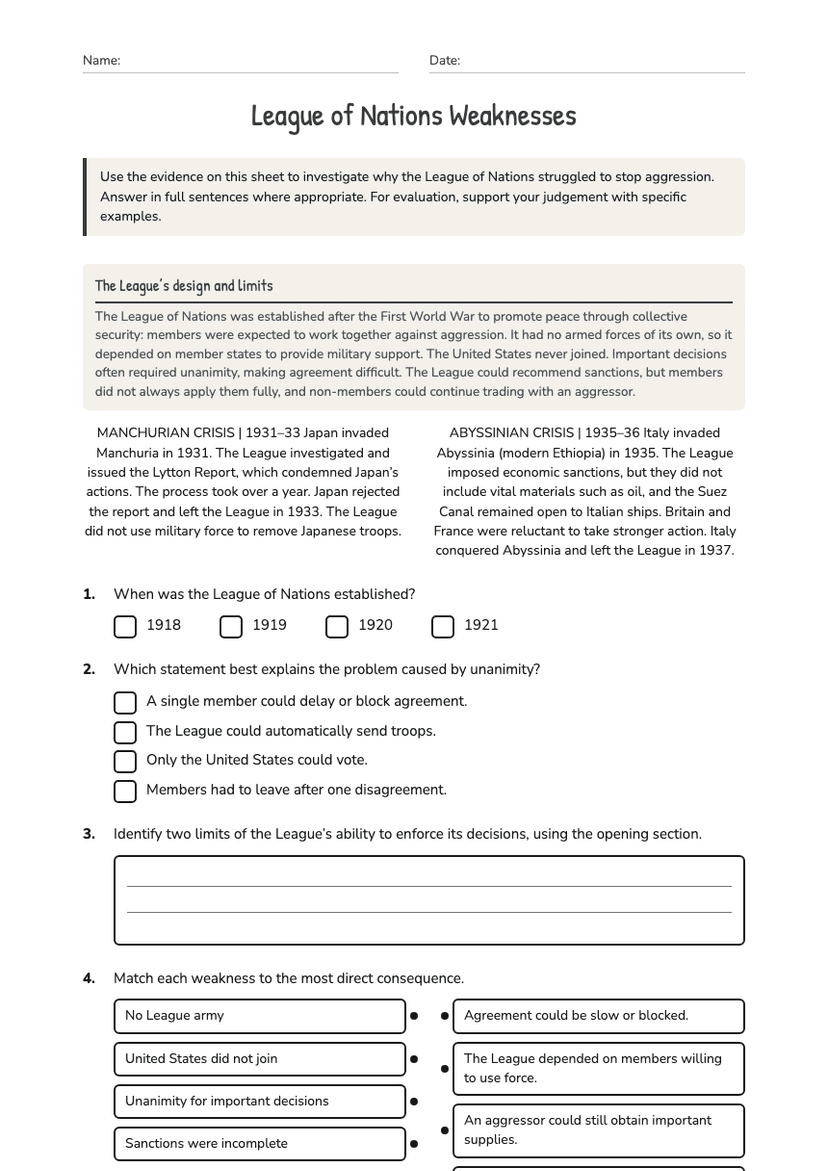
League of Nations Weaknesses
Free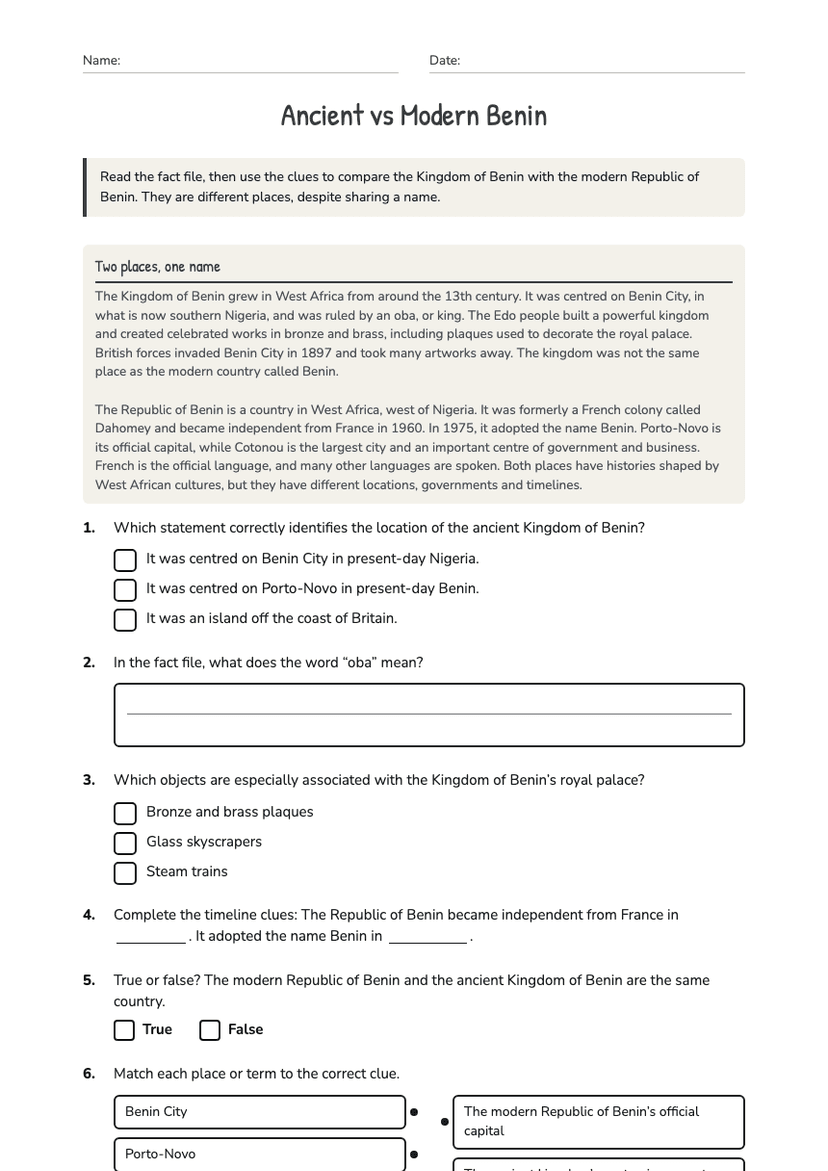
Ancient vs Modern Benin
Free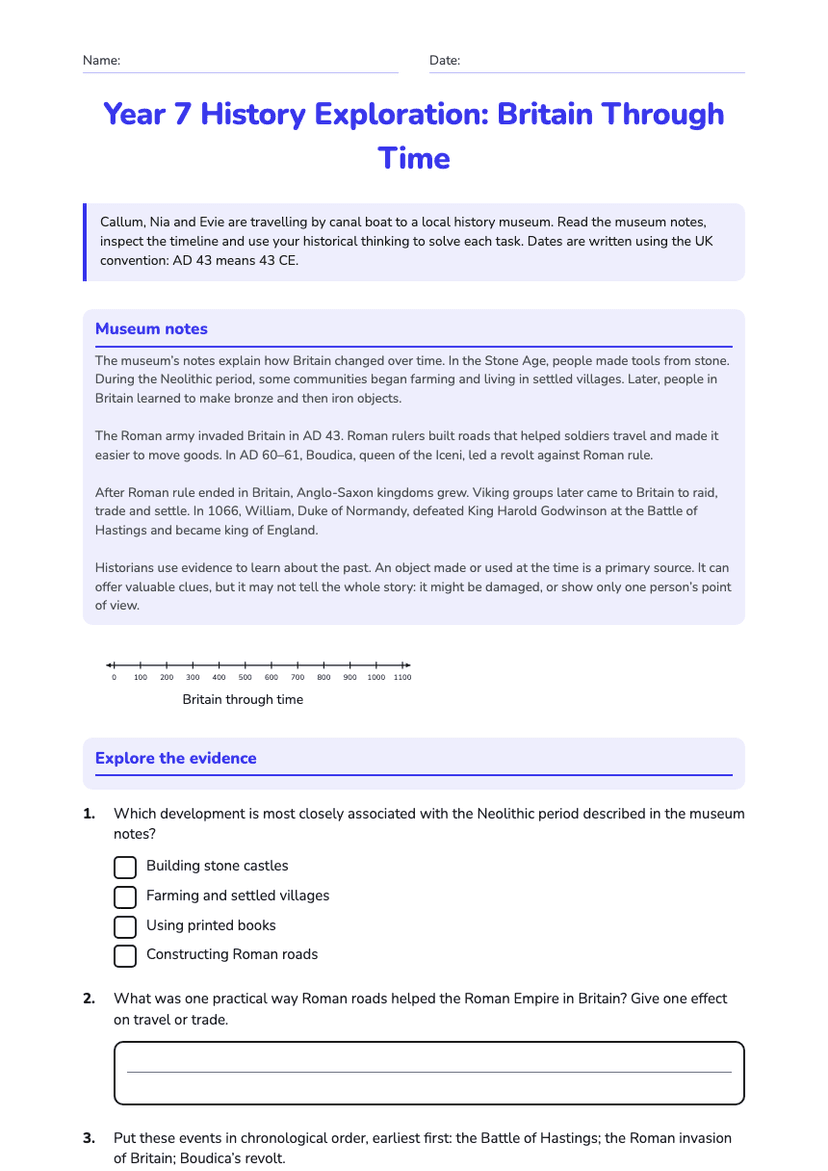
Year 7 History Exploration: Britain Through Time
Free
Norman Origins and Timeline
Free
Christmas Truce 1914
Free
League of Nations Effectiveness
Free
Loyalty in Freedom's Fight
Free