Victorian Literature Answer Key
A free english worksheet ready for your classroom. Open in Kuraplan to grab the print-ready PDF, customize it for your students, or generate a fresh version in seconds.
Oliver Twist Answer Key
📚 Part 1: Plot and Characters
Answer: In a workhouse
Teaching note: The workhouse represents the harsh treatment of the poor in Victorian society. Emphasise how this setting immediately shows Oliver's disadvantaged start in life.
Teaching note: Gruel was a thin, watery porridge. This scene shows the terrible conditions and hunger in the workhouse. The phrase "Please sir, I want some more" is one of literature's most famous quotes.
Teaching note: The Artful Dodger (Jack Dawkins) is the leader of Fagin's gang of child pickpockets. He appears friendly but leads Oliver into crime.
Answer: Bill Sikes
Teaching note: Bill Sikes represents the brutal criminal underworld. His character shows how poverty and crime create cycles of violence.
Answer: Nancy is Bill Sikes' girlfriend and a member of Fagin's gang. She is important because she helps Oliver and shows kindness despite her criminal life. She tries to protect Oliver and ultimately sacrifices herself to help him.
Teaching note: Nancy represents redemption and the possibility of goodness even in difficult circumstances. Her character development shows that people can change.
🏛️ Part 2: Victorian Social Issues
Teaching note: Help students connect these issues to modern social problems. Discuss how literature can raise awareness about social injustice.
Sample Answer: Workhouses were harsh because they provided minimal food, had strict rules, separated families, and treated poor people badly. They were designed to be unpleasant so people would only use them as a last resort. Children and adults had to work long hours for basic shelter and food.
Teaching note: Accept answers mentioning poor conditions, family separation, inadequate food, or harsh treatment. Explain that workhouses were meant to deter people from seeking help.
Sample Answer: Oliver experiences extreme poverty in the workhouse and on the streets, while characters like Mr. Brownlow live comfortably. The poor have no choices and face hunger and danger, while the wealthy can afford to be generous and kind. This shows the huge gap between social classes.
Teaching note: Encourage students to give specific examples from the text. Discuss how social class affected people's opportunities and treatment.
📖 Part 3: Language and Themes
Teaching note: Oliver maintains his moral goodness despite terrible circumstances. This shows Dickens' belief that people are naturally good and that society creates evil conditions.
Sample Answer: Dickens describes the streets as "narrow and muddy" and the buildings as "old and thickly inhabited by the roughest classes." He uses words like "filthy," "wretched," and "miserable" to paint a picture of poverty and desperation.
Teaching note: Accept any specific descriptive phrases from the text. Help students identify how adjectives and imagery create atmosphere and mood.
Sample Answer: Dickens chose a child because it makes readers feel more sympathy and shows how unfair society is when even innocent children suffer. Children represent hope and goodness, so Oliver's struggles highlight the cruelty of the social system. It also shows how society should protect its most vulnerable members.
Teaching note: Accept answers about sympathy, innocence, social criticism, or the vulnerability of children. Discuss how authors make deliberate choices to create emotional impact.
Sample Answer: The novel ends with Oliver being adopted by Mr. Brownlow and discovering his true family background. This happy ending suggests that goodness is rewarded and that there are kind people willing to help. It gives hope that social problems can be solved through compassion and reform.
Teaching note: Discuss how Victorian novels often had moral endings. Consider whether this ending is realistic and what Dickens wanted readers to think about social reform.
About This Worksheet
Free in Kuraplan
Sign up free, grab the PDF, and customize it for your class.
Print-Ready
Formatted for standard paper. Clean layout, easy to read.
AI-Generated
Created with Kuraplan's AI, designed for real classroom use.
For Teachers & Parents
Use in classrooms, for homework, tutoring, or homeschool.
Need a custom version of this worksheet?
Kuraplan's AI generates custom worksheets in seconds — differentiated for every learner, aligned to your curriculum.
Generate Custom Worksheets — FreeMore English Worksheets
Willow Park Cricket
Free
Year 5 Reading Comprehension
Free
Year 5 Comprehension Worksheet
Free
Year 5 English Comprehension
Free
Inference Reading Skills Worksheet
Free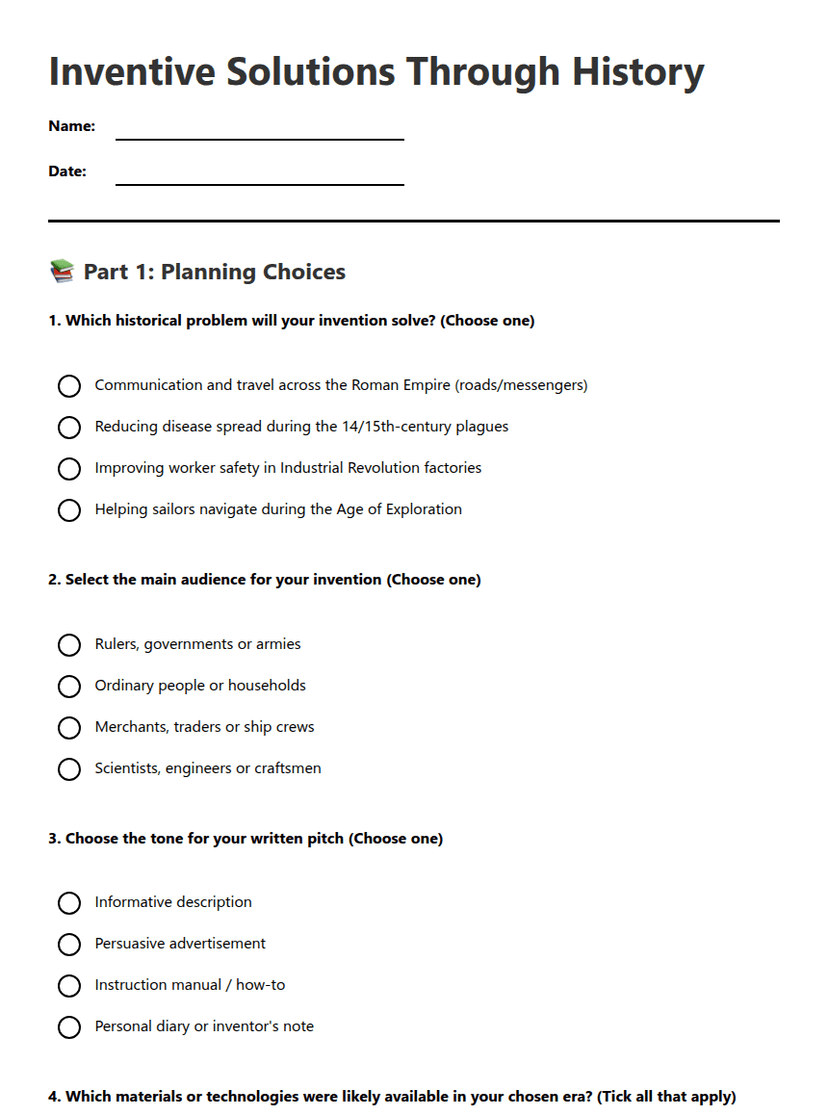
Inventive Solutions Through History
Free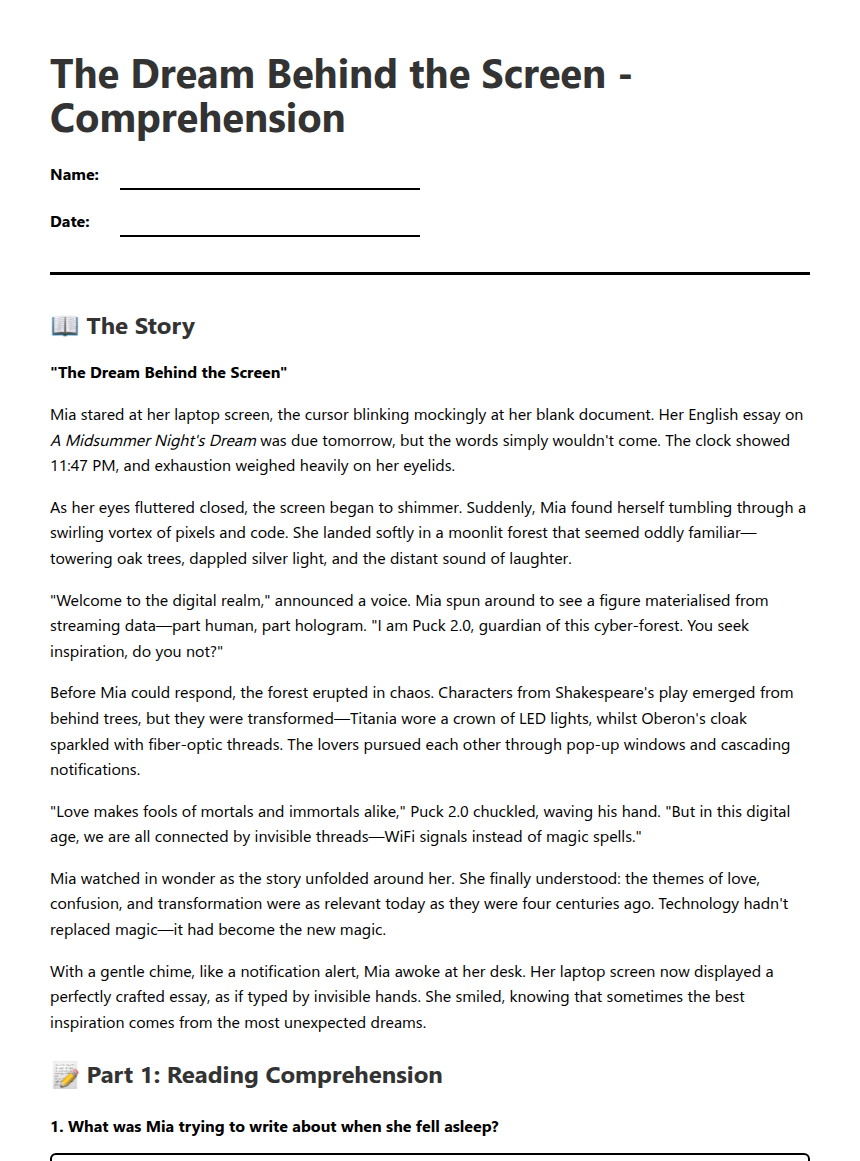
Dream Behind the Screen Comprehension
Free