More Than Just Fun: Using Trivia to Spark Real Learning
It's Wednesday afternoon, and the energy in the classroom is fading. You need something fast that wakes students up without turning the rest of the lesson into cleanup mode. That's where trivia helps. Not because it's flashy, but because it gives you a quick way to pull attention back onto content students already know a little about.
The mistake is treating trivia as filler. In Grade 6, that usually means a few recall questions, a burst of excitement, and then nothing sticks. Stronger 6th grade trivia questions and answers work differently. They act like lesson starters. One question can open a map activity, a short writing task, a science sketch, or a compare-and-contrast discussion.
That approach fits how many classrooms already use question banks. Large quiz collections aimed at this age group now include hundreds of items, and one Grade 6 math quiz set includes 29 questions focused on statistics, which shows how common standards-linked trivia has become in classroom review and quick assessment within this Grade 6 statistics quiz collection. If you also want game-night inspiration, these top trivia board game titles can spark ideas for classroom formats.
A useful reminder from math class applies here too. Grade 6 students are expected to recognize a statistical question, an idea formalized in the Common Core State Standards published in 2010, where answers vary instead of producing one fixed response in this Common Core statistics explainer. That matters because trivia doesn't have to stop at right-or-wrong recall. It can move into data, patterns, evidence, and explanation.
Here are eight questions I'd use in a classroom, along with ways to make each one do more than fill five minutes.
1. What is the smallest country in the world?
Answer: Vatican City.
This is one of those questions that sounds simple but opens a surprisingly rich geography conversation. Students usually know “country” as a big shape on a map. Vatican City pushes them to think about sovereignty, borders, capitals, and why some places are politically independent even when they sit inside another city.
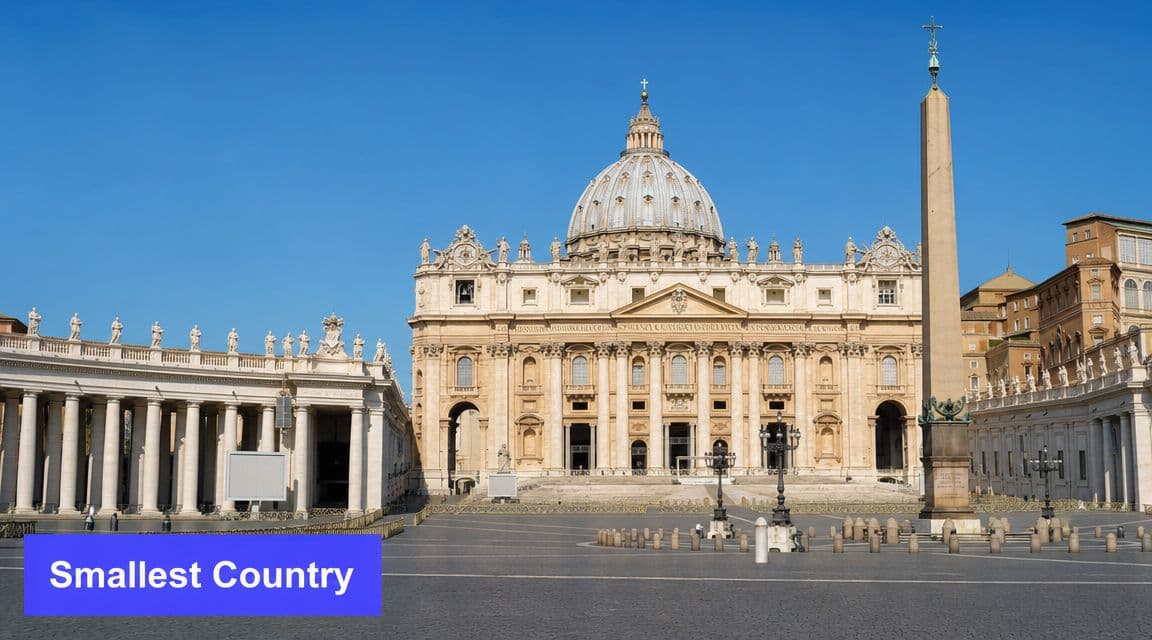
In practice, this works well as a warm-up before a Europe map lesson. Put Italy on the board first. Then ask students to find Rome. Then reveal that Vatican City sits within Rome. That sequence helps the fact land more clearly than just saying the answer and moving on.
How to turn it into a real lesson
The best follow-up isn't “memorize this.” It's “why would a place this small be its own country?” That gets students talking about history, religion, government, and the difference between a city and a state.
You can also use Kuraplan to build a quick map worksheet with layers. One version can label Italy, Rome, and Vatican City. Another can ask students to explain why political borders don't always match what they expect from physical size.
Practical rule: If a trivia answer surprises students, use that surprise to ask a “why” question before you move on.
A few versions that work well:
- Basic prompt: Locate Vatican City on a map of Europe.
- Intermediate prompt: Explain how Vatican City can be a country inside Rome.
- Advanced prompt: Compare Vatican City with another place students think of as a country, city, or capital.
This one also fits social studies stations. At one table, students label maps. At another, they read a short paragraph about sovereignty. At a third, they write one sentence explaining why “smallest” doesn't mean “least important.” That's where trivia becomes useful instead of disposable.
2. What is the chemical symbol for gold?
Answer: Au.
Students often expect the symbol for gold to start with a G, so this question naturally creates curiosity. That's exactly why it's worth keeping in your science rotation. It gives you an easy entry into the periodic table and shows students that scientific symbols often connect to language history, not just English spelling.
A quick board routine works well here. Write Gold, Silver, Sodium, and Potassium. Ask students to predict the symbols. Then reveal which ones match English and which ones don't. The mismatch is the hook.
Where this gets stronger
“Au” is more memorable when students connect it to the Latin name aurum. You don't need a full language lesson. Just enough to show that chemistry carries historical traces. Students like finding out that science vocabulary didn't appear out of nowhere.
Kuraplan is useful here for creating a focused periodic table sheet instead of handing students the entire chart and hoping they notice patterns. Highlight the non-obvious symbols. Ask students to sort them into “looks like English” and “doesn't look like English.”
- Recall task: What element does Au represent?
- Comprehension task: Why isn't the symbol for gold just G?
- Extension task: Find other symbols that don't match the English word neatly.
This kind of trivia also connects well to history. Gold appears in ancient civilizations, trade, art, and currency. If your class is already studying a historical period, you can fold the science question into that unit instead of isolating it.
Independent trivia libraries for 6th graders often organize questions across subjects and include science terms like H2O, chlorophyll, evaporation, and photosynthesis, which is part of why mixed-subject trivia works well for classroom review in this Grade 6 trivia collection by subject.
Students remember this question better when they make their own memory aids. Have small groups invent a mnemonic for Au, then vote on the one the class is most likely to remember next week.
3. How many bones are in the adult human body?
Answer: 206 bones.
This one is a classic because students usually have an opinion before they have the answer. That makes it perfect for a quick estimate routine. Ask every student to write a guess first. Then reveal 206. The guessing matters because it turns passive listening into participation.
To make the answer concrete, put a skeleton diagram in front of them instead of leaving the number floating in the air.
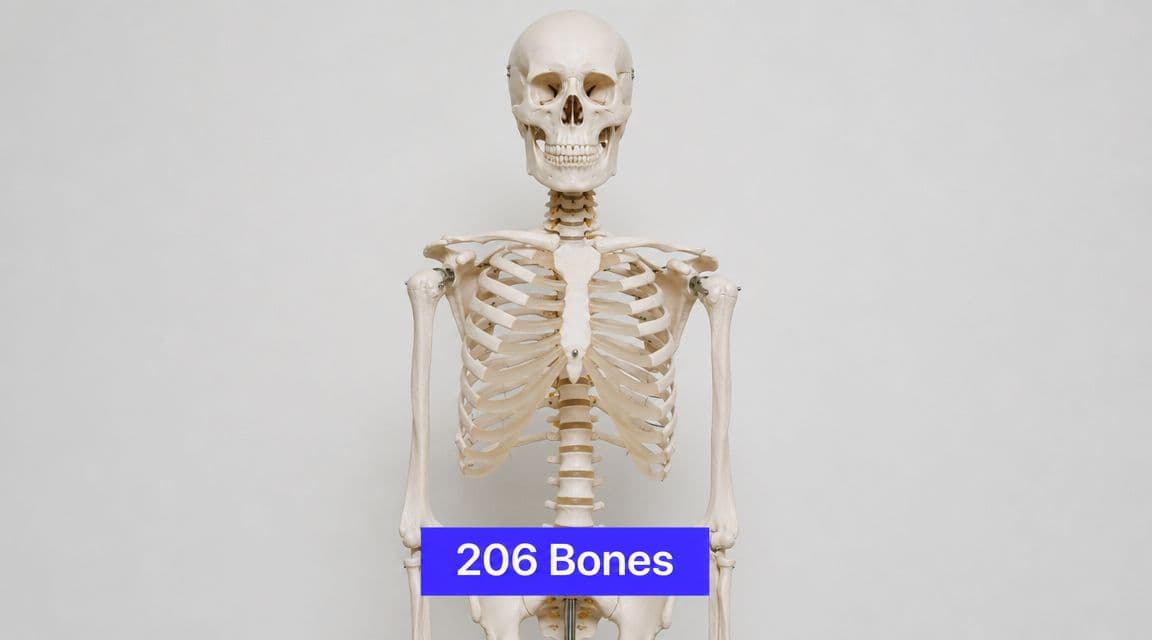
This question works especially well during life science, health, or even PE when you're discussing movement and injury prevention. Students start to understand that the skeleton isn't just a list to memorize. It supports movement, protection, and growth.
Better than a number recall drill
The strongest follow-up is getting students to name major bones they already know and then locating them visually. A labeled practice page saves time here, especially if you want students to move from trivia into actual academic vocabulary. A ready-made muscular and skeletal vocabulary worksheet can help bridge that gap without extra prep.
If you want one more layer, ask students why an adult body has a set number of bones but learning about the skeleton still involves patterns and systems. That shifts the conversation away from “Did you memorize it?” and toward “Do you understand how body parts connect?”
Students usually remember body-system trivia when they label, point, and explain. They forget it when they only copy the answer.
A few practical formats:
- Quick pair task: One student names a bone, the other points to where it belongs on a diagram.
- Station activity: Sort bones by function, such as protection, support, or movement.
- Short writing prompt: Explain why athletes need to understand the skeleton, not just muscles.
If you want a strong visual reset in the middle of the lesson, a short classroom video helps before students complete independent work.
The trade-off with anatomy trivia is that it can become shallow fast. If all students do is chant “206,” they'll forget it. If they connect the number to structure, movement, and labeled diagrams, it sticks much better.
4. In what year did the Titanic sink?
Answer: 1912.
Students tend to know the name Titanic long before they know the date. That's useful. Familiar topics lower the barrier to entry, especially for reluctant learners who shut down when a question sounds too academic.
The year matters, but I wouldn't teach this as a date-only trivia fact. I'd use it to anchor a timeline. Put 1912 on the board and ask students what life looked like at that time. No smartphones, no modern radar systems, very different travel expectations, and a strong public belief in new technology.
Why this one earns class time
Titanic works because it crosses subjects easily. In social studies, it fits early twentieth-century history. In ELA, it pairs with historical fiction or nonfiction reading. In STEM, it opens a discussion about engineering decisions, safety procedures, and what people mean when they call something “advanced.”
Kuraplan can help you turn one date into a layered worksheet. One version asks for the year and basic event. Another asks students to sequence key moments in the voyage. A third asks them to reflect on how public confidence in technology can outpace real safety planning.
- Simple version: When did the Titanic sink?
- Stronger version: Why did this event matter beyond the ship itself?
- Best version: What changed when people realized technology could still fail dramatically?
This question also supports good classroom discussion because students often arrive with movie knowledge, not historical knowledge. That gives you a clean opening to compare storytelling with evidence.
Classroom move: Let students share what they think they know first. Then sort their ideas into “movie detail,” “historical fact,” and “question we still need to answer.”
If you want a readable companion text for older elementary or middle grades, an educational Titanic story can help you set up a quick comprehension activity. The point isn't to overbuild the lesson. It's to turn a famous answer into a reason to read, sequence, and think.
5. What is the largest planet in our solar system?
Answer: Jupiter.
This question lands well because the answer feels important. Students already suspect Jupiter is big, and they usually know it by name. That makes it a strong confidence-builder at the start of a space lesson.
The catch is that “largest” can stay vague unless you make size visible. Students need comparison. If you only say “Jupiter is the largest planet,” many of them will nod and move on without really picturing scale.
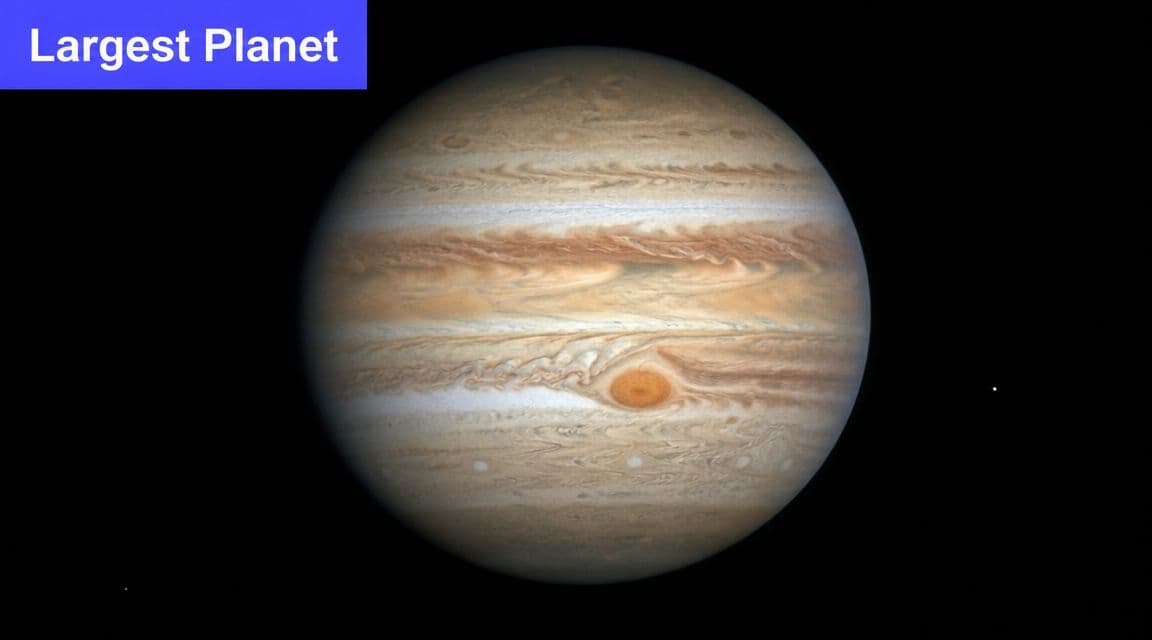
Make size visible
I like using simple comparison tasks here. Students can rank planets they already know, then check their predictions. A visual resource helps a lot more than verbal explanation. This solar system exploration worksheet fits well when you want students comparing planets rather than memorizing them one by one.
You can also use objects around the room for a rough scale model. It doesn't need to be perfect. The value is in helping students grasp that planetary size isn't just a vocabulary word.
Try one of these:
- Recall question: Which planet is the largest?
- Comparison question: How is Jupiter different from Earth besides size?
- Reasoning question: Why do scientists call Jupiter a gas giant?
This is also a good place to talk about what trivia can and can't do. The trivia question gives students a doorway. The lesson happens when they compare atmosphere, structure, and place in the solar system.
Publisher-style kid trivia sets often mix factual prompts with immediate answers on science topics such as mammal classification, oceans, and temperature measurement, and they're often designed for reusable formats like worksheet races or question trails in these classroom-ready trivia activity ideas. That modular style is exactly why Jupiter works well in stations, partner games, or exit tickets.
6. Who wrote Romeo and Juliet?
Answer: William Shakespeare.
This is one of those trivia questions that some students know from pop culture and others know from older siblings, movies, or hearing the title in passing. That familiarity helps. It lowers the intimidation level around Shakespeare before you've even opened a text.
I wouldn't start with the author and then launch into Elizabethan drama vocabulary right away. That usually loses half the room. Instead, use the question to frame Shakespeare as a writer whose stories still get adapted because the conflicts still make sense to students. Family pressure, loyalty, misunderstanding, and impulsive choices aren't hard sells in middle grades.
A better entry into Shakespeare
Students don't need to read the full original play to benefit from the question. They do need support. A scaffolded intro to the writer, setting, and major characters gets much better results than asking them to admire a classic on command. This Shakespeare facts worksheet is useful when you want a straightforward bridge into background knowledge.
Once students know who Shakespeare was, give them a relationship map. Who belongs to which family? Who is allied with whom? Who escalates conflict? Suddenly the trivia answer starts leading somewhere useful.
- Recall level: Who wrote Romeo and Juliet?
- Understanding level: Why has the play remained famous for so long?
- Application level: Compare the central feud with a modern conflict students might recognize from fiction or media.
This question also works nicely in interdisciplinary planning. If social studies is touching Renaissance England, students can connect literature to time period without much setup.
One caution. Don't let the question become a badge of “smart kids know this.” Keep it low-stakes. The win here is not catching students out. It's getting them to see that literature trivia can open discussion, vocabulary, and plot analysis.
7. What is the hardest natural substance on Earth?
Answer: diamond.
This one gets strong reactions because students already associate diamonds with jewelry, expense, and pop culture. That background knowledge is helpful, but it can also distract from the science. If you want this question to hold academic value, move quickly from the answer to the property being tested: hardness.
That distinction matters. Students often confuse hard, strong, and unbreakable. They're not the same thing. A trivia question can surface that misconception fast.
Where the science gets interesting
Instead of stopping at “diamond,” bring in mineral testing language. Ask students what scientists mean by hardness. Then compare scratch resistance with other material properties. That gives the answer more precision and keeps the lesson grounded in earth science rather than random fact collection.
Kuraplan can help you generate a simple Mohs hardness comparison chart or a visual showing crystal structure if you want students to connect material properties to atomic arrangement. That makes the topic feel like science, not just geology trivia.
The best follow-up question here is not “What's the answer?” It's “What exactly is being measured?”
A few classroom uses:
- Demonstration setup: Show common classroom items and ask which could scratch which.
- Notebook task: Define hardness in student-friendly language.
- Extension prompt: Compare diamond and graphite as two forms of carbon with very different properties.
This item also works well in a rocks and minerals unit because it helps students understand that identification involves observable properties. It's not only about memorizing names. Students can test, compare, and classify. That's much richer than a single-word response.
If your students like engineering angles, connect the question to tools and materials. Why would an industry care about hardness? That shift helps students see that mineral properties matter beyond museum displays and textbook diagrams.
8. What is the capital of France?
Answer: Paris.
This is a foundational geography question, and because it's so familiar, teachers sometimes skip it or treat it as too easy. I wouldn't. Familiar questions are useful because they build momentum. The issue isn't whether the fact is basic. The issue is whether you do anything with it.
Paris works well because students often know at least one landmark, image, or cultural reference. That gives you a quick path into map work, capitals, language, and comparative geography.
Don't stop at the capital
After students answer Paris, ask what a capital city does. That question improves the lesson immediately. Students begin moving from “place-name recall” to function. Government, culture, transportation, tourism, and historical importance all come into play.
Kuraplan is handy here for generating a map-based worksheet that asks students to locate France, identify Paris, and note nearby countries or major landmarks. You can also create tiered versions for mixed-readiness groups.
- Foundational task: Match France to Paris.
- Intermediate task: Name landmarks or features students associate with Paris.
- Advanced task: Compare Paris with the capital city of your own country.
This question can also support literacy. Have students read a short nonfiction paragraph about Paris and pull out details that explain why capitals matter. That's especially worthwhile because many trivia collections still lean heavily toward simple recall, while teachers increasingly need tasks that build inference, explanation, and evidence-based responses. The need is clear when NAEP's 2024 results showed that 31% of U.S. 8th graders were proficient in reading and 39% were proficient in math as summarized in this middle school trivia discussion.
6th Grade Trivia: 8-Question Comparison
| Item | 🔄 Implementation complexity | ⚡ Resource requirements | 📊 Expected outcomes | 💡 Ideal use cases | ⭐ Key advantages |
|---|---|---|---|---|---|
| What is the smallest country in the world? (Vatican City) | Low, simple factual lesson | Minimal, map and image | Recall + brief civic context | Geography unit, trivia hooks | Memorable fact; cross-curricular links |
| What is the chemical symbol for gold? (Au) | Low–Moderate, needs periodic context | Periodic table visual, etymology notes | Symbol recognition; language connection | Intro chemistry, element sorting | Immediately applicable; culturally memorable |
| How many bones are in the adult human body? (206) | Moderate, explain bone fusion variability | Skeleton model or labeled diagrams | Understand growth, anatomy basics | Life science, health lessons | Relatable; enables hands-on activities |
| In what year did the Titanic sink? (1912) | Moderate, sensitive historical framing | Timelines, primary sources, images | Historical analysis; cause/consequence | Early 20th-century history, ethics | Highly engaging; rich interdisciplinary material |
| What is the largest planet in our solar system? (Jupiter) | Low–Moderate, clarify scale vs. mass | Planet images, scale diagrams | Scale comprehension; planetary features | Solar system unit, STEM demos | Visually engaging; expandable topics |
| Who wrote "Romeo and Juliet"? (William Shakespeare) | High, needs scaffolding for language | Adapted texts, background, vocab aids | Literary themes; dramatic structure | ELA on classic drama, comparative studies | Extensive teaching resources; timeless themes |
| What is the hardest natural substance on Earth? (Diamond) | Moderate, link atomic structure to properties | Mineral samples, Mohs scale chart | Connect chemistry to material properties | Earth science, materials lessons | Real-world relevance; tangible examples |
| What is the capital of France? (Paris) | Low, straightforward fact | Maps, cultural media, landmarks | Map literacy; cultural awareness | Geography, world languages, culture | Abundant resources; easy assessment |
Turn Trivia into Effortless Lessons
Simple trivia still has a place in Grade 6. Sometimes you really do need a fast bell-ringer, a transition activity, or a low-pressure review game. But the better use of 6th grade trivia questions and answers is as a launch point. A strong question buys you attention. What you do next determines whether students just enjoyed the moment or learned something from it.
That's the practical difference between fun trivia and useful trivia. Useful trivia gives students something to do with the answer. They locate it on a map. They explain a pattern. They label a diagram. They compare two ideas. They justify a response in writing. Even a basic question like “What is the capital of France?” can stretch into geography, reading, and discussion if the follow-up is planned well.
This matters even more now because teachers are being asked to do more with less time. Many ready-made trivia pages still lean toward quick recall. That's not always bad, but it doesn't fully meet classroom needs when you're also trying to differentiate, connect to standards, and build stronger reading and reasoning habits. At the same time, expectations around adaptable classroom materials are changing. RAND's 2024 American Teacher Panel found that 25% of teachers had used AI tools for instruction or classroom tasks in this summary of AI use among teachers. That helps explain why more teachers want editable prompts, printable extensions, and quick variations by skill level.
The good news is that trivia adapts well. One question can become a partner talk, a mini research task, a visual worksheet, a vocabulary sort, or an exit ticket. It can also shift from one-answer recall to a statistical question when you ask students to gather class data and notice variation. That kind of flexibility is why trivia keeps surviving every trend cycle in teaching. It's easy to launch and easy to reshape.
If you want to save planning time, a tool like Kuraplan is a natural fit. Instead of building every extension from scratch, you can take a trivia prompt and turn it into a standards-aligned worksheet, visual support, or differentiated practice set much faster. For busy weeks, that's often the difference between having a good idea and using it.
The main thing is simple. Don't throw trivia away as fluff. A well-chosen question can wake up a tired room, lower the entry point for hesitant students, and create a clean path into real academic work. That's a solid return from a single question.
If you want to turn quick trivia prompts into printable lessons, differentiated worksheets, and visual supports without building everything from scratch, take a look at Kuraplan.