
AP Psychology Topic 2.5: Sensation and Perception
Understanding How We Process Sensory Information From Stimulus Detection to Conscious Awareness Grade 11 AP Psychology
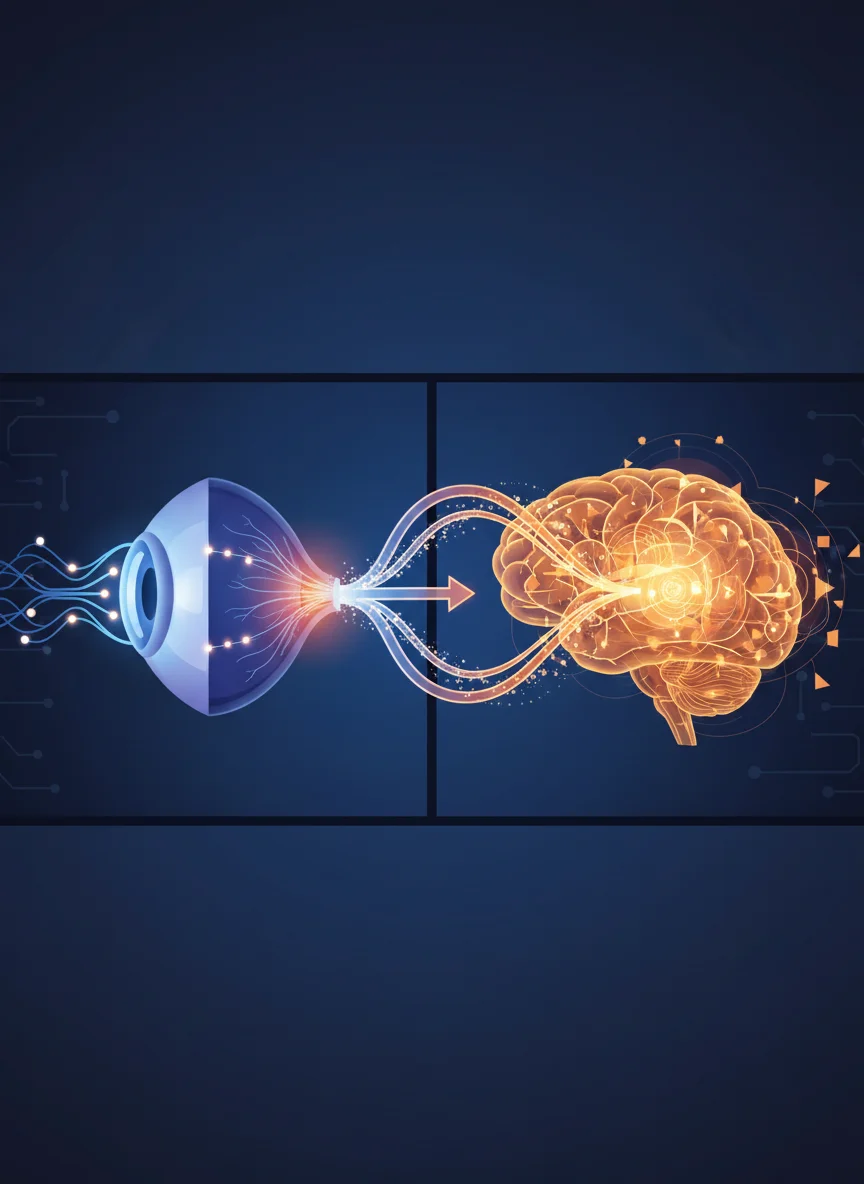
Sensation vs. Perception: Key Definitions
Sensation: The process of detecting physical energy from the environment Perception: The process of organizing and interpreting sensory information Bottom-up processing: Data-driven interpretation Top-down processing: Knowledge-driven interpretation
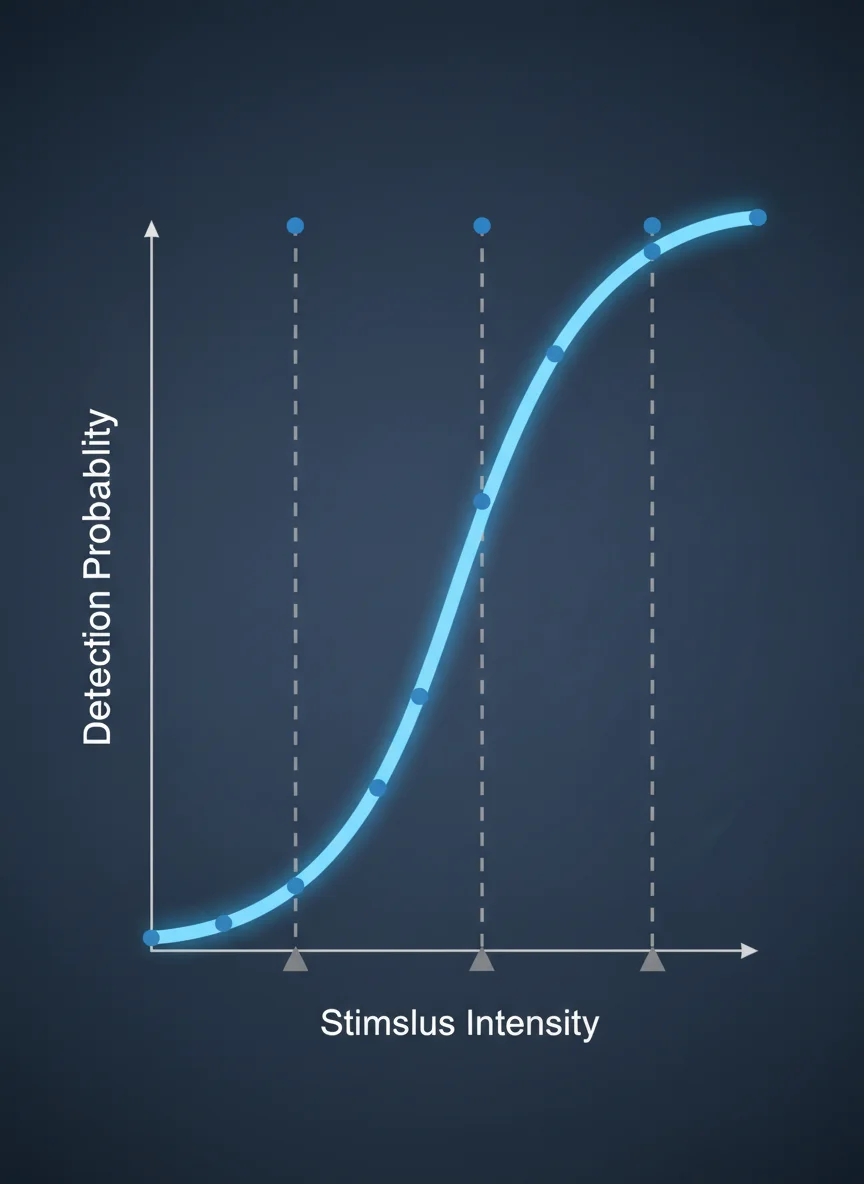
Thresholds in Sensation
Absolute threshold: Minimum stimulus intensity for detection 50% of the time Difference threshold (JND): Smallest detectable difference between stimuli Weber's Law: JND is proportional to stimulus intensity Signal detection theory: Decision-making in uncertain conditions
Threshold Testing Activity
Partner up with a classmate Test absolute thresholds using whisper detection Measure difference thresholds with coin weight comparison Record your findings and compare with class averages

Visual Processing: From Eye to Brain
Light enters through cornea and lens Retina contains rods (dim light) and cones (color/detail) Optic nerve carries signals to visual cortex Feature detectors identify lines, edges, and movement
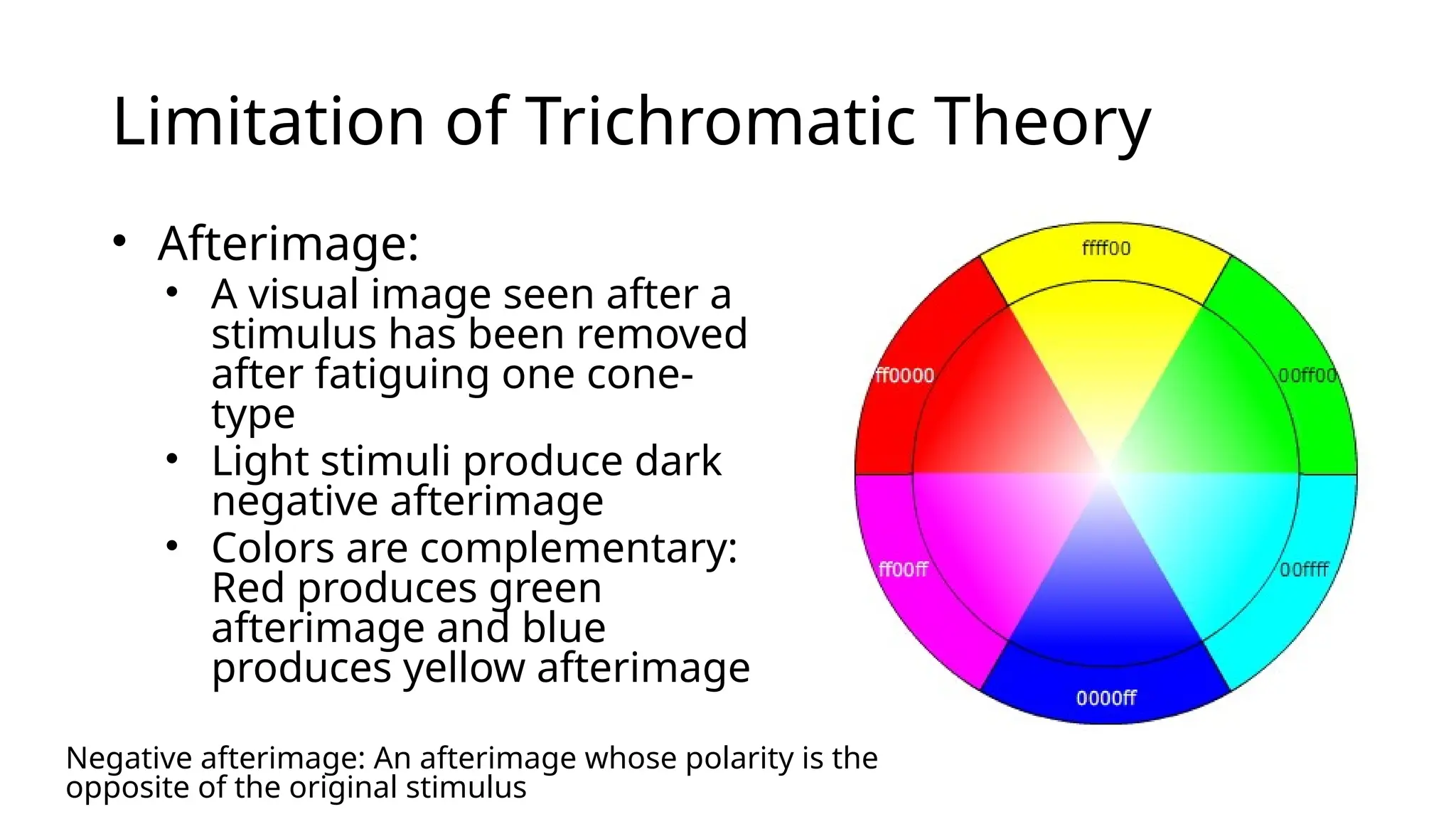
Color Vision and Theories
Auditory Processing: How We Hear
Sound waves create vibrations in the eardrum Ossicles amplify vibrations to the cochlea Hair cells in cochlea convert vibrations to neural signals Auditory cortex processes pitch, loudness, and timbre
Critical Thinking: Perceptual Illusions
Why do optical illusions work? What do they reveal about perception? How do expectations influence what we see? Can you think of everyday examples of perceptual errors?
Gestalt Principles of Perception
{"left":"Figure-ground: Distinguishing objects from background\nProximity: Items close together are grouped\nSimilarity: Similar items are grouped together","right":"Closure: We complete incomplete patterns\nContinuity: We follow smooth, continuous lines\nCommon fate: Items moving together are grouped"}
Summary: Sensation and Perception Integration
Sensation detects stimuli; perception interprets meaning Thresholds determine what we can detect Multiple sensory systems work together Perception is active and influenced by experience Understanding these processes helps explain human behavior