
Balancing Chemical Equations Made Simple
Grade 10 Chemistry Understanding Conservation of Mass Making Equations Equal

What is the Law of Conservation of Mass?
Matter cannot be created or destroyed in chemical reactions Atoms are rearranged, not lost or gained Total mass of reactants equals total mass of products Discovered by Antoine Lavoisier in 1789

Think About It
If you start with 10 hydrogen atoms and 5 oxygen atoms... How many atoms should you have after the reaction? Where do atoms go if they seem to 'disappear'?

Why Do We Balance Chemical Equations?
Chemical equations are like mathematical recipes They show what goes in and what comes out Unbalanced equations violate the Law of Conservation of Mass Balanced equations help predict quantities needed for reactions
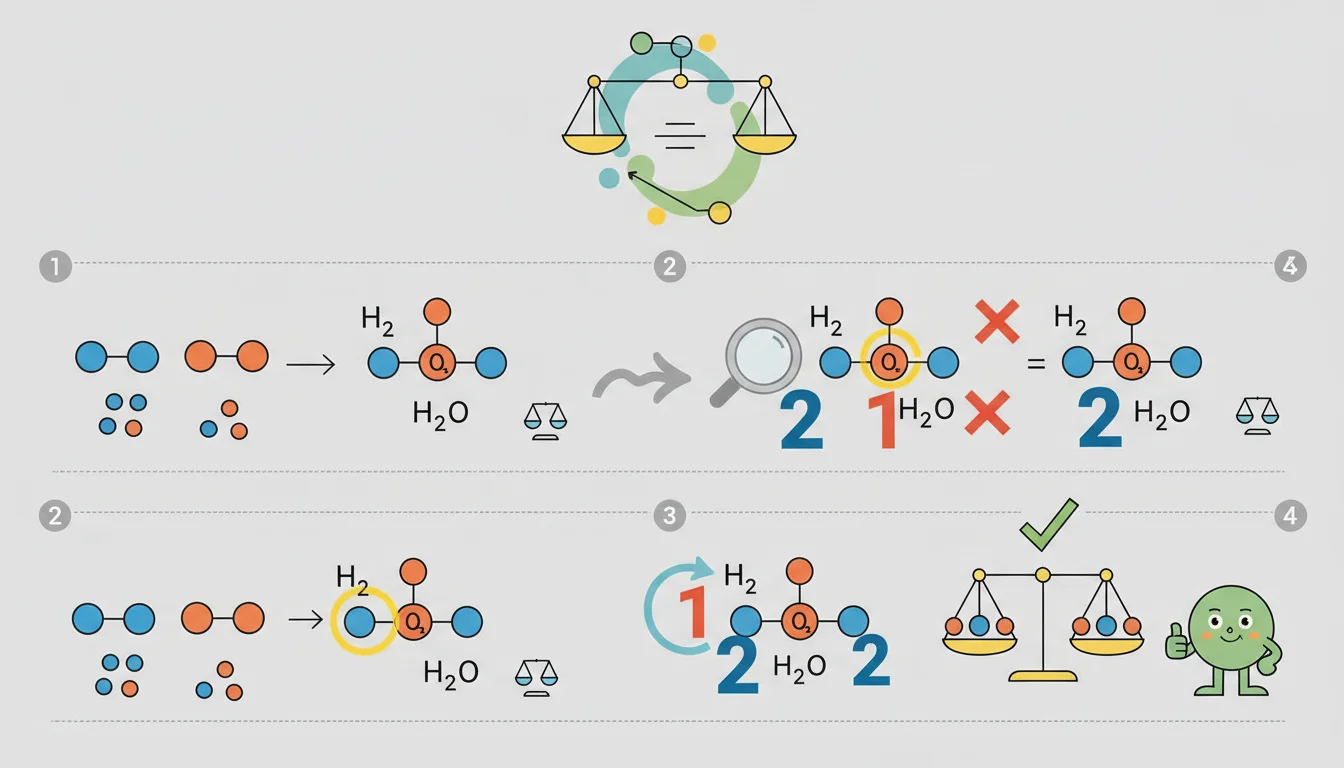
Step-by-Step Balancing Process
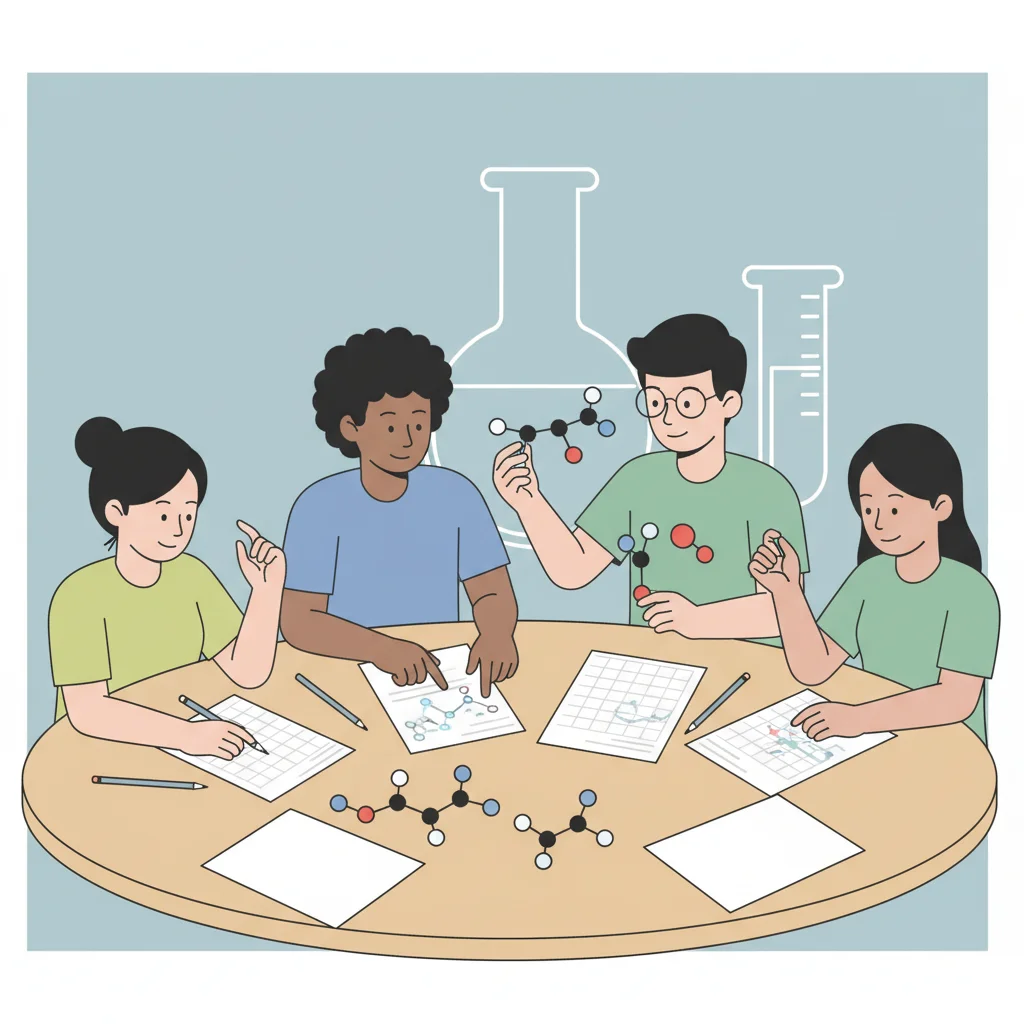
Practice Time: Balance These Equations
Work in groups of 4-5 students Balance the equations on your worksheet Remember: only change coefficients! Check each other's work and explain your reasoning

Common Mistakes to Avoid
{"left":"Changing subscripts in chemical formulas\nForgetting to count atoms on both sides\nAdding extra elements that aren't in the original equation\nNot using the smallest whole number coefficients","right":"Never change the chemical identity of compounds\nAlways double-check your final answer\nStart with the most complex molecule\nBalance polyatomic ions as units when possible"}
Key Takeaway
"In chemistry, as in life, balance is everything. When we balance equations, we're honoring the fundamental law that matter cannot be created or destroyed - only rearranged into new and amazing forms."