
Cell Cycle and Division Mastery
Understanding How Cells Grow, Divide, and Regulate Grade 11 Biology From Mitosis to Meiosis to Cancer

The Cell Cycle: Life's Continuous Journey
Interphase: Cell growth and DNA replication (90% of cell's life) M Phase: Mitosis and cytokinesis (10% of cell's life) G1, S, G2 phases prepare cells for division Checkpoints ensure quality control
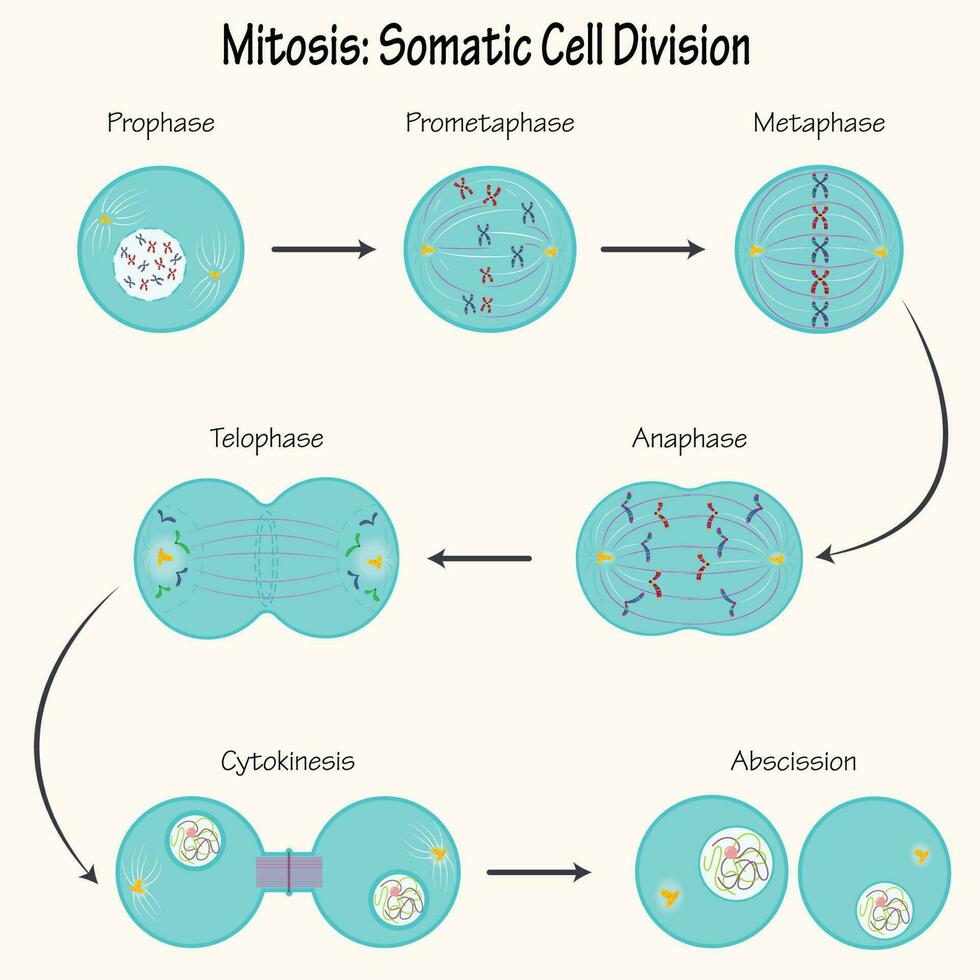
Mitosis in Action: Chromosome Dance
Role-play activity: Students become chromosomes Demonstrate prophase, metaphase, anaphase, telophase Use colored yarn or rope as chromatids Show how genetic material is equally distributed
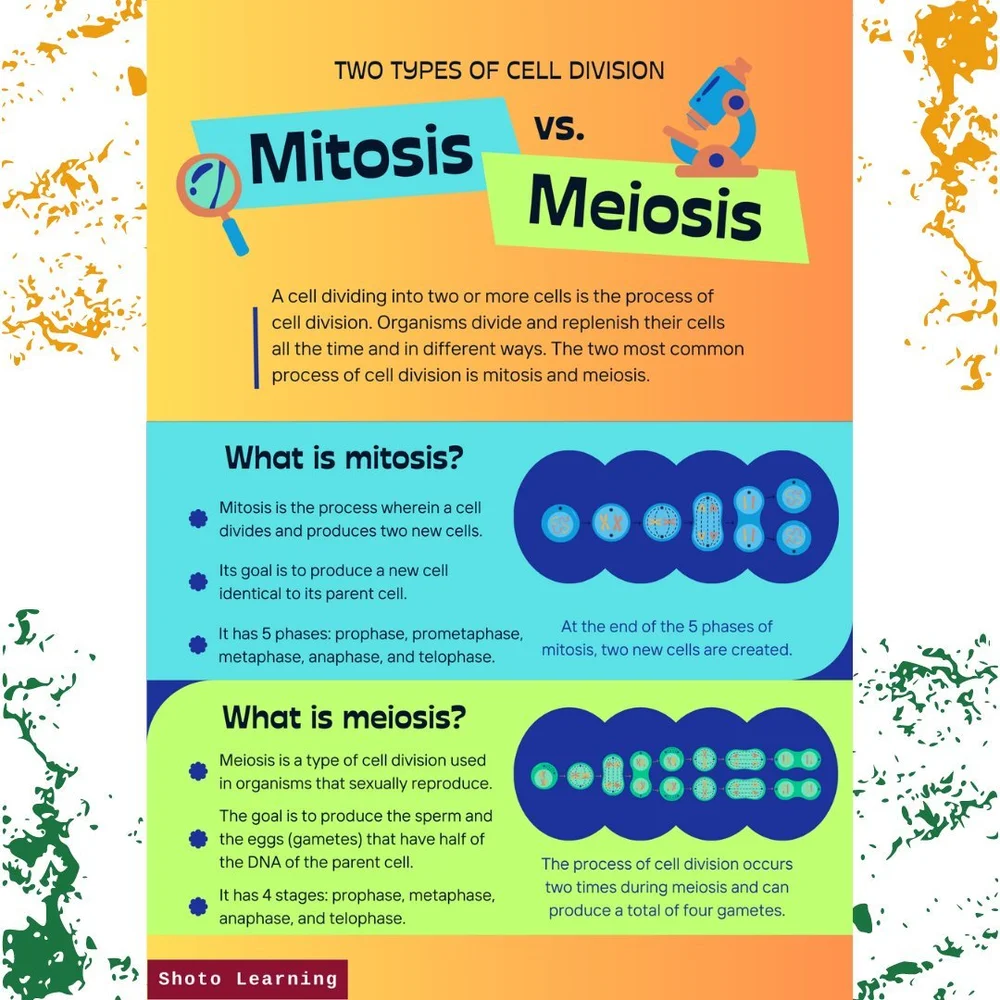
Mitosis vs. Meiosis: Two Types of Division
{"left":"Mitosis: Growth and repair\nMeiosis: Sexual reproduction\nProduces identical diploid cells\nProduces genetically diverse gametes","right":"One division cycle\nTwo division cycles\nMaintains chromosome number\nReduces chromosome number by half"}
Cell Cycle Checkpoints: Quality Control
G1/S Checkpoint: Is DNA damaged? Are nutrients available? G2/M Checkpoint: Has DNA replicated correctly? Spindle Checkpoint: Are all chromosomes attached? p53 protein: The 'guardian of the genome'
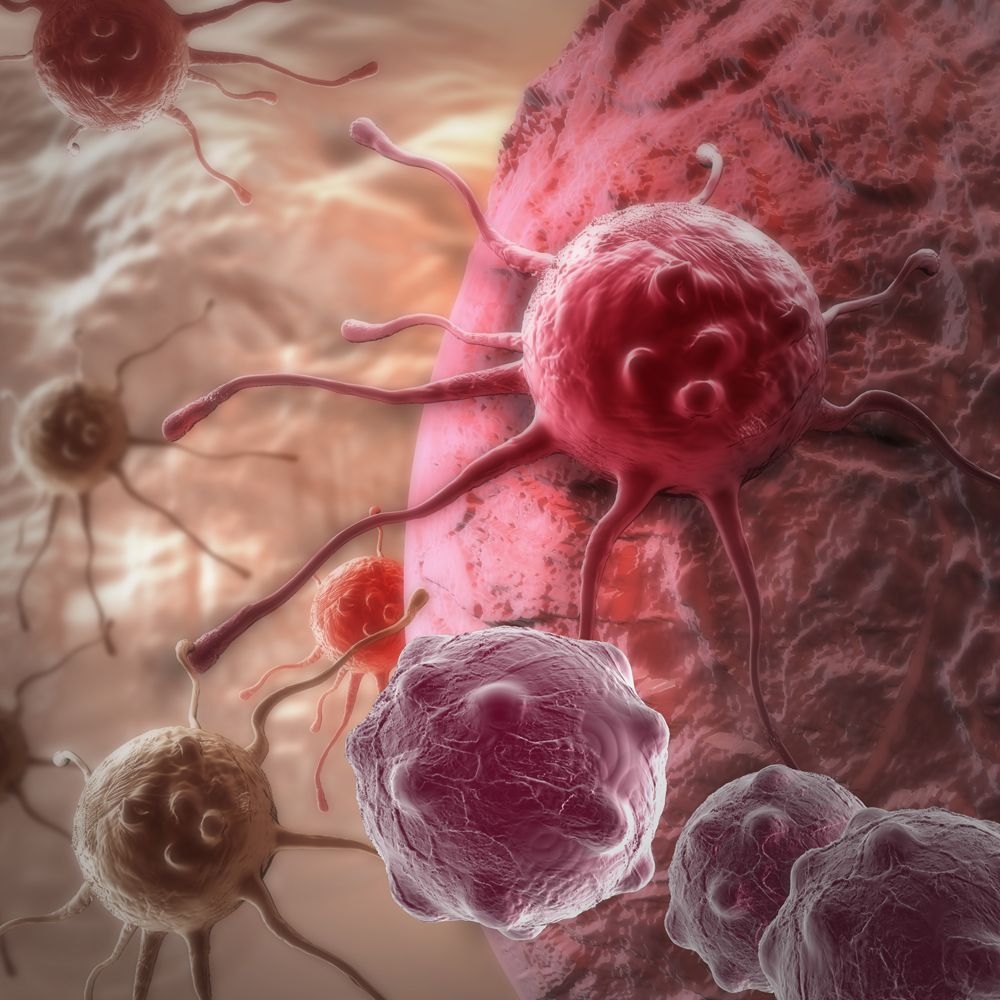
When Checkpoints Fail: Cancer
"Cancer is a disease of the cell cycle. When cells lose the ability to control their division, tumors form and can spread throughout the body."

Meiosis: Creating Genetic Diversity
Crossing over: Chromosomes exchange genetic material Independent assortment: Random chromosome distribution Results in genetically unique gametes Maintains species chromosome number across generations
Putting It All Together
How do mitosis, meiosis, and cell regulation work together to maintain life? What would happen if checkpoints didn't exist? Why is genetic diversity from meiosis important for species survival?