
Civics in Action: Rights & Responsibilities
Grade 11 Social Studies Introduction to Civics and Government Understanding Our Role in Democracy
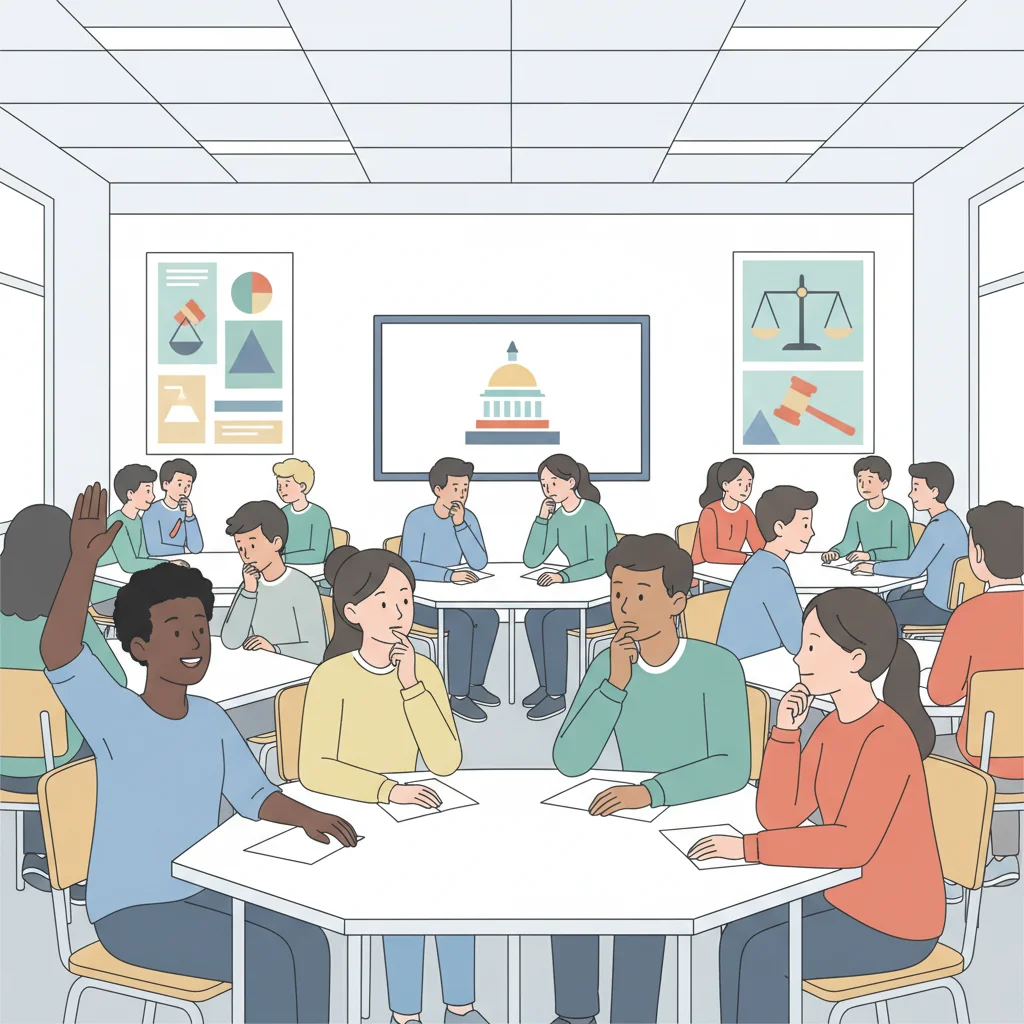
What Does It Mean to Be a Citizen?
Think about your daily life What rights do you exercise? What responsibilities do you have? Share your thoughts with a partner
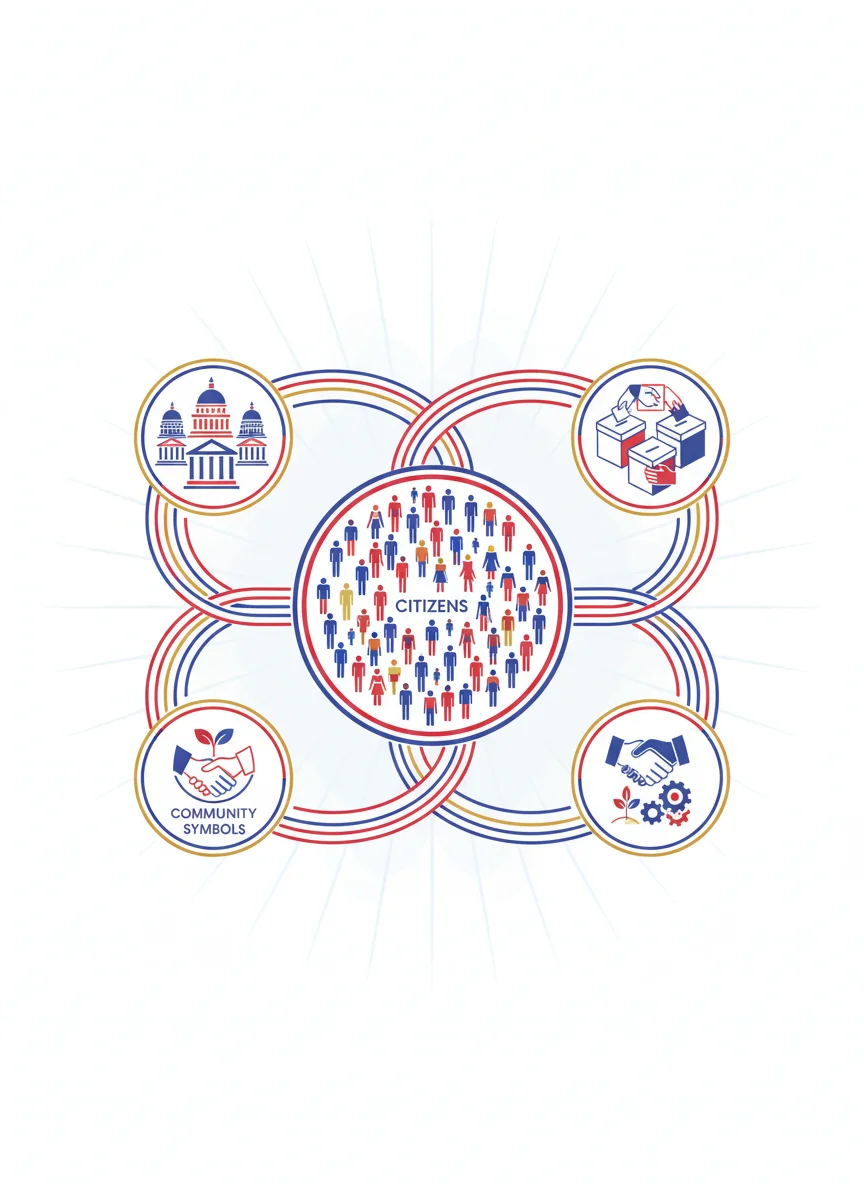
What is Civics?
The study of citizenship and government How citizens participate in their community Understanding rights, responsibilities, and duties The relationship between people and their government Making informed decisions about public issues

Structure of American Government
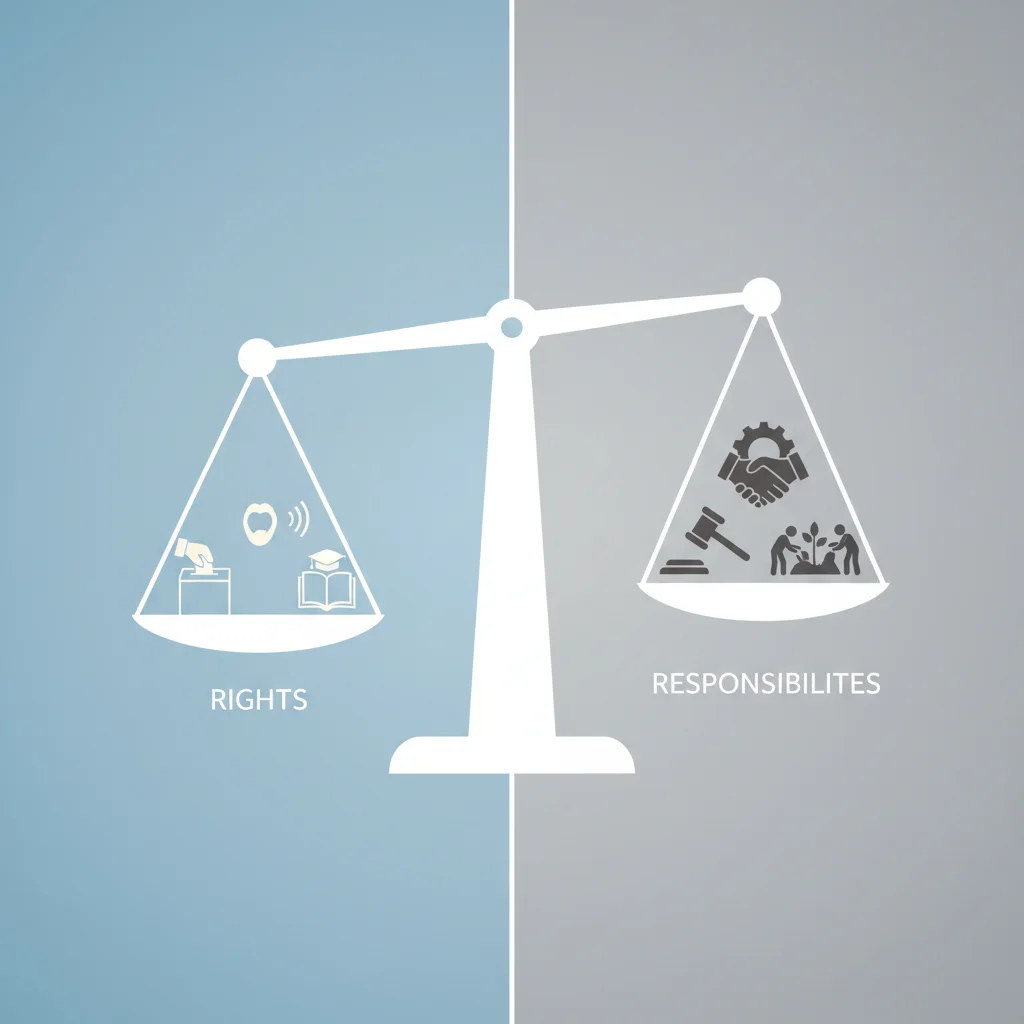
Rights vs. Responsibilities
{"left":"Freedom of speech\nRight to vote\nRight to fair trial\nFreedom of religion\nRight to education","right":"Obey laws\nPay taxes\nServe on juries\nVote in elections\nRespect others' rights"}
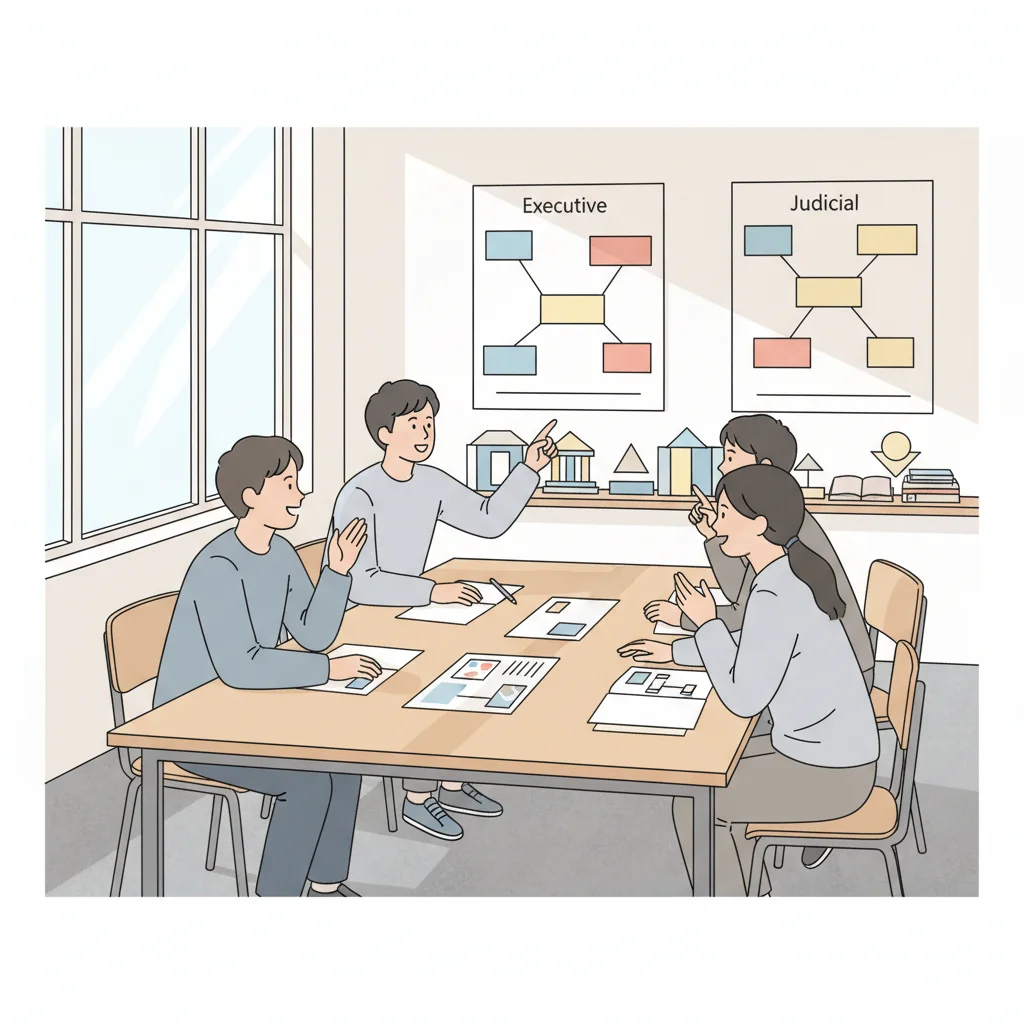
Civic Engagement Scenarios
Work in pairs to complete the graphic organizer Match government branches with citizen roles Identify rights and responsibilities for each scenario Think of real examples from your community Be ready to share your findings
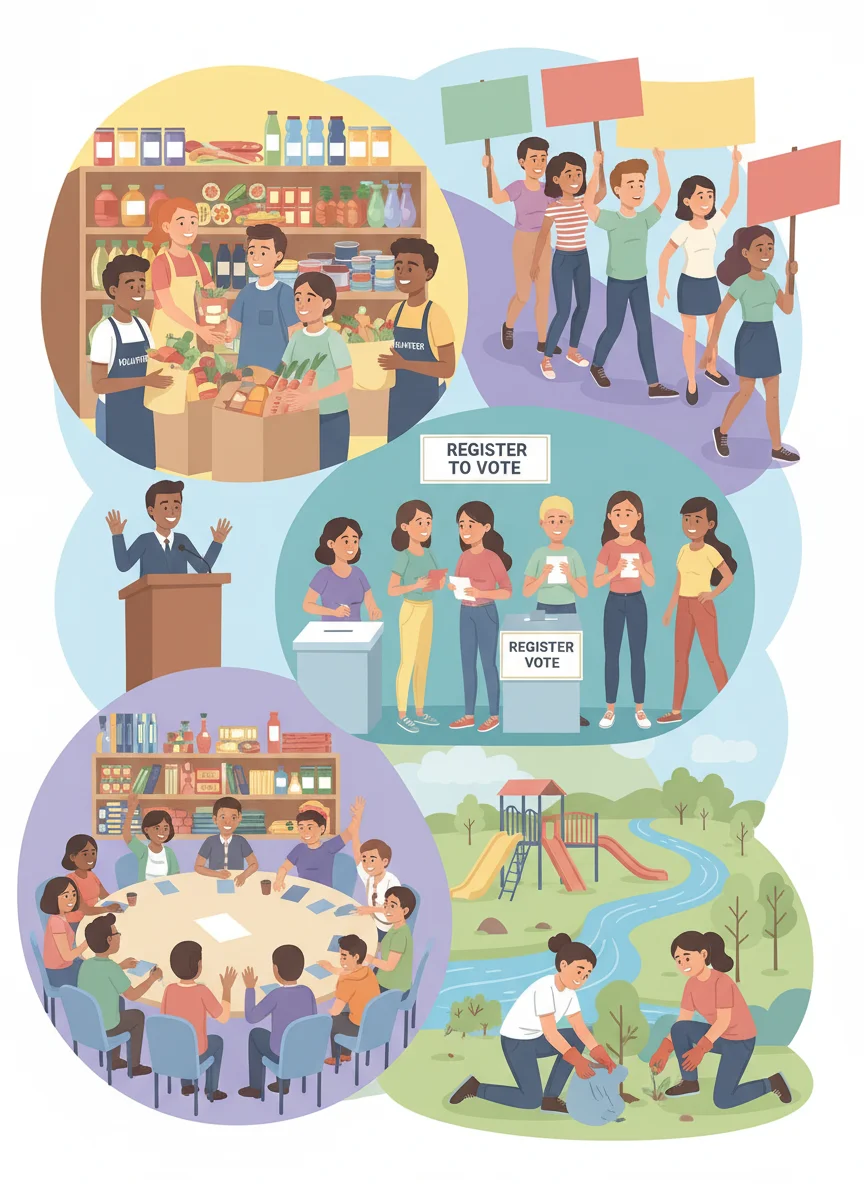
Why Civic Engagement Matters
Democracy requires active participation Your voice can influence government decisions Voting is just one form of civic engagement Community service builds stronger neighborhoods Staying informed helps you make better choices Future depends on engaged citizens

Reflection & Next Steps
What is one new thing you learned about government today? How can you participate as a citizen right now? Why do you think both rights and responsibilities matter? What questions do you still have about civics?