
Classifying Matter by Atomic Arrangement
Understanding Elements, Compounds, and Mixtures Grade 8 Science Exploring How Atoms Are Organized

Bellringer: What Do You Think?
Look at these three substances: Toothpaste Air Gold Which are elements, compounds, or mixtures? Write your predictions and reasoning

Engaging Phenomenon
Why do bubbles form when you open a soda? How might atoms look different in the gas versus the liquid? Think about what's happening at the atomic level
Three Types of Matter
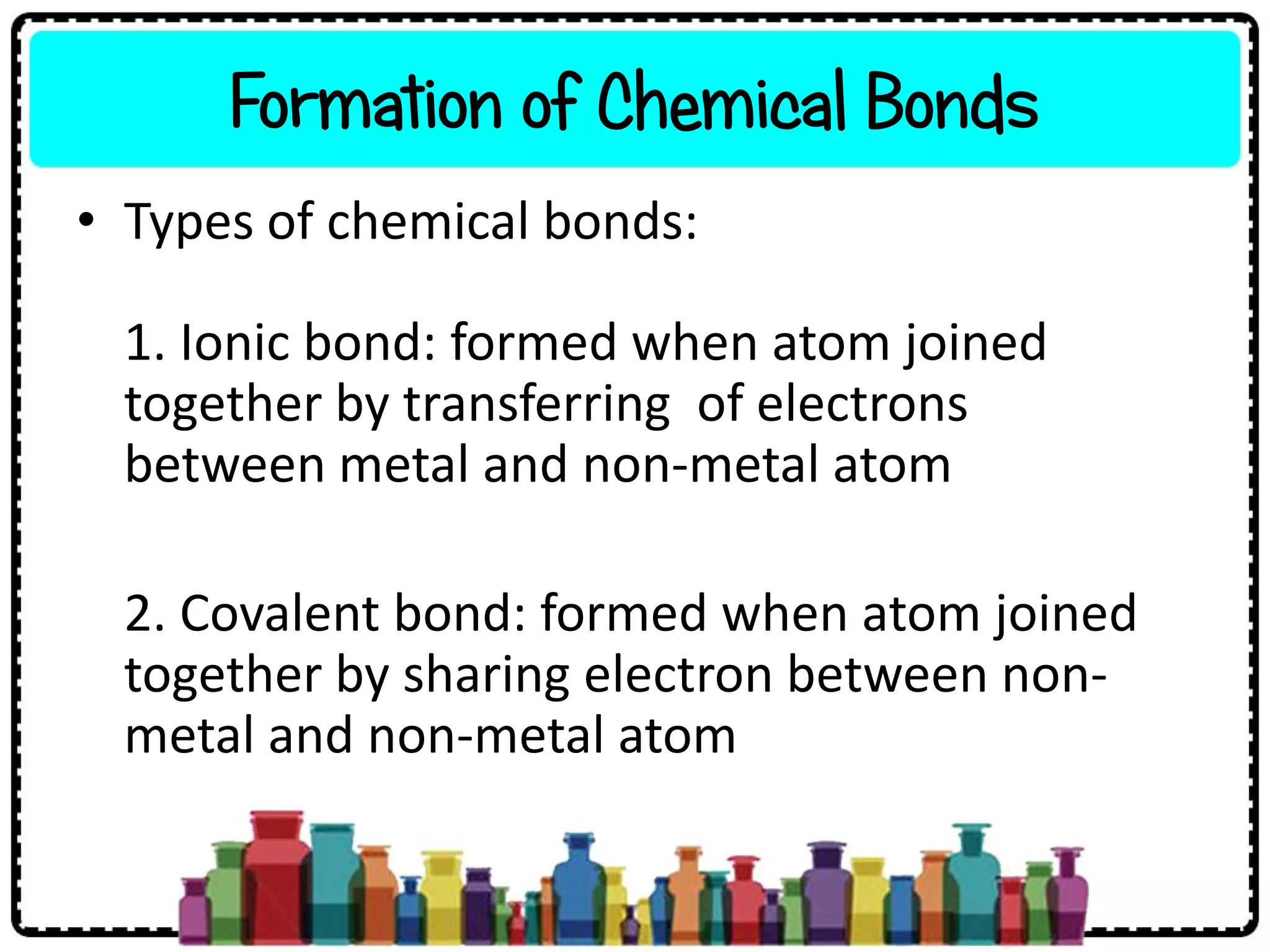
Elements: Made of only ONE type of atom Compounds: Different atoms chemically bonded together Mixtures: Substances combined but NOT chemically bonded Each has a unique atomic arrangement

Elements vs. Compounds vs. Mixtures
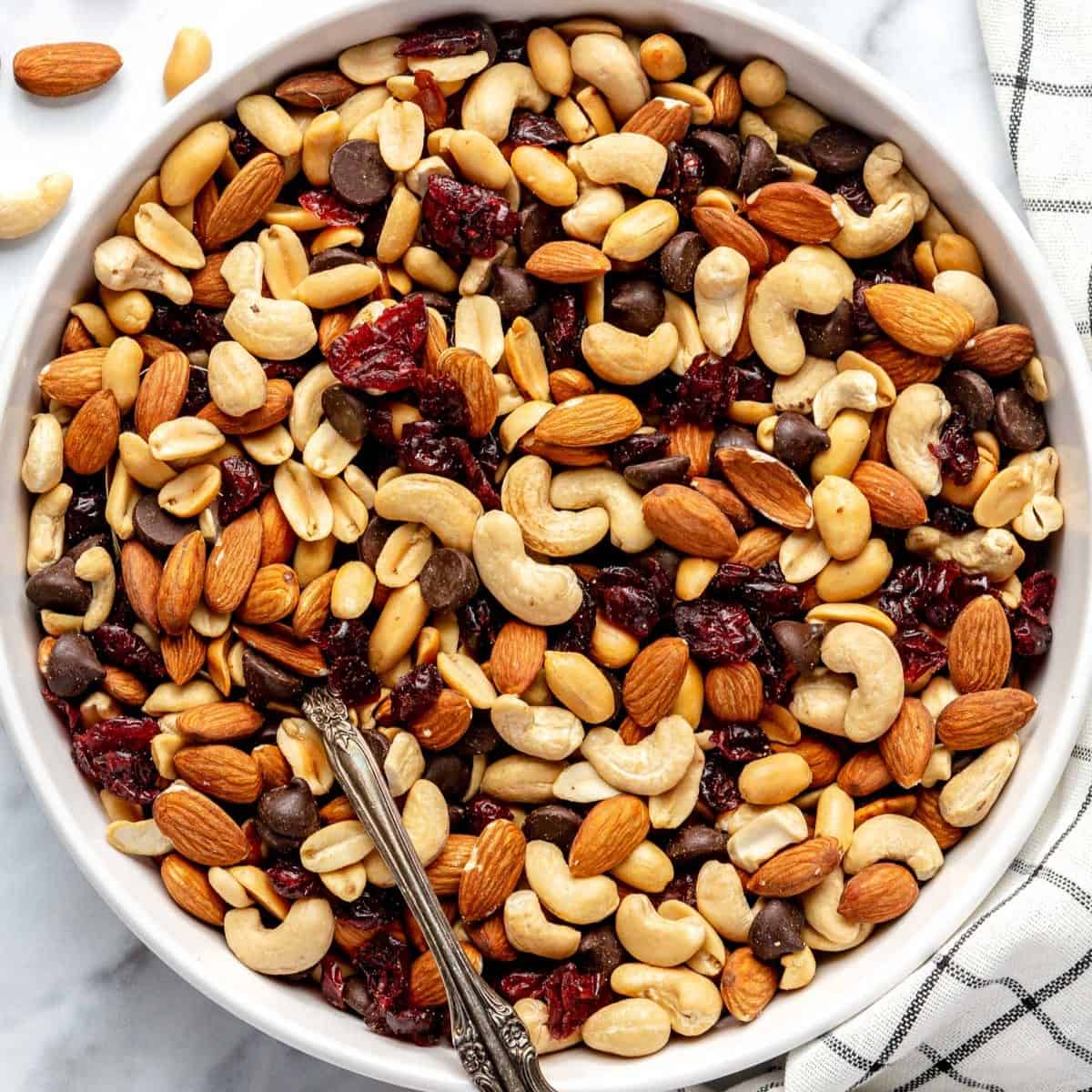
{"left":"Elements: Oxygen gas (O₂), Gold (Au), Carbon (C)\nCompounds: Water (H₂O), Salt (NaCl), Sugar (C₆H₁₂O₆)","right":"Mixtures: Air, Salt water, Trail mix"}

Think-Pair-Share: Sort the Matter Cards
Work with your partner Sort these substances into three groups: Iron (Fe), Salt water, Sugar (C₆H₁₂O₆), Air, Table salt (NaCl) Explain your reasoning using atomic arrangement
Higher-Order Thinking Challenge
Imagine trail mix ingredients were chemically bonded instead of just mixed together How would this change the properties? Would it still be classified the same way? Think about what makes something a mixture versus a compound

Summary: Atomic Arrangement Determines Classification
Elements: One type of atom only Compounds: Atoms chemically bonded in fixed ratios Mixtures: Substances physically combined Understanding atomic arrangement helps us classify ALL matter around us