Cloning: Past, Present, and Future
A Journey Through Scientific Discovery Grade 6 Science
What Do You Think Cloning Means?
Think about what you already know Share your ideas with a partner We'll discover the real definition together
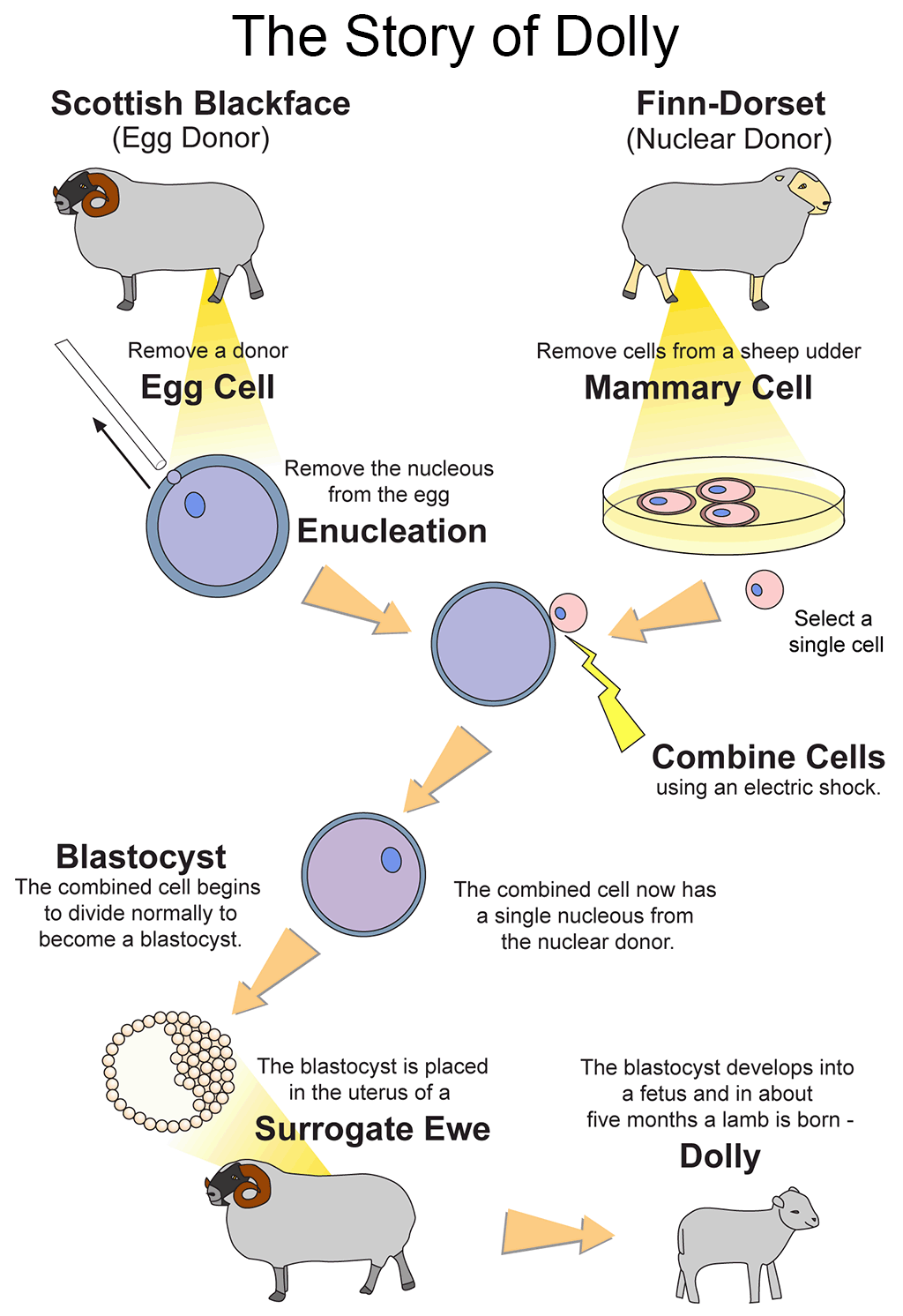
What is Cloning?
Making an exact genetic copy of a living thing The copy has identical DNA to the original Like having a genetic twin Happens naturally in some organisms
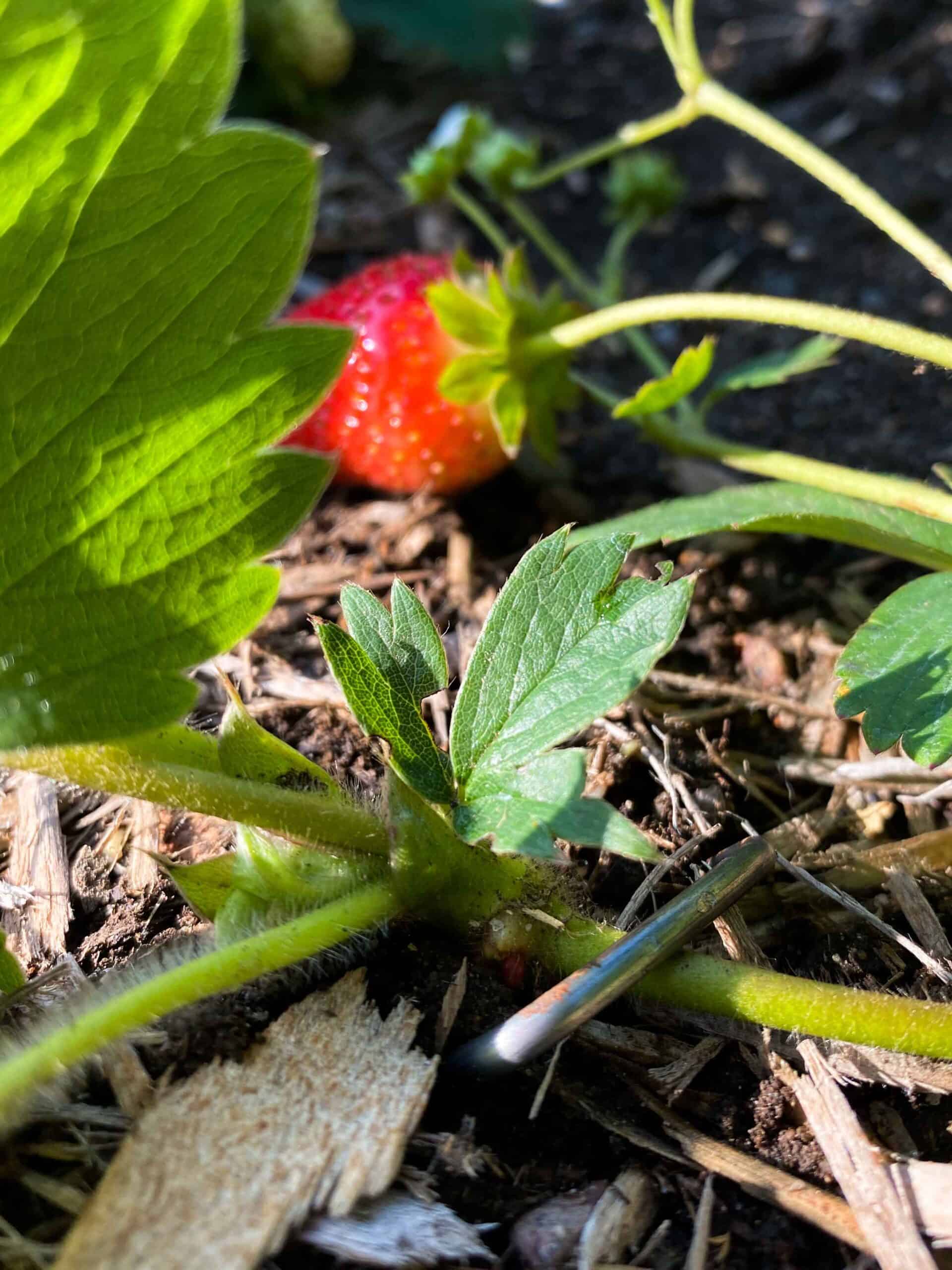
Natural Cloning Examples
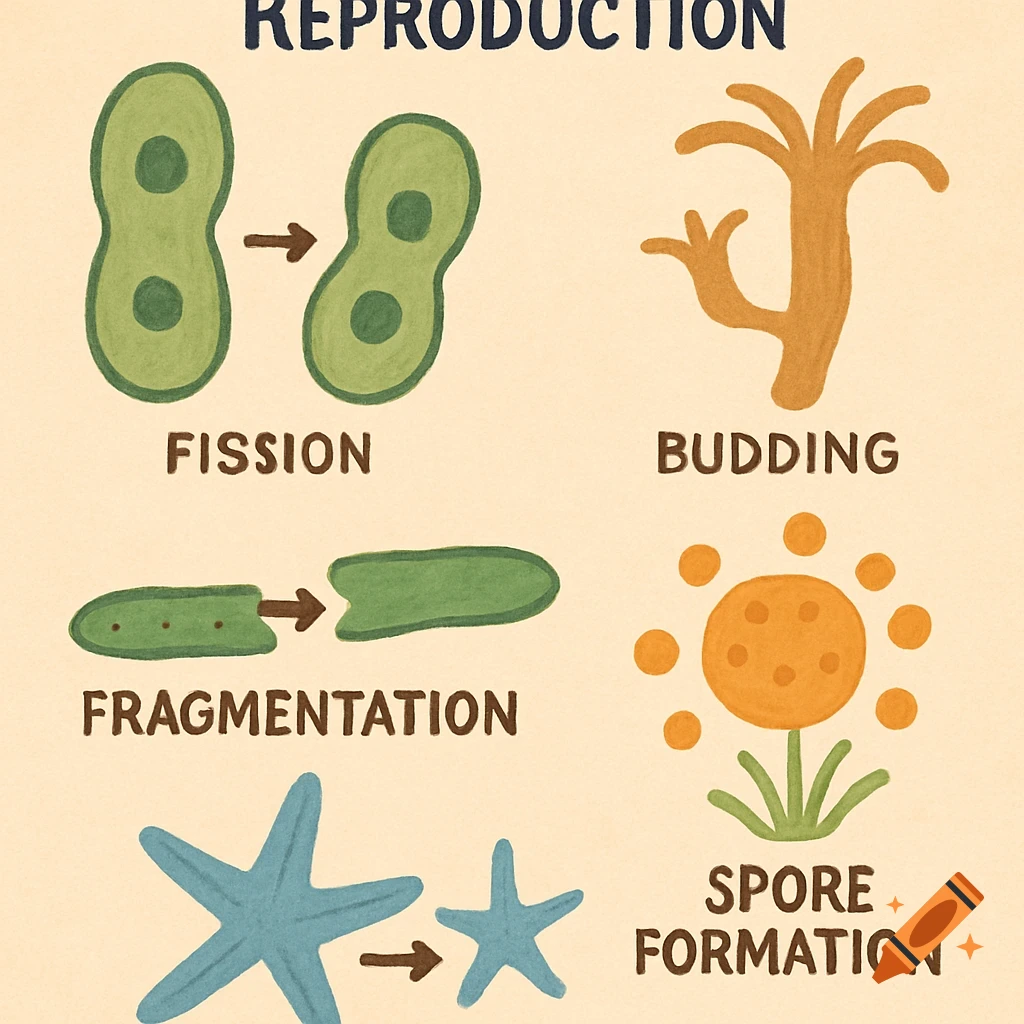
Strawberry plants grow runners Starfish can regrow lost arms Some bacteria split to make copies Identical twins are natural clones
Clone Detective Activity
Look at the pictures provided Identify which organisms can clone naturally Work with your table group Be ready to explain your choices
The Beginning of Artificial Cloning
"Scientists have been dreaming of creating genetic copies since the early 1900s"
History of Cloning Timeline

Early Cloning Experiments
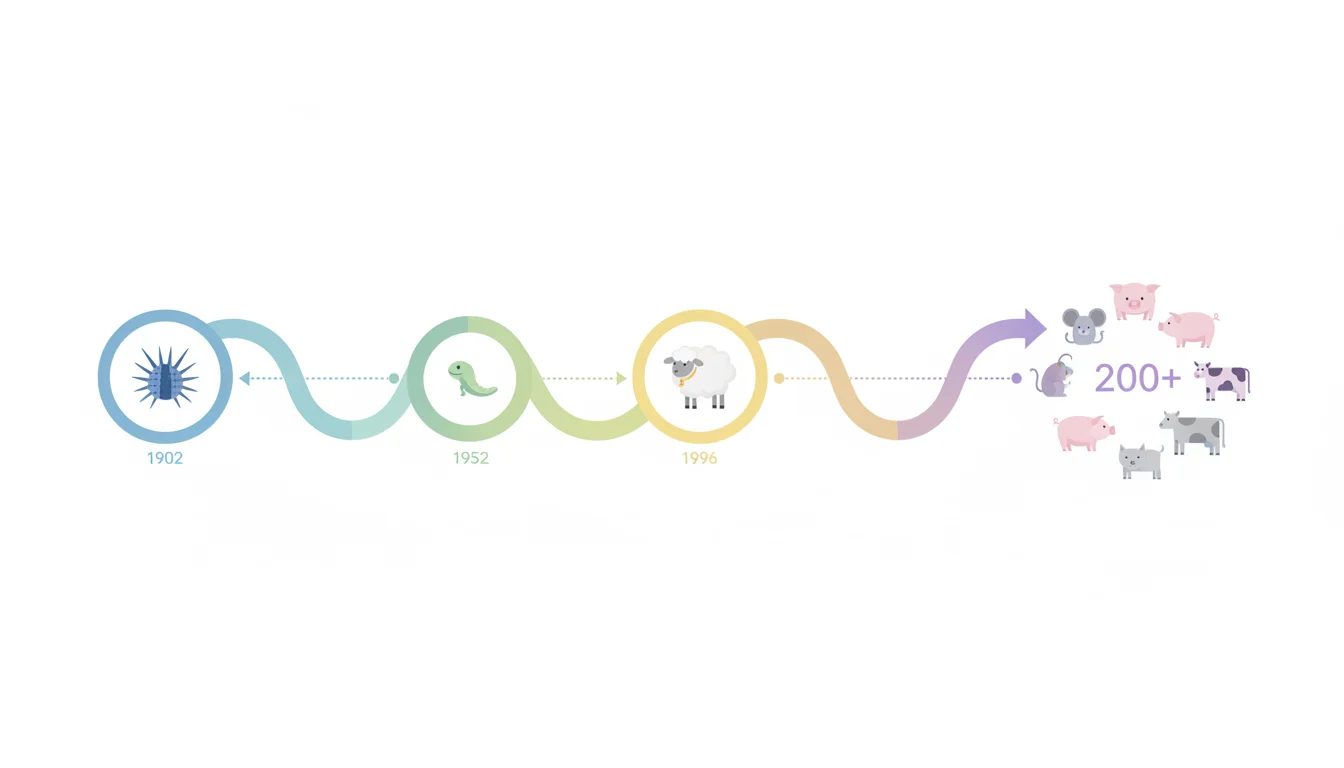
1902: Hans Spemann split sea urchin embryos 1952: Scientists cloned tadpoles These were the first successful artificial clones It took many years to perfect the process
Dolly the Sheep - A Scientific Breakthrough
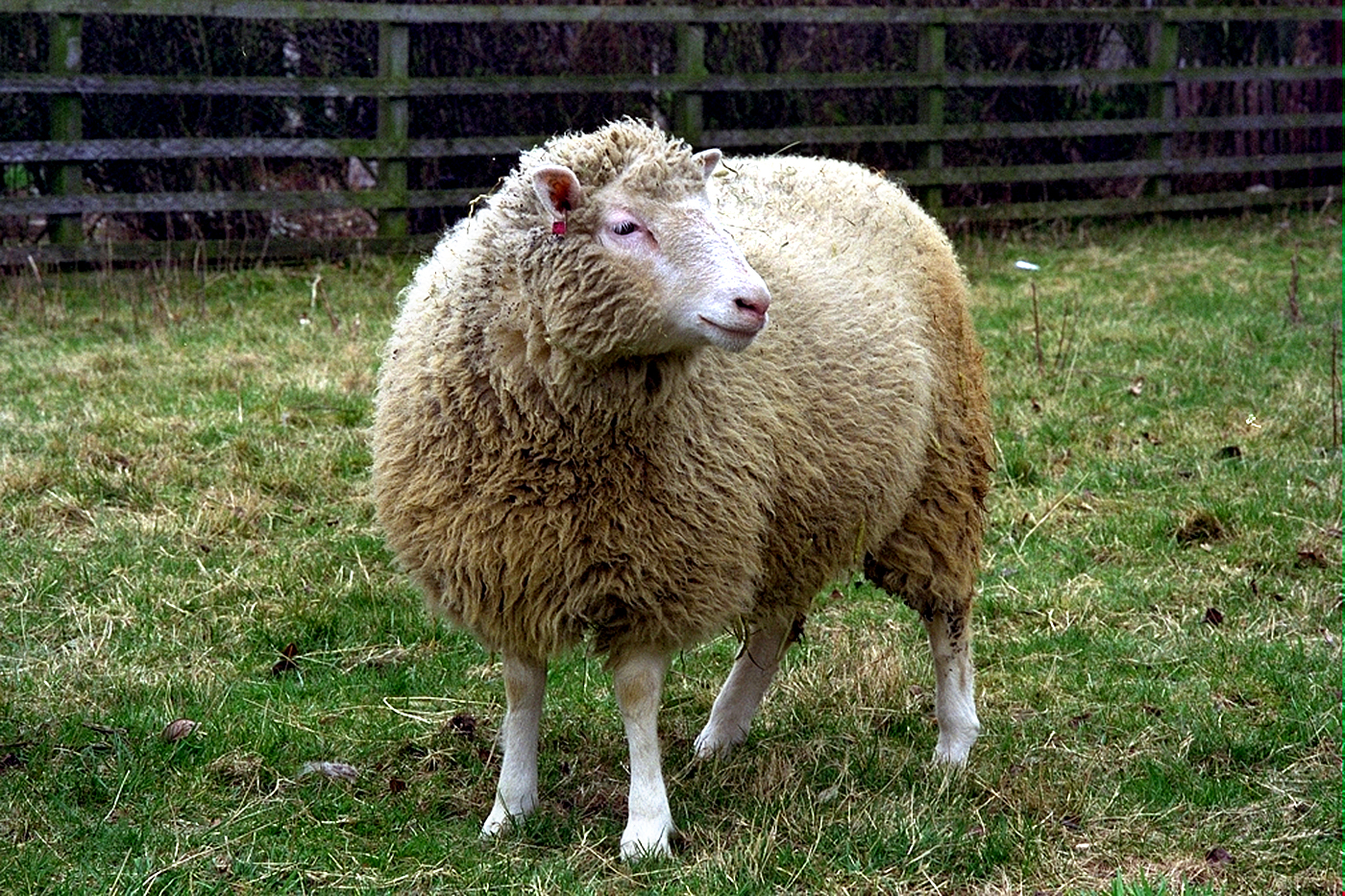
Born in 1996 in Scotland First mammal cloned from an adult cell Named after country singer Dolly Parton Proved that cloning complex animals was possible

Why Was Dolly So Important?
Think about what made her special What did she prove to scientists? How might this help people?
Modern Cloning Today
Many animals have been cloned since Dolly Cats, dogs, horses, and cattle Used for medical research Helps save endangered species

Benefits of Cloning
{"left":"Medical research and treatments\nSaving endangered species\nImproving farm animals","right":"Creating organs for transplants\nStudying diseases\nPreserving genetics"}
8 more slides available after you open the deck.
Download all 20 slides