Comparing Fractions: Grade 3 Fundamentals
Learning to compare fractions using visual models Grade 3 Mathematics NC.3.NF.4 Standard
I Can Statement & Success Criteria
I can compare fractions with the same denominator using visual models I can use fraction bars and circles to see which fraction is larger I can explain my thinking when comparing fractions Success: I will correctly compare 4 out of 5 fraction pairs
What Are Fractions?
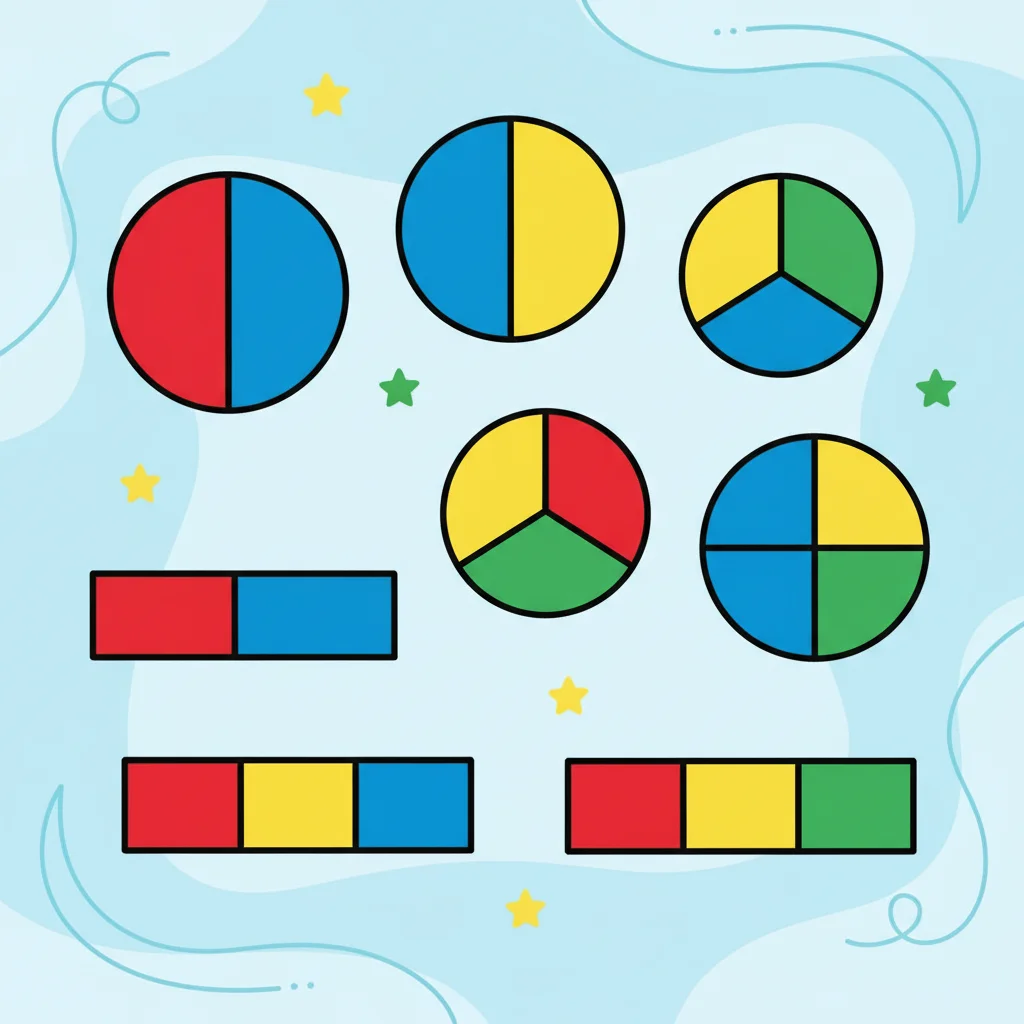
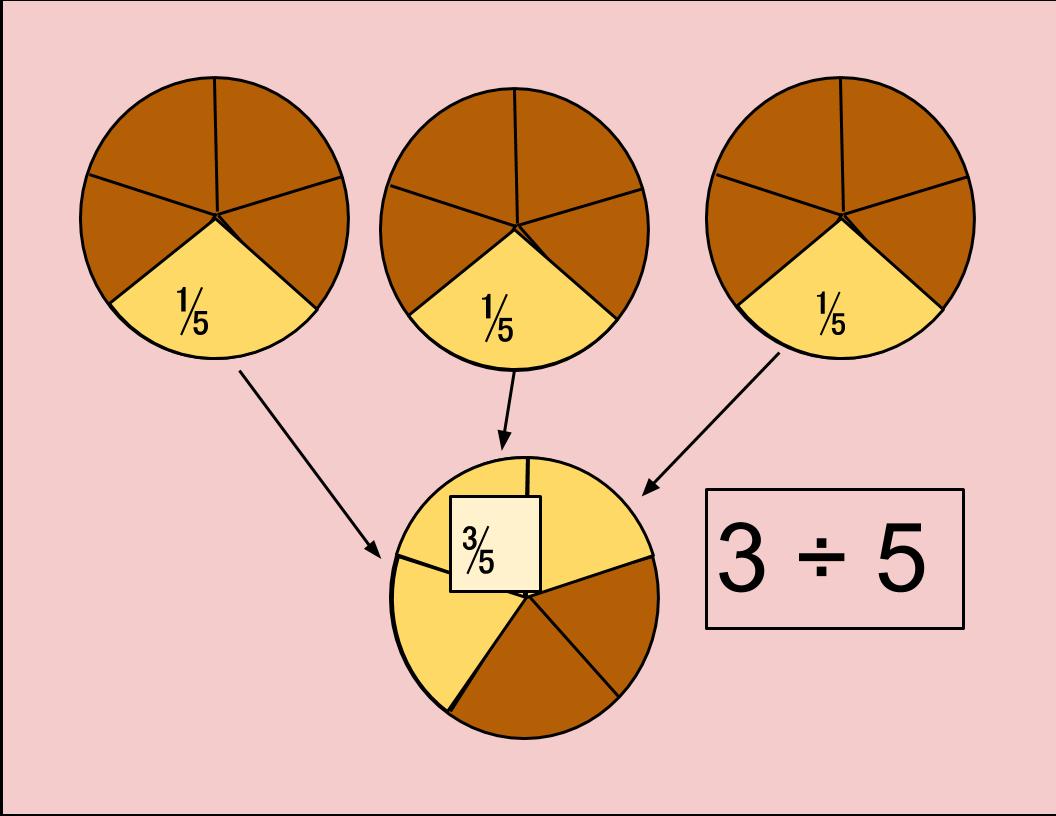
A fraction shows parts of a whole The bottom number (denominator) shows how many equal parts The top number (numerator) shows how many parts we have Example: 2/4 means 2 out of 4 equal parts
Fraction Circle Exploration
Work with your partner to build fractions using circle pieces Make 1/3 and 2/3 using yellow circles Make 1/4 and 3/4 using red circles Talk about what you notice about the sizes
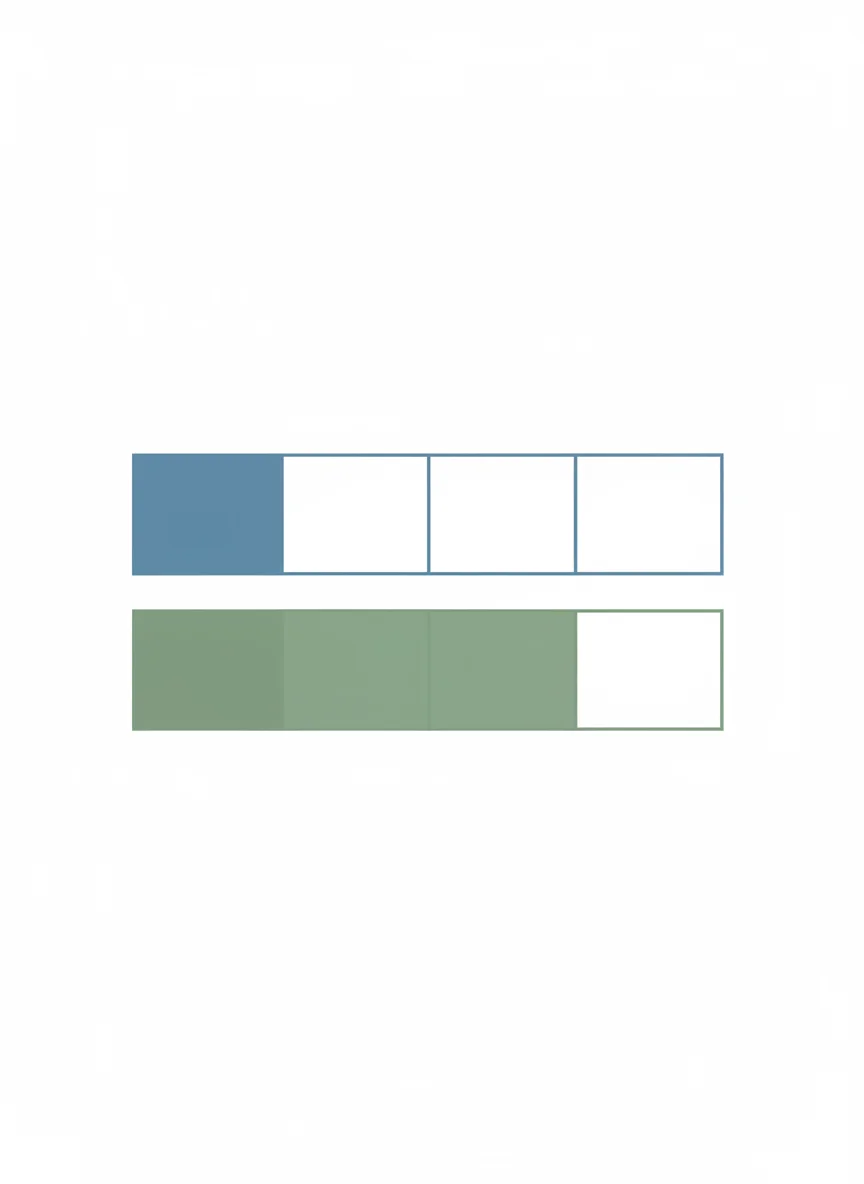
Comparing Fractions with Same Denominator
When fractions have the same bottom number, compare the top numbers 2/4 vs 3/4: Which has more parts? The fraction with the bigger numerator is larger 2/4 < 3/4 because 2 < 3
Let's Compare Together
{"left":"1/5 vs 4/5\n2/6 vs 5/6\n1/8 vs 3/8","right":"4/5 is larger\n5/6 is larger\n3/8 is larger"}
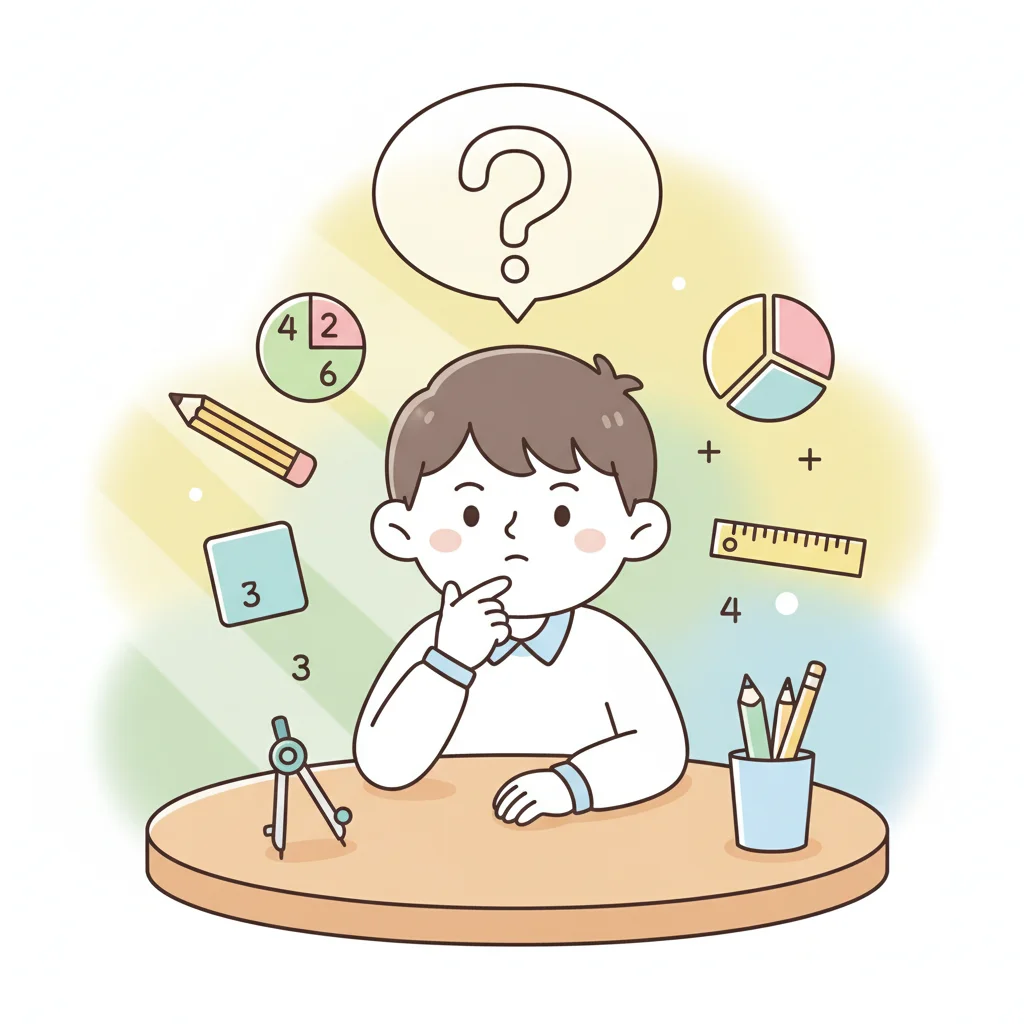
Think About This!
Look at these fractions: 3/8 and 1/8 Which fraction is larger? How do you know? Draw a picture or use manipulatives to prove your answer Be ready to explain your thinking to a classmate

Fraction Comparison Game
Draw two fraction cards from the deck Use fraction bars to build each fraction Decide which fraction is larger Explain your reasoning to earn a point
Common Mistakes to Avoid
Don't just look at the numerator size Remember: larger numerator = larger fraction (same denominator) Always check that denominators are the same Use visual models when you're unsure
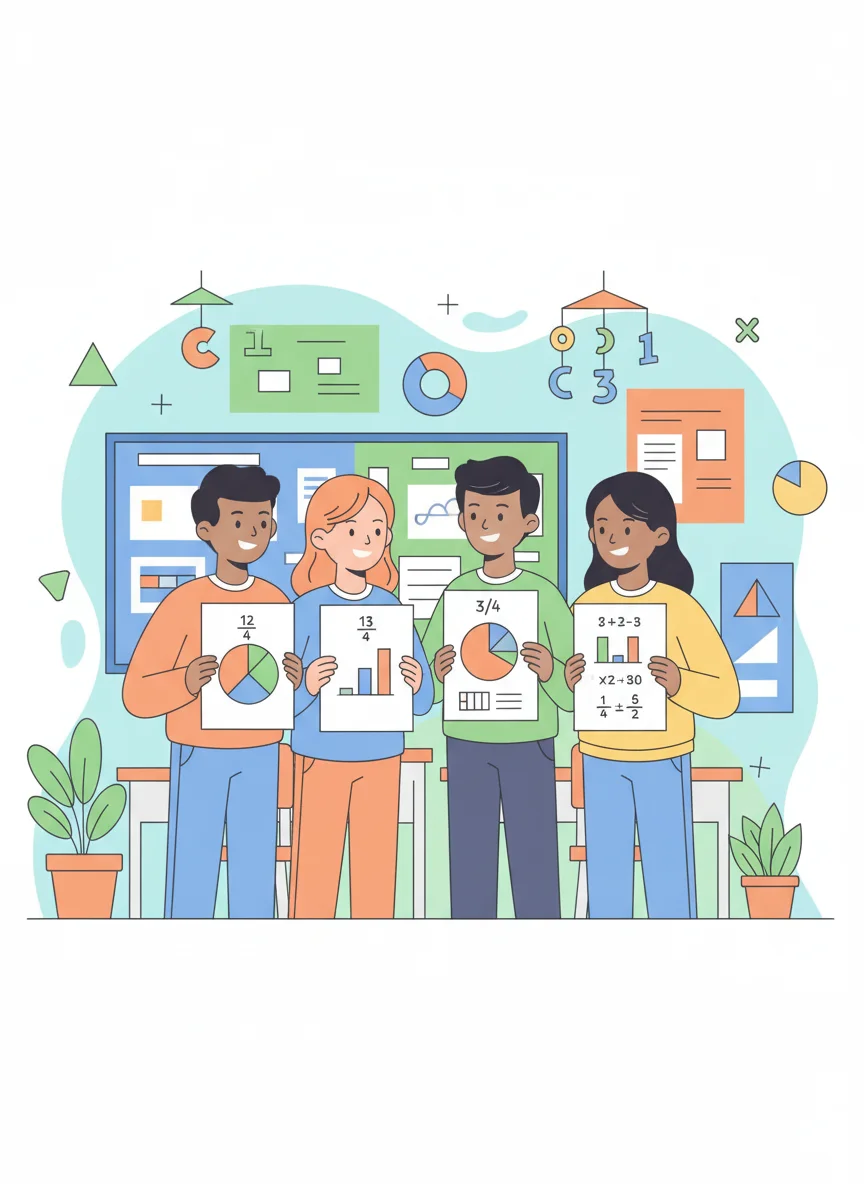
Today's Learning Summary
We learned to compare fractions with the same denominator Visual models help us see which fraction is larger The fraction with the bigger numerator is larger (same denominator) Practice makes perfect - keep using your fraction tools!