
Exploring Four Essential Budgeting Methods
Grade 9 Business Education Understanding Personal Finance Management

Prior Knowledge Check
Why do you think people create budgets? What problems might a budget help solve? What budgeting experiences have you had?

Learning Objectives
Identify and explain four common budgeting methods Analyze advantages and limitations of each method Apply one budgeting method to a real scenario Evaluate which method suits different financial goals
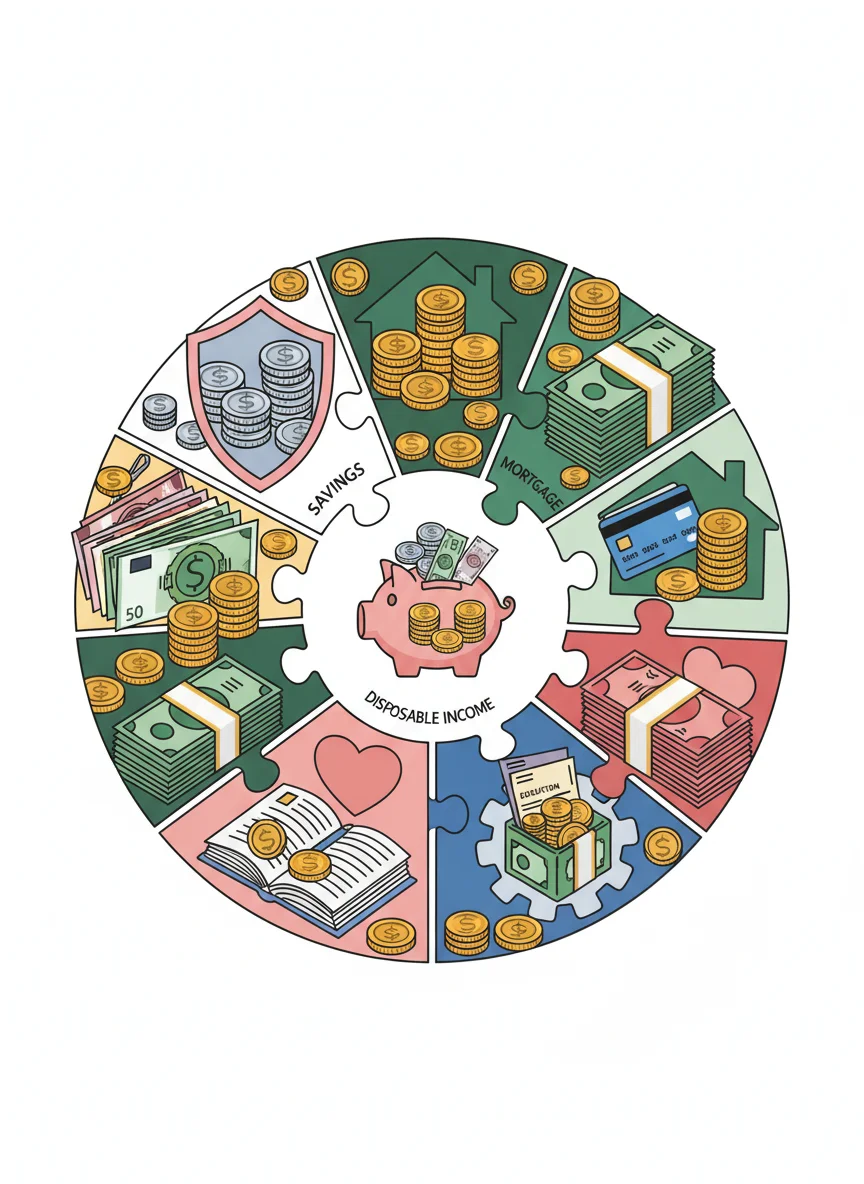
Method 1: Zero-Based Budgeting
Assign every dollar of income a specific purpose Income minus expenses equals zero No money sits unassigned Forces intentional spending decisions
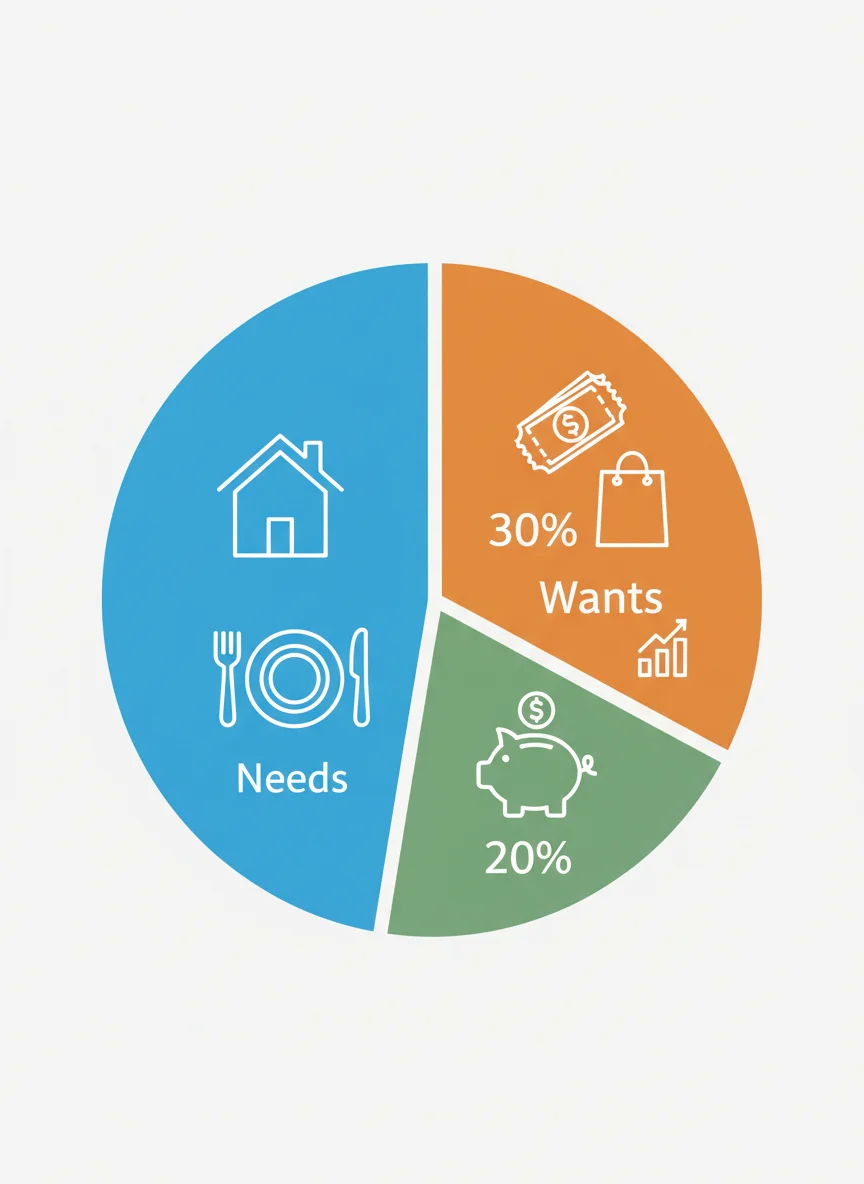
Method 2: 50/30/20 Framework
50% for needs (housing, food, utilities) 30% for wants (entertainment, dining out) 20% for savings and debt repayment Simple percentage-based approach
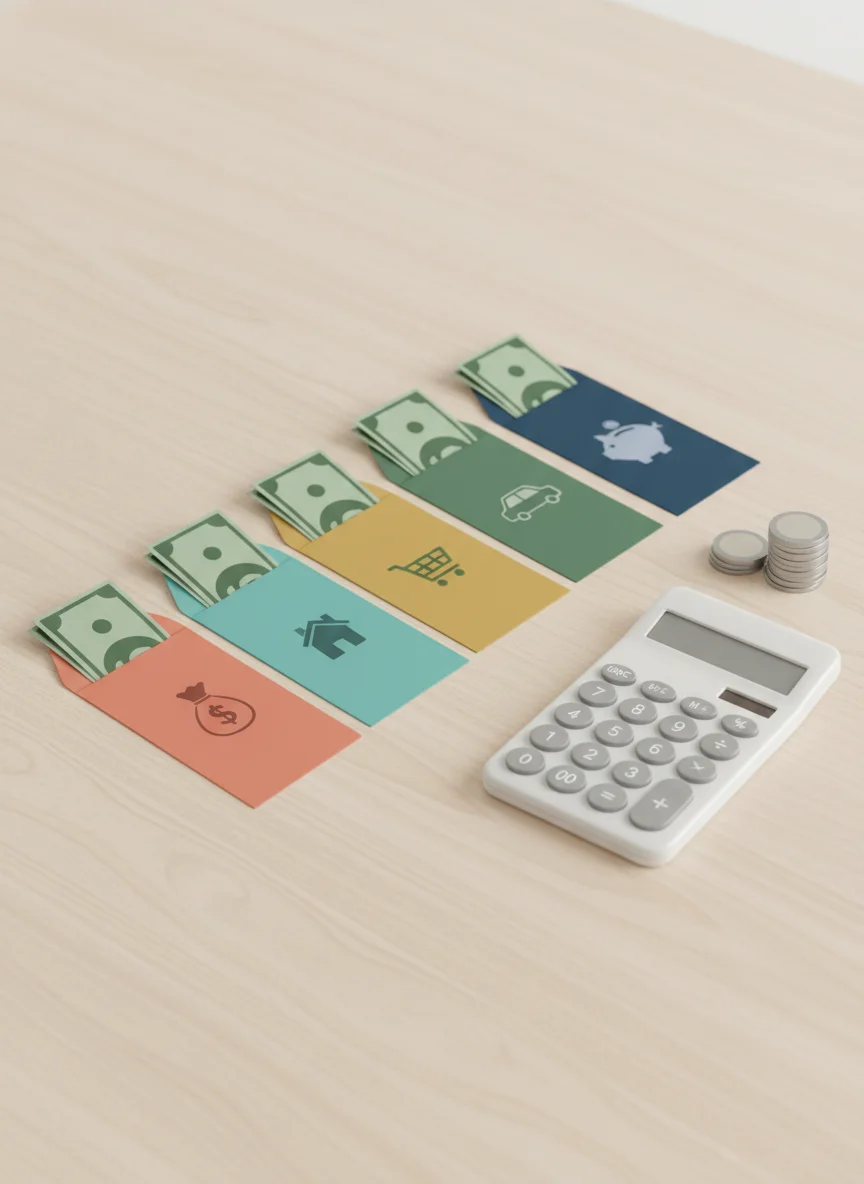
Method 3: Envelope System
Use physical or digital 'envelopes' for each expense category Put cash or allocate funds to each envelope When envelope is empty, no more spending in that category Prevents overspending through visual limits

Method 4: Pay-Yourself-First
Automatically save a fixed percentage before any spending Prioritizes long-term financial goals Typically save 10-20% of income first Spend what remains after saving

Hands-On Comparison Activity
Monthly Income: $3,000 Fixed Expenses: $1,800 (rent, utilities, groceries) Apply each budgeting method to this scenario Calculate allocations and write pros/cons for each
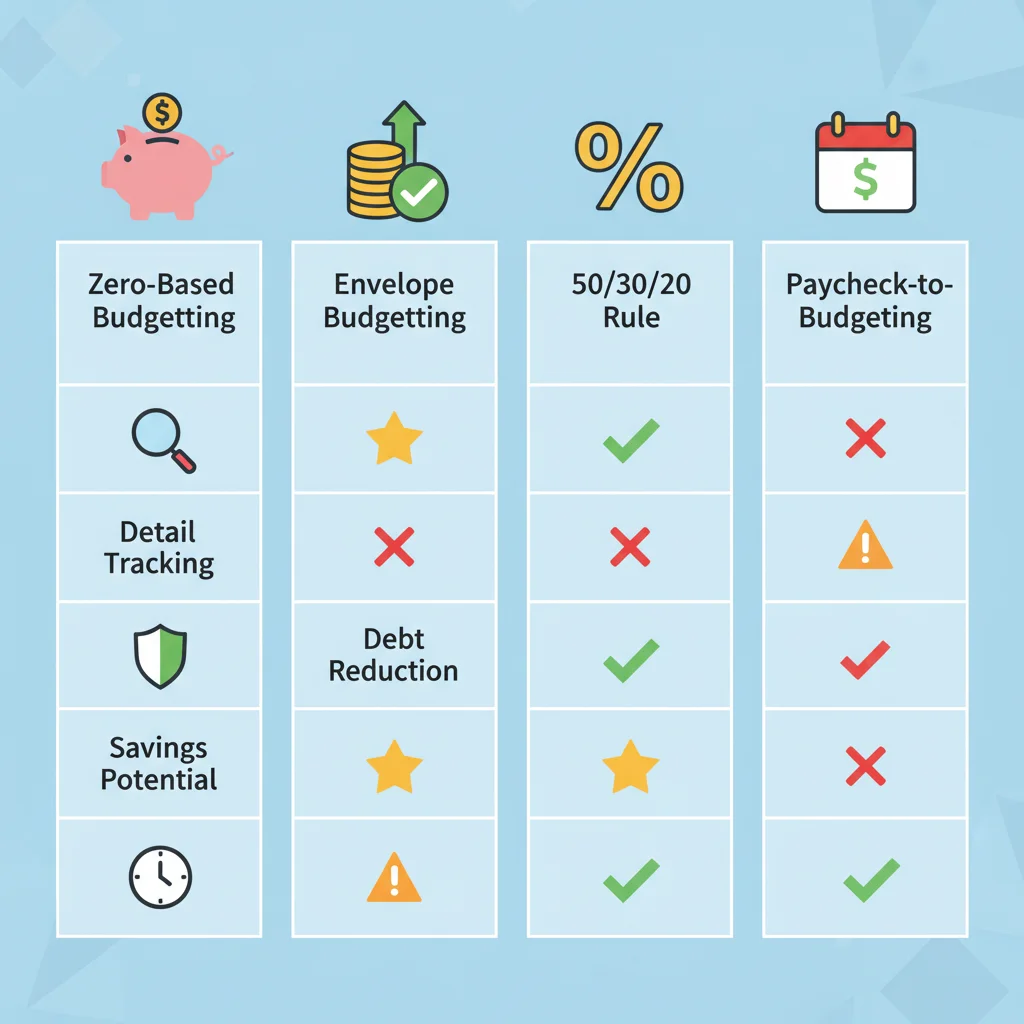
Method Comparison Analysis
{"left":"Zero-Based: Most detailed control, time-intensive\n50/30/20: Simple percentages, may not fit all situations","right":"Envelope: Visual limits, requires discipline\nPay-Yourself-First: Prioritizes goals, may strain current spending"}

Reflection and Application
Which budgeting method would you choose for yourself and why? How might your chosen method help you manage money better? What challenges might you face with your chosen method?
More Business slide decks
Other ready-to-teach business decks for US classrooms.

Comparing Multiple Budget Methods
Comparing Multiple Budget Methods

Pay-Yourself-First: Smart Budgeting Strategy
Pay-Yourself-First: Smart Budgeting Strategy
Creating Your Personal Budget
Creating Your Personal Budget