
How America Elects Its President
Understanding the Electoral College System Grade 7 Civics

What Do You Think?
How do you think Americans choose their president? Is it just by counting all the votes across the country?

The Founding Fathers' Dilemma
In 1787, the founders faced a big question How should America choose its leader? They had to balance different ideas about democracy Small states vs. large states had different concerns
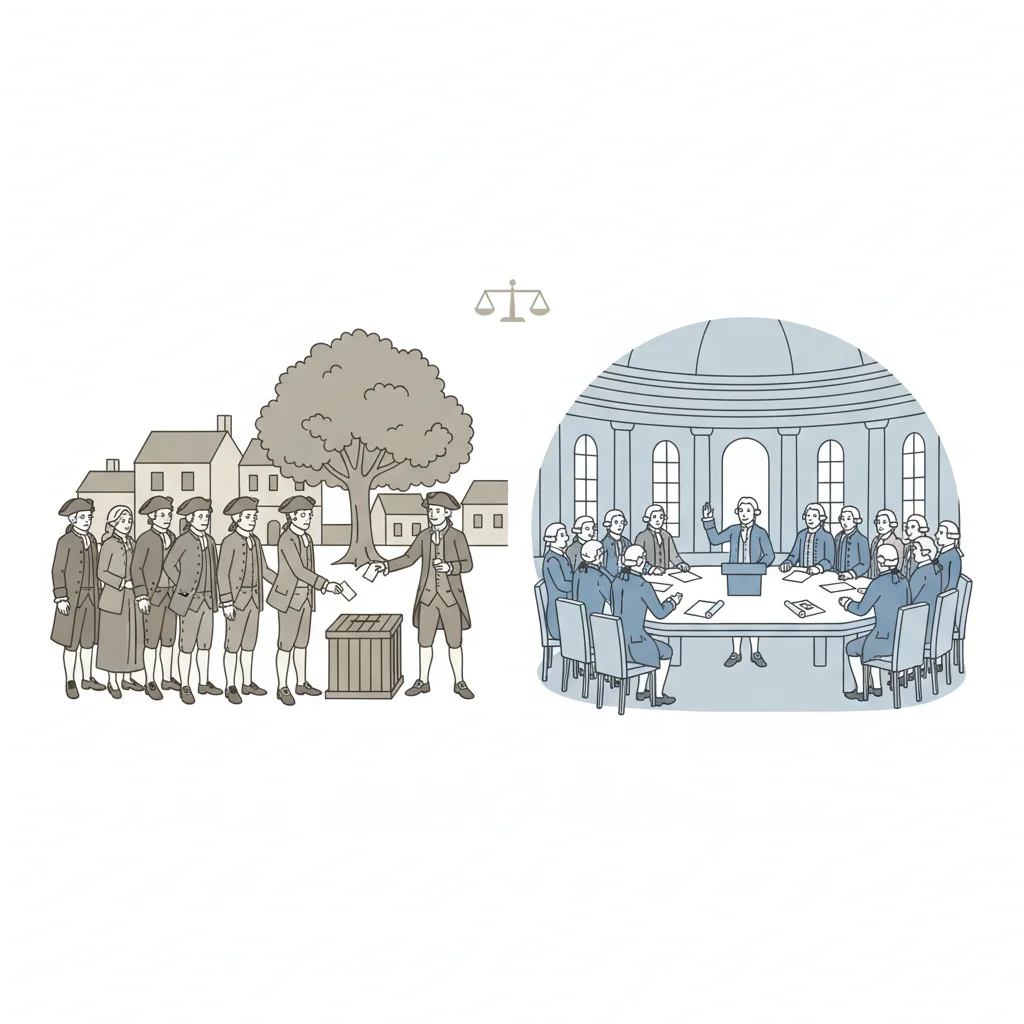
Two Main Ideas in 1787
{"left":"Popular Vote: Let all citizens vote directly for president\nCongress Chooses: Let elected representatives pick the president\nProblem: Large states would dominate","right":"Problem: People might not know distant candidates\nSolution needed: A compromise system\nSolution needed: Balance between state and federal power"}
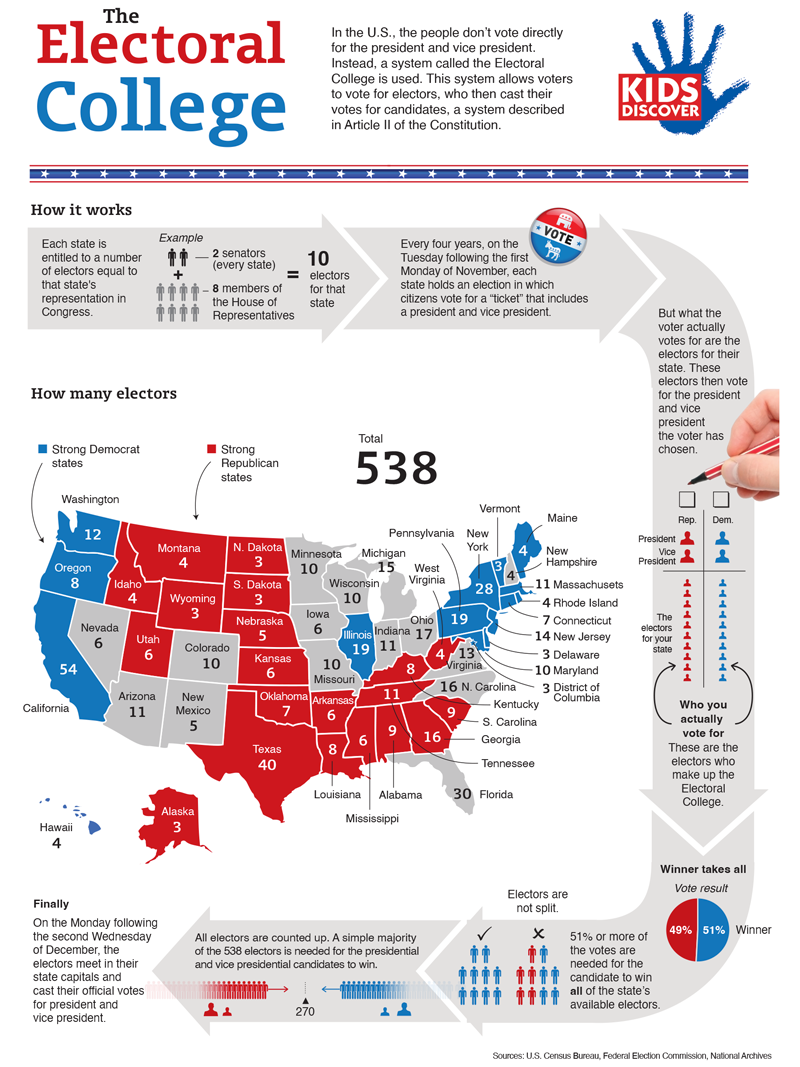
What is the Electoral College?
It's NOT a school or building It's a group of 538 people called 'electors' These electors officially choose the president Each state gets a certain number of electors

Calculate Electoral Votes
Each state gets electoral votes equal to: Number of House Representatives + Number of Senators Example: California has 52 House seats + 2 Senate seats = 54 electoral votes Your turn: If Texas has 36 House seats, how many electoral votes does it have?
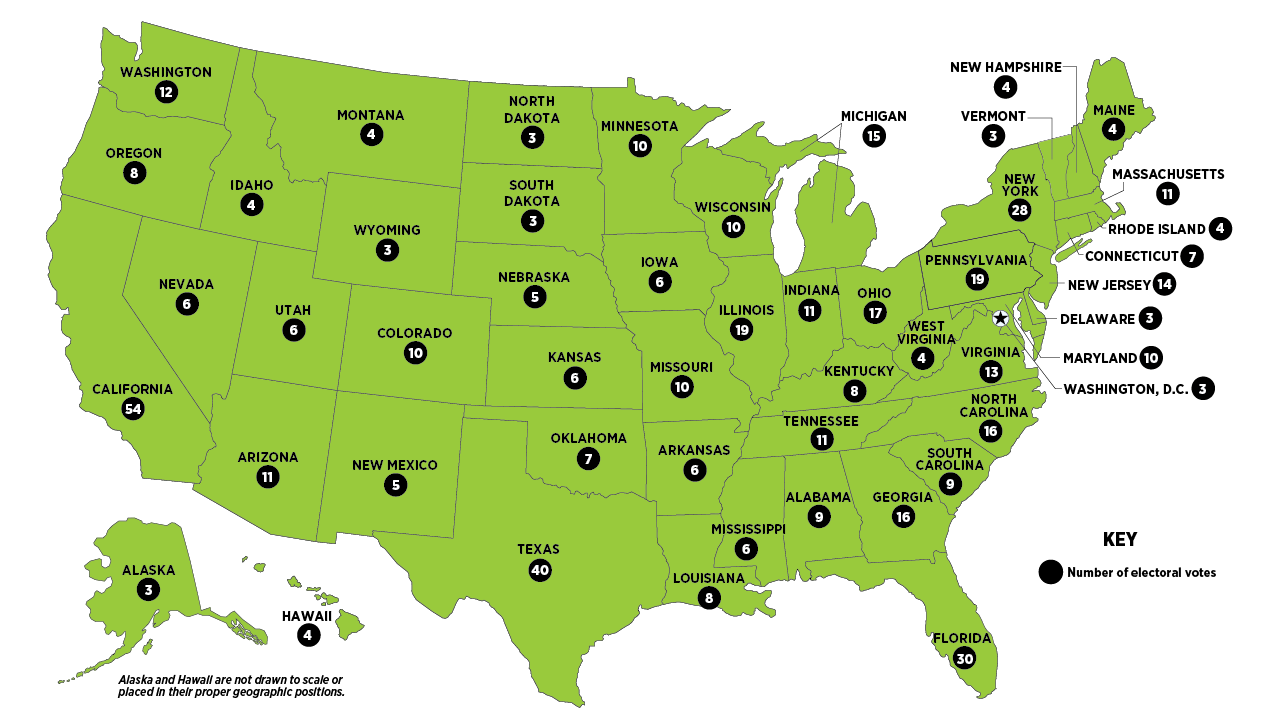
Electoral Vote Map 2020

Winner-Take-All System
In 48 states, whoever wins the most votes gets ALL electoral votes This is called 'winner-take-all' Only Maine and Nebraska split their electoral votes This makes some states more important than others
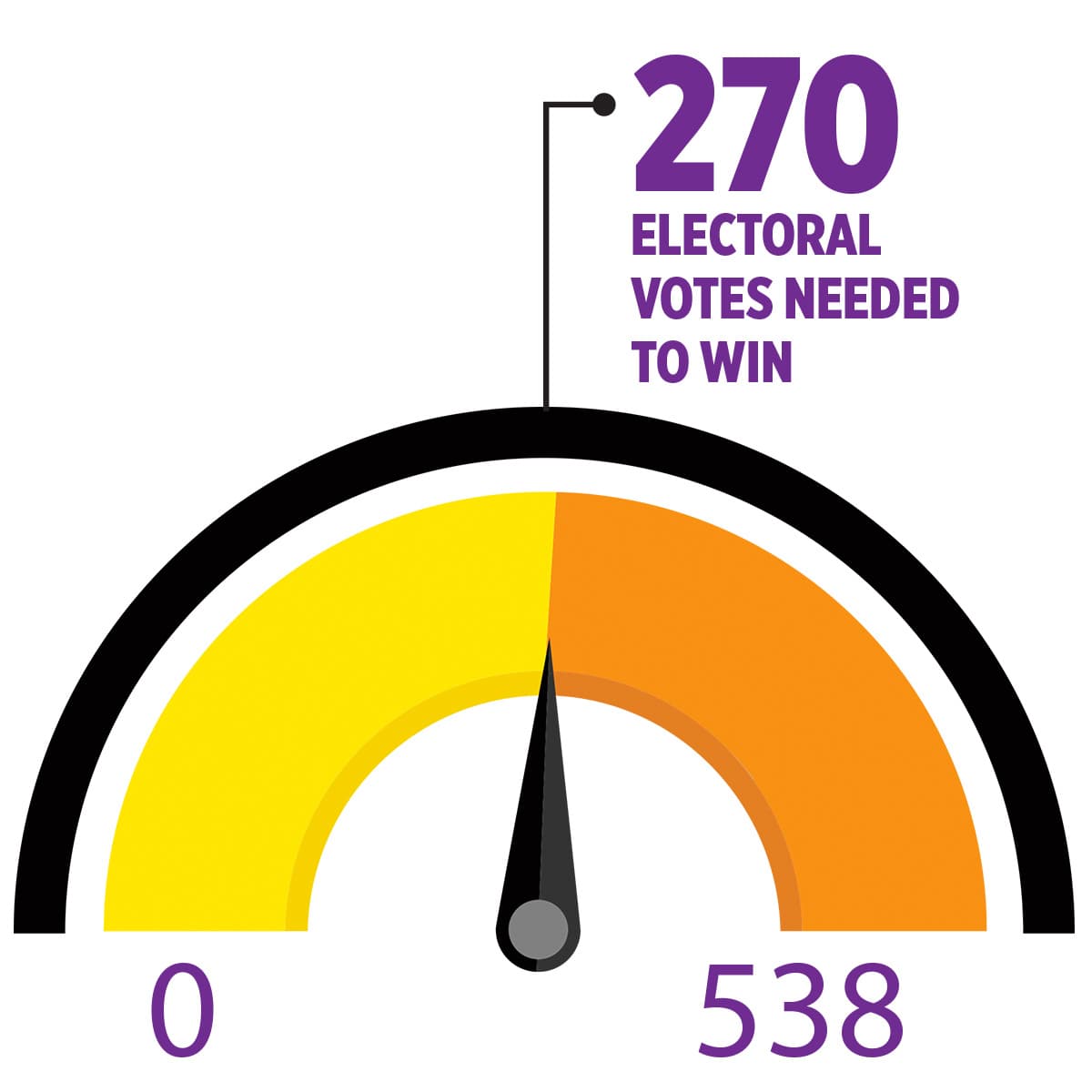
The Magic Number
A candidate needs 270 electoral votes to win the presidency 270 is more than half of 538 total electoral votes

Swing States vs Safe States
Swing States: Could vote for either party Examples: Florida, Pennsylvania, Wisconsin Safe States: Predictably vote for one party Examples: California (Democrat), Texas (Republican) Campaigns focus most attention on swing states

Electoral College Scenarios
Scenario 1: Candidate A wins the popular vote by 3 million votes But Candidate B wins more electoral votes Who becomes president? Scenario 2: What happens if both candidates get exactly 269 electoral votes?

Arguments For and Against
{"left":"Protects influence of smaller states\nMaintains federalism and state importance\nEncourages broad geographic coalitions\nPart of constitutional framework","right":"Can contradict the popular vote\nFocuses campaigns on swing states only\nMakes some votes 'worth more' than others\nReduces voter turnout in safe states"}
2 more slides available after you open the deck.
Download all 14 slides