Kitchen Safety Hazards and Hygiene
Grade 8 Science Understanding Food Safety Preventing Kitchen Accidents

Think-Pair-Share
What comes to mind when you hear 'kitchen safety'? Think for 30 seconds Share with your partner Volunteers share with class

Common Kitchen Hazards
Sharp objects (knives, can openers) Hot surfaces and liquids Electrical appliances near water Slippery floors and spills Chemical cleaners and detergents

Kitchen Safety Rules
What Are Foodborne Illnesses?
Sickness caused by eating contaminated food Bacteria, viruses, or parasites in food Symptoms: nausea, vomiting, diarrhea, fever Can be serious, especially for young and elderly Preventable with proper food handling

Cross-Contamination Prevention
{"left":"Raw meat touches cutting board\nSame board used for vegetables\nBacteria spreads to vegetables\nPerson gets sick from 'safe' salad","right":"Use separate cutting boards\nWash hands between tasks\nClean surfaces immediately\nStore raw meat separately"}
Hygiene Practice Role-Play
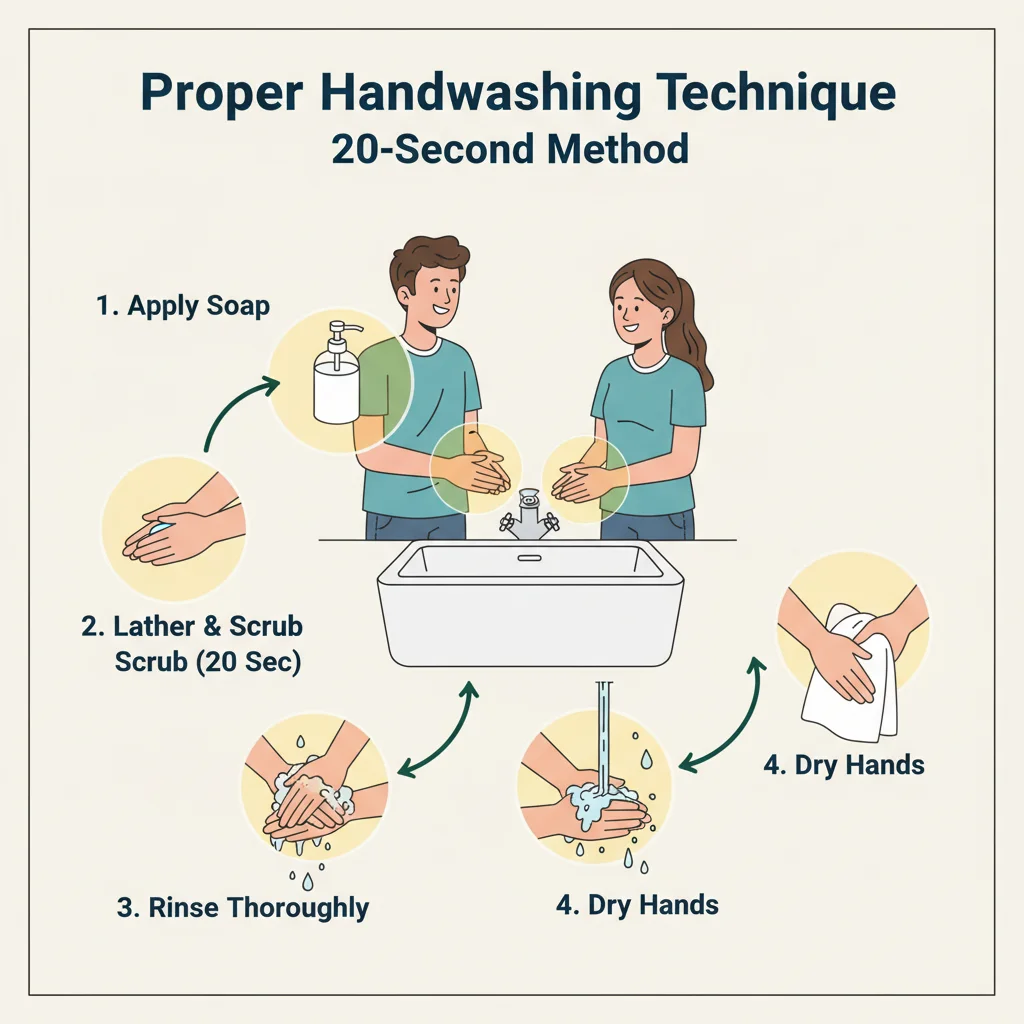
Work in pairs One person: demonstrates GOOD hygiene Other person: shows POOR hygiene habits Explain your actions to your partner Switch roles and try again Share observations with class
Key Takeaways
Kitchen hazards are manageable with awareness Proper hygiene prevents foodborne illness Wash hands for 20 seconds with soap Use separate tools for raw and cooked foods Clean spills immediately When in doubt, ask for help!