Kitchen Safety Hazards and Hygiene
Grade 8 Science Understanding Kitchen Safety for Health and Wellness
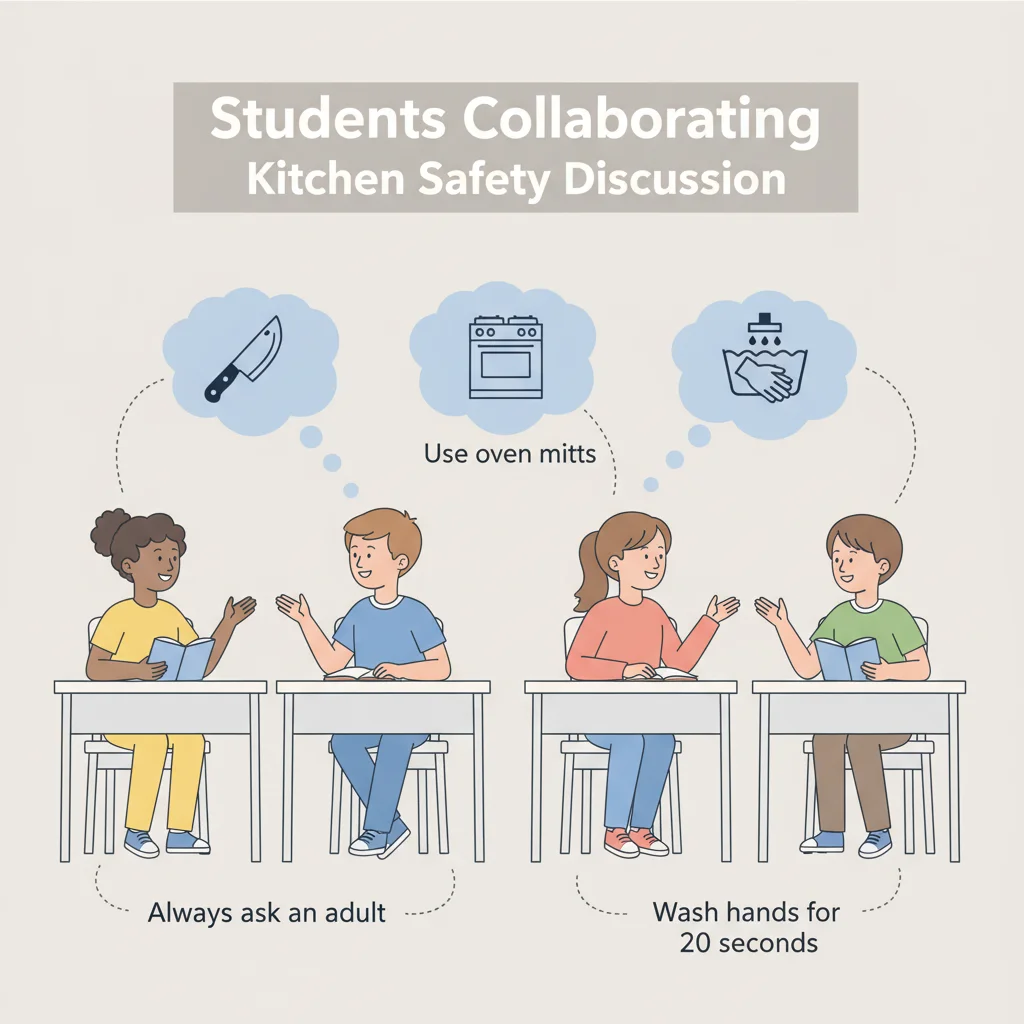
What Comes to Mind?
Think about kitchen safety... Share with a partner: What hazards might exist in a kitchen? Why is kitchen safety important?

Common Kitchen Hazards
Sharp objects (knives, broken glass) Hot surfaces and liquids Electrical appliances near water Slippery floors and spills Chemical cleaning products
Types of Kitchen Injuries

What Are Foodborne Illnesses?
Illnesses caused by eating contaminated food Bacteria like E. coli and Salmonella Symptoms: nausea, vomiting, diarrhea, fever Can be serious, especially for children and elderly Completely preventable with proper hygiene
Cross-Contamination: Do's and Don'ts
{"left":"Use separate cutting boards for meat and vegetables\nWash hands for 30 seconds with soap\nStore raw meat on bottom shelf of refrigerator\nClean surfaces with disinfectant after use","right":"Use same cutting board for raw meat and salad\nTouch raw meat then other foods without washing hands\nStore raw meat above ready-to-eat foods\nRinse hands quickly without soap"}
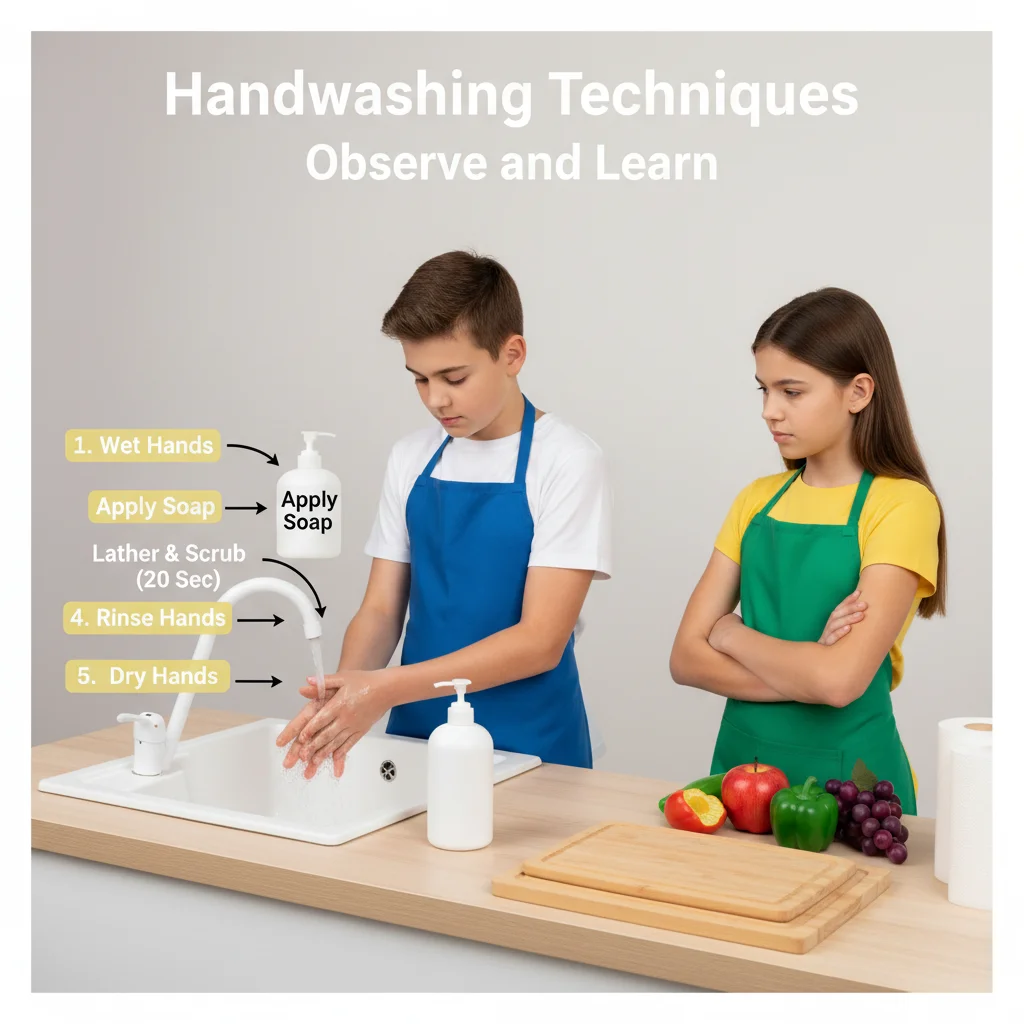
Hygiene Practice Role-Play
Work in pairs One person demonstrates GOOD hygiene practices Other person shows POOR hygiene practices Explain WHY each practice is important Be ready to share observations with class

Key Takeaways: Stay Safe in the Kitchen
Always wash hands for 30 seconds before and after handling food Keep raw meat separate from other foods Clean up spills immediately to prevent falls Use proper tools and techniques when cutting When in doubt, ask an adult for help