Kitchen Safety Hazards and Hygiene
Grade 8 Science Understanding Food Safety and Prevention
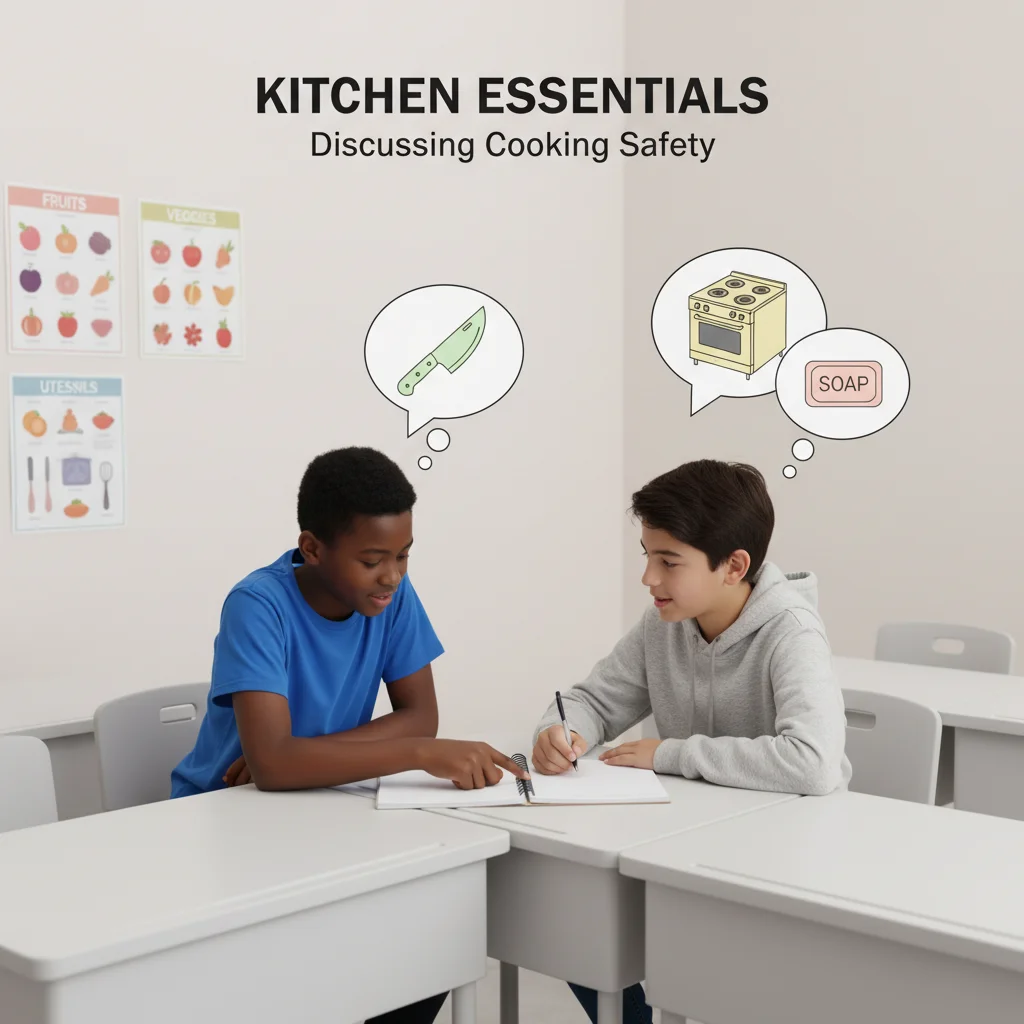
Think-Pair-Share
What comes to mind when you hear 'kitchen safety'? Think for 30 seconds Share with your partner Volunteers share with class
Common Kitchen Hazards
Sharp objects (knives, broken glass) Hot surfaces (stoves, ovens, pans) Electrical hazards (wet hands, damaged cords) Slippery floors and spills Chemical cleaners and toxic substances
The Invisible Threat: Bacteria and Microorganisms
What Are Foodborne Illnesses?
Sickness caused by eating contaminated food Common symptoms: nausea, vomiting, diarrhea, fever Caused by bacteria, viruses, or parasites Can be serious, especially for young children and elderly Prevention is key to staying healthy

Cross-Contamination: How Bacteria Spread
{"left":"Raw meat touches vegetables\nSame cutting board for different foods\nUnwashed hands touch multiple surfaces\nDirty utensils used for different foods","right":"Clean hands before handling food\nUse separate cutting boards\nWash utensils between uses\nKeep raw and cooked foods separate"}
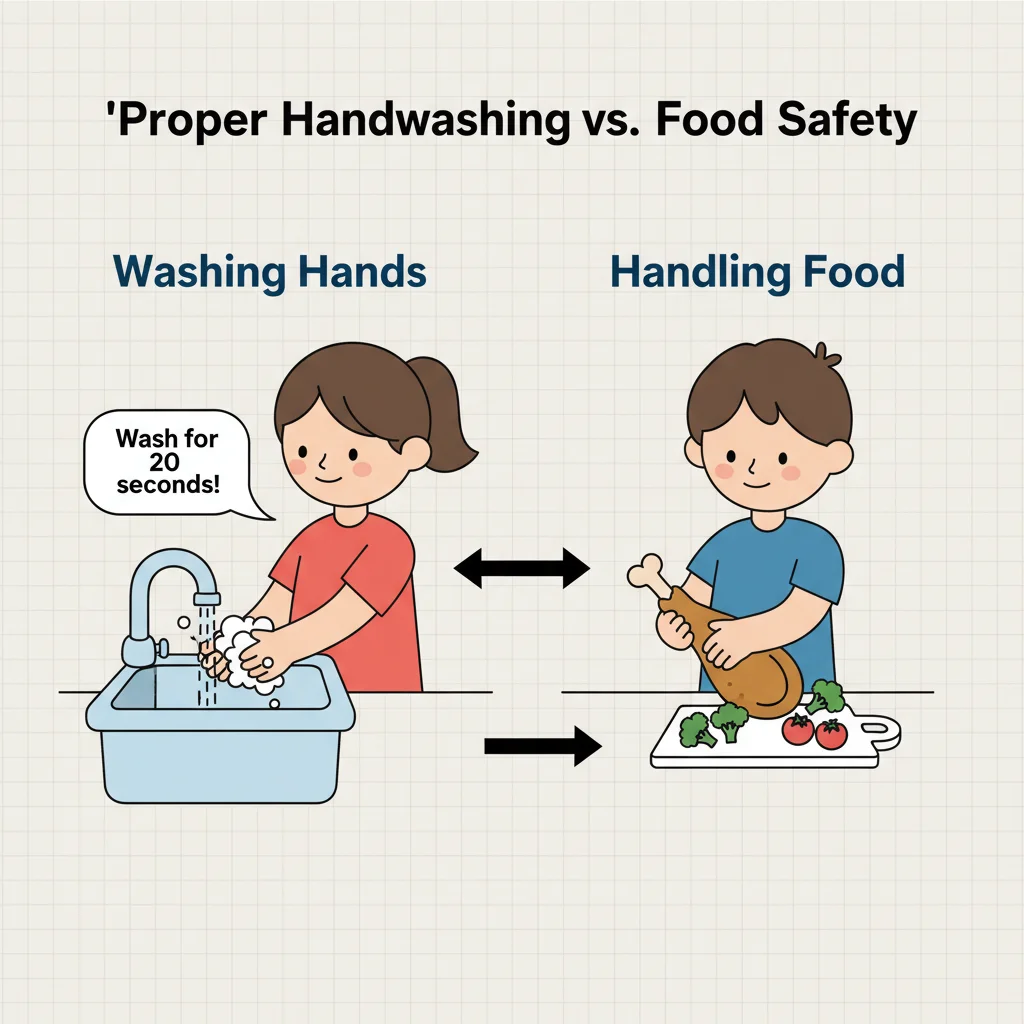
Hygiene Practice Role-Play
Work in pairs One person demonstrates SAFE hygiene practices Other person demonstrates UNSAFE practices Explain your choices to your partner Share observations with the class
Key Takeaways: Staying Safe in the Kitchen
Always wash hands for 30 seconds with soap Use separate cutting boards for raw meat and vegetables Keep kitchen surfaces clean and dry Store food at proper temperatures Be aware of sharp objects and hot surfaces Clean up spills immediately