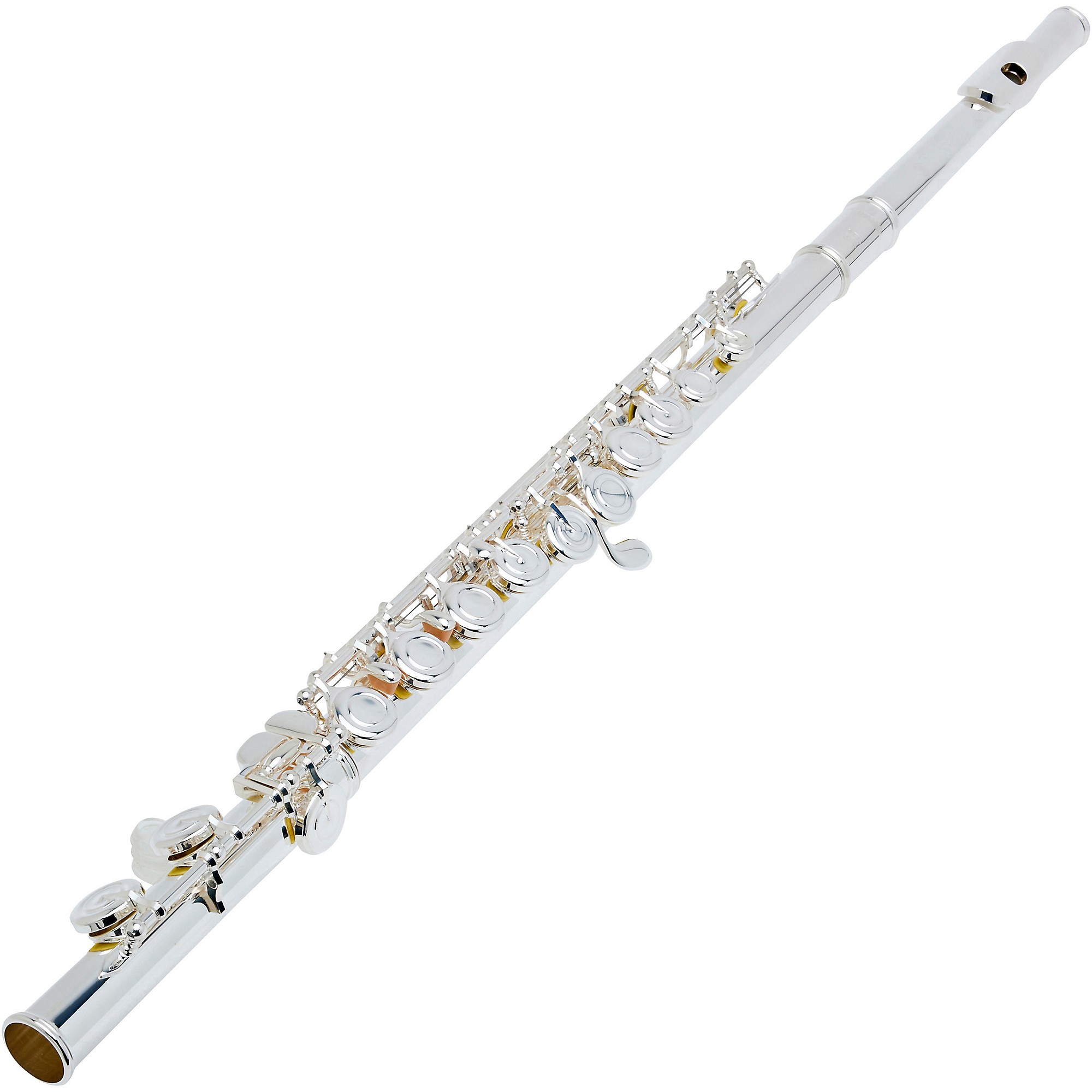
Learning to Play the Flute
A Musical Journey for Young Musicians Grade 5 Music Education

What is a Flute?
A woodwind instrument made of metal Played by blowing air across a hole Part of the orchestra and band families One of the oldest musical instruments
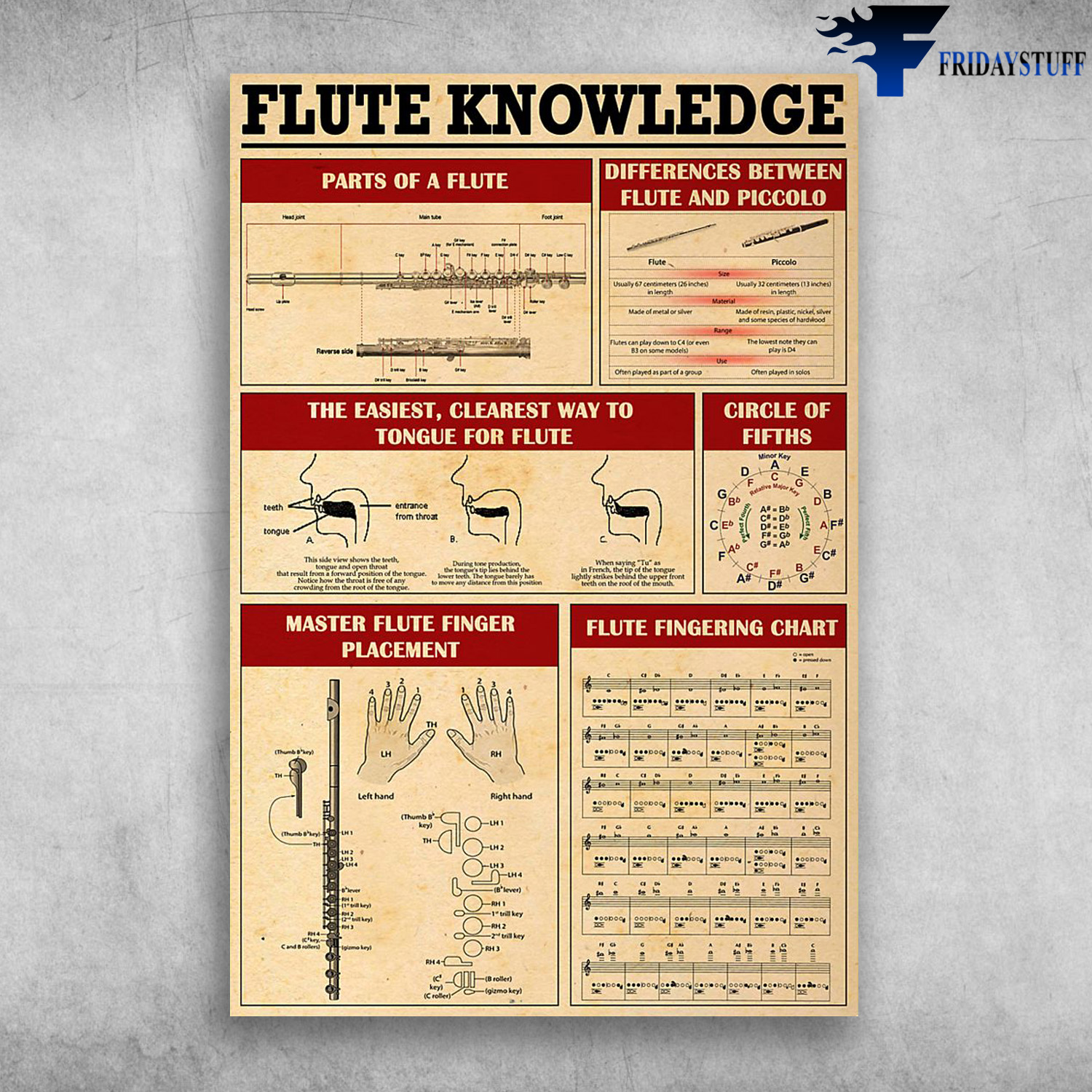
Parts of the Flute
{"left":"Head Joint - where you blow\nBody Joint - main section with most keys\nFoot Joint - lowest notes","right":"Embouchure Hole - where air enters\nKeys and Tone Holes - create different pitches\nLip Plate - where your lips rest"}
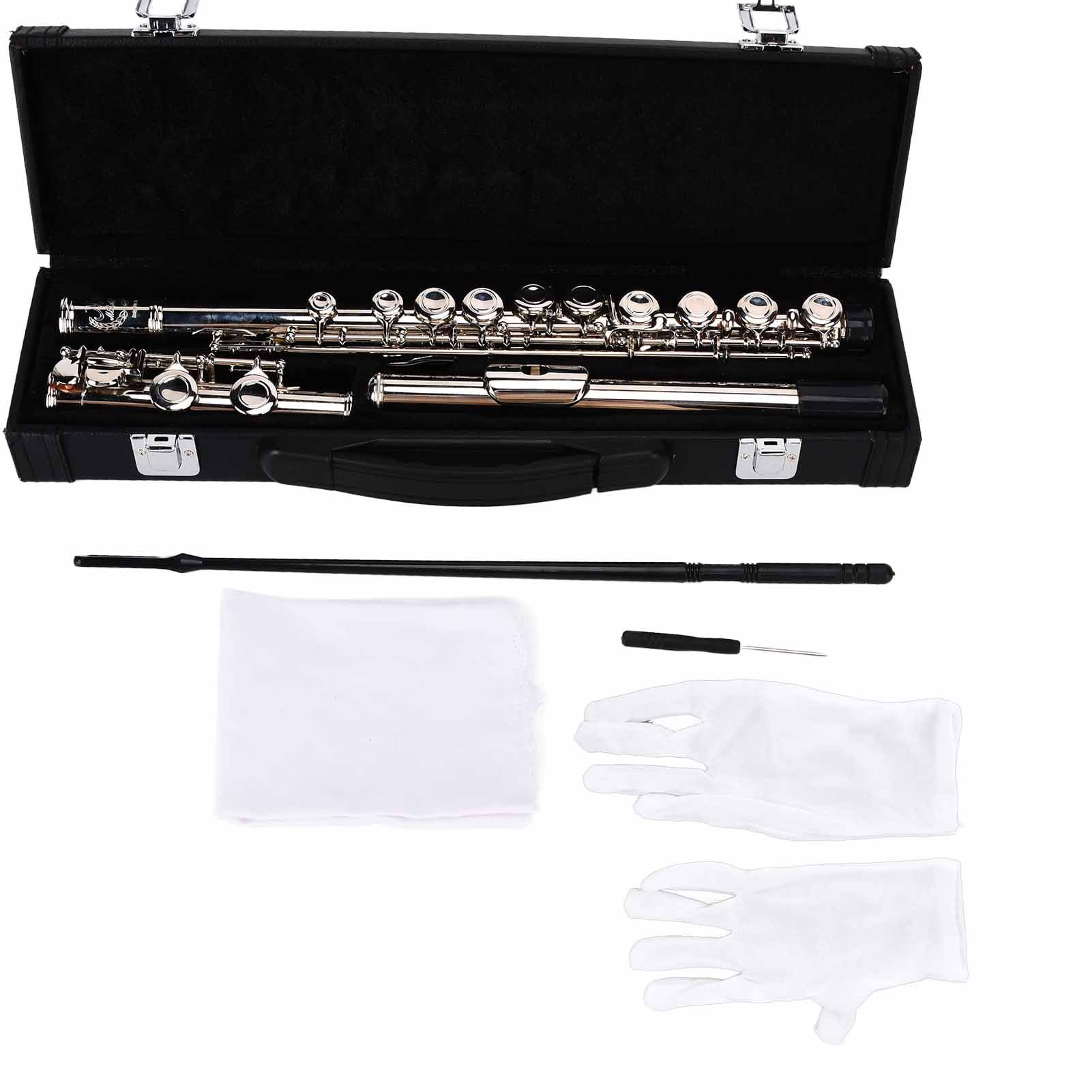
Proper Flute Assembly
Step 1: Connect foot joint to body with gentle twisting Step 2: Align the rod on foot joint with last key on body Step 3: Attach head joint to body joint Step 4: Align embouchure hole with keys

How to Hold the Flute
Left hand goes on top, right hand on bottom Thumbs support the flute from underneath Fingers curve naturally over the keys Keep wrists straight and relaxed

Making Your First Sound
Place bottom lip on the lip plate Cover about 1/4 of the embouchure hole Blow air across the hole, not into it Think of blowing across a bottle top
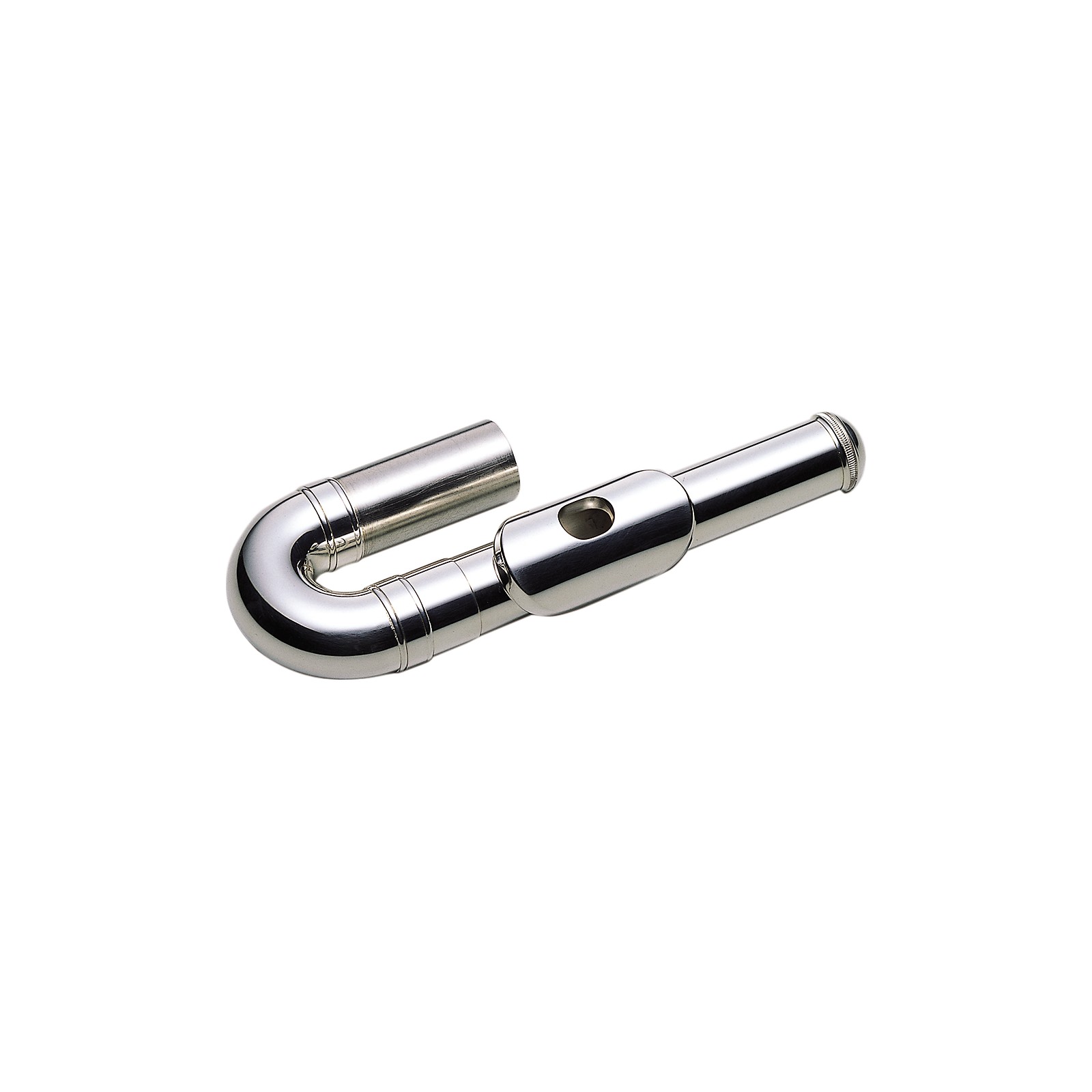
Practice Exercise: Head Joint Only
Hold just the head joint like a telescope Cover the open end with your hand Practice making sounds with different lip positions Listen for clear, steady tones

Basic Fingering Chart
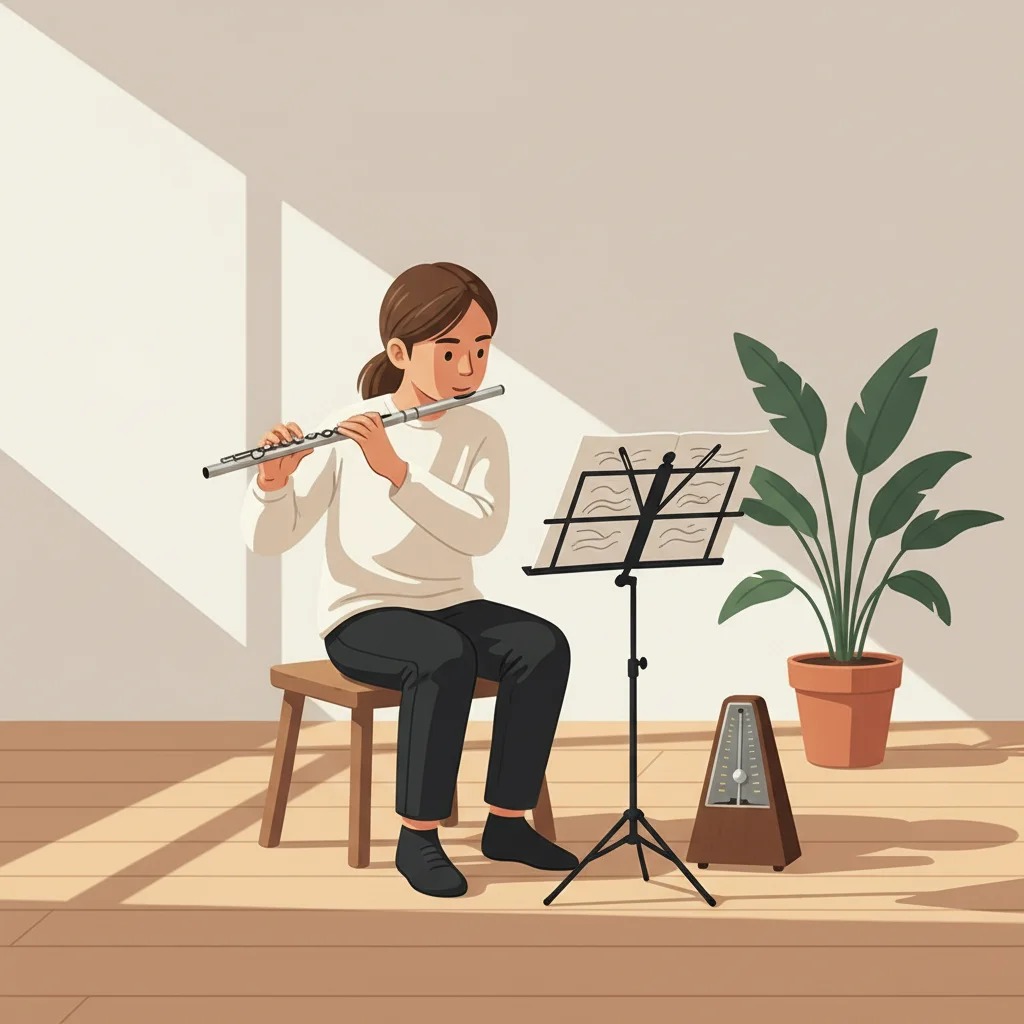
Practice Makes Perfect!
How many minutes should you practice each day? What's the most important thing to remember about embouchure? Why is proper posture important when playing flute?

Your Musical Journey Begins
"Music is a language that doesn't speak in particular words. It speaks in emotions." - Keith Richards Every expert was once a beginner Practice with patience and enjoy the process!