
Roman Dictators: Power and Republic
Understanding Emergency Leadership in Ancient Rome Grade 9 Social Studies
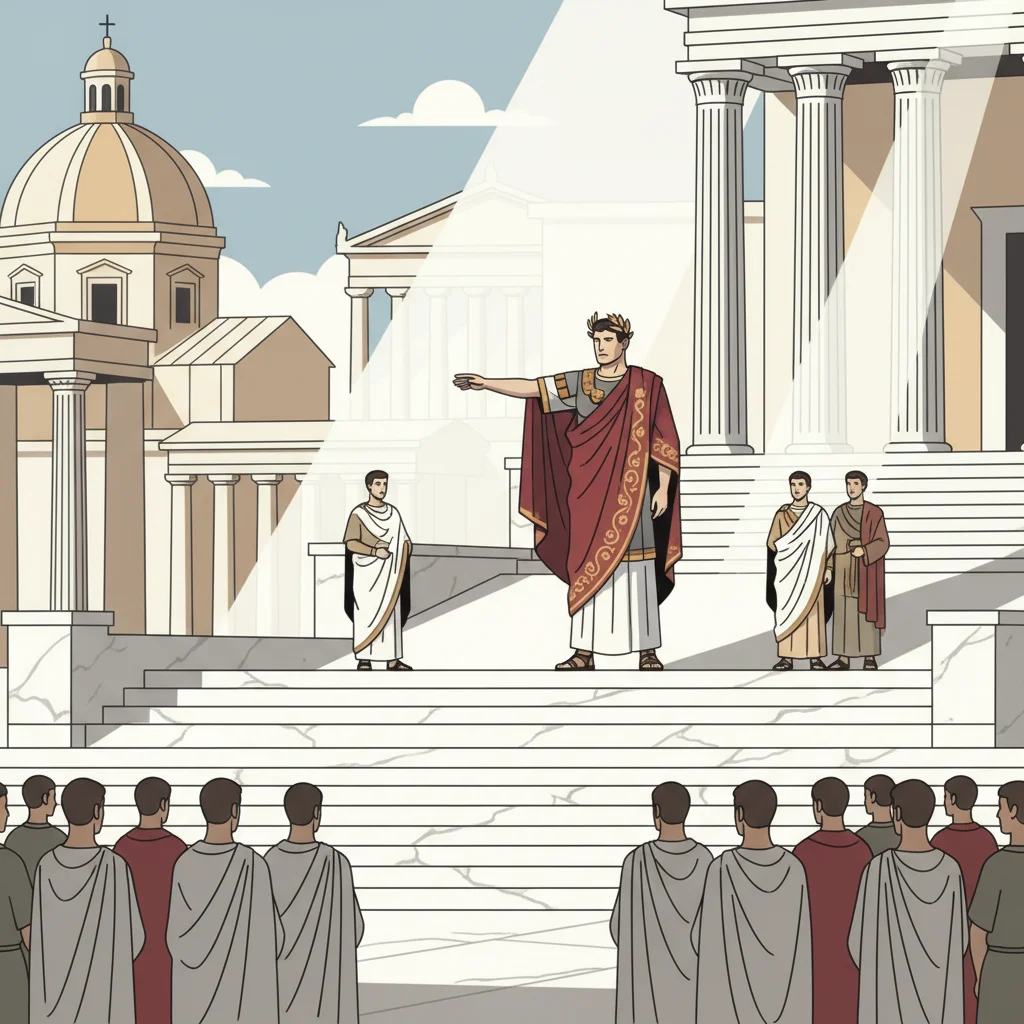
What comes to mind when you hear 'dictator'?
Think about modern examples Consider the word's connotations How might ancient dictators be different?
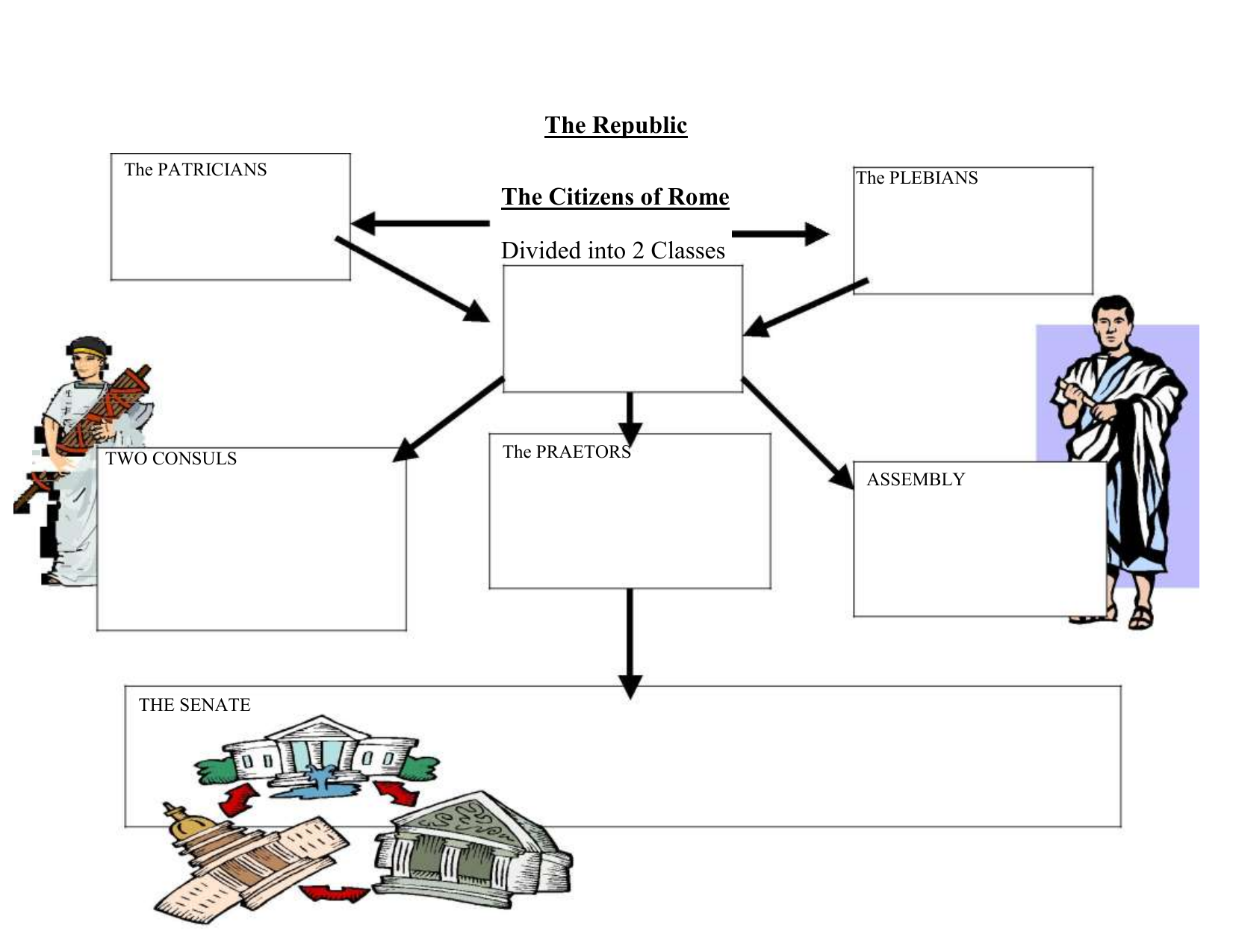
Roman Republic Government Structure
Two Consuls: shared executive power Senate: advisory body of former officials Popular assemblies: citizen voting Checks and balances prevented tyranny Emergency provision: temporary dictator
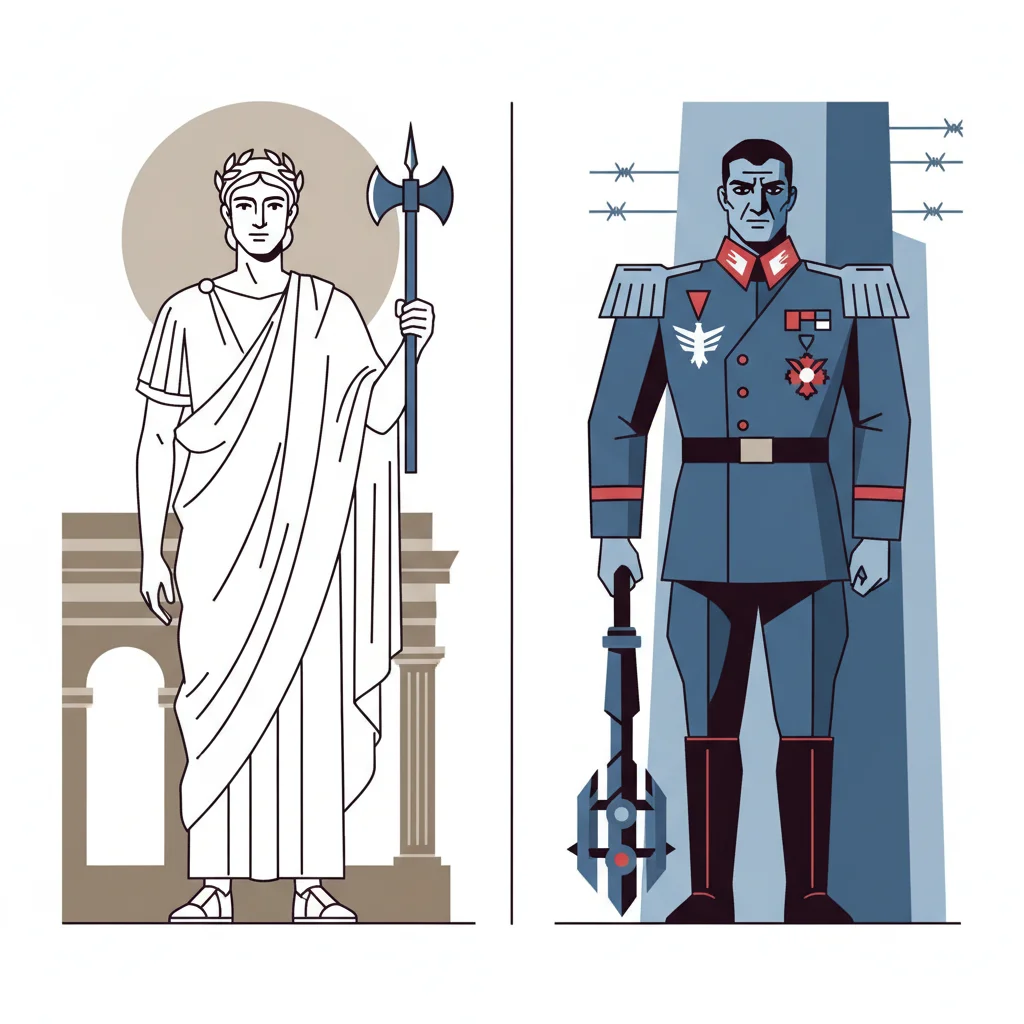
Roman Dictator vs. Modern Dictator
{"left":"Appointed legally by consul and Senate\nTemporary - maximum 6 months\nSpecific emergency purpose\nReturned power when crisis ended\nConstitutional office with limits","right":"Seize power through force or manipulation\nIndefinite rule until overthrown\nBroad control over all aspects of life\nRefuse to give up power\nOperate outside legal framework"}

Powers of a Roman Dictator
Imperium: supreme military and civil authority Could make laws without Senate approval Command all armies and military forces Appoint a Master of Horse as deputy Judge legal cases without appeal BUT: Could not change the constitution BUT: Limited to 6-month term

Cincinnatus: The Ideal Dictator
'He was called from his plow to save Rome, and after victory, returned to his farm.' - Traditional Roman saying about Lucius Quinctius Cincinnatus (458 BCE)
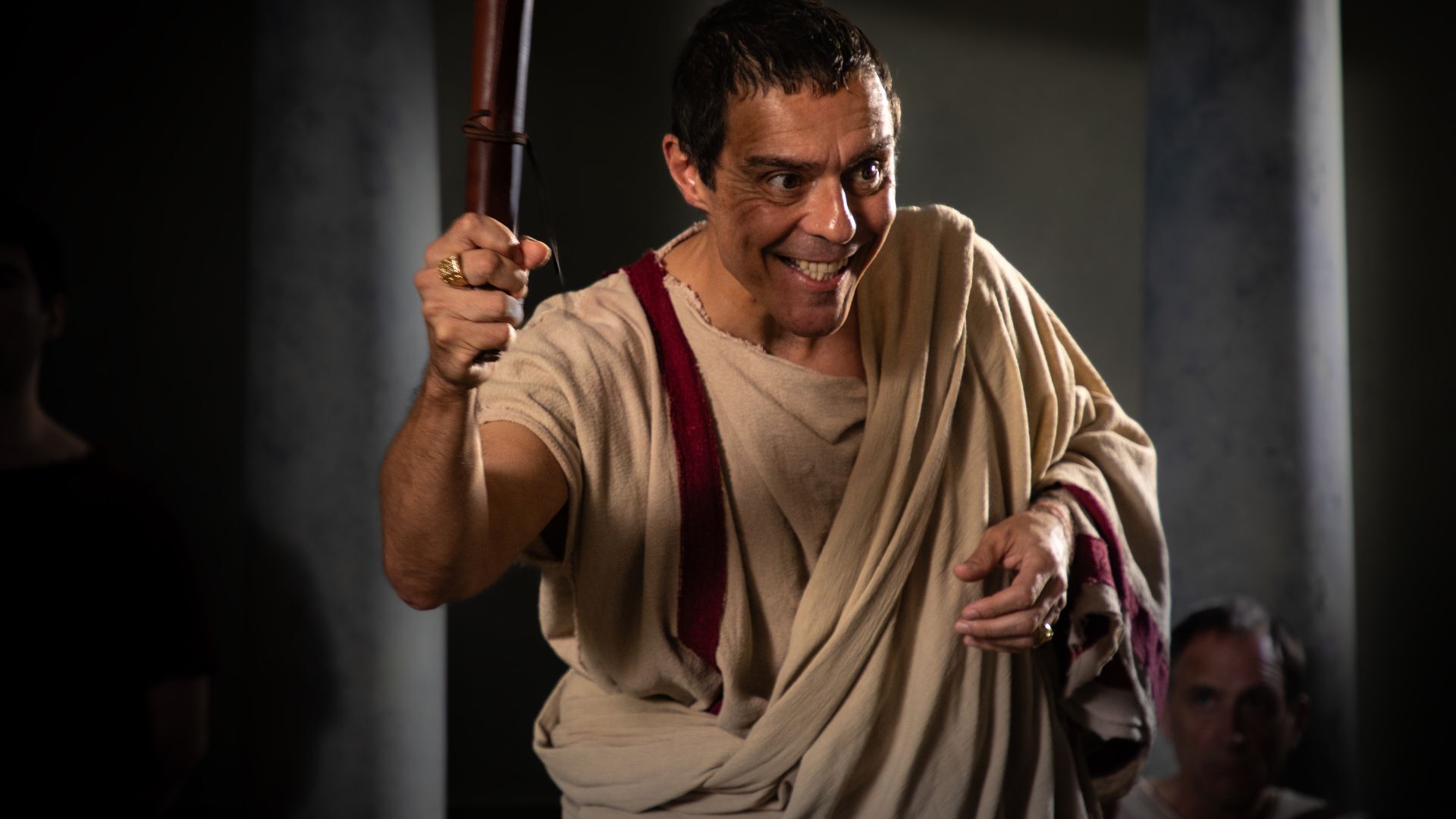
Julius Caesar: The Dictator Who Changed Everything

Document Analysis: Voices on Caesar
Work in groups of 5 students Analyze primary source excerpts Focus on author's perspective and bias Identify evidence about dictatorial power Prepare 2-minute group presentation Use the graphic organizer provided