
Understanding Equivalent Expressions
Grade 7 Mathematics Exploring Algebraic Relationships 30-minute lesson

What Are Equivalent Expressions?
Expressions that have the same value for all values of their variables They may look different but are mathematically equal Example: 3 + 4 = 2 + 5 (both equal 7) In algebra: 2x + 3x = 5x

Think-Pair-Share
Look at these expressions: 4a + 3a 7a Are they equivalent? How do you know?
Combining Like Terms
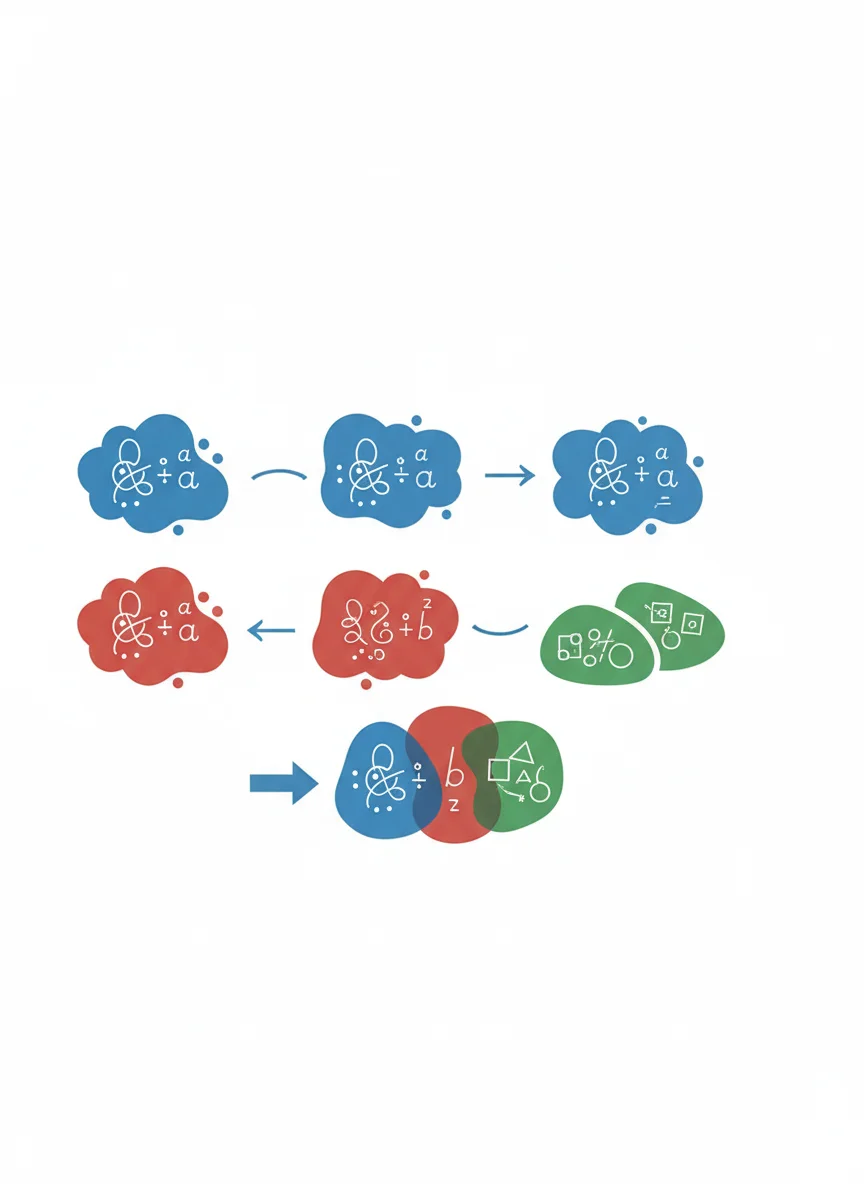
Like terms have the same variable and exponent Examples: 4a and 3a are like terms Constants are like terms: 5 and -3 Combine by adding or subtracting coefficients 4a + 3a = (4 + 3)a = 7a

Expression Card Matching
Work with a partner using expression cards Find pairs of equivalent expressions Combine like terms to simplify Example: Match '2x + 3x + 1' with '5x + 1'
Step-by-Step Examples
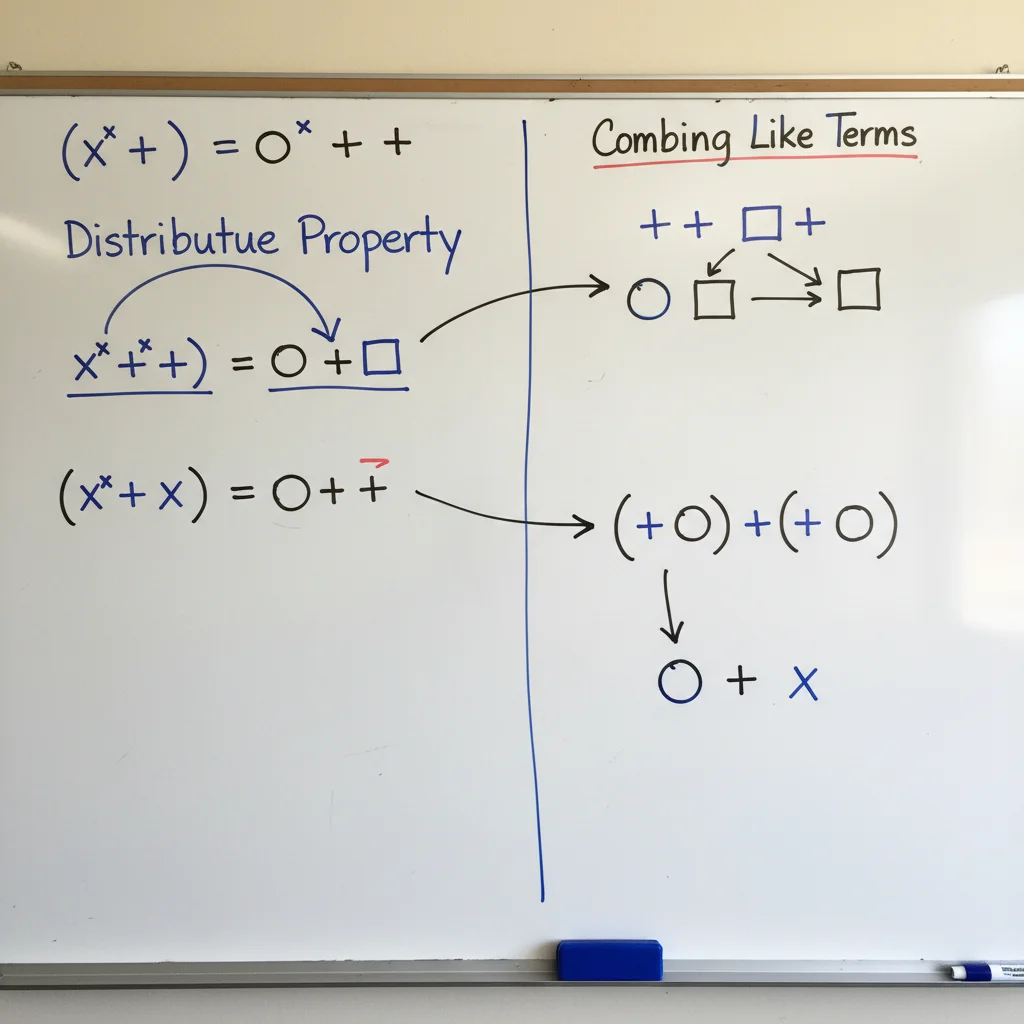
{"left":"Original: 2(x + 3)\nDistribute: 2x + 6","right":"Original: 5y - 2y + 3\nCombine like terms: 3y + 3"}
Why Do These Work?
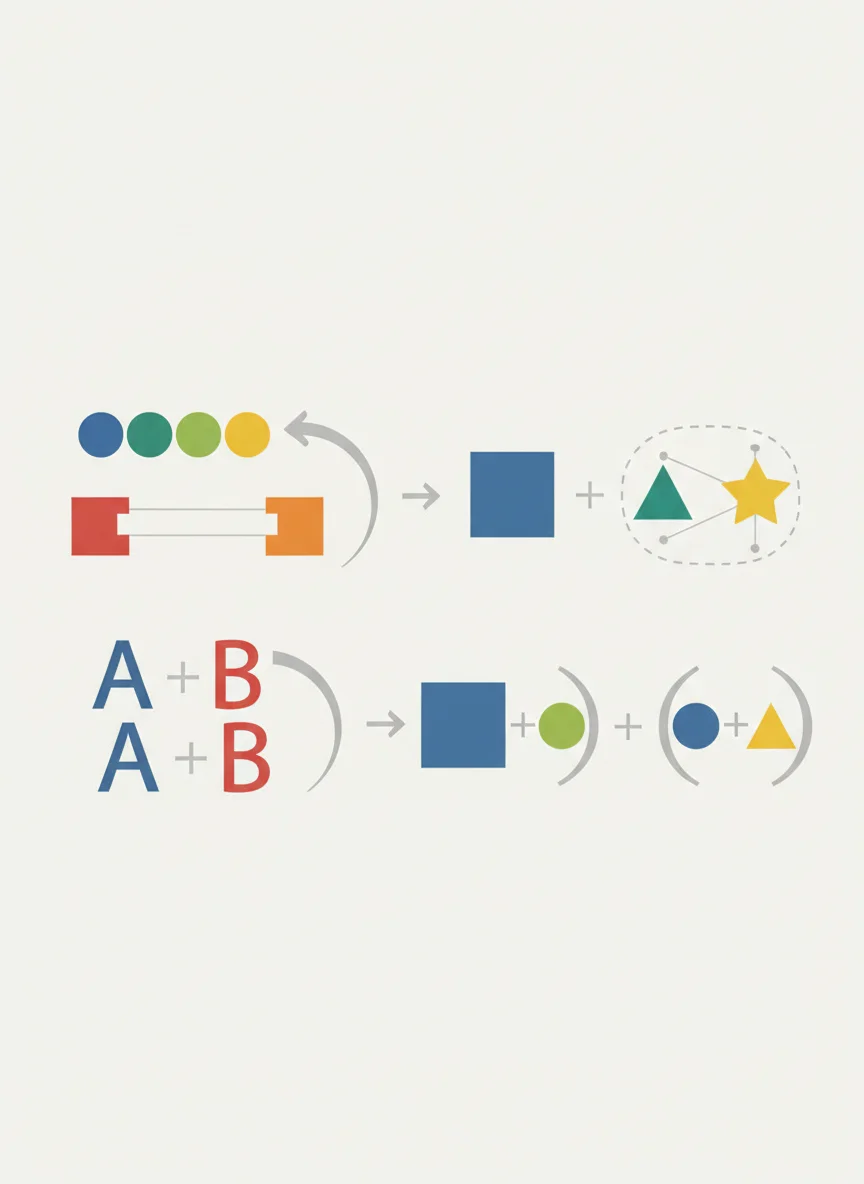
Properties of operations make equivalence possible Commutative property: a + b = b + a Associative property: (a + b) + c = a + (b + c) Distributive property: a(b + c) = ab + ac These properties ensure expressions remain equal

Key Takeaways
Equivalent expressions have the same value for any variable value Combine like terms by adding their coefficients Use properties of operations to justify equivalence Practice helps you recognize equivalent forms quickly Next: We'll use these skills to solve equations!