American Revolution Video Guide
A free social studies worksheet ready for your classroom. Open in Kuraplan to grab the print-ready PDF, customize it for your students, or generate a fresh version in seconds.
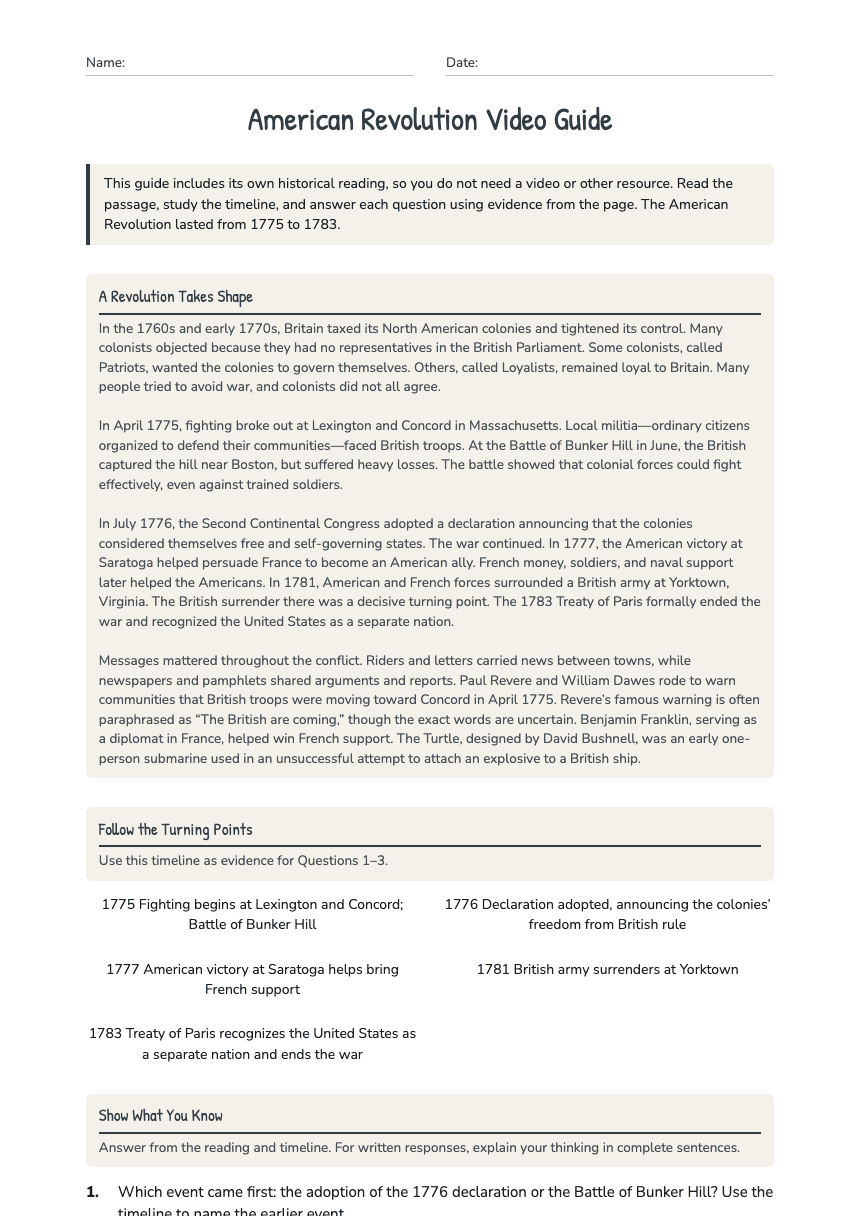
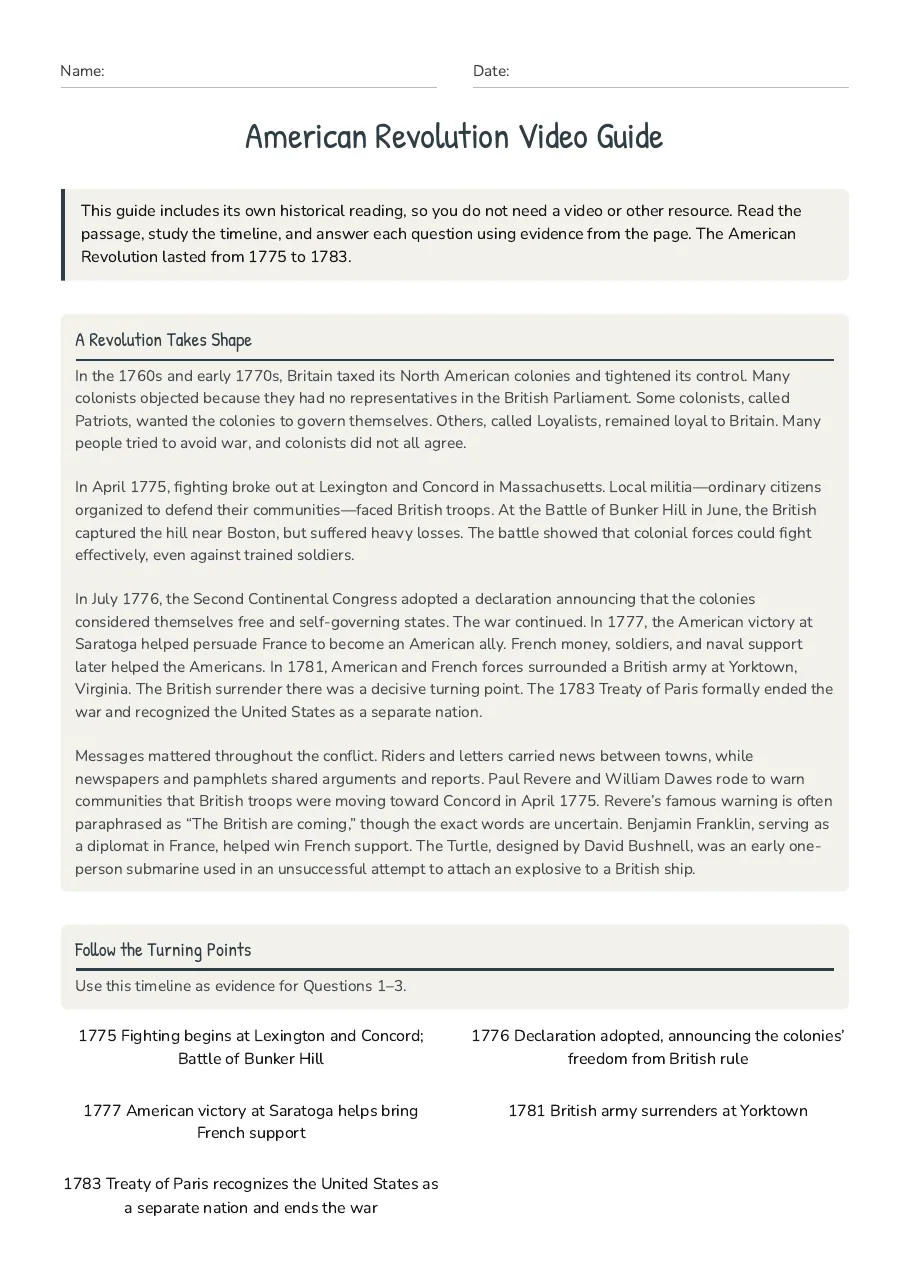
American Revolution Video Guide
A Revolution Takes Shape
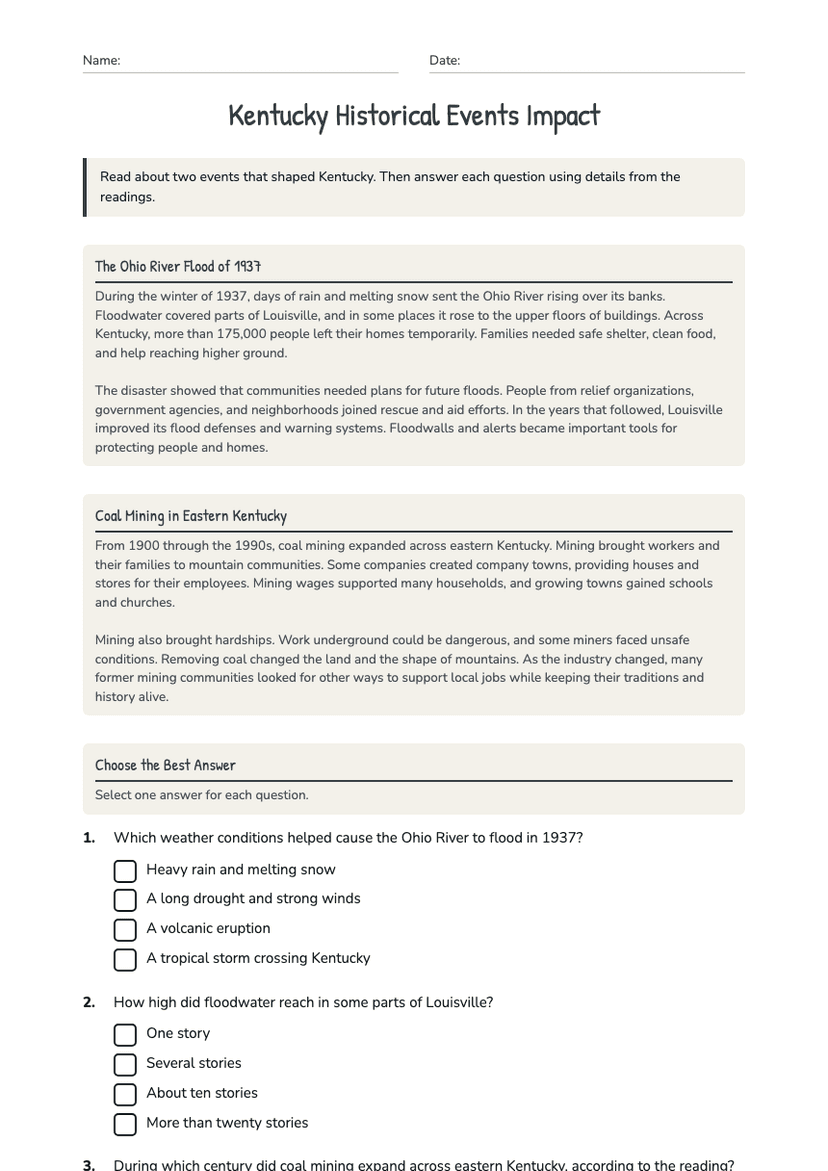
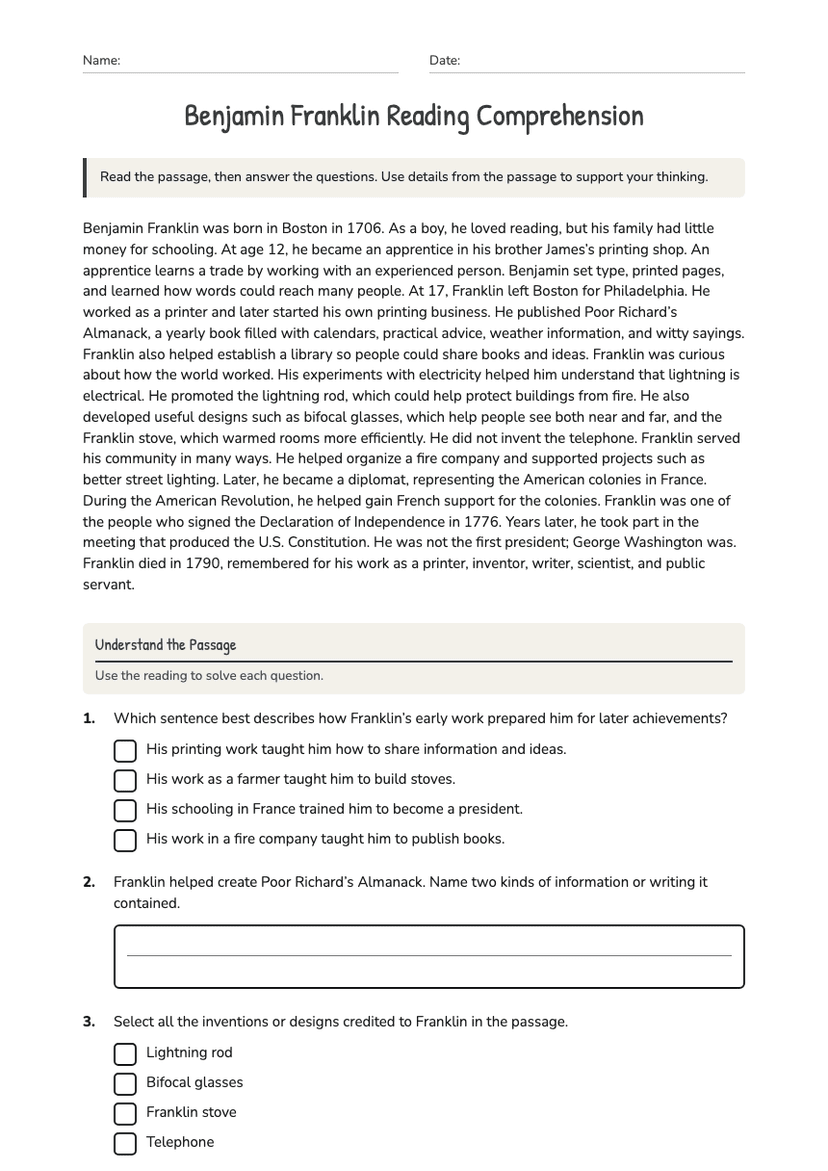
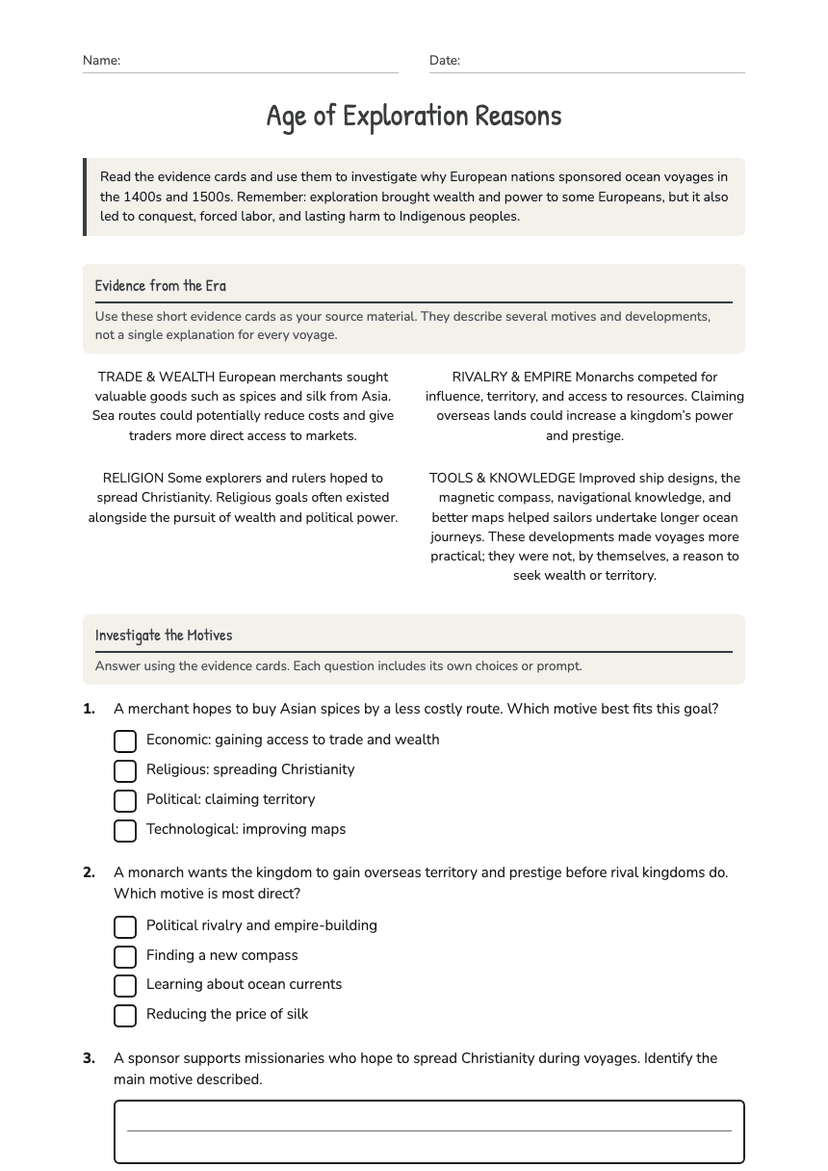
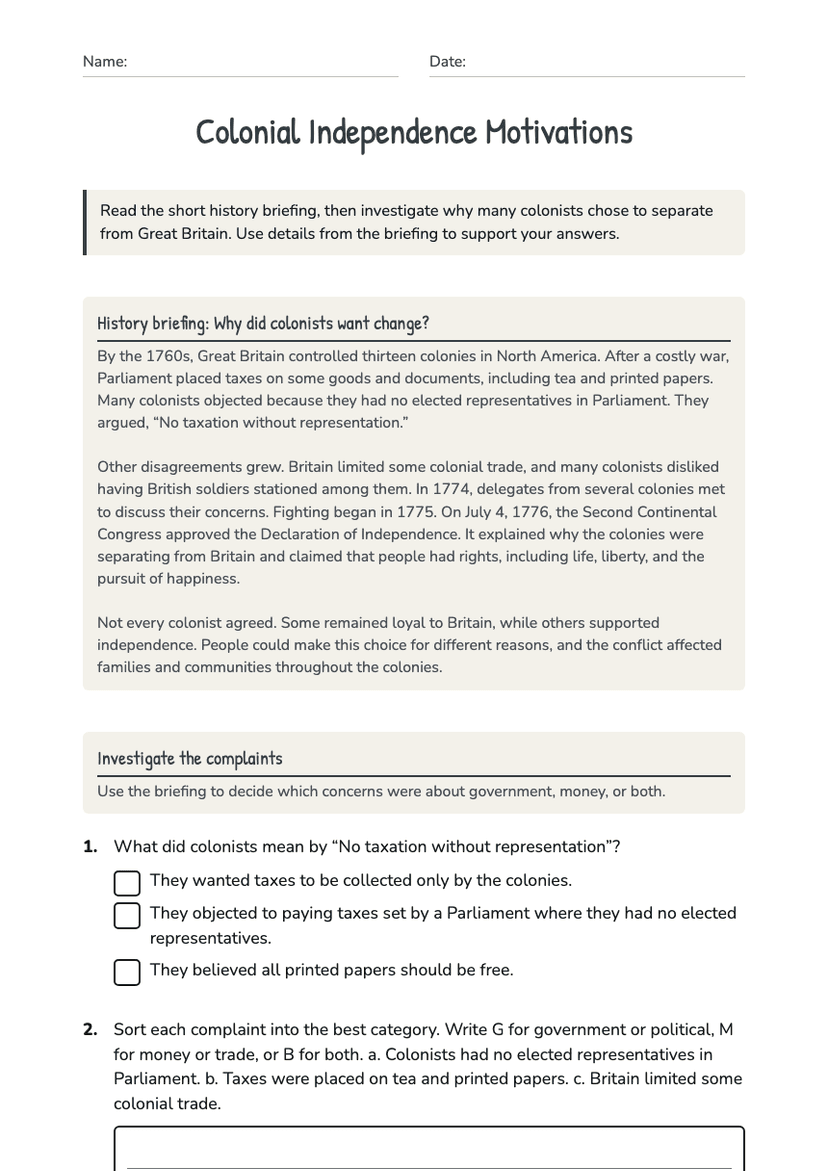
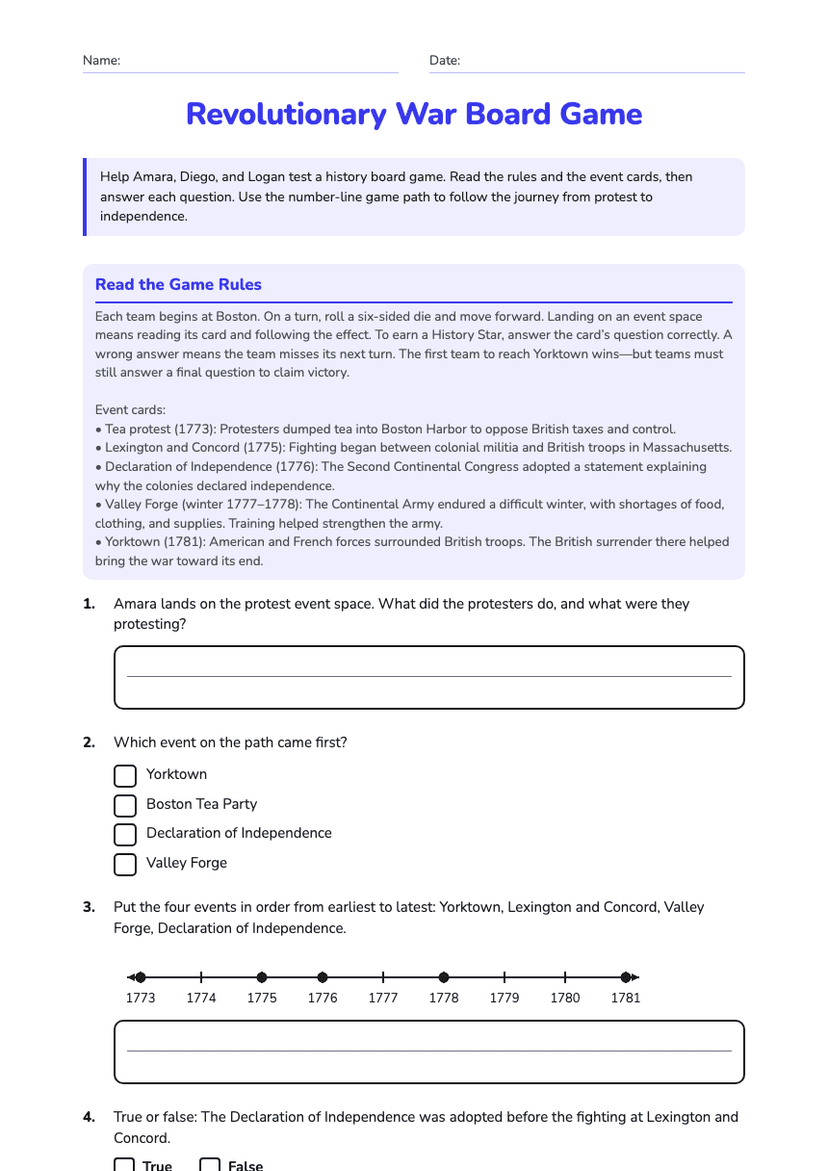
In the 1760s and early 1770s, Britain taxed its North American colonies and tightened its control. Many colonists objected because they had no representatives in the British Parliament. Some colonists, called Patriots, wanted the colonies to govern themselves. Others, called Loyalists, remained loyal to Britain. Many people tried to avoid war, and colonists did not all agree. In April 1775, fighting broke out at Lexington and Concord in Massachusetts. Local militia—ordinary citizens organized to defend their communities—faced British troops. At the Battle of Bunker Hill in June, the British captured the hill near Boston, but suffered heavy losses. The battle showed that colonial forces could fight effectively, even against trained soldiers. In July 1776, the Second Continental Congress adopted a declaration announcing that the colonies considered themselves free and self-governing states. The war continued. In 1777, the American victory at Saratoga helped persuade France to become an American ally. French money, soldiers, and naval support later helped the Americans. In 1781, American and French forces surrounded a British army at Yorktown, Virginia. The British surrender there was a decisive turning point. The 1783 Treaty of Paris formally ended the war and recognized the United States as a separate nation. Messages mattered throughout the conflict. Riders and letters carried news between towns, while newspapers and pamphlets shared arguments and reports. Paul Revere and William Dawes rode to warn communities that British troops were moving toward Concord in April 1775. Revere’s famous warning is often paraphrased as “The British are coming,” though the exact words are uncertain. Benjamin Franklin, serving as a diplomat in France, helped win French support. The Turtle, designed by David Bushnell, was an early one-person submarine used in an unsuccessful attempt to attach an explosive to a British ship.
Follow the Turning Points
Use this timeline as evidence for Questions 1–3.
1775 Fighting begins at Lexington and Concord; Battle of Bunker Hill
1776 Declaration adopted, announcing the colonies’ freedom from British rule
1777 American victory at Saratoga helps bring French support
1781 British army surrenders at Yorktown
1783 Treaty of Paris recognizes the United States as a separate nation and ends the war
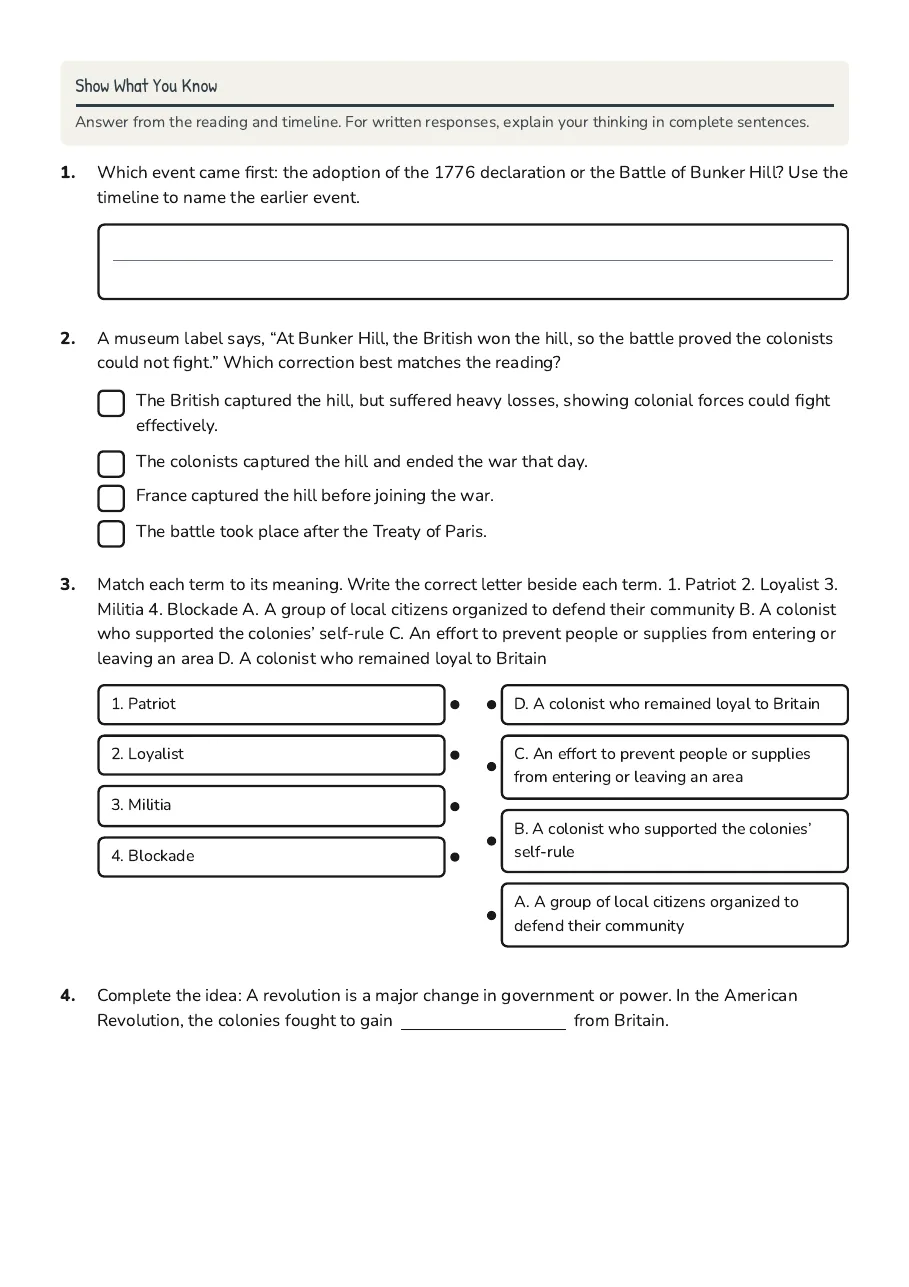
Show What You Know
Answer from the reading and timeline. For written responses, explain your thinking in complete sentences.
- The British captured the hill, but suffered heavy losses, showing colonial forces could fight effectively.
- The colonists captured the hill and ended the war that day.
- France captured the hill before joining the war.
- The battle took place after the Treaty of Paris.
- 1. Patriot
- 2. Loyalist
- 3. Militia
- 4. Blockade
- D. A colonist who remained loyal to Britain
- C. An effort to prevent people or supplies from entering or leaving an area
- B. A colonist who supported the colonies’ self-rule
- A. A group of local citizens organized to defend their community
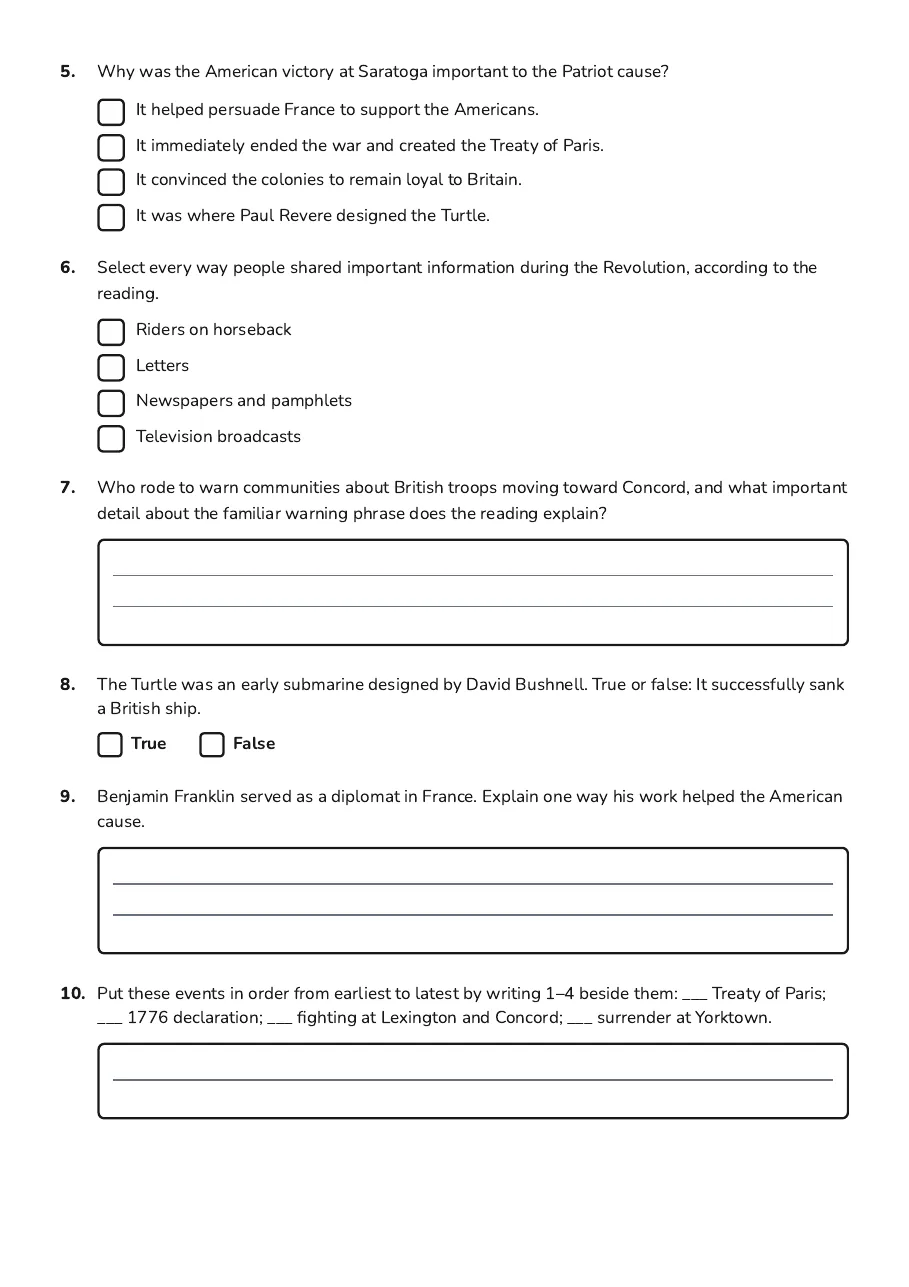
- It helped persuade France to support the Americans.
- It immediately ended the war and created the Treaty of Paris.
- It convinced the colonies to remain loyal to Britain.
- It was where Paul Revere designed the Turtle.
- Riders on horseback
- Letters
- Newspapers and pamphlets
- Television broadcasts
4 printable pages
Page 1
Page 2
Page 3
Page 4
About This Worksheet
Free in Kuraplan
Sign up free, grab the PDF, and customize it for your class.
Print-Ready
Formatted for standard paper. Clean layout, easy to read.
AI-Generated
Created with Kuraplan's AI, designed for real classroom use.
For Teachers & Parents
Use in classrooms, for homework, tutoring, or homeschool.
Need a custom version of this worksheet?
Kuraplan's AI generates custom worksheets in seconds — differentiated for every learner, aligned to your curriculum.
Generate Custom Worksheets — Free