Evidence Analysis: Black History
A free english (ela) worksheet ready for your classroom. Open in Kuraplan to grab the print-ready PDF, customize it for your students, or generate a fresh version in seconds.

Evidence Analysis: Black History
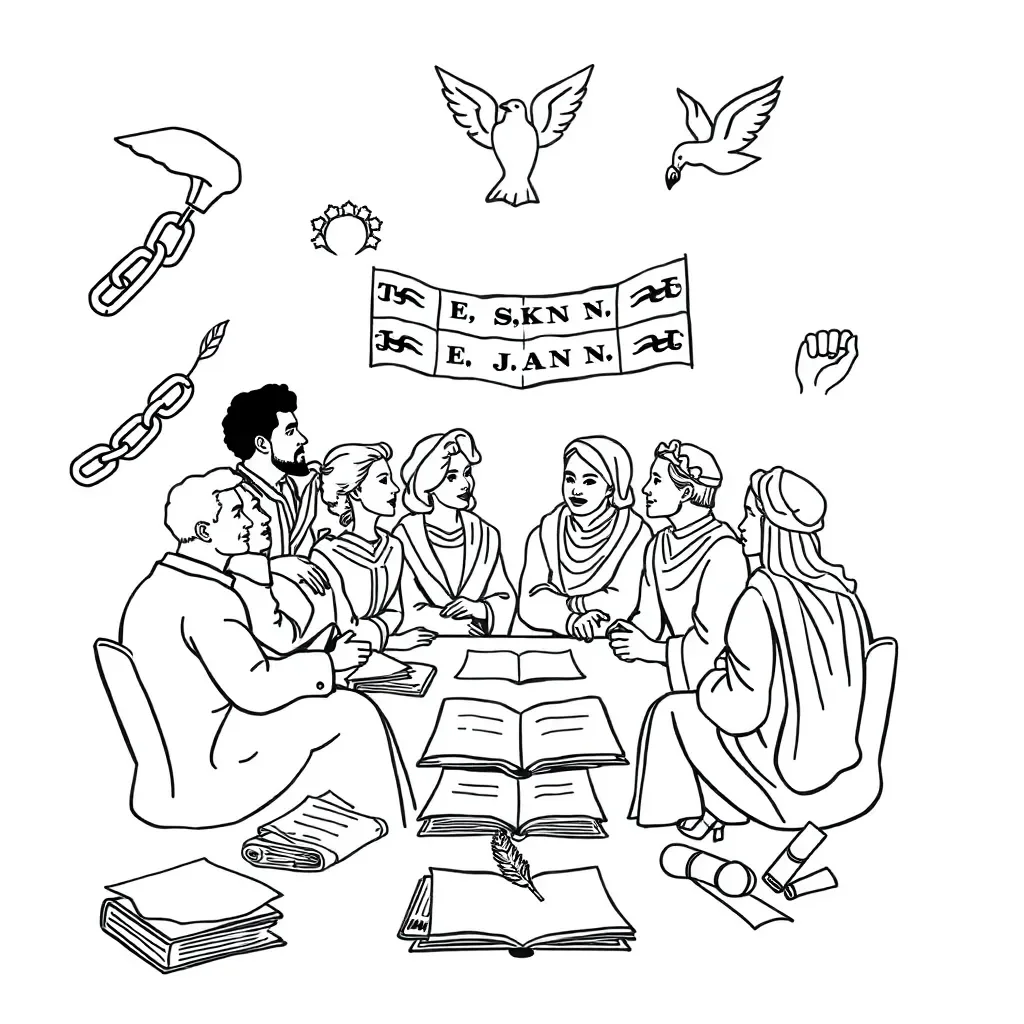
📚 Part 1: Identifying Relevant vs. Irrelevant Evidence
Read this main idea statement: "Harriet Tubman was a courageous leader who risked her life to help enslaved people escape to freedom through the Underground Railroad."
Instructions: For each piece of evidence below, decide if it is RELEVANT (supports the main idea) or IRRELEVANT (does not support the main idea). Circle your choice.
✏️ Part 2: Justify Your Reasoning
📝 Part 3: Writing with Textual Evidence
Read this passage about Frederick Douglass:
"Frederick Douglass escaped slavery in 1838 and became one of the most powerful voices for abolition in American history. Born into slavery around 1818, he secretly learned to read and write, which was forbidden for enslaved people. After his escape, Douglass wrote his autobiography, 'Narrative of the Life of Frederick Douglass, an American Slave,' which became a bestseller and opened many people's eyes to the horrors of slavery. He traveled throughout the North giving speeches about his experiences and advocating for the end of slavery. Douglass also supported women's rights and spoke at the first women's rights convention in 1848. He advised President Lincoln during the Civil War and continued fighting for civil rights until his death in 1895."
About This Worksheet
Free in Kuraplan
Sign up free, grab the PDF, and customize it for your class.
Print-Ready
Formatted for standard paper. Clean layout, easy to read.
AI-Generated
Created with Kuraplan's AI, designed for real classroom use.
For Teachers & Parents
Use in classrooms, for homework, tutoring, or homeschool.
Need a custom version of this worksheet?
Kuraplan's AI generates custom worksheets in seconds — differentiated for every learner, aligned to your curriculum.
Generate Custom Worksheets — FreeMore English (ELA) Worksheets
Character, Setting, and Plot
Free
Book Club Story Quest
Free
Plot Elements and Development
Free
Sharing Stories Wellinermi
Free
Building Story Structure
Free
Entering the Story Worksheet
Free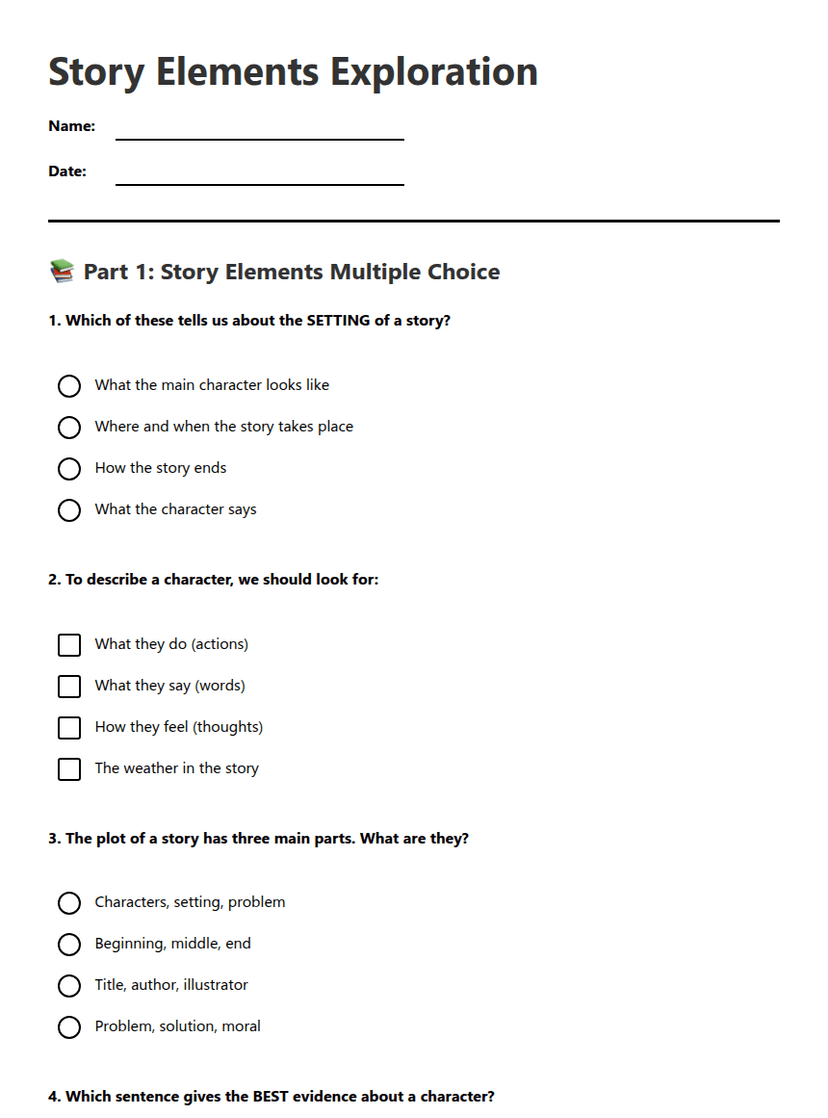
Story Elements Exploration
Free