ScienceFreePrintable
Particles in Matter Reflections
A free science worksheet ready for your classroom. Open in Kuraplan to grab the print-ready PDF, customize it for your students, or generate a fresh version in seconds.

Particles in Matter Reflections
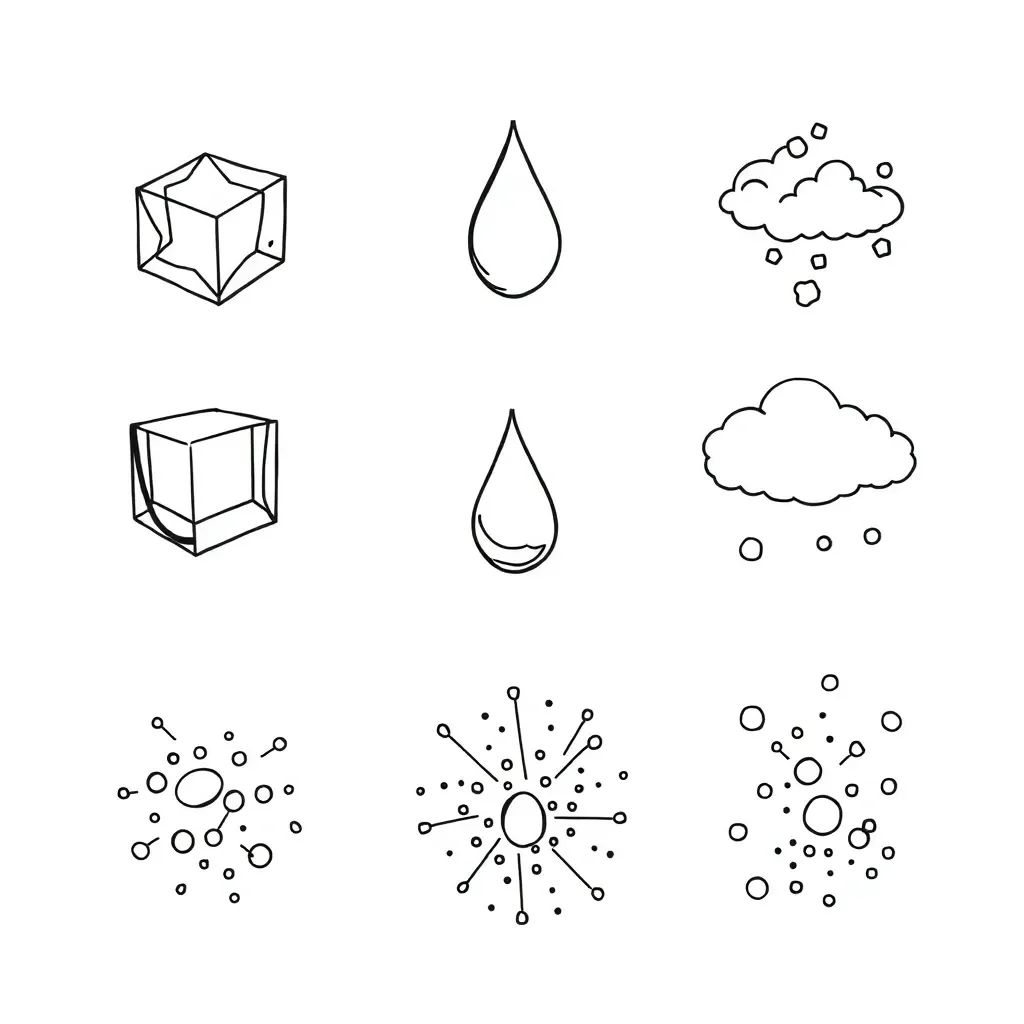
🔬 Part 1: Reflecting on Key Concepts
1. In your own words, explain what particles are and why we can't see them with our eyes.
2. Think about the particle models you built today. How were the particles arranged differently in solids, liquids, and gases? Describe each arrangement.
3. During the ice melting demonstration, what happened to the particles as the ice changed to water? Use the word "energy" in your explanation.
4. Why do you think the balloon expanded when it was placed over warm water? What was happening to the particles inside?
🌡️ Part 2: Temperature and Particle Motion
5. Complete this statement: When particles are heated, they move __________ because they have __________ energy.
6. Think of three everyday examples where you can observe matter changing states (like ice melting). For each example, explain what's happening to the particles.
Example 1:
Example 2:
Example 3:
7. If you could shrink down to the size of a particle, describe what it would feel like to be in a solid, then a liquid, then a gas. How would your movement change?
🤔 Part 3: Critical Thinking and Connections
8. A student says, "Particles in solids don't move at all because solids are hard and don't change shape." Do you agree or disagree? Explain your reasoning using evidence from today's lesson.
9. How does understanding particles help explain why a hot sidewalk feels different from a cold sidewalk when you walk on it barefoot?
10. What is one question you still have about particles in matter? What would you like to investigate further?
About This Worksheet
Free in Kuraplan
Sign up free, grab the PDF, and customize it for your class.
Print-Ready
Formatted for standard paper. Clean layout, easy to read.
AI-Generated
Created with Kuraplan's AI, designed for real classroom use.
For Teachers & Parents
Use in classrooms, for homework, tutoring, or homeschool.
Need a custom version of this worksheet?
Kuraplan's AI generates custom worksheets in seconds — differentiated for every learner, aligned to your curriculum.
Generate Custom Worksheets — Free No credit card Curriculum-aligned Under 60 seconds
More Science Worksheets
8th Grade
Matter and Energy Fun Lab
Free
6th Grade
Matter Pathway Investigation
Free
5th Grade–8th Grade
Mixture Separation Investigation
Free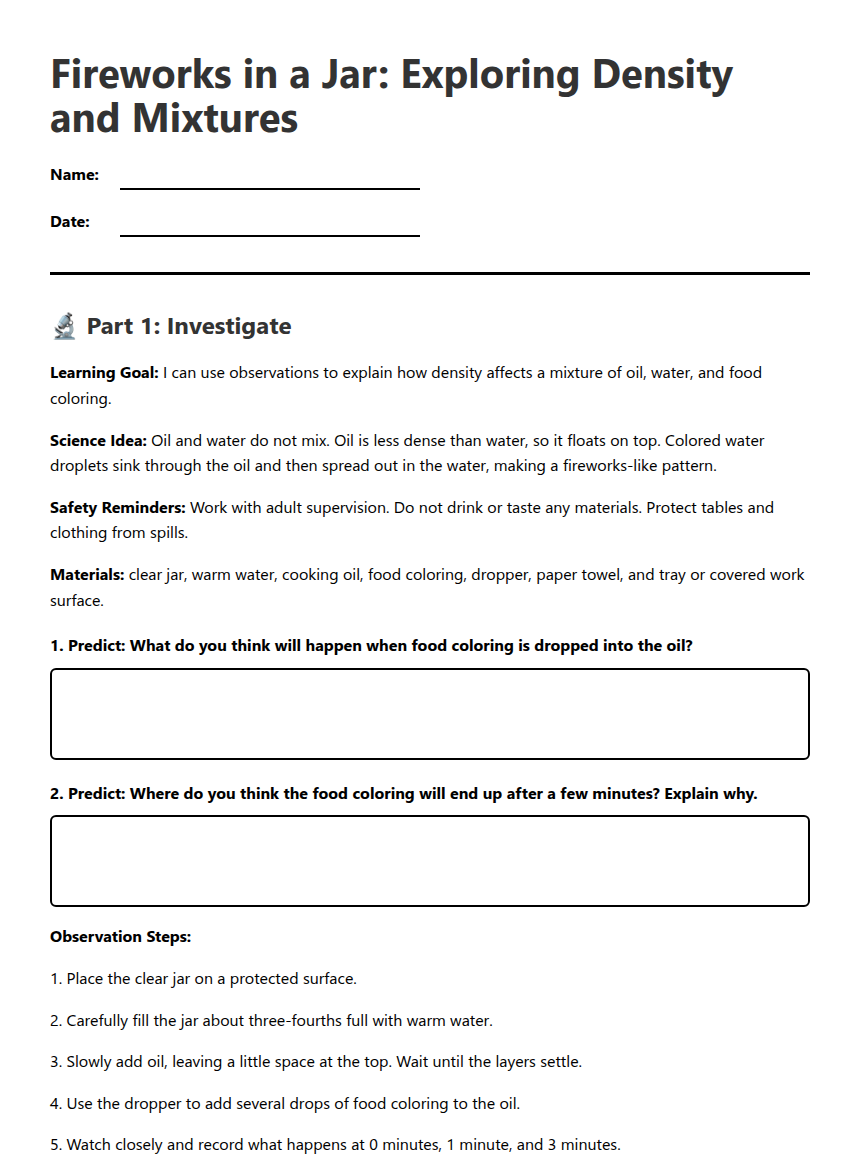
4th Grade
Fireworks in a Jar: Density and Mixtures
Free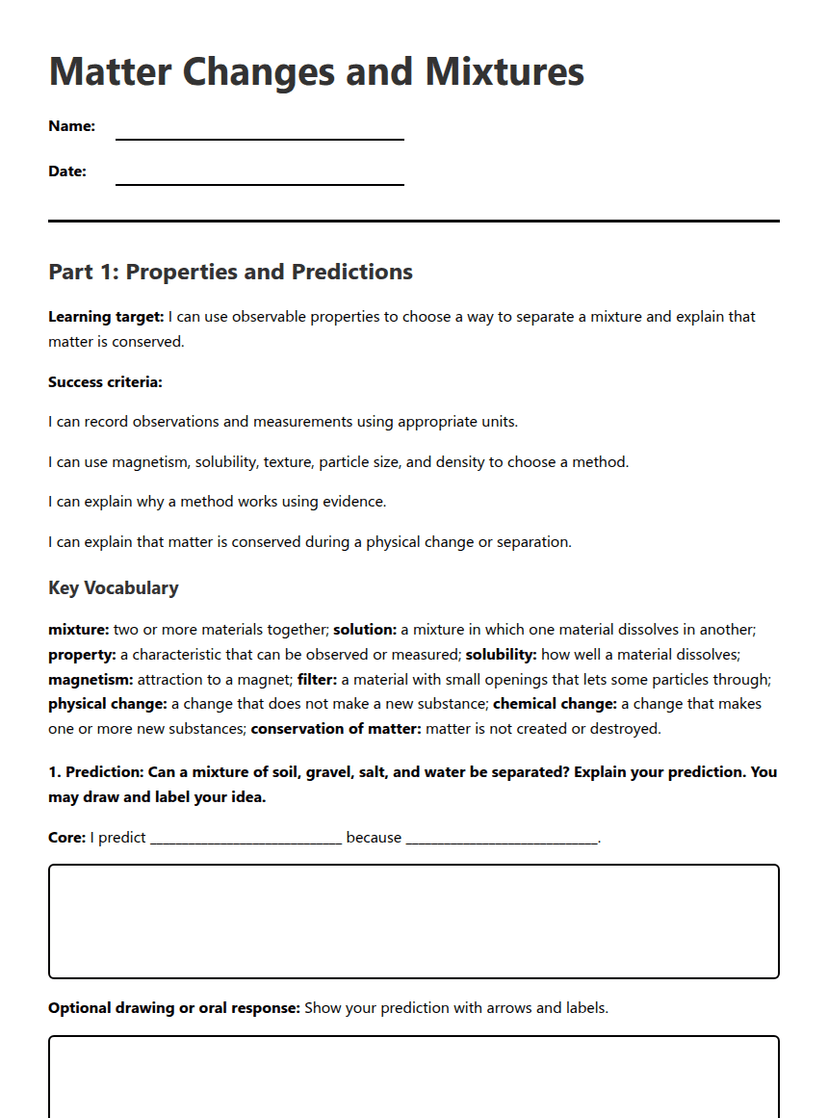
5th Grade–8th Grade
Matter Changes and Mixtures
Free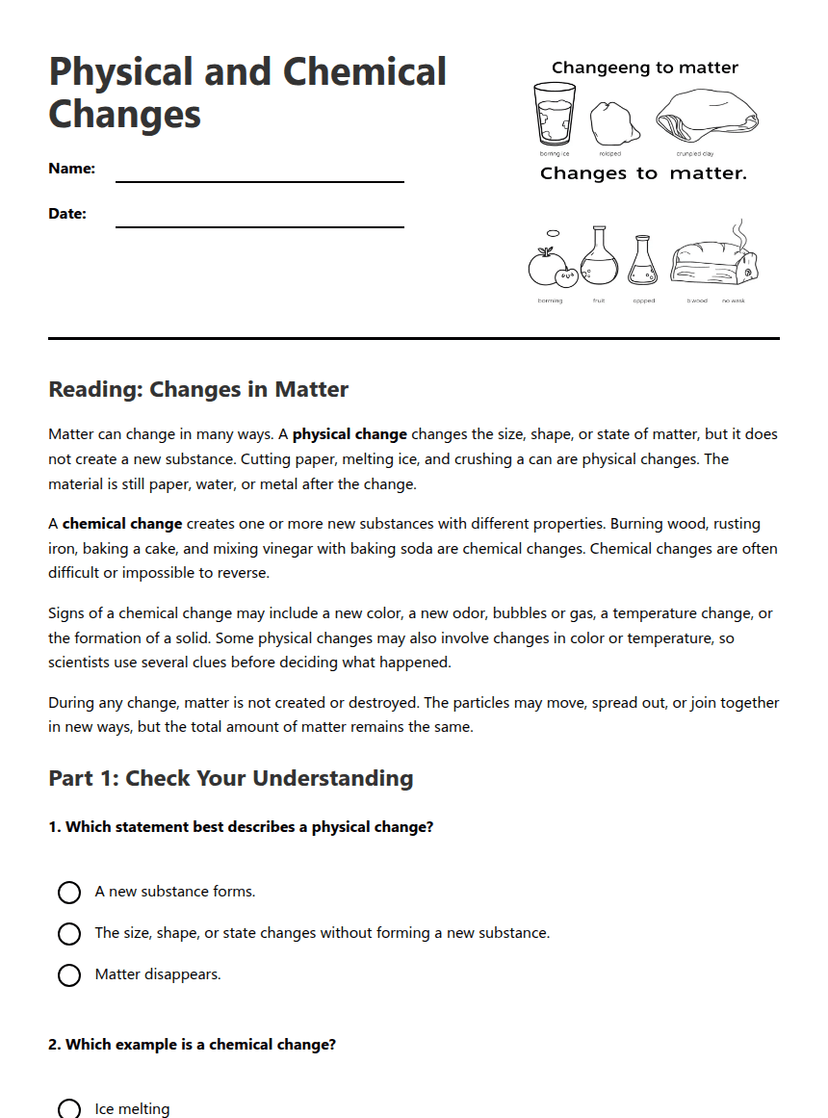
2nd Grade
Physical and Chemical Changes
Free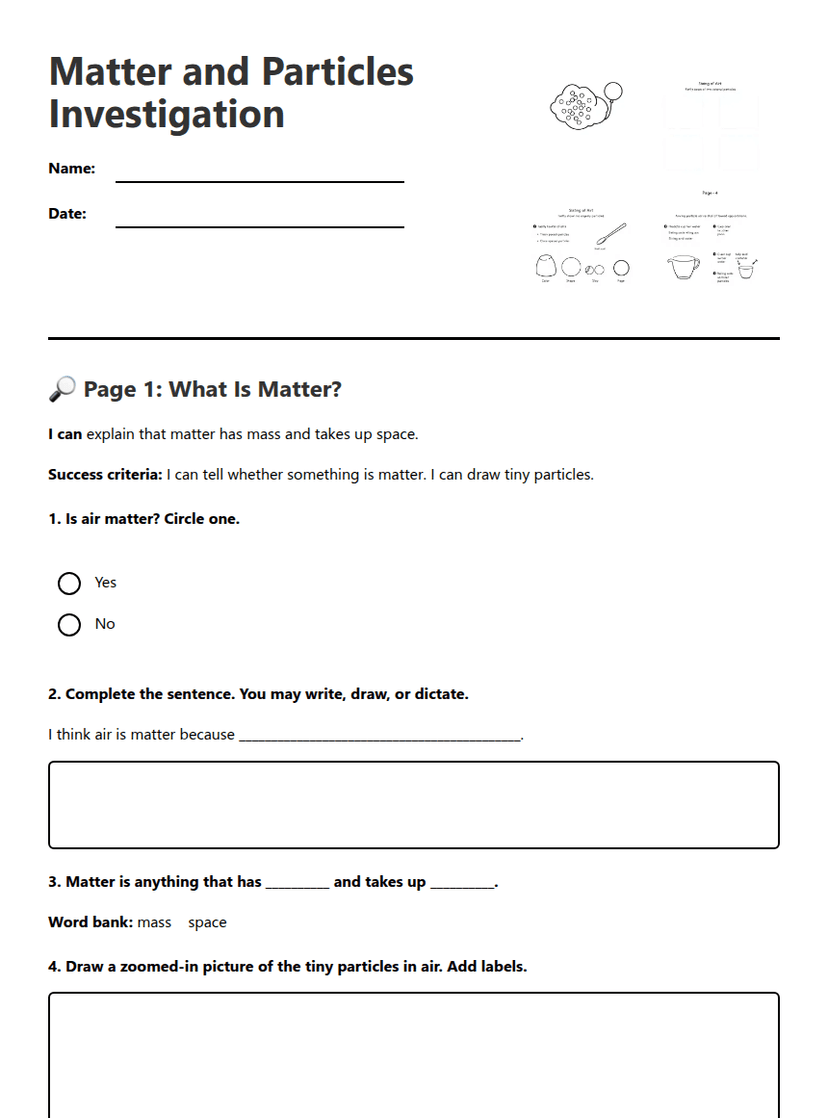
5th Grade
Matter and Particles Investigation
Free
2nd Grade