Screened Out Analysis
A free english (ela) worksheet ready for your classroom. Open in Kuraplan to grab the print-ready PDF, customize it for your students, or generate a fresh version in seconds.
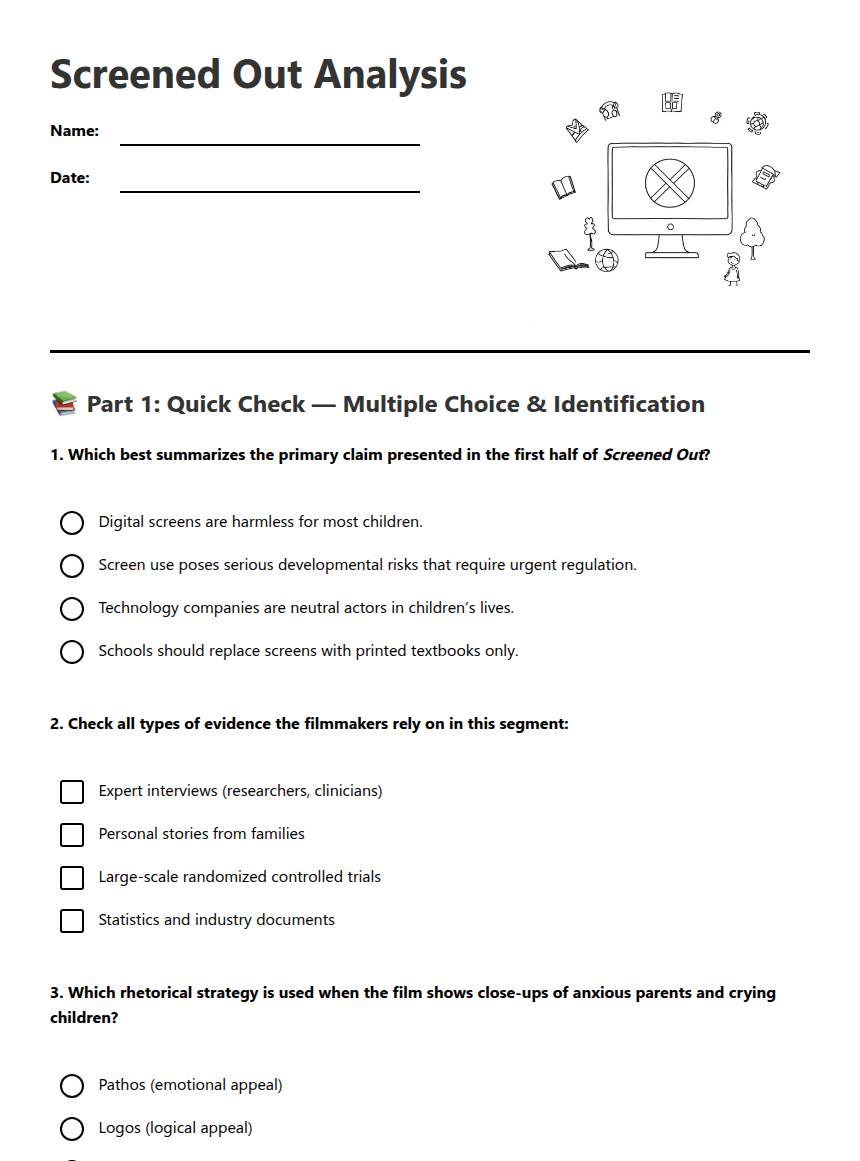
Screened Out Analysis

📚 Part 1: Quick Check — Multiple Choice & Identification
✏️ Part 2: Analysis, Counter-Argument Prep, and Reflection
I can... discuss a key argument from the first half of Screened Out and prepare a respectful counter-argument.
Success criteria: I contribute one insight in discussion, cite specific evidence from the film, and write a short counter-argument outline with at least two supporting points.
• The original claim: ___________________________
• Your counterclaim (one sentence): ___________________________
• Two pieces of supporting evidence or reasoning you would use: 1) ________ 2) ________
Differentiation: Sentence starters: "One argument I noticed is…", "A possible counterclaim is…". Allow oral response or tech tools for students who need them.
Extension for advanced learners: Find a peer-reviewed article or data set that supports your counter-argument and note one way it strengthens your position.
🔁 Part 3: Share & Exit Ticket
About This Worksheet
Free in Kuraplan
Sign up free, grab the PDF, and customize it for your class.
Print-Ready
Formatted for standard paper. Clean layout, easy to read.
AI-Generated
Created with Kuraplan's AI, designed for real classroom use.
For Teachers & Parents
Use in classrooms, for homework, tutoring, or homeschool.
Need a custom version of this worksheet?
Kuraplan's AI generates custom worksheets in seconds — differentiated for every learner, aligned to your curriculum.
Generate Custom Worksheets — FreeMore English (ELA) Worksheets
Theme and Textual Evidence
Free
The Magic Marker Mystery Worksheet
Free
Magic Marker Mystery Quiz
Free
The Magic Marker Mystery Worksheet
Free
Text Evidence and Inference Assessment
Free
Citing Evidence and Inferences
Free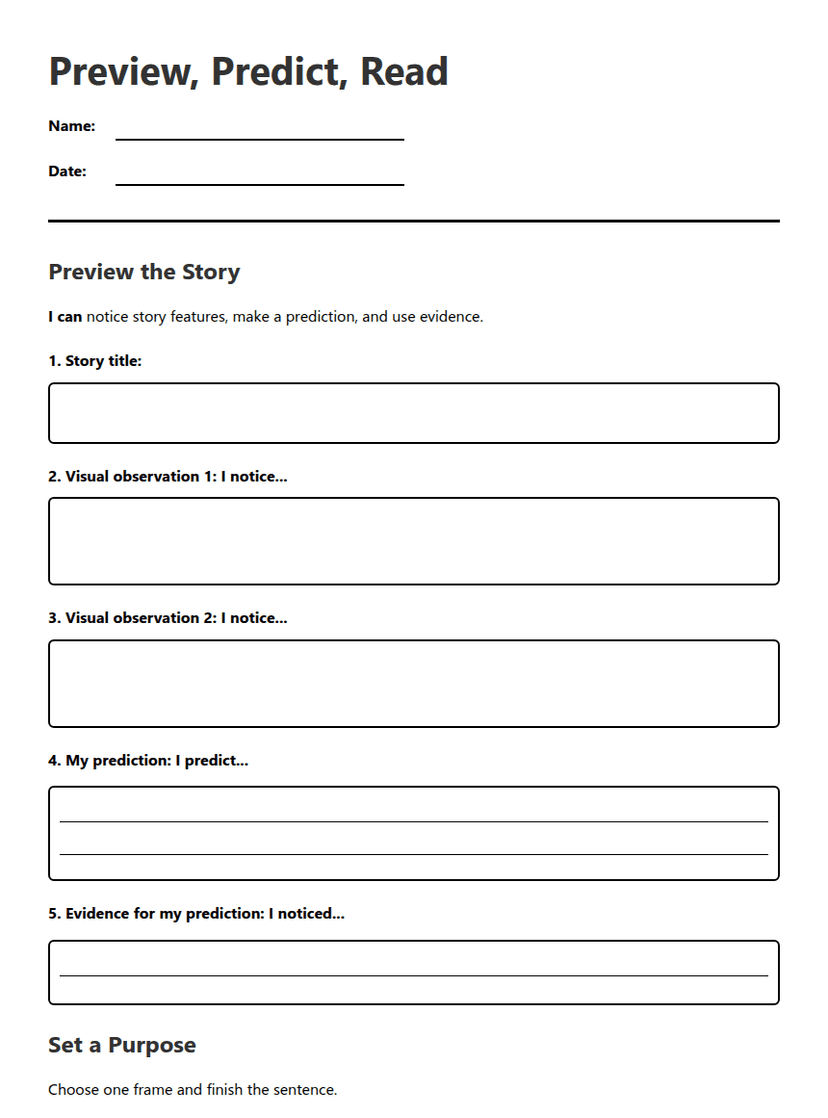
Preview, Predict, Read”】【
Free