Aboriginal Dreaming Stories Jigsaw
A free au history worksheet ready for your classroom. Open in Kuraplan to grab the print-ready PDF, customize it for your students, or generate a fresh version in seconds.
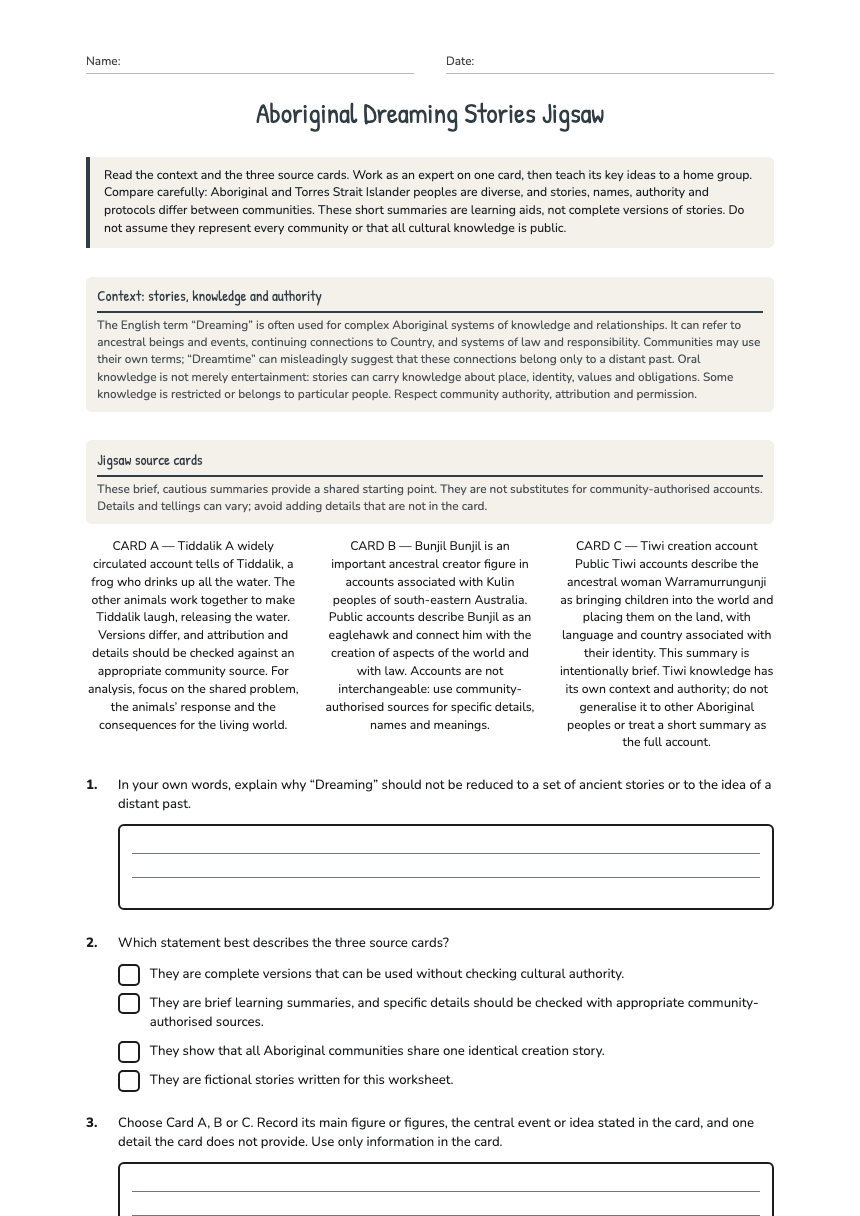
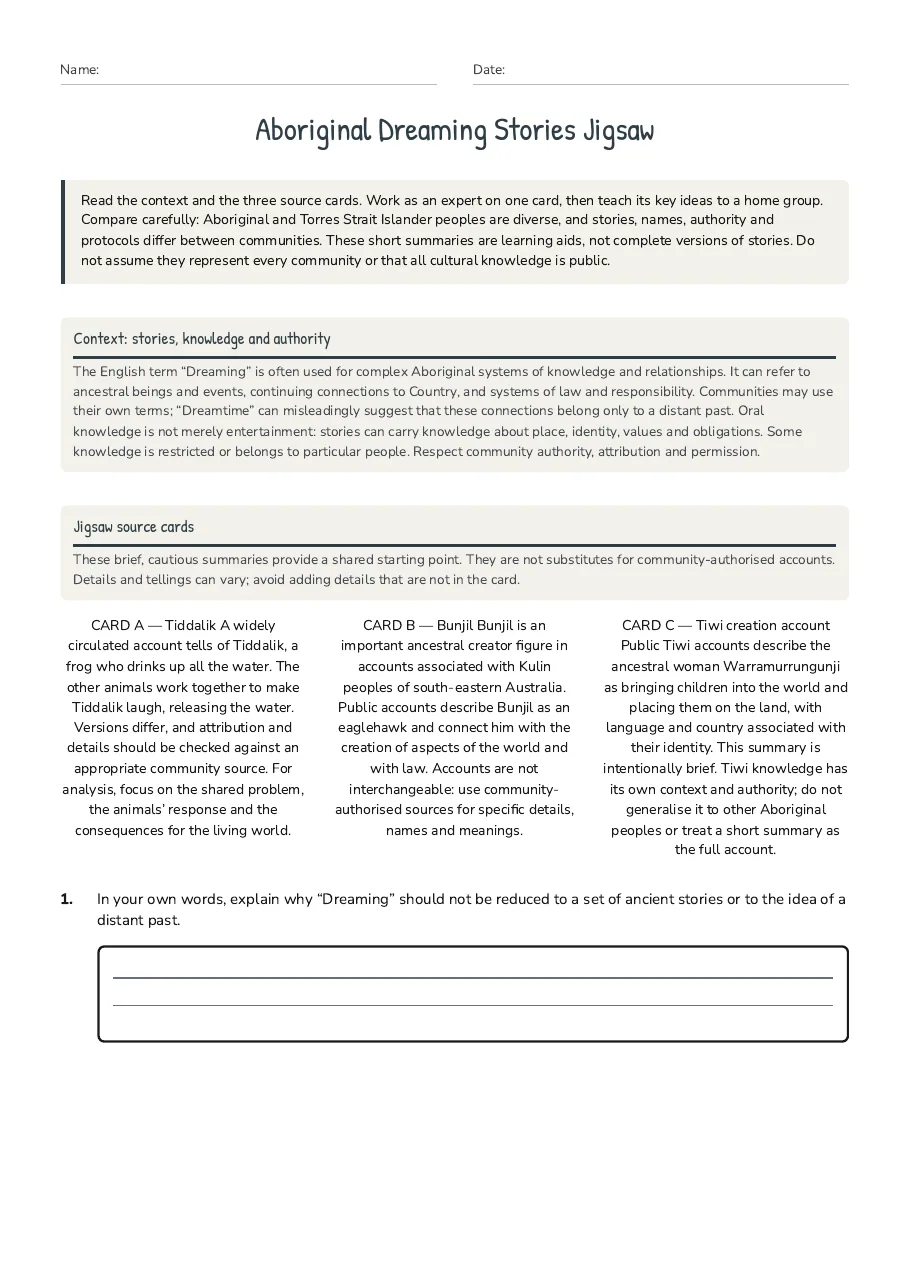
Aboriginal Dreaming Stories Jigsaw
Context: stories, knowledge and authority
The English term “Dreaming” is often used for complex Aboriginal systems of knowledge and relationships. It can refer to ancestral beings and events, continuing connections to Country, and systems of law and responsibility. Communities may use their own terms; “Dreamtime” can misleadingly suggest that these connections belong only to a distant past. Oral knowledge is not merely entertainment: stories can carry knowledge about place, identity, values and obligations. Some knowledge is restricted or belongs to particular people. Respect community authority, attribution and permission.
Jigsaw source cards
These brief, cautious summaries provide a shared starting point. They are not substitutes for community-authorised accounts. Details and tellings can vary; avoid adding details that are not in the card.
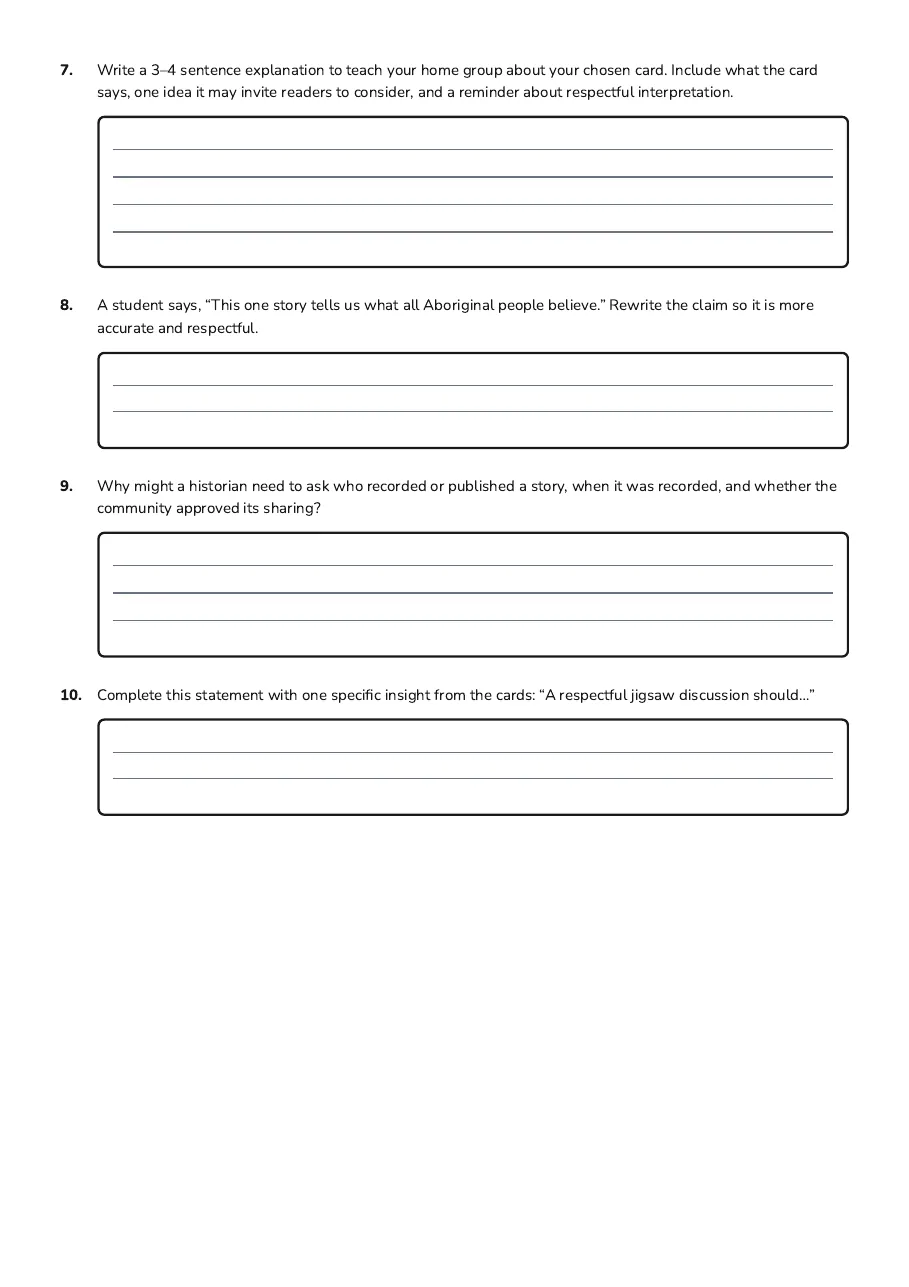
CARD A — Tiddalik A widely circulated account tells of Tiddalik, a frog who drinks up all the water. The other animals work together to make Tiddalik laugh, releasing the water. Versions differ, and attribution and details should be checked against an appropriate community source. For analysis, focus on the shared problem, the animals’ response and the consequences for the living world.
CARD B — Bunjil Bunjil is an important ancestral creator figure in accounts associated with Kulin peoples of south-eastern Australia. Public accounts describe Bunjil as an eaglehawk and connect him with the creation of aspects of the world and with law. Accounts are not interchangeable: use community-authorised sources for specific details, names and meanings.
CARD C — Tiwi creation account Public Tiwi accounts describe the ancestral woman Warramurrungunji as bringing children into the world and placing them on the land, with language and country associated with their identity. This summary is intentionally brief. Tiwi knowledge has its own context and authority; do not generalise it to other Aboriginal peoples or treat a short summary as the full account.
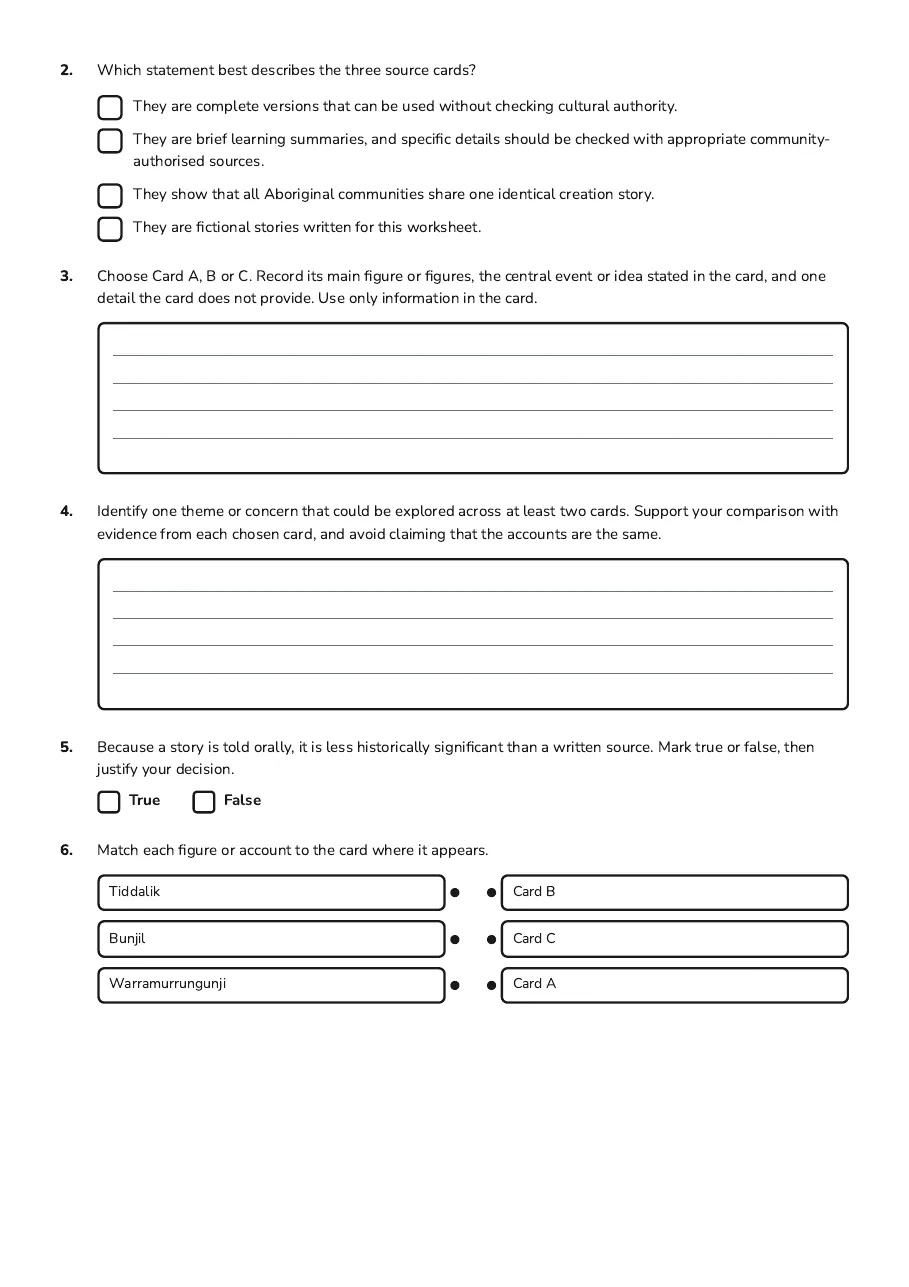
- They are complete versions that can be used without checking cultural authority.
- They are brief learning summaries, and specific details should be checked with appropriate community-authorised sources.
- They show that all Aboriginal communities share one identical creation story.
- They are fictional stories written for this worksheet.
- Tiddalik
- Bunjil
- Warramurrungunji
- Card B
- Card C
- Card A
3 printable pages
Page 1
Page 2
Page 3
About This Worksheet
Free in Kuraplan
Sign up free, grab the PDF, and customize it for your class.
Print-Ready
Formatted for standard paper. Clean layout, easy to read.
AI-Generated
Created with Kuraplan's AI, designed for real classroom use.
For Teachers & Parents
Use in classrooms, for homework, tutoring, or homeschool.
Need a custom version of this worksheet?
Kuraplan's AI generates custom worksheets in seconds — differentiated for every learner, aligned to your curriculum.
Generate Custom Worksheets — FreeMore AU History Worksheets
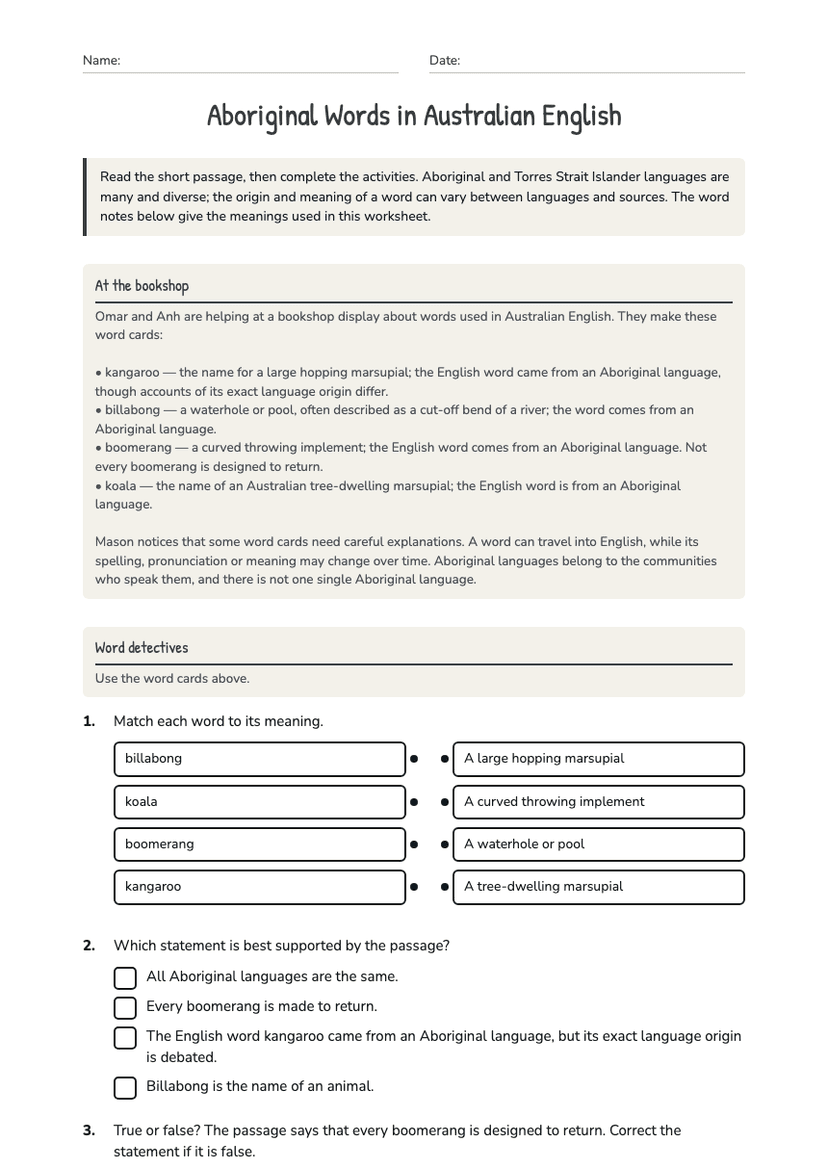
Aboriginal Words in Australian English
Free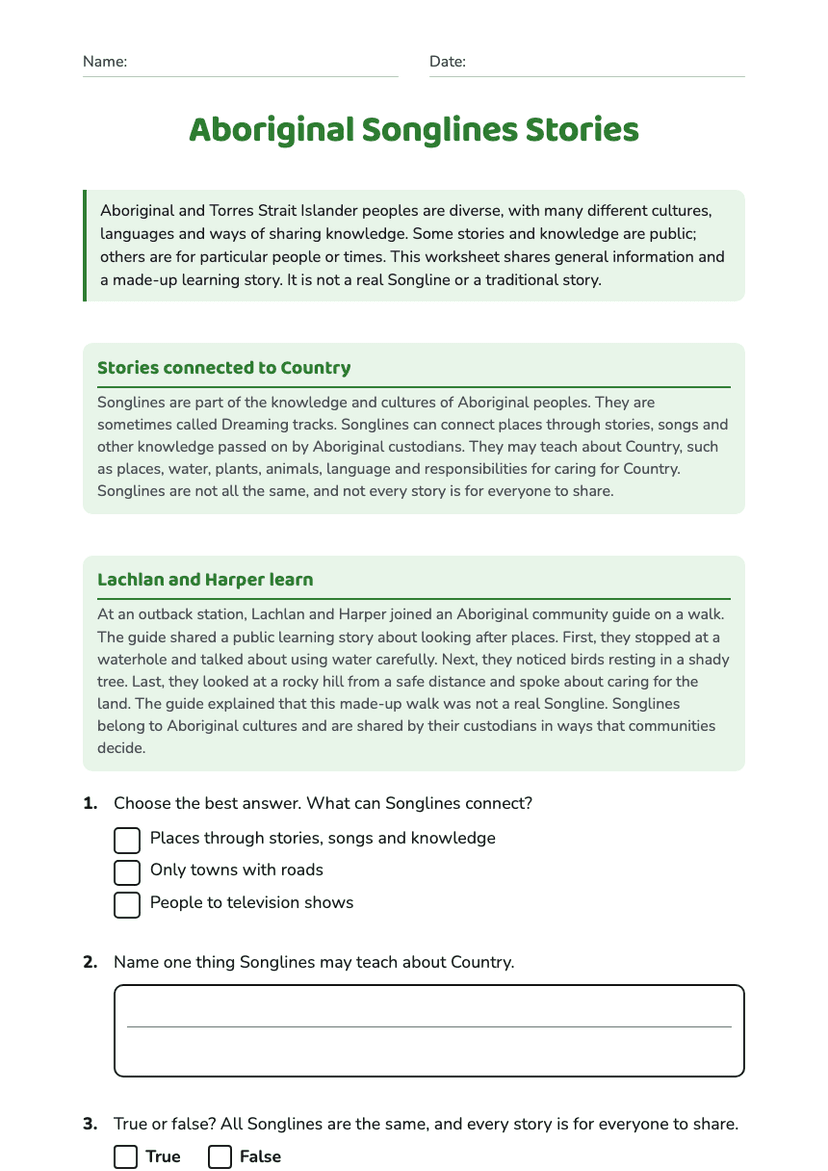
Aboriginal Songlines Stories
Free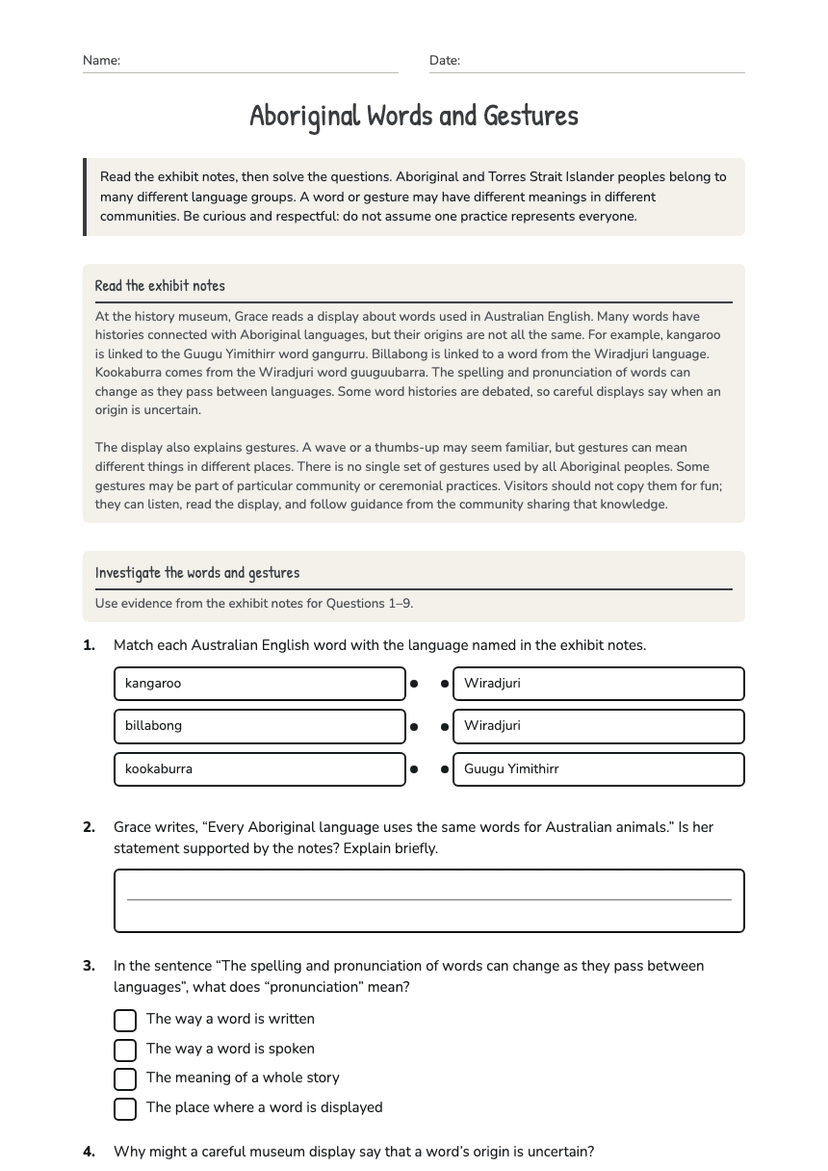
Aboriginal Words and Gestures
Free
1967 Aboriginal Referendum Facts
Free
1967 Aboriginal Rights Referendum
Free
Aboriginal Magnetic Island Connections
Free
1967 Aboriginal Rights Referendum
Free