Advanced Recycling Materials Worksheet
A free science worksheet ready for your classroom. Open in Kuraplan to grab the print-ready PDF, customize it for your students, or generate a fresh version in seconds.
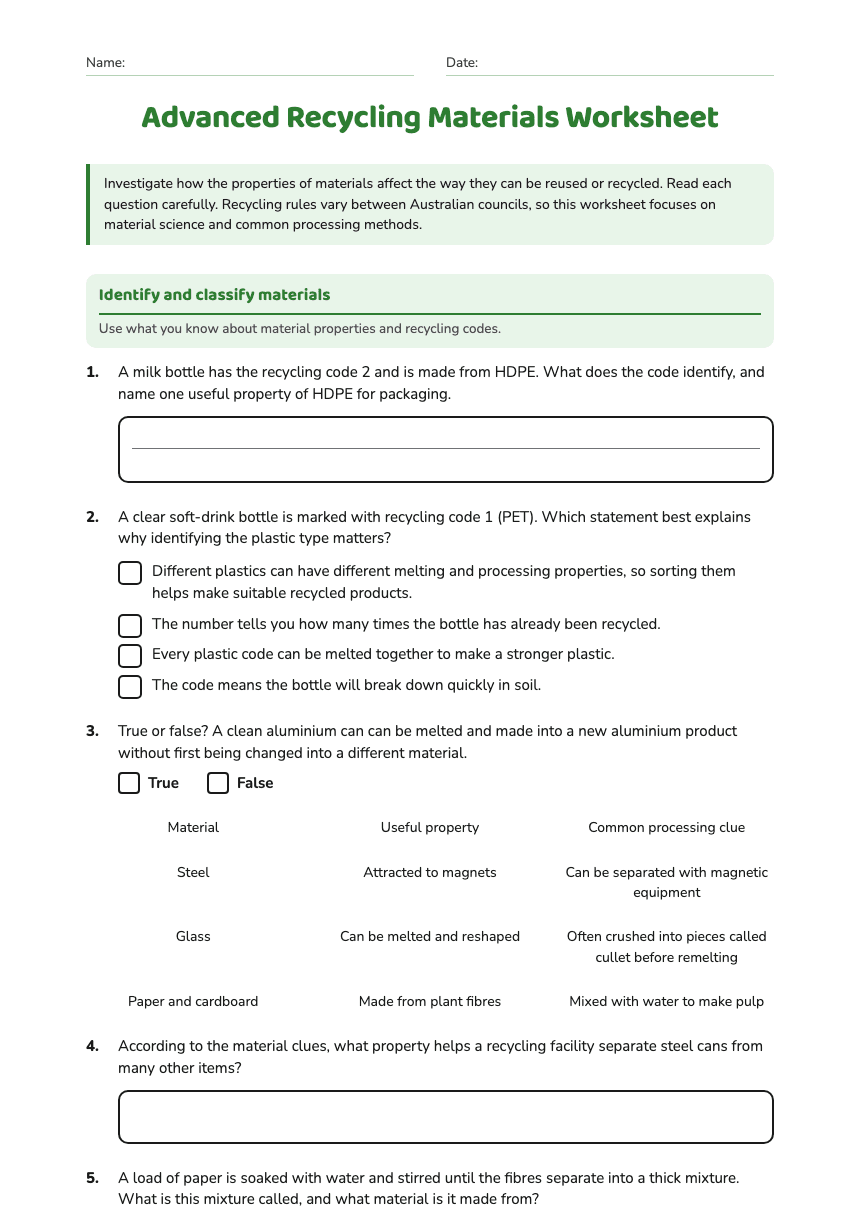
Advanced Recycling Materials Worksheet
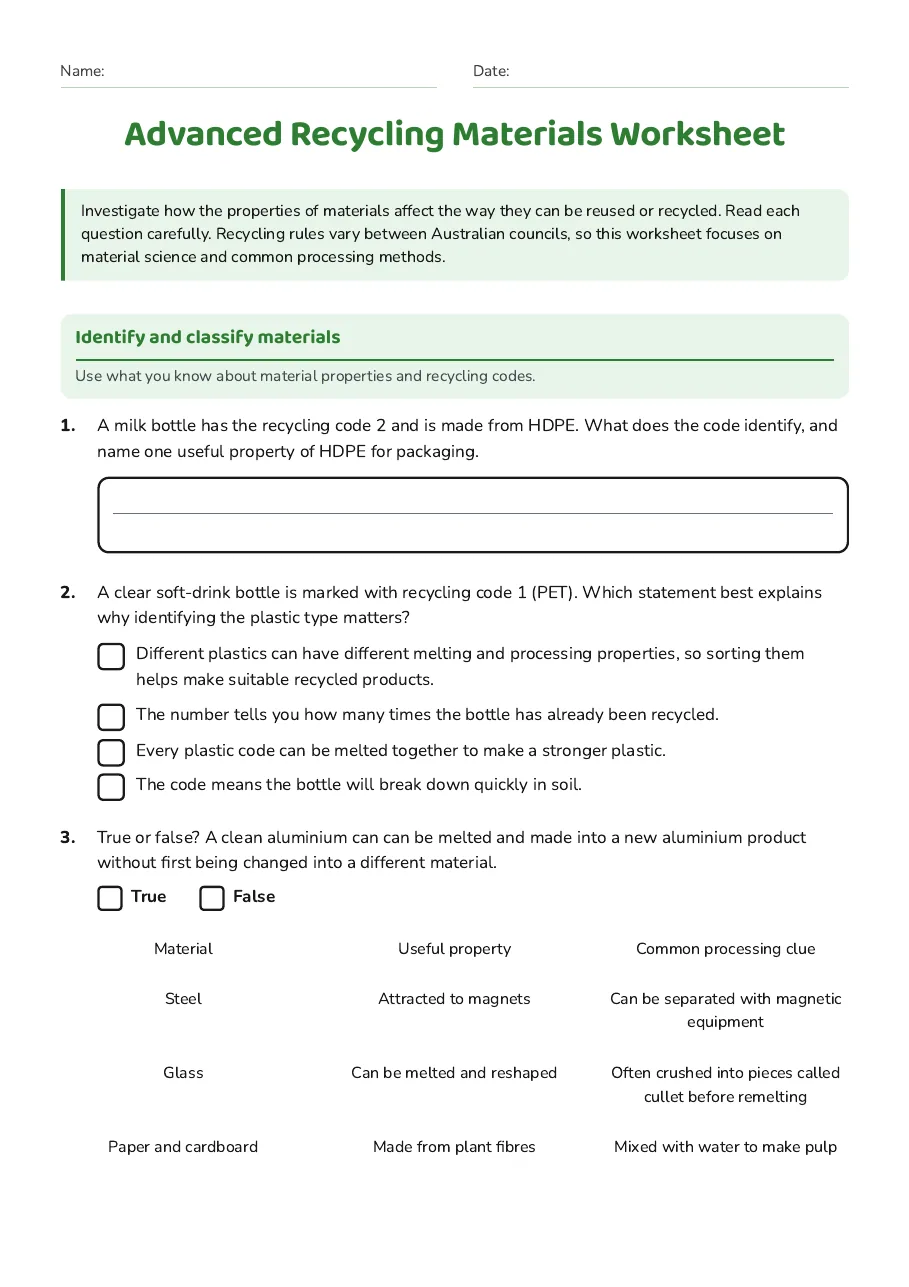
Identify and classify materials
Use what you know about material properties and recycling codes.
- Different plastics can have different melting and processing properties, so sorting them helps make suitable recycled products.
- The number tells you how many times the bottle has already been recycled.
- Every plastic code can be melted together to make a stronger plastic.
- The code means the bottle will break down quickly in soil.
Material
Useful property
Common processing clue
Steel
Attracted to magnets
Can be separated with magnetic equipment
Glass
Can be melted and reshaped
Often crushed into pieces called cullet before remelting
Paper and cardboard
Made from plant fibres
Mixed with water to make pulp
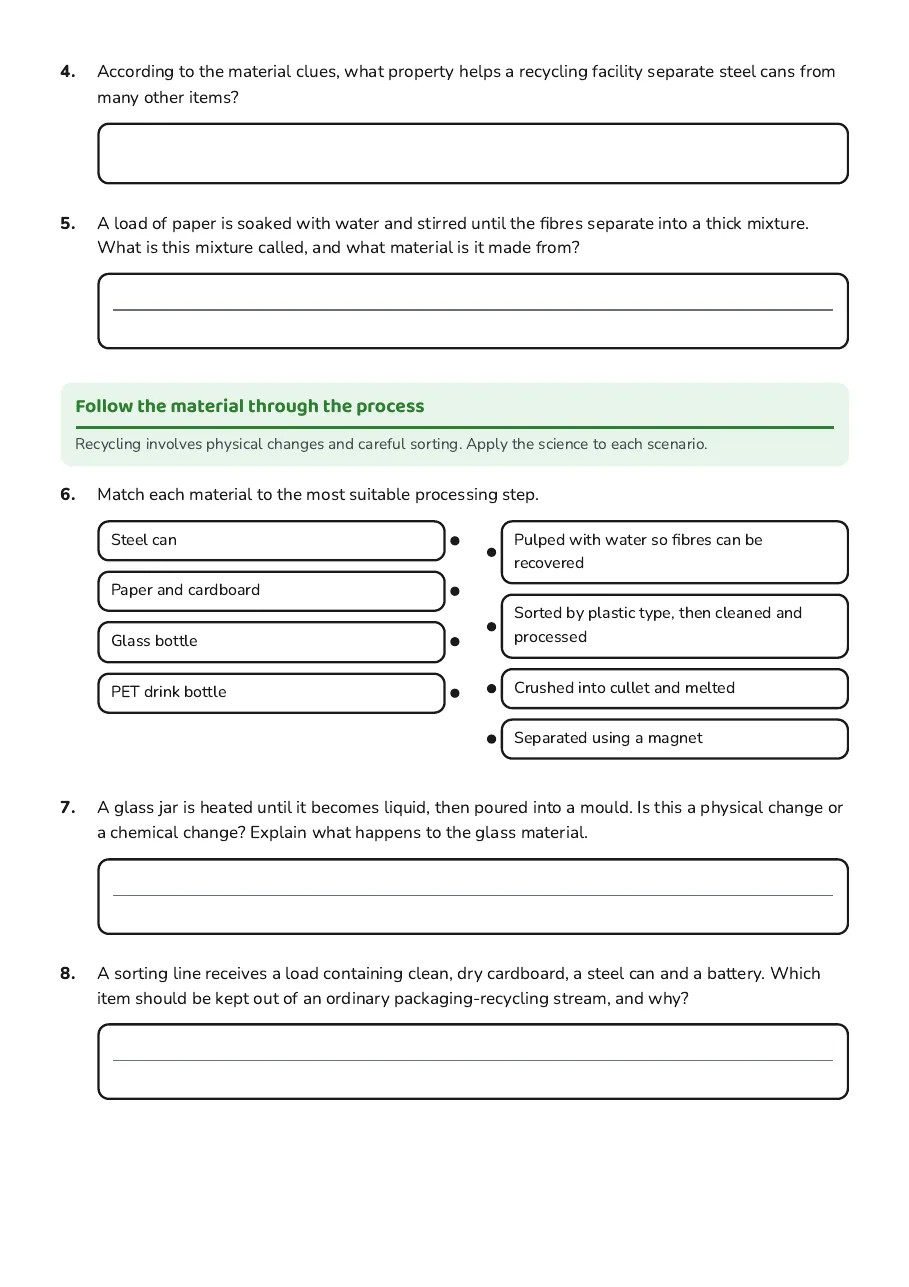
Follow the material through the process
Recycling involves physical changes and careful sorting. Apply the science to each scenario.
- Steel can
- Paper and cardboard
- Glass bottle
- PET drink bottle
- Pulped with water so fibres can be recovered
- Sorted by plastic type, then cleaned and processed
- Crushed into cullet and melted
- Separated using a magnet
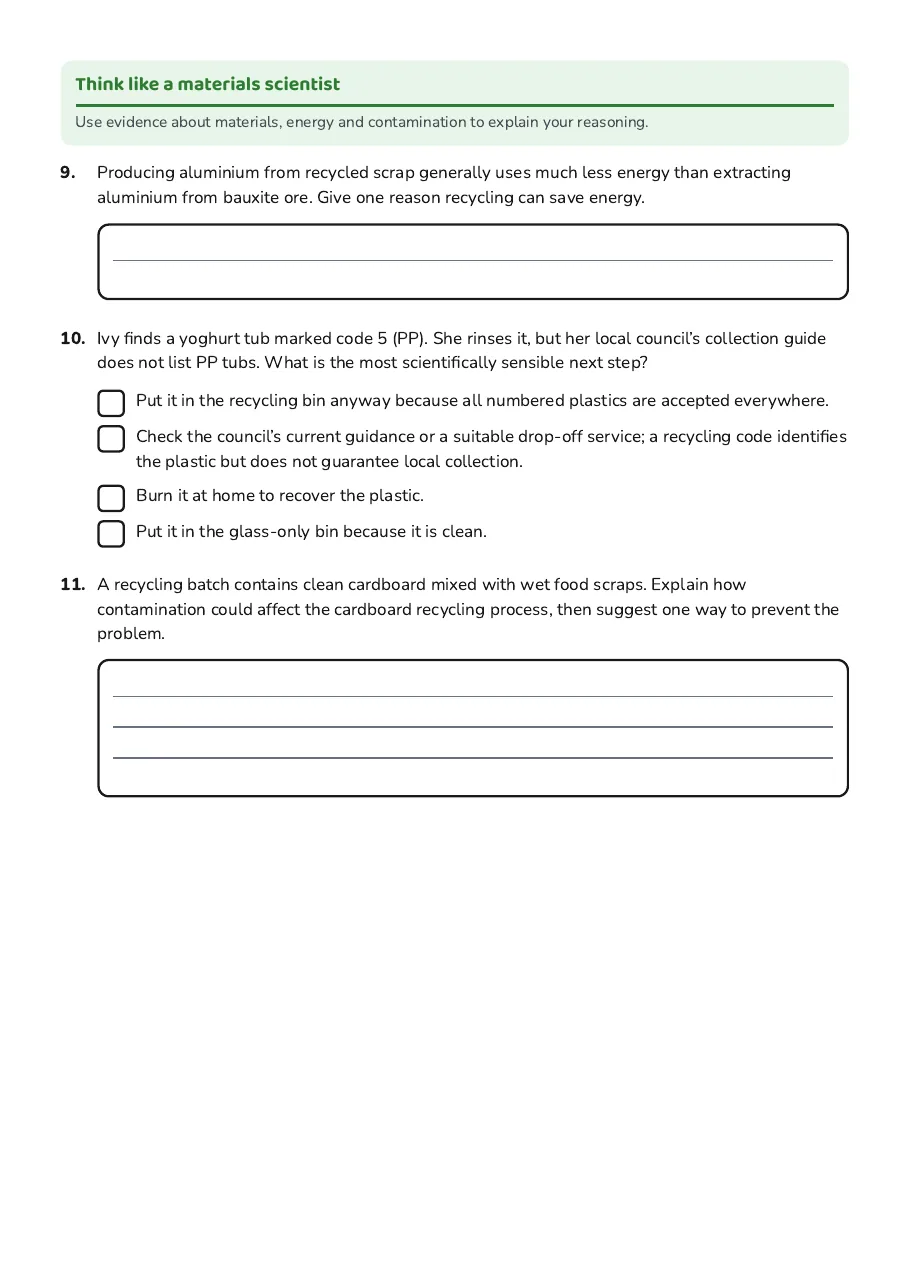
Think like a materials scientist
Use evidence about materials, energy and contamination to explain your reasoning.
- Put it in the recycling bin anyway because all numbered plastics are accepted everywhere.
- Check the council’s current guidance or a suitable drop-off service; a recycling code identifies the plastic but does not guarantee local collection.
- Burn it at home to recover the plastic.
- Put it in the glass-only bin because it is clean.
3 printable pages
Page 1
Page 2
Page 3
About This Worksheet
Free in Kuraplan
Sign up free, grab the PDF, and customize it for your class.
Print-Ready
Formatted for standard paper. Clean layout, easy to read.
AI-Generated
Created with Kuraplan's AI, designed for real classroom use.
For Teachers & Parents
Use in classrooms, for homework, tutoring, or homeschool.
Need a custom version of this worksheet?
Kuraplan's AI generates custom worksheets in seconds — differentiated for every learner, aligned to your curriculum.
Generate Custom Worksheets — FreeMore Science Worksheets
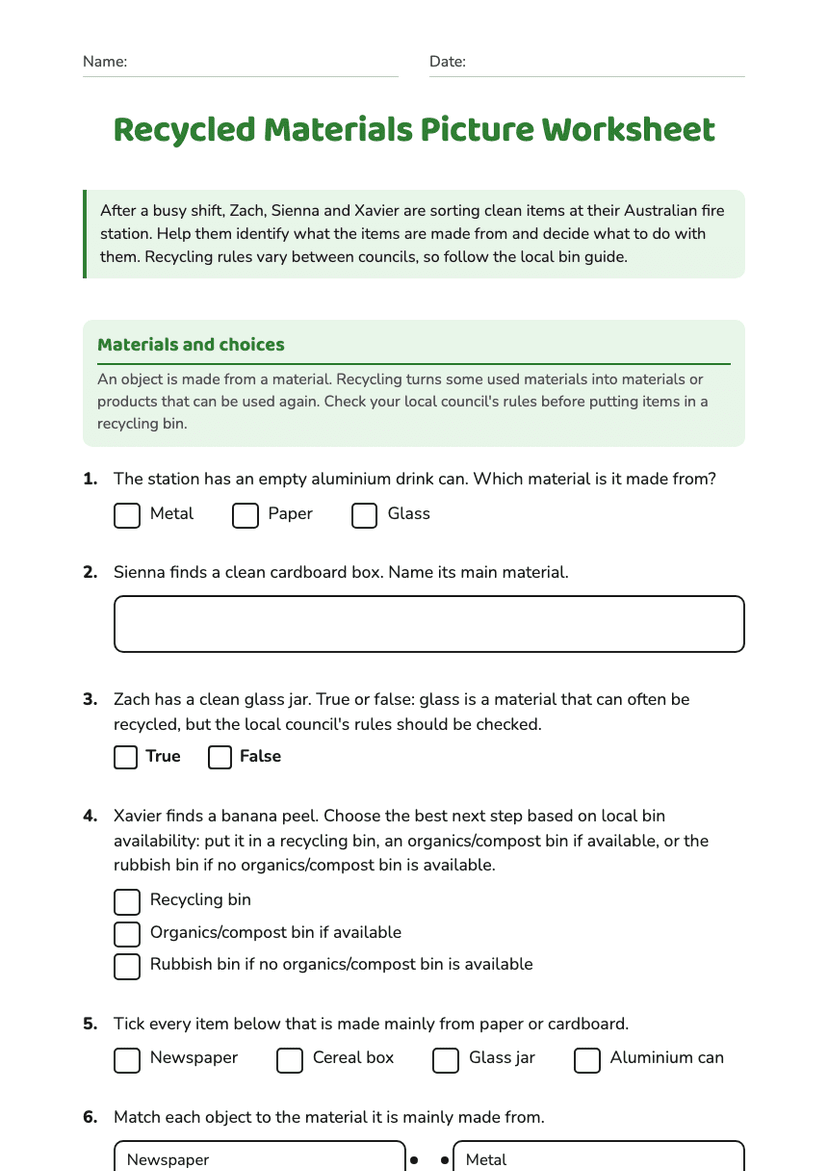
Recycled Materials Picture Worksheet
Free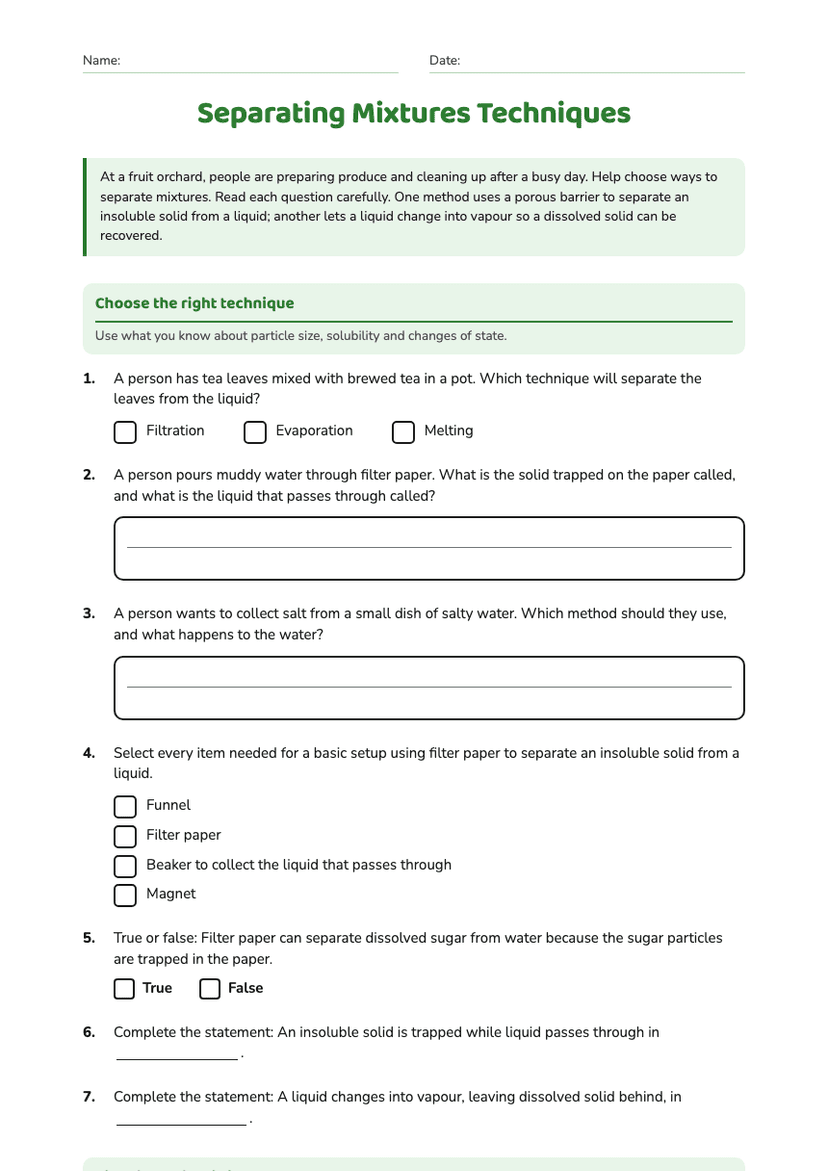
Separating Mixtures Techniques
Free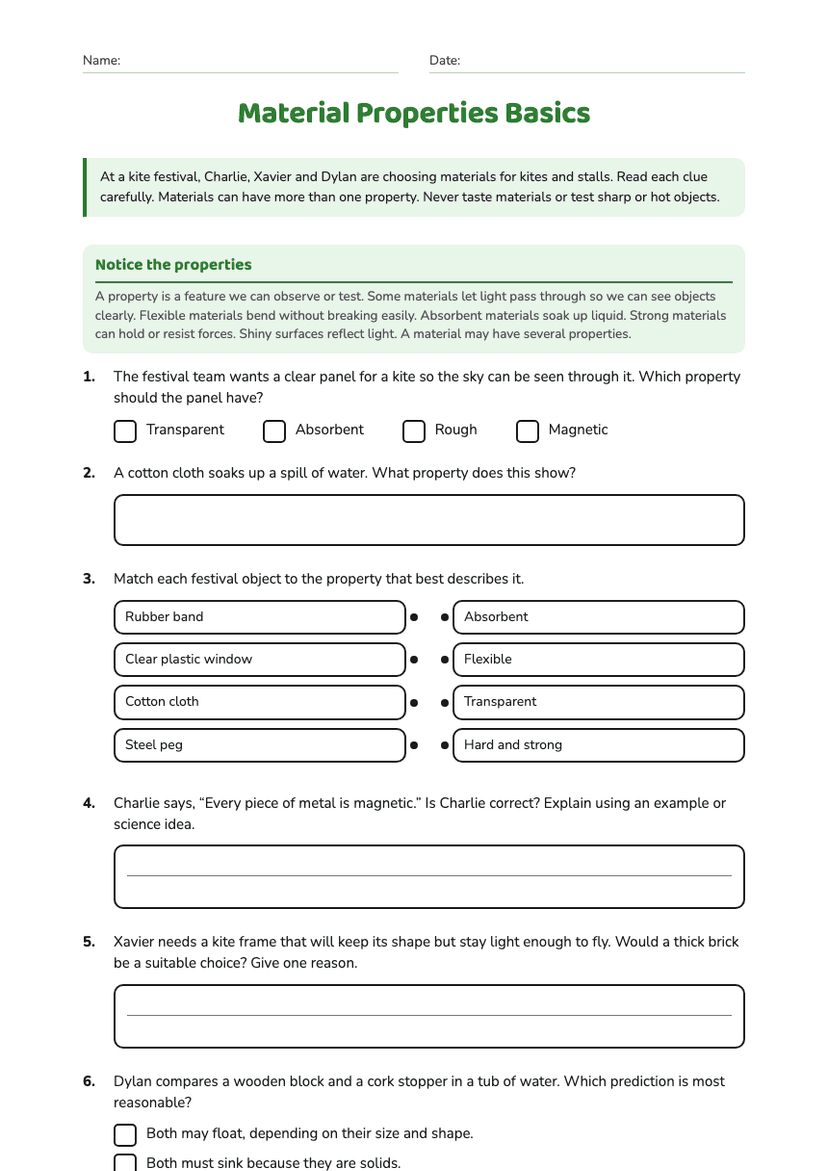
Material Properties Basics
Free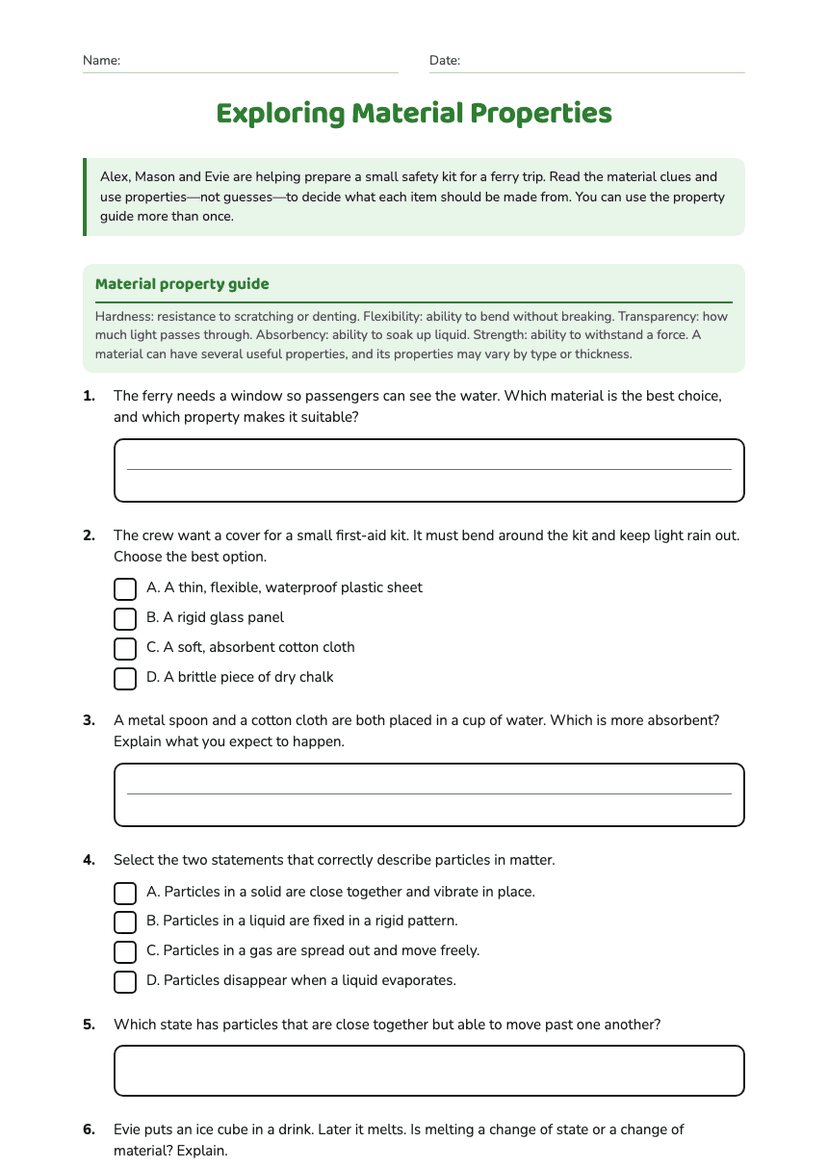
Exploring Material Properties
Free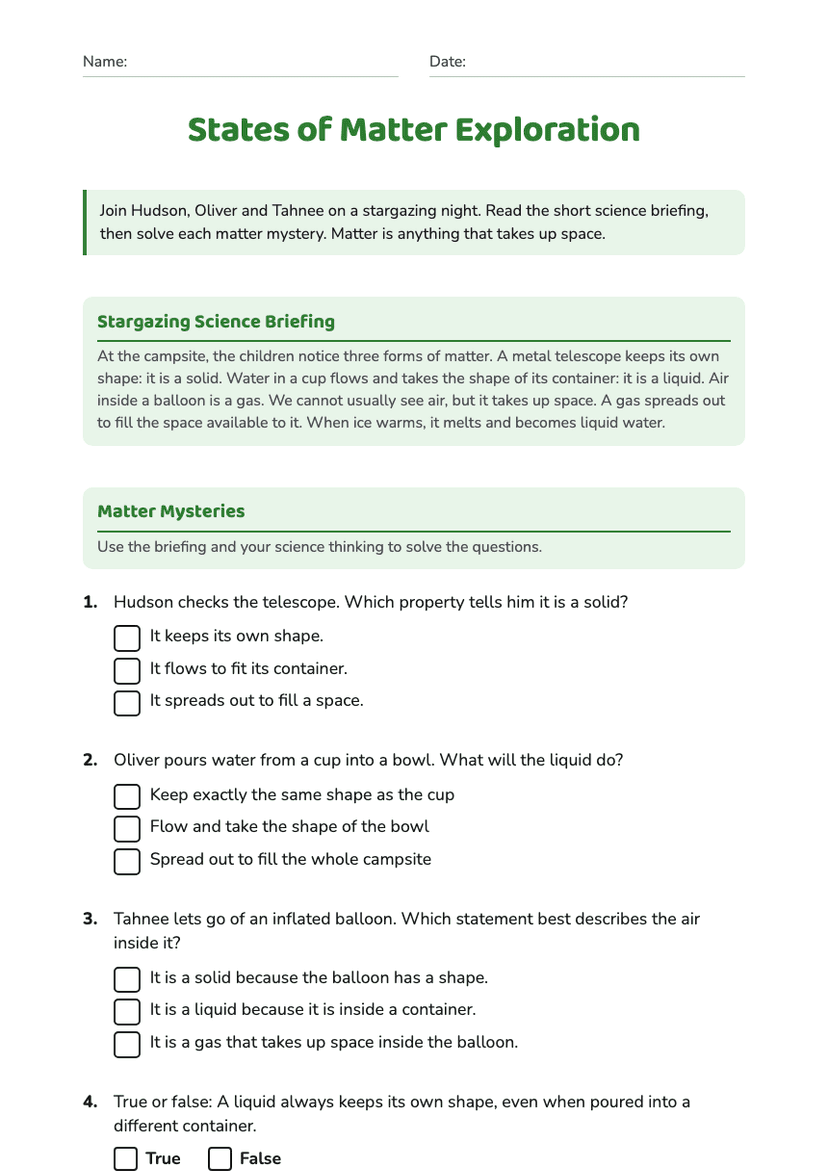
States of Matter Exploration
Free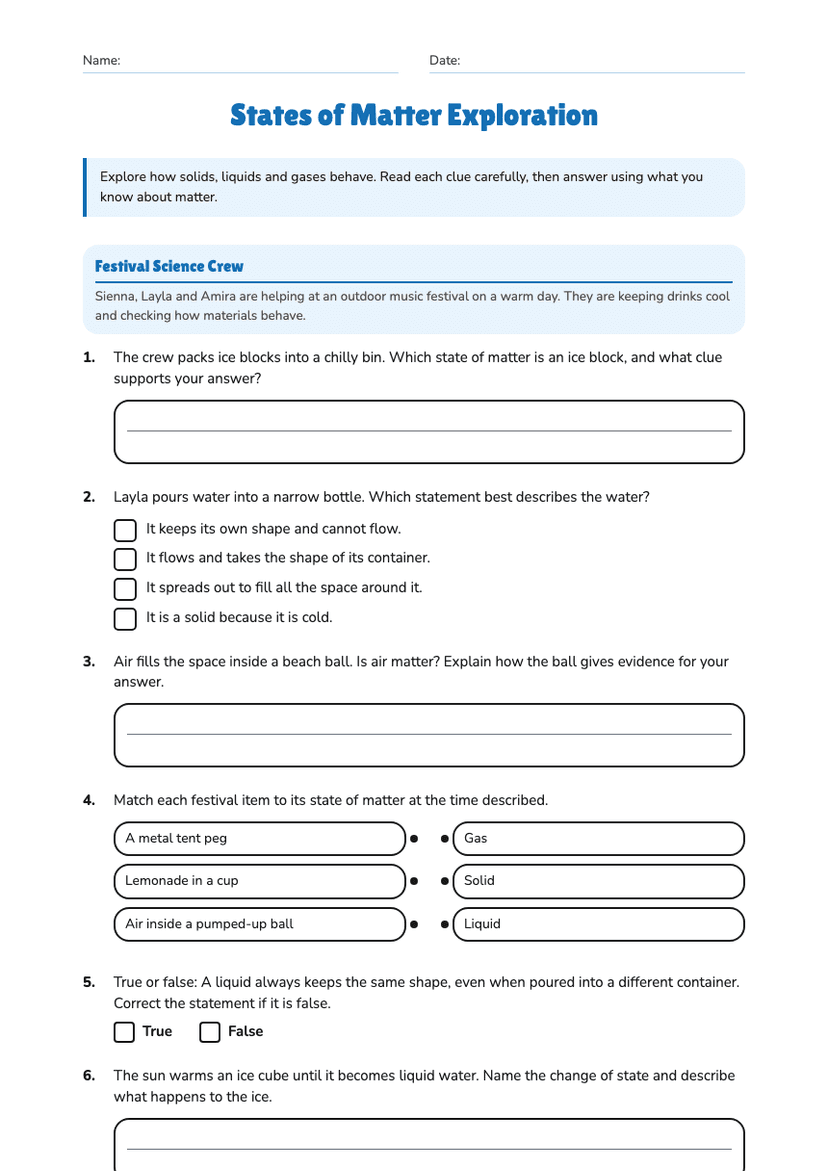
States of Matter Exploration
Free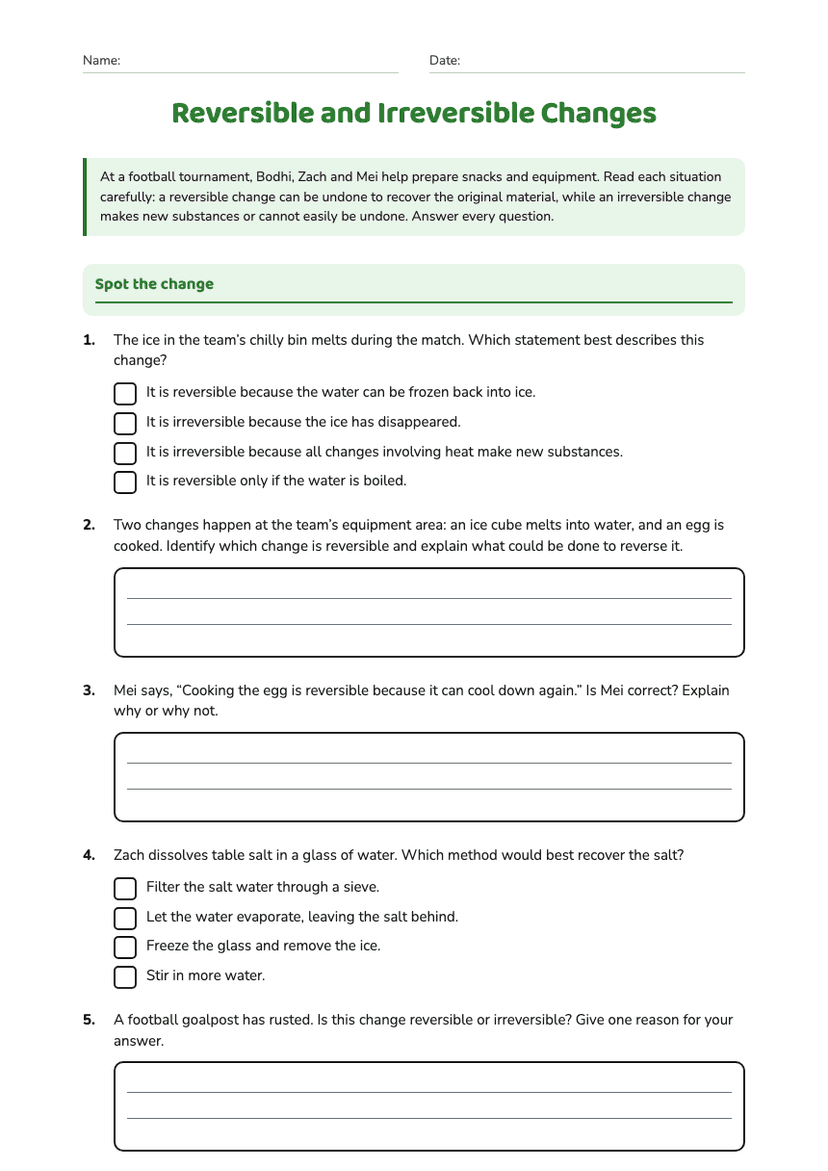
Reversible and Irreversible Changes
Free