EnglishFreePrintable
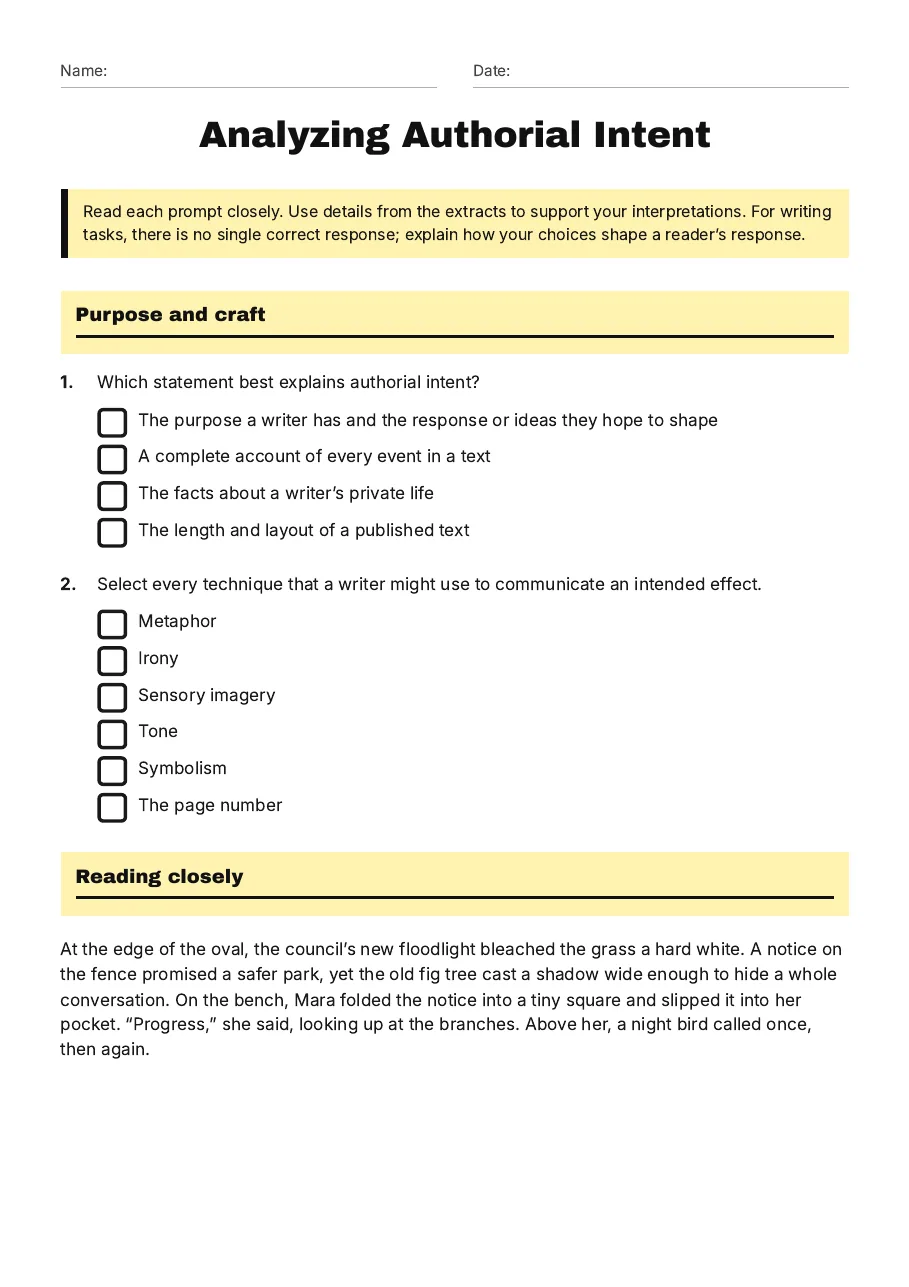
Analyzing Authorial Intent
A free english worksheet ready for your classroom. Open in Kuraplan to grab the print-ready PDF, customize it for your students, or generate a fresh version in seconds.

Name:Date:
Analyzing Authorial Intent
Read each prompt closely. Use details from the extracts to support your interpretations. For writing tasks, there is no single correct response; explain how your choices shape a reader’s response.
Purpose and craft
1.Which statement best explains authorial intent?
- The purpose a writer has and the response or ideas they hope to shape
- A complete account of every event in a text
- The facts about a writer’s private life
- The length and layout of a published text
2.Select every technique that a writer might use to communicate an intended effect.
- Metaphor
- Irony
- Sensory imagery
- Tone
- Symbolism
- The page number
Reading closely
At the edge of the oval, the council’s new floodlight bleached the grass a hard white. A notice on the fence promised a safer park, yet the old fig tree cast a shadow wide enough to hide a whole conversation. On the bench, Mara folded the notice into a tiny square and slipped it into her pocket. “Progress,” she said, looking up at the branches. Above her, a night bird called once, then again.
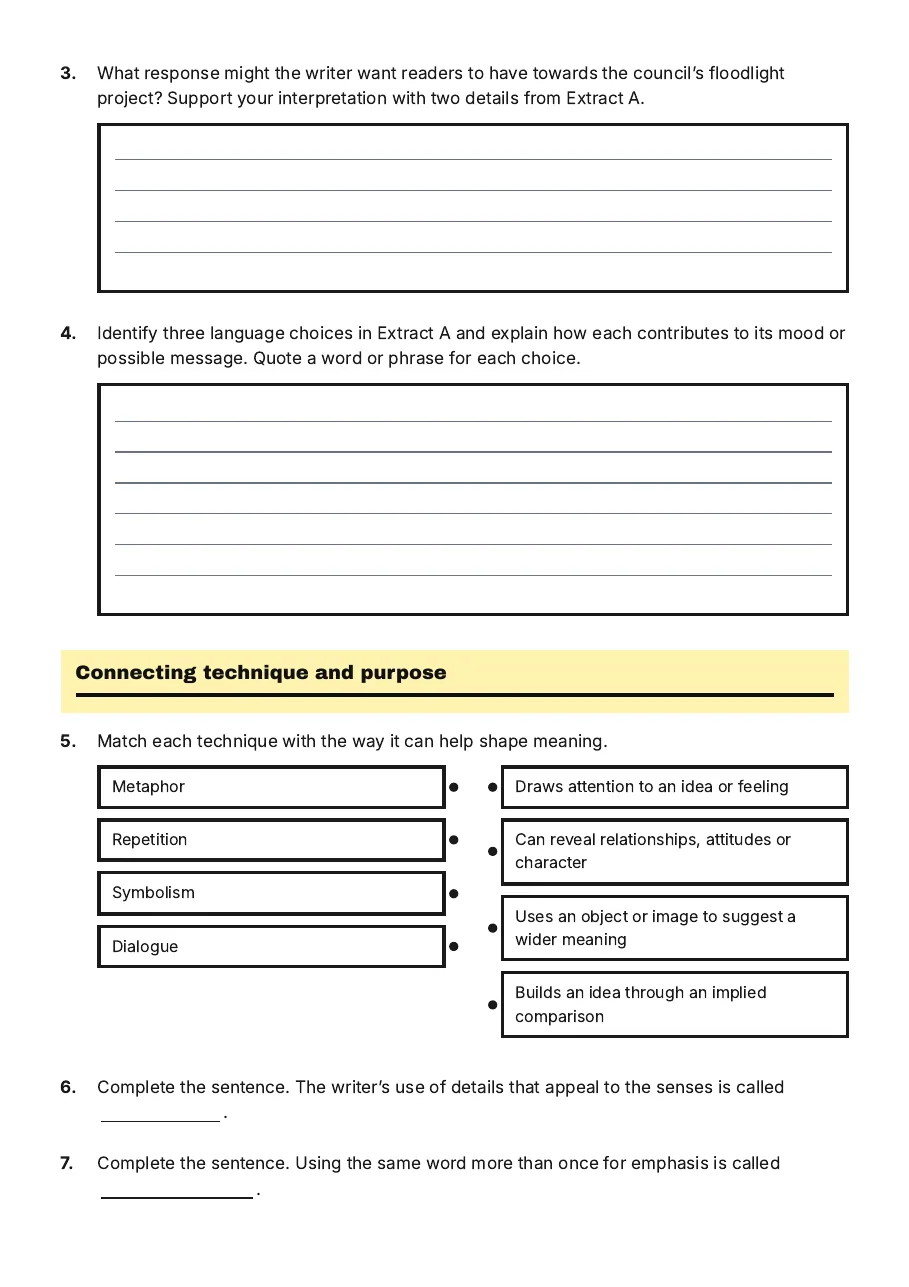
3.What response might the writer want readers to have towards the council’s floodlight project? Support your interpretation with two details from Extract A.
4.Identify three language choices in Extract A and explain how each contributes to its mood or possible message. Quote a word or phrase for each choice.
Connecting technique and purpose
5.Match each technique with the way it can help shape meaning.
- Metaphor
- Repetition
- Symbolism
- Dialogue
- Draws attention to an idea or feeling
- Can reveal relationships, attitudes or character
- Uses an object or image to suggest a wider meaning
- Builds an idea through an implied comparison
6.Complete the sentence. The writer’s use of details that appeal to the senses is called .
7.Complete the sentence. Using the same word more than once for emphasis is called .
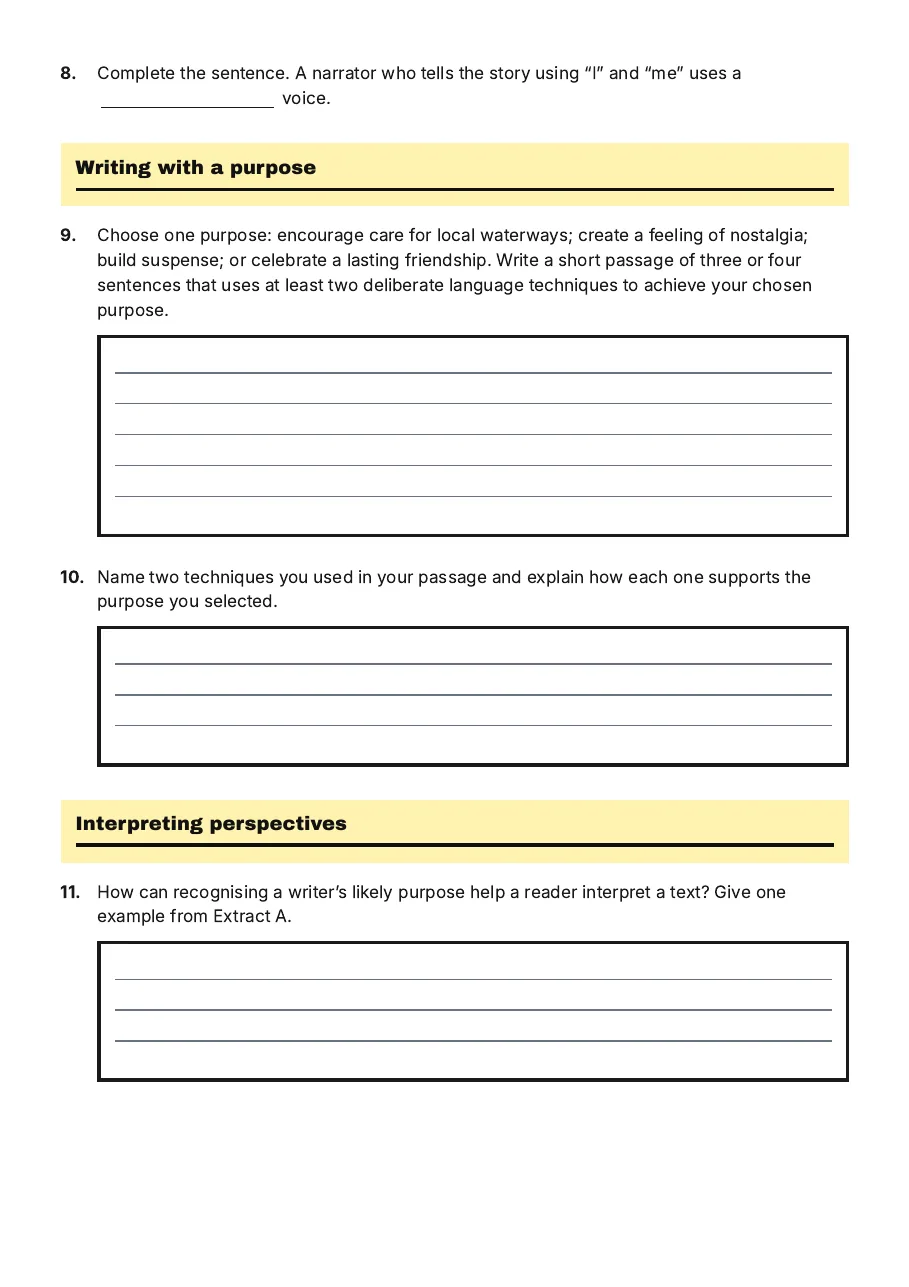
8.Complete the sentence. A narrator who tells the story using “I” and “me” uses a voice.
Writing with a purpose
9.Choose one purpose: encourage care for local waterways; create a feeling of nostalgia; build suspense; or celebrate a lasting friendship. Write a short passage of three or four sentences that uses at least two deliberate language techniques to achieve your chosen purpose.
10.Name two techniques you used in your passage and explain how each one supports the purpose you selected.
Interpreting perspectives
11.How can recognising a writer’s likely purpose help a reader interpret a text? Give one example from Extract A.
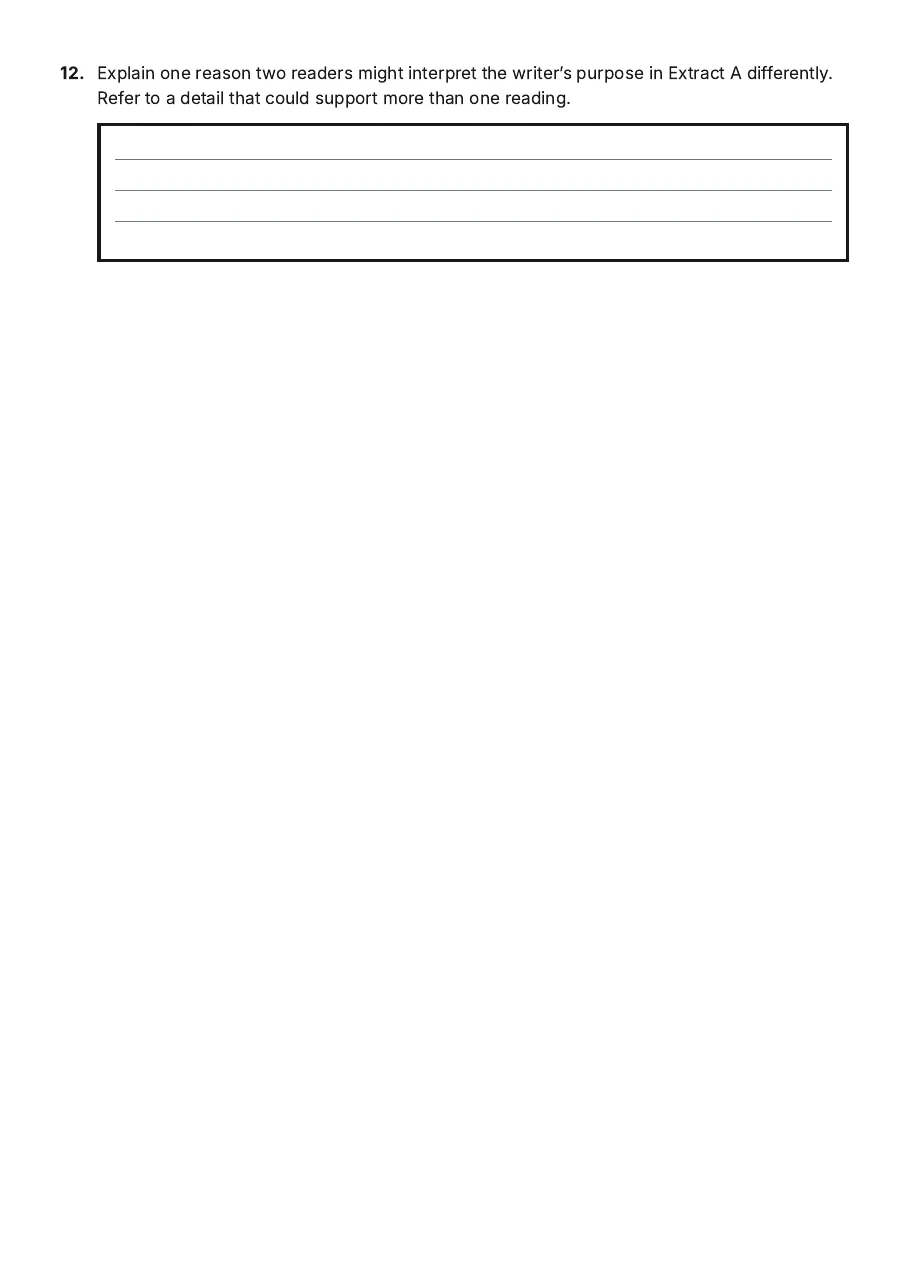
12.Explain one reason two readers might interpret the writer’s purpose in Extract A differently. Refer to a detail that could support more than one reading.
4 printable pages
Page 1
Page 2
Page 3
Page 4
About This Worksheet
Free in Kuraplan
Sign up free, grab the PDF, and customize it for your class.
Print-Ready
Formatted for standard paper. Clean layout, easy to read.
AI-Generated
Created with Kuraplan's AI, designed for real classroom use.
For Teachers & Parents
Use in classrooms, for homework, tutoring, or homeschool.
Need a custom version of this worksheet?
Kuraplan's AI generates custom worksheets in seconds — differentiated for every learner, aligned to your curriculum.
Generate Custom Worksheets — Free No credit card Curriculum-aligned Under 60 seconds