Ancient Egyptian Burial Practices
A free social sciences worksheet ready for your classroom. Open in Kuraplan to grab the print-ready PDF, customize it for your students, or generate a fresh version in seconds.
Ancient Egyptian Burial Practices
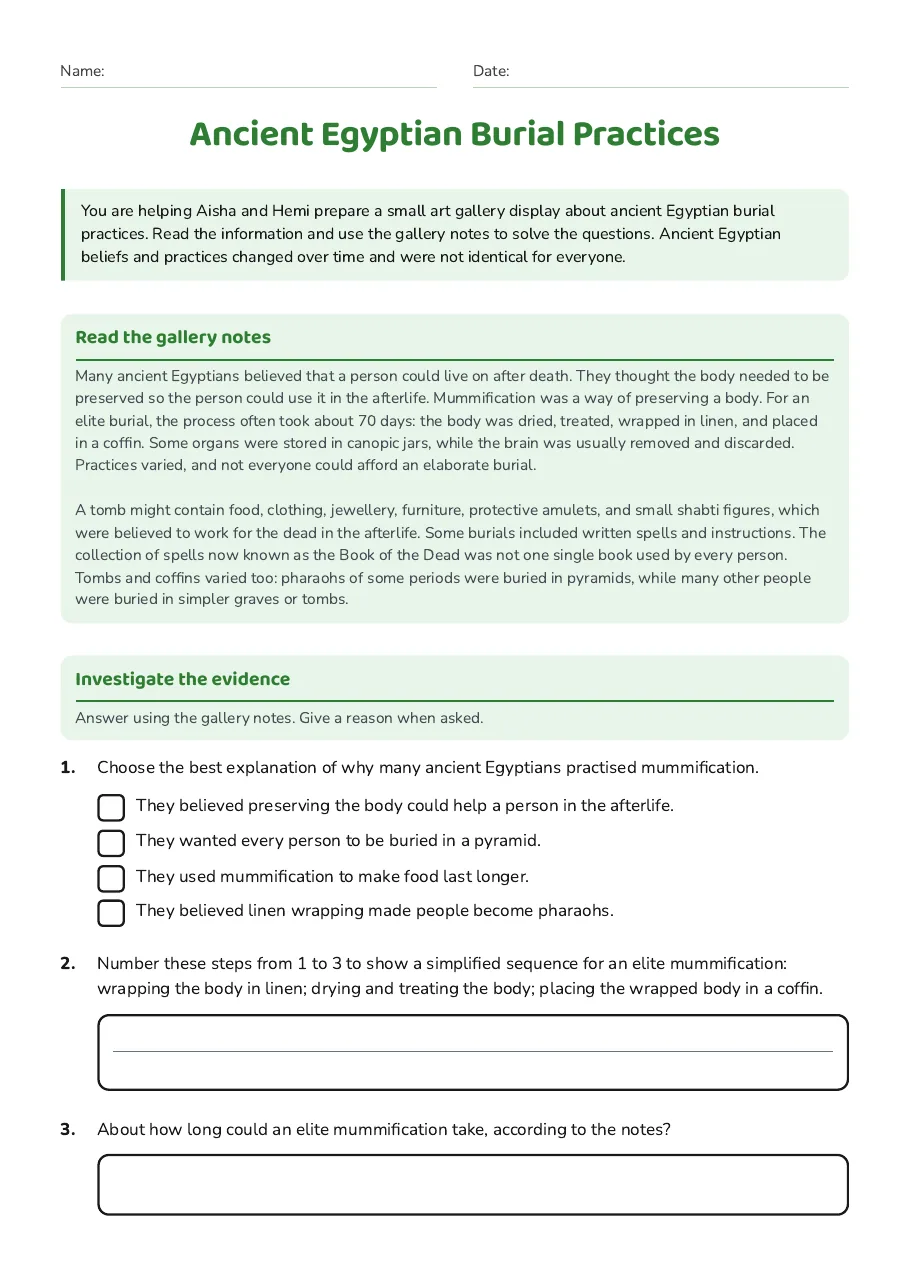
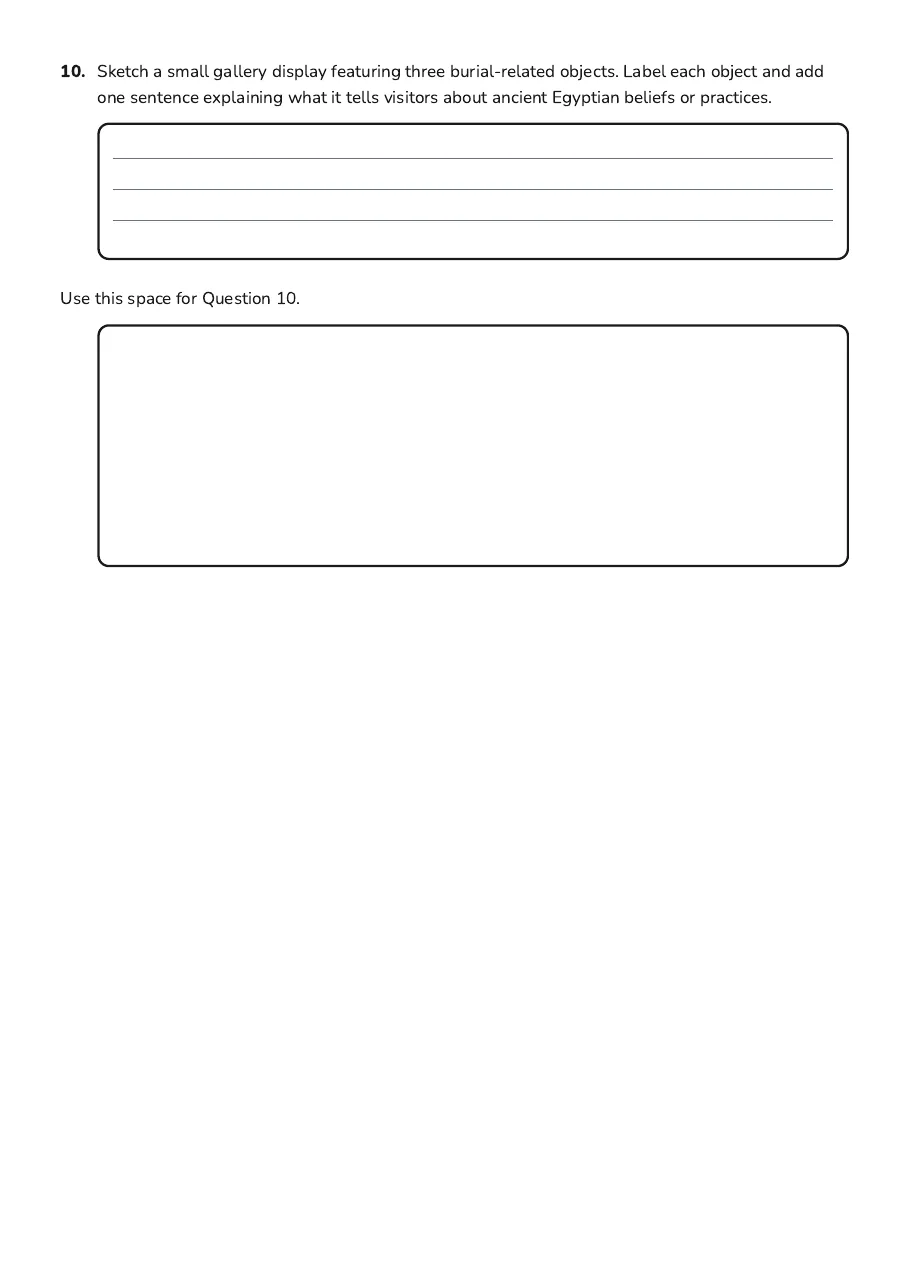
Read the gallery notes
Many ancient Egyptians believed that a person could live on after death. They thought the body needed to be preserved so the person could use it in the afterlife. Mummification was a way of preserving a body. For an elite burial, the process often took about 70 days: the body was dried, treated, wrapped in linen, and placed in a coffin. Some organs were stored in canopic jars, while the brain was usually removed and discarded. Practices varied, and not everyone could afford an elaborate burial. A tomb might contain food, clothing, jewellery, furniture, protective amulets, and small shabti figures, which were believed to work for the dead in the afterlife. Some burials included written spells and instructions. The collection of spells now known as the Book of the Dead was not one single book used by every person. Tombs and coffins varied too: pharaohs of some periods were buried in pyramids, while many other people were buried in simpler graves or tombs.
Investigate the evidence
Answer using the gallery notes. Give a reason when asked.
- They believed preserving the body could help a person in the afterlife.
- They wanted every person to be buried in a pyramid.
- They used mummification to make food last longer.
- They believed linen wrapping made people become pharaohs.
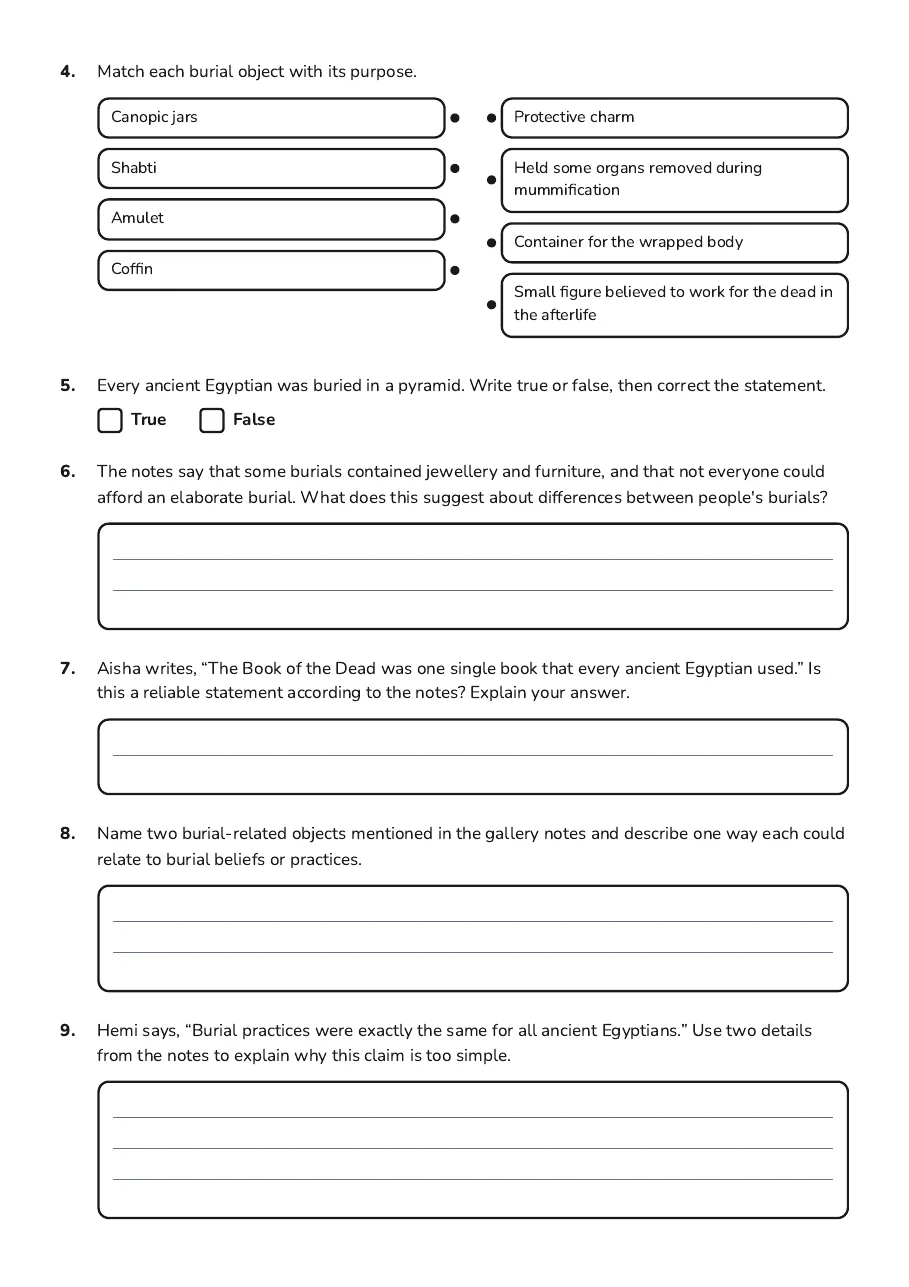
- Canopic jars
- Shabti
- Amulet
- Coffin
- Protective charm
- Held some organs removed during mummification
- Container for the wrapped body
- Small figure believed to work for the dead in the afterlife
3 printable pages
Page 1
Page 2
Page 3
About This Worksheet
Free in Kuraplan
Sign up free, grab the PDF, and customize it for your class.
Print-Ready
Formatted for standard paper. Clean layout, easy to read.
AI-Generated
Created with Kuraplan's AI, designed for real classroom use.
For Teachers & Parents
Use in classrooms, for homework, tutoring, or homeschool.
Need a custom version of this worksheet?
Kuraplan's AI generates custom worksheets in seconds — differentiated for every learner, aligned to your curriculum.
Generate Custom Worksheets — FreeMore Social Sciences Worksheets
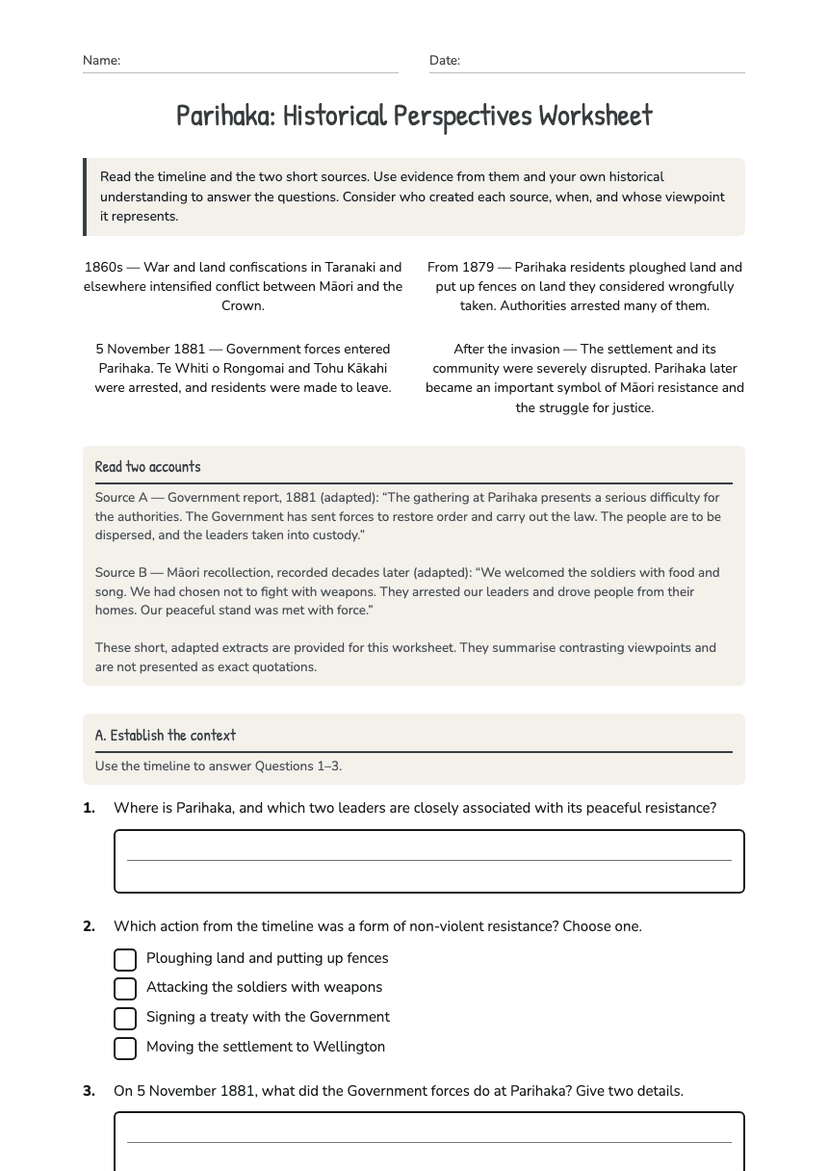
Parihaka: Historical Perspectives Worksheet
Free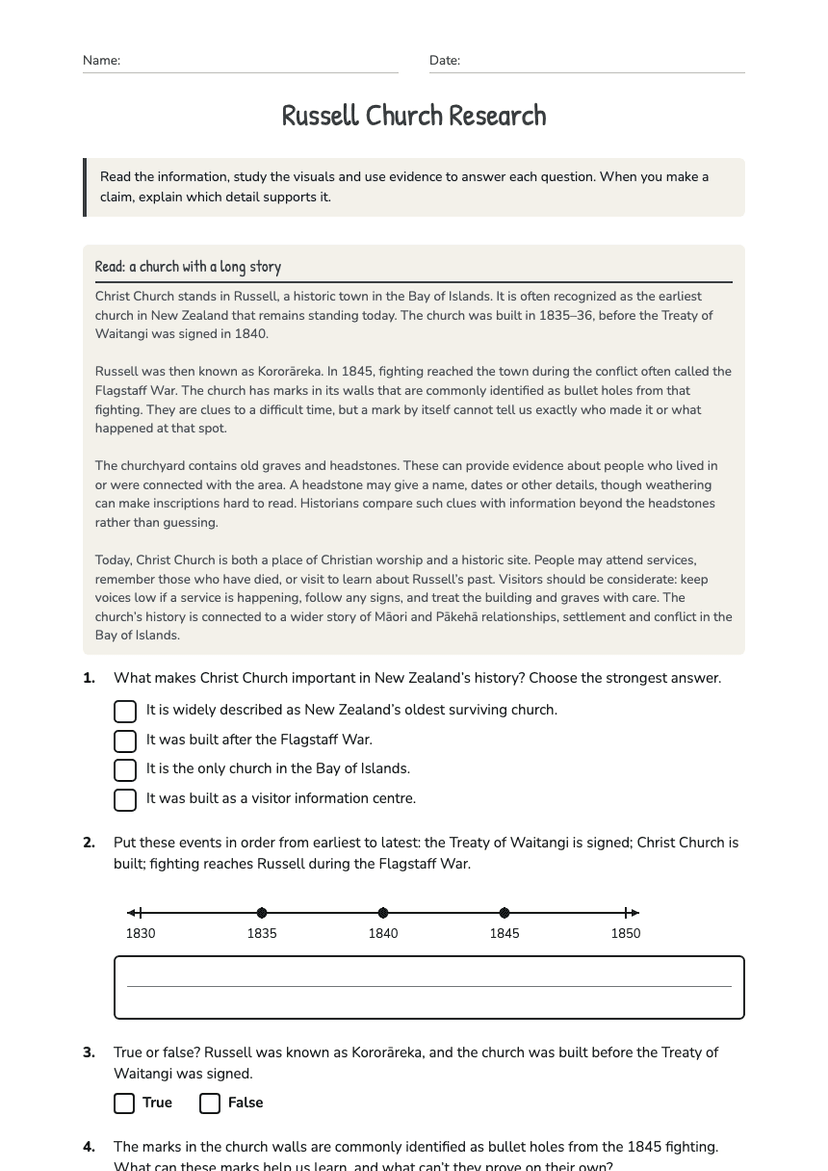
Russell Church Research
Free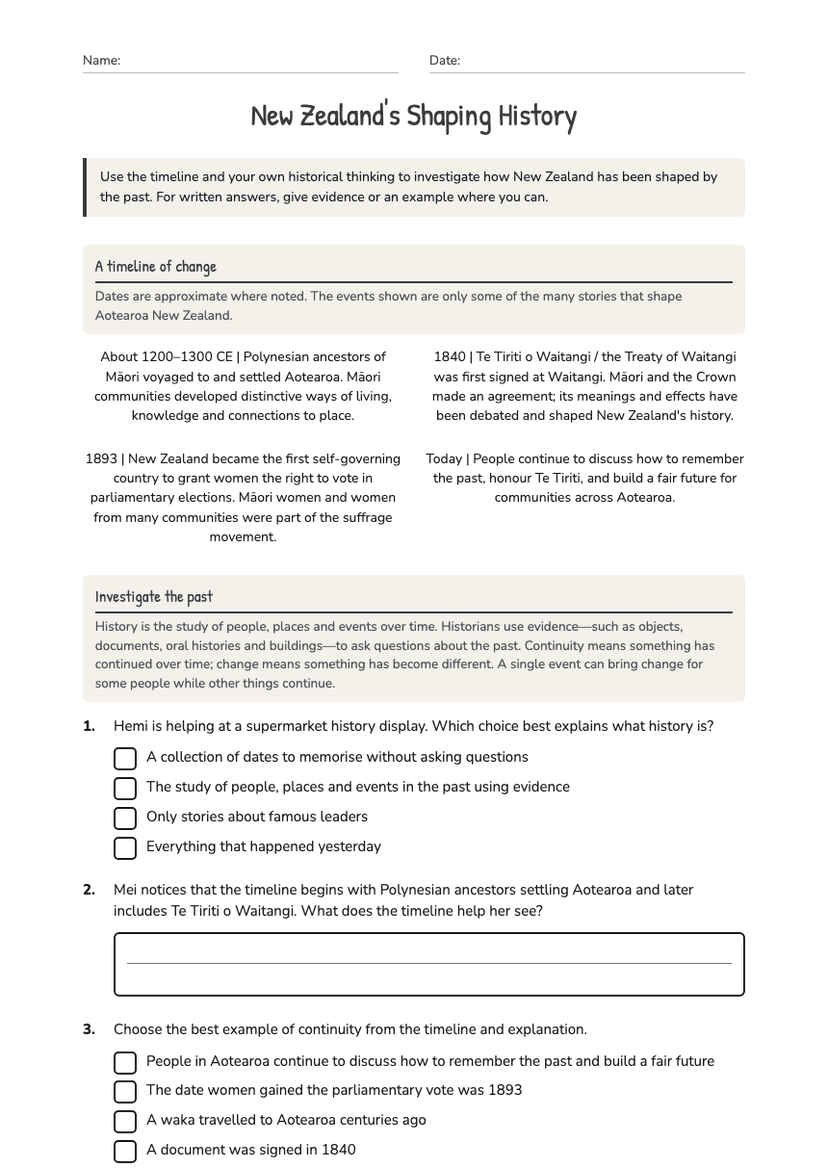
New Zealand's Shaping History
Free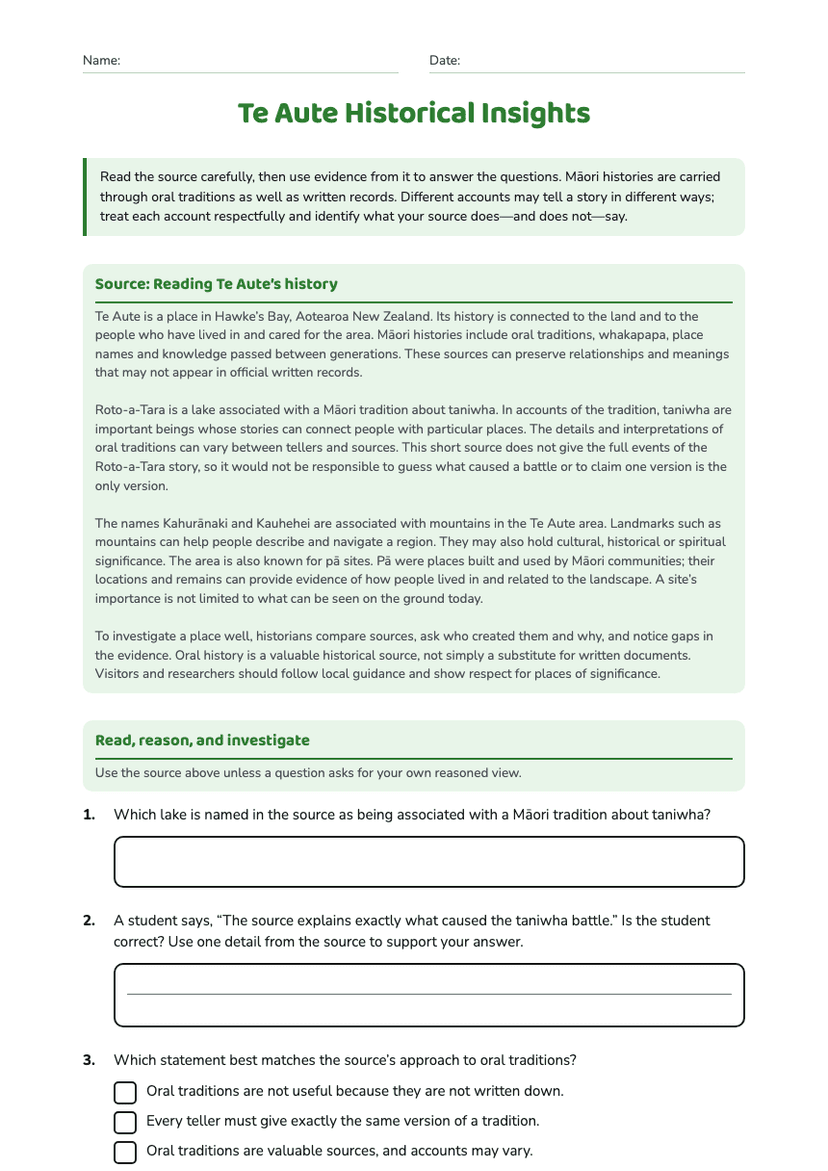
Te Aute Historical Insights
Free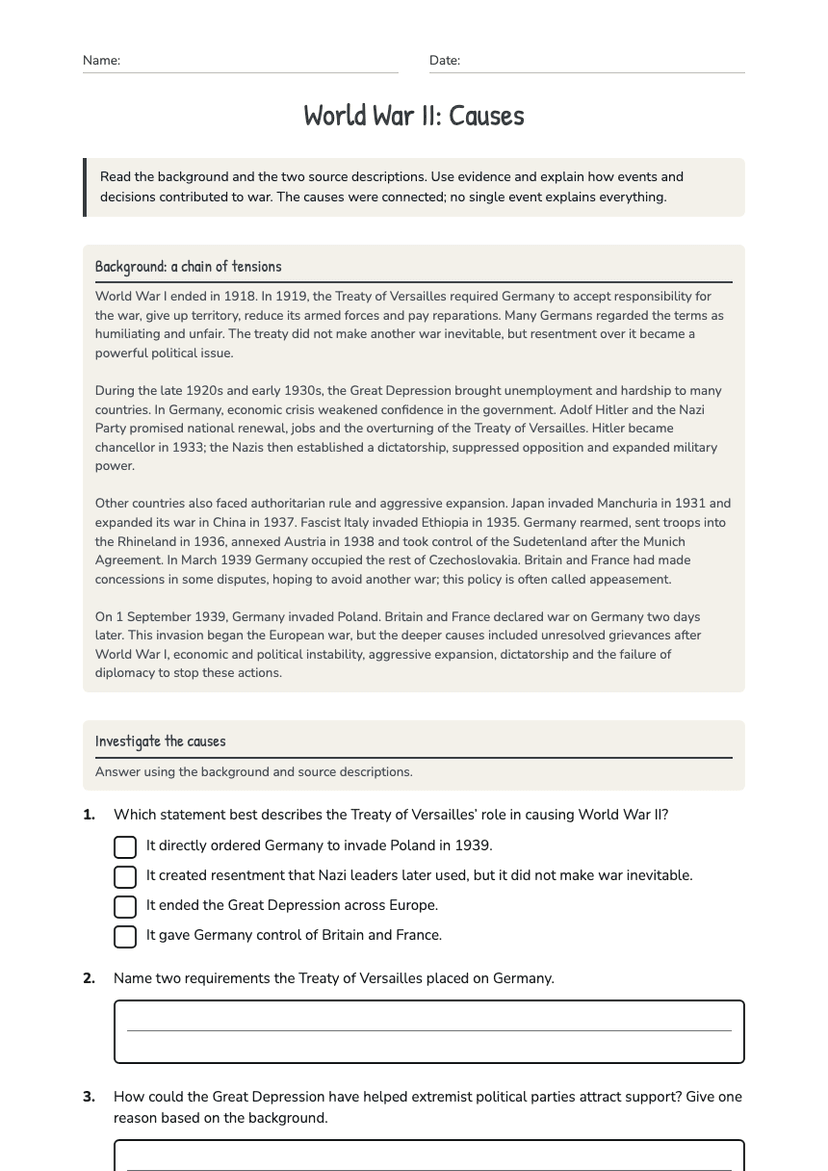
World War II: Causes
Free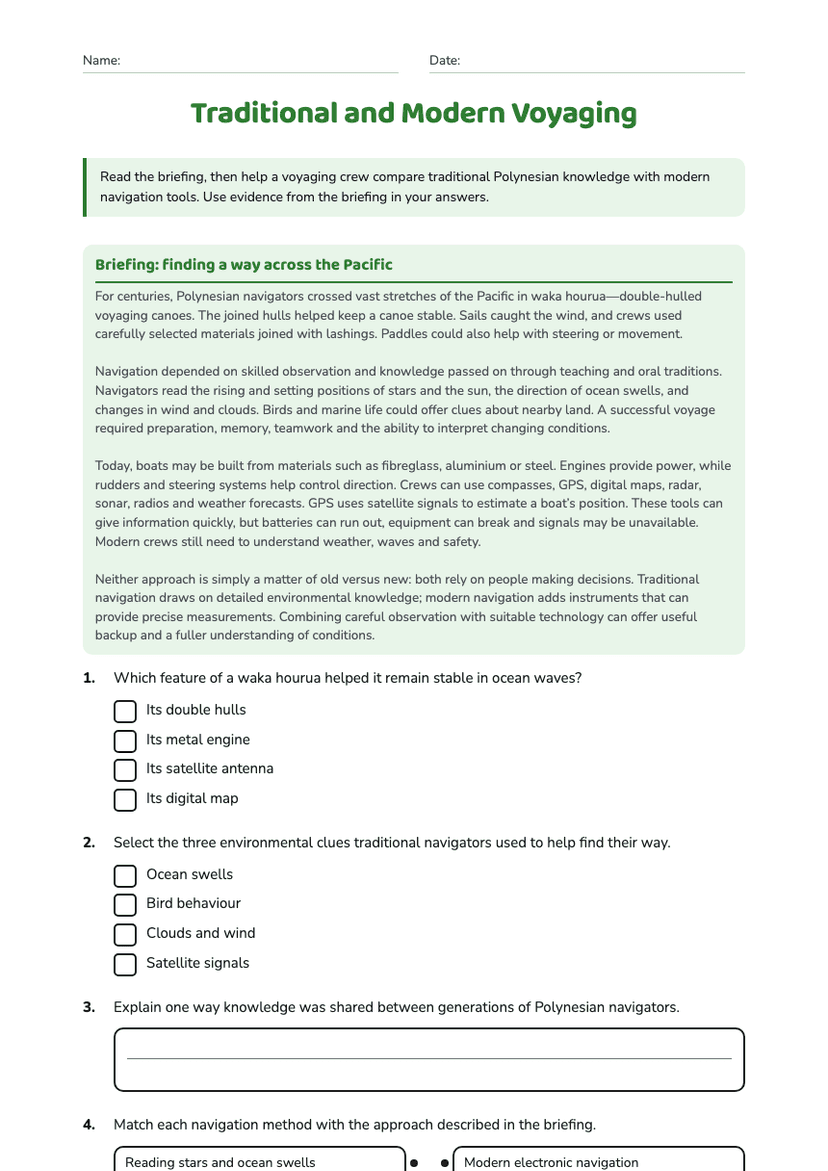
Traditional and Modern Voyaging
Free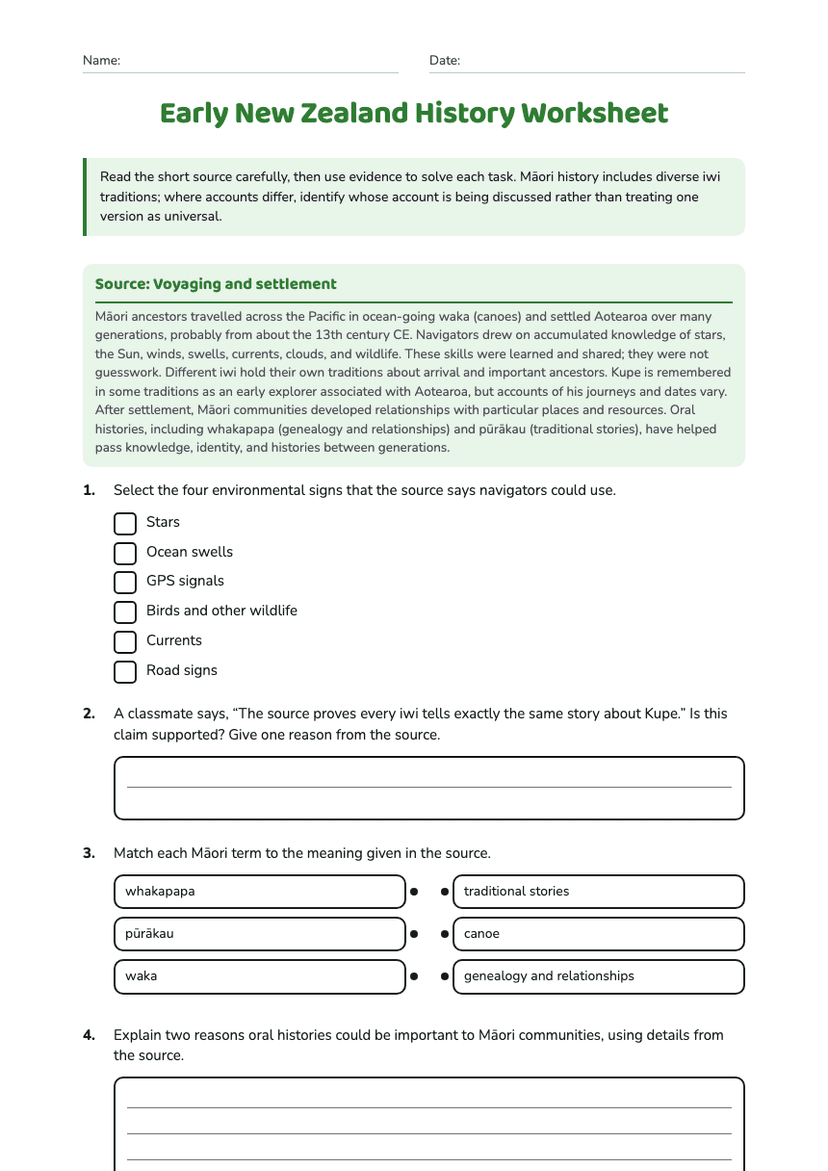
Early New Zealand History Worksheet
Free